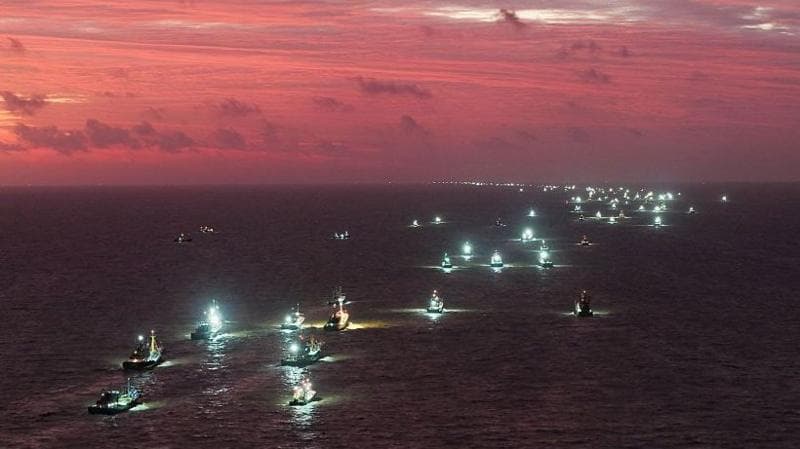
Fishermen venture back onto the water beneath a blood-red sky in August after China's Jiangsu province endures the onslaught of Super Typhoon Dolphin. Across the western Pacific, a relentless sequence of intense and frequently unpredictable storms, amplified by the El Niño weather pattern, has claimed dozens of lives, forced major airports to close and devastated crops and infrastructure throughout East Asia. According to BBC News, the region has experienced extraordinary conditions in recent months that go far beyond the typical wild weather residents along the coasts of the Philippines, Taiwan, China and Japan have come to expect.
The 2026 El Niño event has already surpassed previous temperature records weeks before its anticipated peak, with NOAA forecasting an 83% probability of a historic-strength event for October–December 2026. The phenomenon is expected to persist through early 2027, creating conditions that meteorologists describe as unprecedented in their intensity and reach.
What is El Niño and how does it drive these storms?
El Niño is a naturally occurring climate pattern in which warm waters accumulate in the eastern Pacific and altered wind patterns trigger extreme weather events globally. The cycle typically emerges every two to seven years and persists for roughly twelve months. This year's manifestation, which the UK Met Office has designated as the strongest in living memory, is anticipated to continue until February or March 2027.
The Pacific Ocean, heated to unprecedented levels by El Niño, now contains enormous amounts of typhoon energy according to the Accumulated Cyclone Energy metric, which quantifies the total intensity of a season's storms. Forecasters project that the ACE reading for South East and East Asia will reach nearly double the 30-year average. The World Meteorological Organization forecasts tropical Pacific sea-surface temperatures could reach 3.8°C above average in November 2026–January 2027, with the event potentially peaking near December.
El Niño also reshapes wind patterns, causing typhoons to develop further east than their typical formation zones. They intensify more rapidly as they linger over warm waters for extended periods. Ana Liza Solis, head of climatology at the Philippines' national weather bureau, characterised the overheated Pacific at a Manila press briefing in September using vivid language:
The Pacific can be likened to someone "burning with fever". It can go into convulsions soon.
How severe have the storms been so far?
In June, Japan confronted two simultaneous storms—Typhoon Mekkhala and Severe Tropical Storm Higos—racing toward its eastern coast, forcing one million residents to leave their homes. July brought Tropical Storm Narra, which grazed China's southern coast along Guangxi, submerging villages and displacing tens of thousands of people.
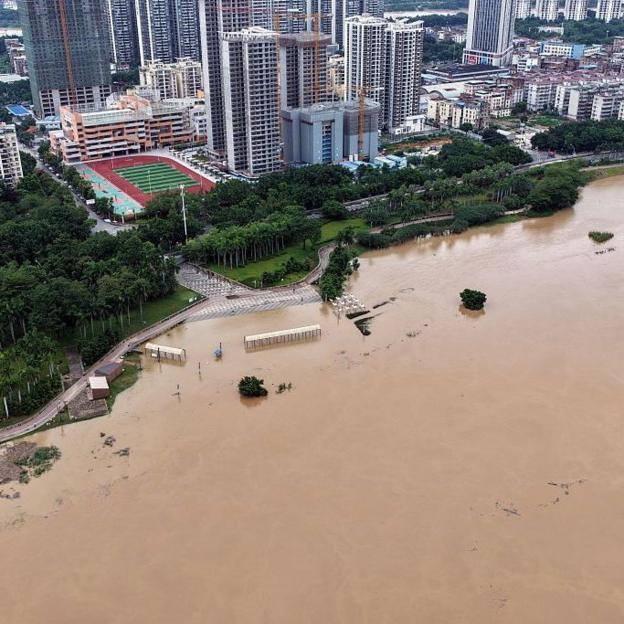
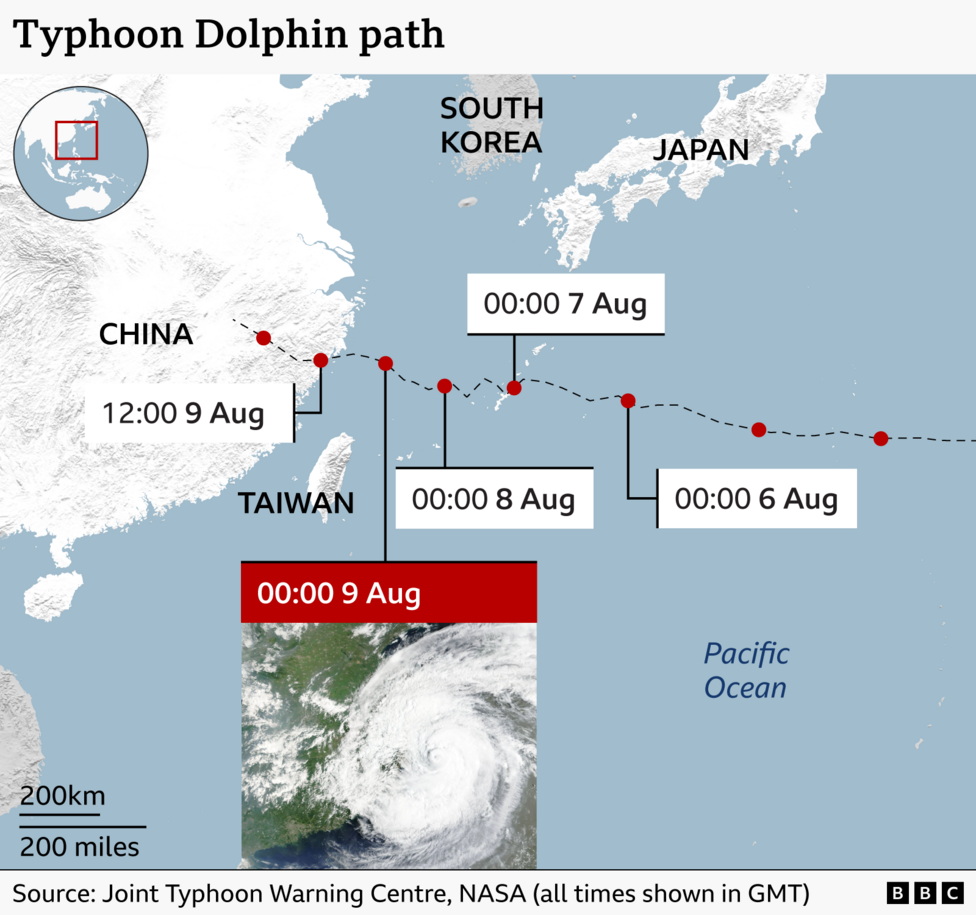
August delivered Super Typhoon Dolphin, which churned across the Pacific for 16 days before striking eastern China with devastating force, triggering extensive flooding and dozens of fatalities. Later that same month, Typhoon Saudel made landfall across three south-eastern Chinese cities over the course of a week, paralyzing transport networks and forcing thousands to evacuate.
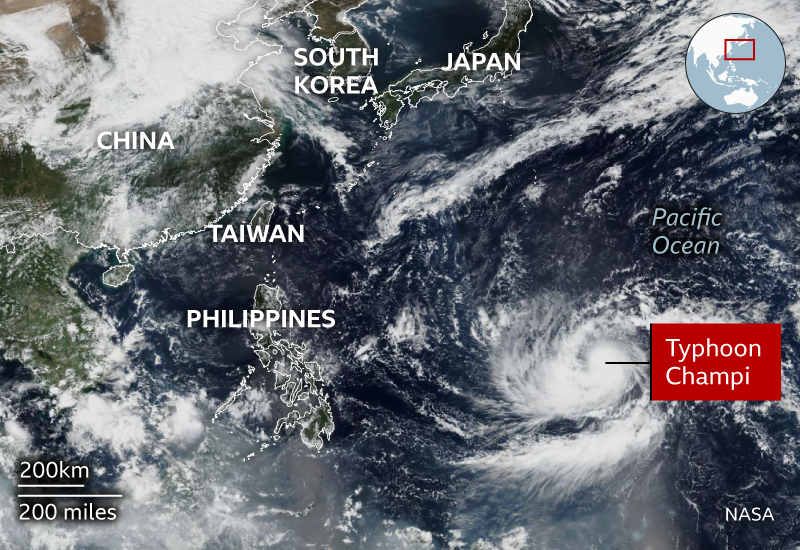
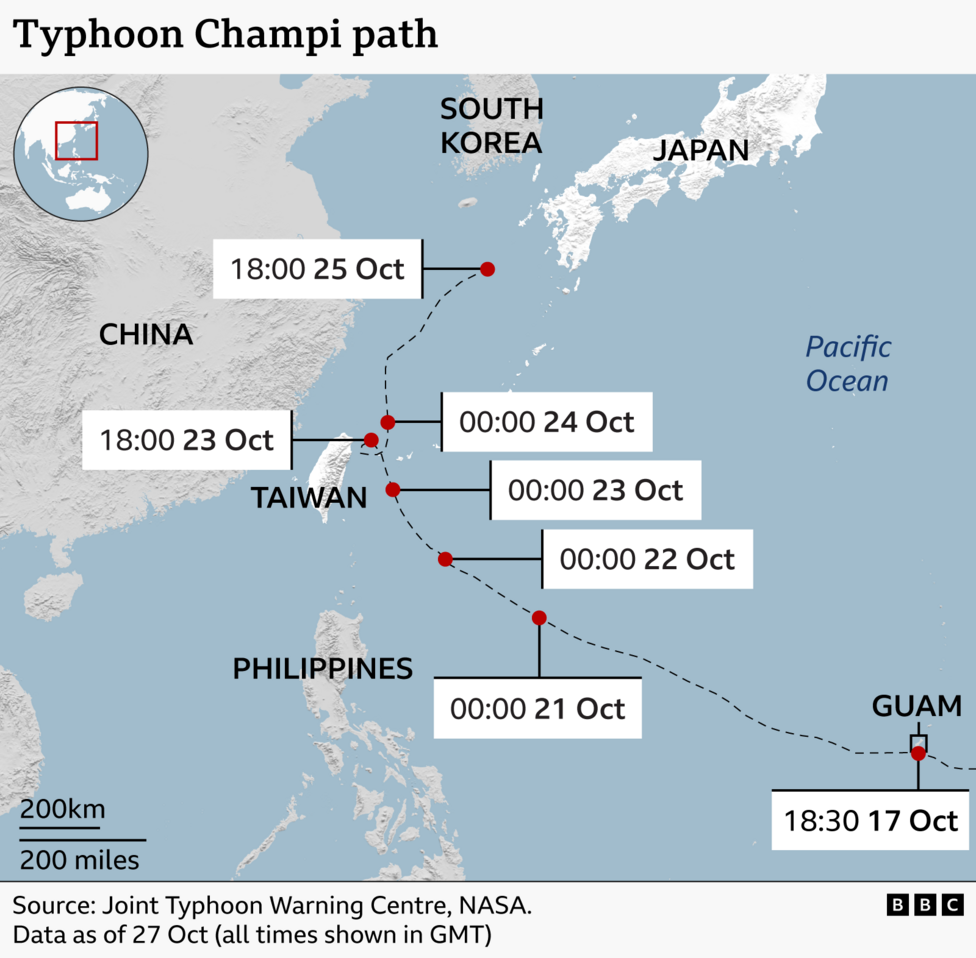
October witnessed a dramatic demonstration of the season's ferocity when nearly all of Taiwan shut down as a colossal storm approached its north-eastern coast. Typhoon Champi, equivalent in strength to a category five hurricane, generated winds of 295 kilometres per hour (193 miles per hour) capable of levelling buildings and generating destructive waves. Though it ultimately skirted past the island while drenching it in rain rather than making direct landfall, its effects rippled across the region: hundreds of flights were cancelled in Hong Kong, Taiwan and Japan. In the Philippines' Batanes archipelago, seaside highways closed as enormous waves crashed onto the shore, and in southern Japan's Okinawa islands, power was cut to 15,000 homes.
What do temperature records reveal about this El Niño?
Last month, sea surface temperatures in the equatorial Pacific—the zone monitored by the Japan Meteorological Agency for El Niño predictions—soared to 4 degrees Celsius above normal, marking the highest reading since records began in 1949. The previous record of 3.6 degrees Celsius was established in December 1997. NOAA's October diagnostic reported sea-surface temperature anomalies exceeding 4.0°C in parts of the eastern equatorial Pacific, while characterising a historic-strength event as one surpassing a +2.5°C three-month reading.
China's climate agency has issued warnings that sea surface temperatures will continue rising over the next three months due to El Niño's influence. Despite typhoon season typically peaking from September through October, these escalating temperatures raise serious concerns across a region already battered by consecutive storms.
How are storm patterns changing?
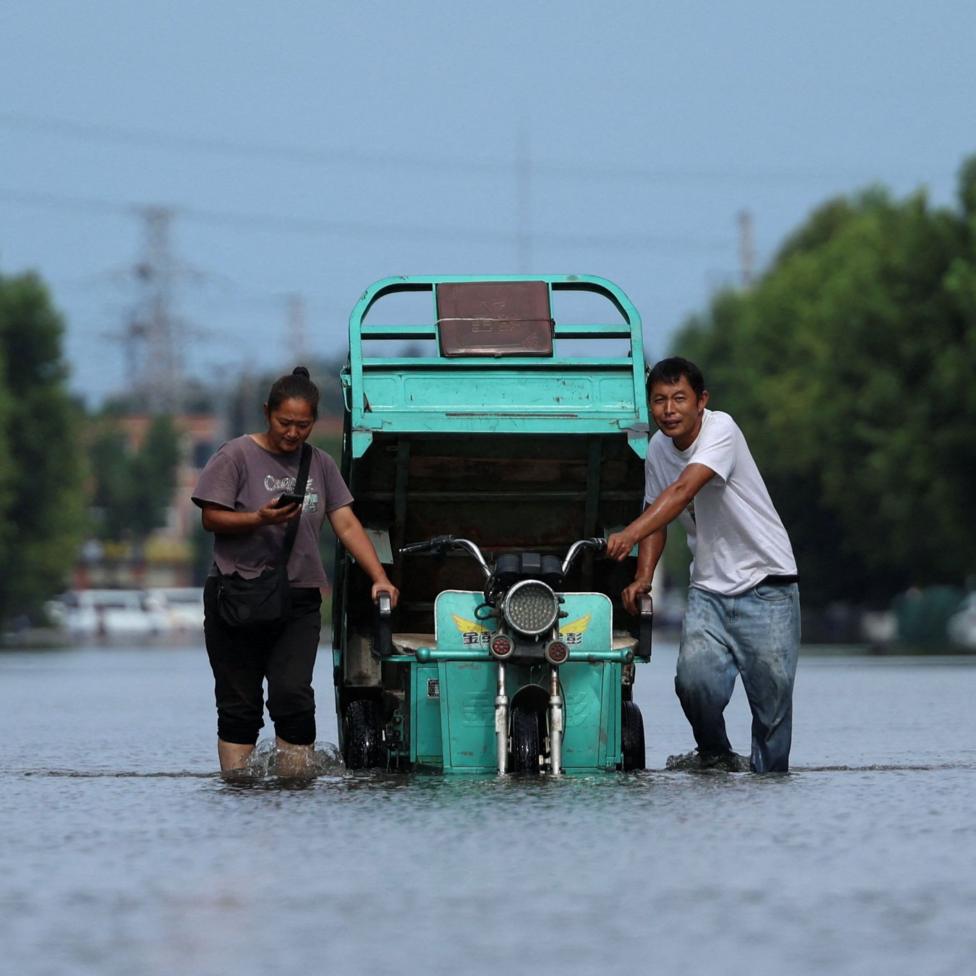
In August, Typhoon Chan-Hom astonished meteorologists in Japan by traversing the country from east to west, defying the conventional south-to-north trajectory. Japan's well-equipped and extensively prepared authorities managed to evacuate residents swiftly, but such rapid response would prove far more difficult in neighbouring countries with fewer resources.
To understand how rising temperatures might amplify risks, Manila-based climatologist Rafaela Jane Delfino and her team modelled the effects of warmer conditions on the Philippines' most devastating recent storms, including 2013's Super Typhoon Haiyan, which killed more than 6,000 people. Their analysis produced what she characterises as deeply troubling conclusions: elevated temperatures increased total accumulated rainfall by 26 percent. This represents a catastrophic prospect in a nation where flooding from monsoon rains and approximately 20 tropical storms annually has emerged as a primary disaster threat.
In recent years, floods have paralysed entire cities for extended periods, and frustrated by the relentless annual cycle, Filipinos have staged public demonstrations protesting corruption, which they contend diverts millions of dollars from flood-control infrastructure. Delfino, writing on the University of the Philippines website, emphasises that government leaders and officials must develop deeper comprehension of climate hazards to enable communities to strengthen their preparedness.
What immediate preparations are underway?
Nations throughout the region are mobilising defensive measures. Japan has urged citizens to stockpile food and essential supplies for the typhoon season and to secure outdoor objects that could become lethal projectiles when typhoon winds strike. China has instructed local officials to map vulnerable zones and is enhancing its early warning and monitoring infrastructure.
The Philippines and its South East Asian neighbours are preparing for disruptions to agricultural output, particularly rice production, and have expanded assistance to farmers, including fertiliser provision. However, the longer-term trajectory remains uncertain.
What do experts say about long-term resilience?
The window for governmental action on El Niño is rapidly narrowing, according to the United Nations Development Programme in Asia and the Pacific. The organisation emphasised that how severely a community experiences an El Niño event is determined years in advance by infrastructure decisions:
How severely a community experiences an El Niño is decided years in advance, by where roads and settlements are built, how water is managed, who is covered by social protection and whether public budgets have room to absorb a shock. Every El Niño tests the resilience we have built; this one should also drive us to build more.
What happens next?
NOAA has scheduled its next ENSO Diagnostic Discussion for November 12, 2026, which will provide updated forecasts on the event's trajectory. Forecasts suggest the most severe impacts may still lie ahead, with the phenomenon expected to maintain or intensify through the remainder of 2026 and into early 2027.
Key Facts
- Typhoon Champi in October 2026 generated winds of 295 km/h (193 mph), equivalent to a category five hurricane, affecting millions across Taiwan, Hong Kong, Japan and the Philippines
- Sea surface temperatures in the equatorial Pacific reached 4°C above normal in October 2026, the highest since records began in 1949, surpassing the previous 1997 record of 3.6°C
- Accumulated Cyclone Energy for South East and East Asia is forecast to reach nearly double the 30-year average due to El Niño's influence
- Simulations by Philippine climatologists show that warmer conditions increase total accumulated rainfall by 26 percent during major typhoons, with devastating implications for flood-prone regions
- The 2026 El Niño event is expected to persist through February or March 2027, with potential historic-strength conditions continuing through early 2027