

Typhoon Dolphin made landfall in eastern China's Zhejiang province on Sunday evening, 9 August 2026, prompting authorities to evacuate more than one million residents from coastal areas, including Shanghai. The storm first struck Yuhuan at around 17:30 local time (09:30 GMT) before coming ashore again near Wenzhou roughly an hour later, according to meteorological officials.
How severe was the storm at landfall?
Chinese authorities recorded maximum sustained winds of 150 km/h (94 mph) at the point of landfall, though the Associated Press put the figure slightly higher at about 162 km/h (101 mph). Storm trackers cited by Zoom Earth later pinpointed the precise landfall location as a point northeast of Wenzhou at approximately 09:15 UTC, refining the storm's official track. described Dolphin as the most powerful tropical cyclone to strike China so far this year, which helps explain the scale of the emergency response.What impact has it had on travel and daily life?
The typhoon brought transport across the region to a standstill, with 1,400 flights cancelled in Shanghai alone. Chinese officials had raised their warning to the highest-level red alert as the storm approached, but downgraded it to a tropical storm classification by Monday morning as Dolphin weakened over land.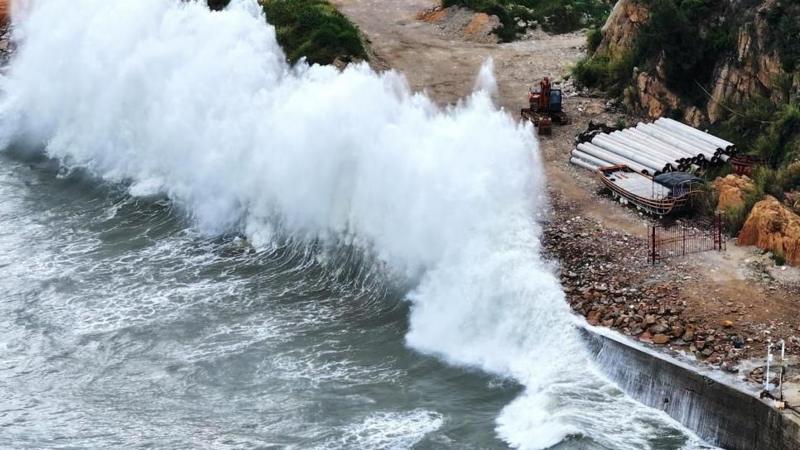

Local governments urged residents to stay indoors, and several major tourist sites shut their doors, including sections of Disneyland and Legoland as well as multiple riverside viewing platforms along Shanghai's Bund.
How does this fit into China's recent storm season?
Dolphin's arrival follows a run of destructive weather across the region. Days earlier, the storm had already knocked out power to tens of thousands of buildings and injured five people in Japan's Okinawa before turning toward the Chinese mainland. It also arrives on the heels of Typhoon Bavi's landfall near Wenzhou and Typhoon Maysak, which caused severe flooding, rare tornadoes and a dam breach earlier in the season. That same stretch of extreme weather also included storms that killed 15 people and triggered tens of thousands of evacuations, prompting President Xi Jinping to call for full rescue efforts.According to People's Daily, China's National Meteorological Centre first issued a yellow alert on Thursday before escalating it to a red typhoon alert on Sunday morning as Dolphin neared the coast.
What happens next?
Forecasters expect the danger to persist well beyond landfall. Euronews reported that parts of central and eastern Zhejiang could see 250 to 500 mm of rain, with heavy downpours also expected in Shanghai, Fujian, Anhui and Jiangsu through Monday afternoon, while the AP put the wider rainfall estimate at 200–400 mm over the coming days. said torrential rain was forecast to continue through 10 August across Zhejiang, Shanghai and neighbouring provinces, with the Qiantang, Yong, Jiao and Shuiyang rivers among those at risk of major flooding. The U.S. Embassy in China warned that strong gusts and torrential rain could persist between Saturday and Tuesday, while Al Jazeera reported the wider rain and wind effects could linger over eastern China until 12 August.Key Facts
- Typhoon Dolphin made landfall in Yuhuan, Zhejiang, on 9 August 2026 at around 17:30 local time before a second landfall near Wenzhou about an hour later.
- More than one million people were evacuated across eastern China, including Shanghai.
- 1,400 flights were cancelled in Shanghai; the red alert was downgraded to tropical storm status by Monday morning.
- Forecast rainfall of 200–500 mm threatens flooding along rivers including the Qiantang, Yong, Jiao and Shuiyang through 10–12 August.
- The storm follows Typhoon Bavi, Typhoon Maysak and other severe storms that have battered China earlier this season.


