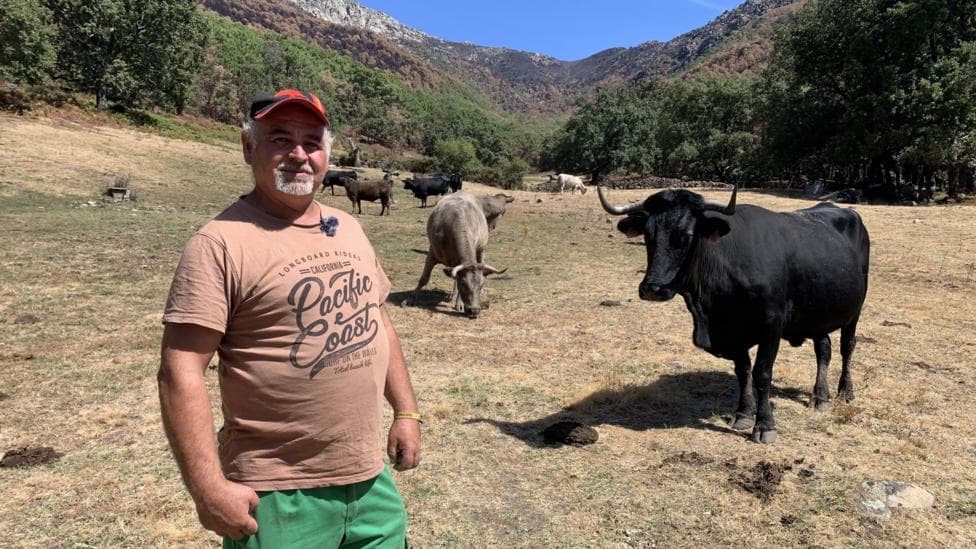
In a small green meadow in the Gredos mountains west of Madrid, a couple of dozen cattle belonging to Juan Ángel Izquierdo and his family graze peacefully. The only sound is the gentle clang of bells around the animals' necks. This tranquil pastoral scene is marred, however, by blackened pine and oak trees surrounding the pasture—the charred remains of a catastrophic wildfire that swept through the region.
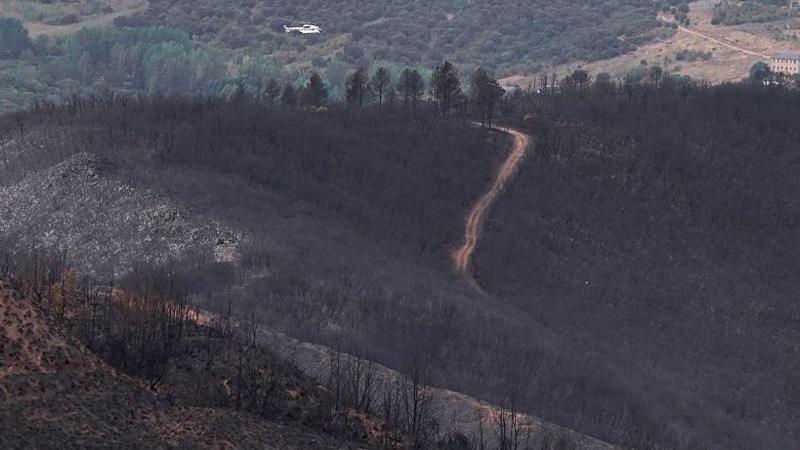
"It was immense, I've never seen anything like it,"says Izquierdo, whose family has farmed this land for two centuries. The fire in late July merged with two others, consuming a combined total of approximately 80,000 hectares (200,000 acres) and becoming the largest blaze Spain has ever recorded. The inferno destroyed more than two-thirds of Izquierdo's property and killed 12 of his 85 cattle, with another eight animals requiring euthanasia due to severe injuries. All the hay he had stockpiled for winter feeding was also consumed by the flames.
This year's wildfire season has proven devastating across Spain. According to the European Forest Fire Information System (EFFIS), approximately 300,000 hectares of land have burned in Spain in 2026—roughly half the total burned across the entire European Union. By 28 July 2026 alone, Spain's wildfire-affected area had reached 172,396 hectares, with more than 63,000 people evacuated. Over the past 40 years, damage from Spanish fires has exceeded 200,000 hectares annually on eight occasions—three of those instances occurring since 2022.
How is climate change driving Spain's wildfire crisis?
Izquierdo attributes the escalating danger to shifting seasonal patterns.
"For us farmers, the summers are becoming more and more worrying, because they are getting hotter,"he explains.
"It rains less, the wet season ends earlier and the autumn starts much later."These conditions create ideal circumstances for fires to ignite and spread rapidly.
Scientific research confirms the connection between global warming and Spain's fire season. World Weather Attribution, an international research organisation, determined that the extreme conditions driving record-breaking fires in Spain and Portugal in 2026 were 40 times more likely to occur due to climate warming. More specifically, the hot, dry and windy conditions that fueled the fires would now be expected about once every six years in central Spain, compared with about once every 20 years in the preindustrial climate.
Ernesto Rodríguez Camino, president of the Spanish Meteorology Association, attributes the root cause to human activity.
"The ultimate reason for the greater frequency and intensity of these kinds of fires has to be attributed to the increase in greenhouse gases caused mainly by the generalised use of fossil fuels,"he stated.
Prime Minister Pedro Sánchez has characterised the crisis in stark language.
"The climate emergency kills,"he declared in July during a visit to the southern province of Almería, where a wildfire claimed 15 lives. In response to the escalating threat, Sánchez announced Spain's National Network of Climate Shelters and new climate-emergency funding on 27 July 2026, including 1,100 climate refuges on a public map. These shelters will operate every summer from 15 May to 30 September.
What is the economic toll on Spain's farming sector?
The agricultural industry faces substantial losses from this year's fires. Farming insurance association Agroseguro estimated that 16,000 hectares of crops had been destroyed by mid-August 2026, a severe blow to Spain's agri-food industry, which contributes 9% of the country's gross domestic product. Local authorities in Castilla y León, the region most heavily affected by the massive fire near Madrid, are offering compensation ranging from €5,500 ($6,300; £4,700) to €25,000 ($29,000; £21,000) to each affected farmer, depending on the extent of damage. However, Izquierdo estimates that this assistance will cover less than half of his actual losses.
The human cost has also been severe. The Spanish government reported in late July that more than 3,800 people had died from heat-related causes during the 2026 wildfire season.
How is extreme heat affecting Spain's tourism industry?
Spain's warm climate has long been a cornerstone of its tourism economy, with sun-drenched Mediterranean resorts and island destinations in the Balearic and Canary Islands driving growth as a global travel hub. This year, close to 100 million foreign visitors are expected to arrive in Spain, making it the second most-visited country in the world after France. However, evidence suggests that escalating temperatures are beginning to deter some travellers.
Research conducted by scholars at Madrid's Rey Juan Carlos University found that extreme heat can act as a deterrent to potential visitors.
"When there is a heatwave, the number of overnight stays drops in the destinations that we've studied, and there is also a drop in arrivals from some of Spain's biggest markets,"explains María Dolores Sánchez, an economist who co-authored the report.
"Tourism represents 13% of Spain's GDP, so this could have repercussions in the medium term when it comes to Spain's competitivity."

The medieval city of Toledo, situated on the plains of Castilla-La Mancha far from Spain's coastline, exemplifies these challenges. Its rich history and winding streets have made it a popular destination for visitors seeking alternatives to beach resorts. This summer, however, tested visitors' tolerance for heat. Spain registered a record-breaking 61 days of heatwaves that extended into early September, with Toledo repeatedly experiencing temperatures exceeding 40 degrees Celsius.
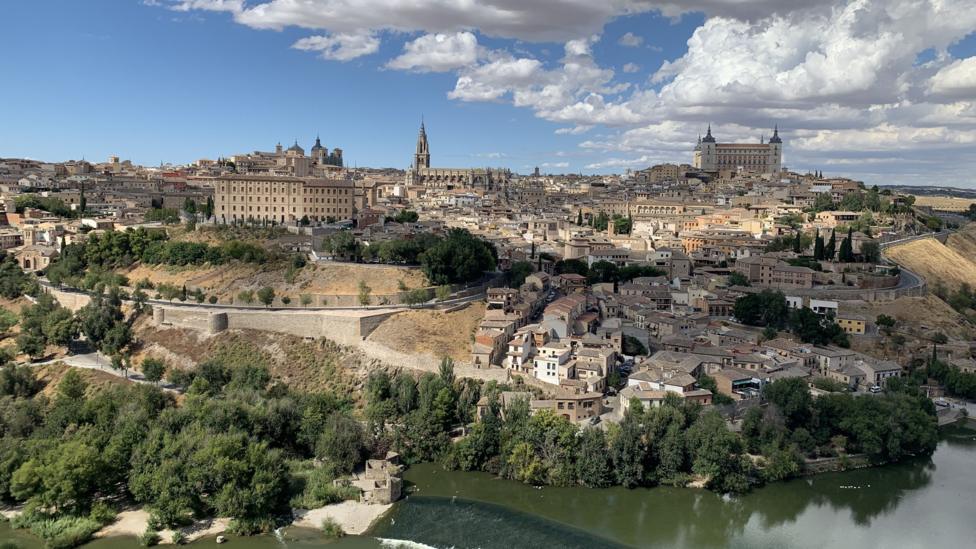
"It's quite difficult to do the tours in the summer,"says Diego Esteban, a guide with Visit Toledo.
"We need to adapt, whether it is those of us who work in the tourism industry or the locals."When conducting summer tours, Esteban ensures frequent rest stops, provides drinking water, and routes itineraries through shaded areas. He advocates for additional shade structures and drinking fountains throughout the city. The heat has already begun reshaping the tourism calendar, with significantly more visitors arriving during the cooler months of spring and autumn rather than summer.
The trend of
"coolcation"—whereby Spanish travellers seek cooler regions for holidays, typically in the country's northern areas—has also gained momentum as domestic tourists respond to rising temperatures.
What other climate-related disasters has Spain experienced?
Wildfires represent only one manifestation of Spain's climate vulnerability. Drought has emerged as another serious threat. In 2024, following three years of minimal rainfall, the north-eastern region of Catalonia temporarily imposed stringent water-use restrictions, including a 25% reduction for industry and an 80% reduction for crop farming. Although heavy rainfall since then has lifted these restrictions, the drought inflicted substantial economic damage on the region.
The most catastrophic natural disaster Spain has experienced in recent years occurred in October 2024, when flash floods killed 237 people in the eastern part of the country, centred on the Valencia region. Spanish meteorological research group Climatoc-Lab characterised the event as
"a manifestation of how global warming alters the hydrological cycle."The Valencia Chamber of Commerce estimated that the floods caused €4.5 billion in direct damage. Thousands of businesses were affected, with some completely destroyed by floodwater while others required lengthy recovery periods before resuming operations.
"It was a disaster, both in terms of the lives lost and the impact on businesses, on workers, employers and ordinary people,"says Laura Llácer Álvarez, manager of the Fepeval federation of industrial parks in the Valencia region.
Why is Spain particularly vulnerable to climate change?
Spain's geographical position, climate and topography render it unusually susceptible to the effects of rising global temperatures. Germanwatch, an independent environmental organisation, ranked Spain the world's 20th most affected country in its 2024 climate risk index, positioned just behind Nigeria and Mali. This vulnerability stems from Spain's location in a region where climate impacts are intensifying faster than in many other parts of the world.
Recognising the scale of the challenge, Spain urged the European Union on 4 September 2026 to create a dedicated climate adaptation fund and binding adaptation targets as wildfire and heat costs mounted. Additionally, UN agencies said on 5 September 2026 they were racing to help Europe as wildfires spread north across the continent, with climate change and land use driving their speed and intensity.
Can climate action create economic opportunities?
Despite the mounting challenges, some economists see potential for positive transformation.
"Climate change affects how we produce, how we invest and how we consume,"says Julián Cubero, head of economics of climate change at economic think tank BBVA Research. He notes that extreme heat can suppress economic activity.
"We all work worse when it's hot,"he observes. However, he argues that a transition to a greener economy can generate new employment opportunities with enhanced productivity.
"The key is to realise that if we don't act, growth will slow down, and if it's handled right it can become an opportunity,"Cubero concludes.
What happens next?
Spain's government has indicated its intention to establish the foundations of a national climate pact in September 2026. The newly announced National Network of Climate Shelters will provide refuge for vulnerable populations during extreme heat events, operating throughout the summer season from 15 May to 30 September each year. These initiatives represent the government's effort to balance immediate crisis response with longer-term climate adaptation planning.
For farmers like Izquierdo, the path forward remains uncertain.
"If you don't think about the wildfires too much, you feel okay,"he reflects.
"But when a fire starts in a nearby village you start wondering – 'and what if we're next?'."His experience encapsulates the anxiety now permeating Spanish society as climate impacts intensify across agriculture, tourism, infrastructure and public health.
Key Facts
- Spain's 2026 wildfire season has burned approximately 300,000 hectares, roughly half the total burned across the entire European Union this year
- World Weather Attribution found that extreme fire conditions in Spain are now 40 times more likely due to climate change, occurring roughly once every six years instead of once every 20 years in the preindustrial climate
- The agri-food industry, which contributes 9% of Spain's GDP, suffered an estimated 16,000 hectares of crop destruction by mid-August 2026
- Tourism, representing 13% of Spain's GDP, faces potential medium-term competitiveness challenges as extreme heat deters some international visitors
- Spain's government has launched a National Network of 1,100 climate shelters operating from 15 May to 30 September annually to protect vulnerable populations during heat emergencies