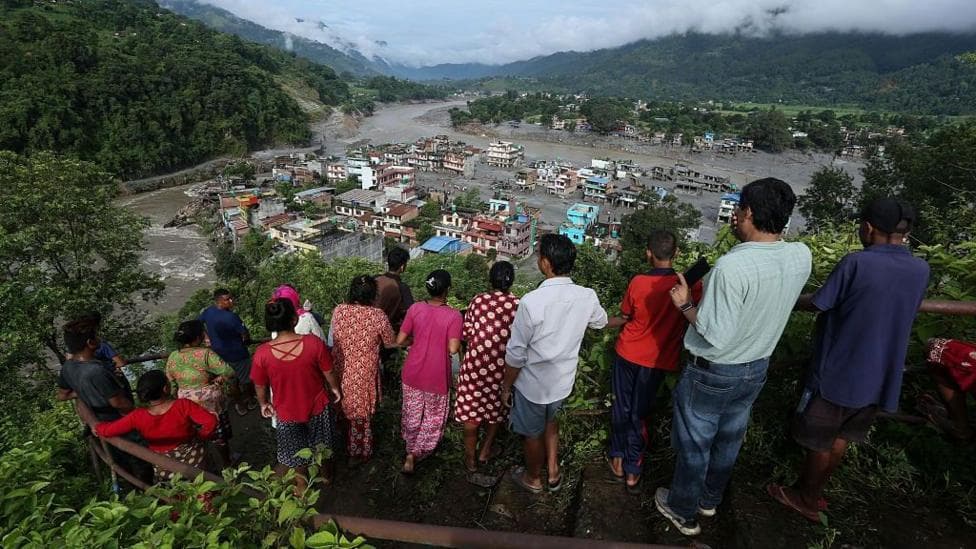
Almost two million residents face evacuation orders across multiple Japanese prefectures as Typhoon Dujuan delivers powerful winds, heavy rainfall, and dangerous conditions to the nation. The storm has claimed at least two lives, left four people missing, and forced the cancellation of major events during a five-day national holiday.
The Japan Meteorological Agency initially issued an "imminent threat to life" warning but has since downgraded most alerts, though danger-to-life warnings remain active in Oshima Town and level four warnings for landslides persist in Shinagawa Ward, Toshima Village, and Niijima Village. The agency confirmed that Dujuan is the 25th typhoon of the year and warned of heavy rain, strong winds and high waves across the Kanto region.
Dujuan was first tracked as a tropical cyclone near the Mariana Islands before strengthening into a tropical storm and then a typhoon. The system was expected to pass near the Ogasawara Islands and then the Izu Islands before affecting the Tokyo region, with forecasts indicating the storm's center could be around the Boso Peninsula on Monday and then shift eastward into open water afterward.
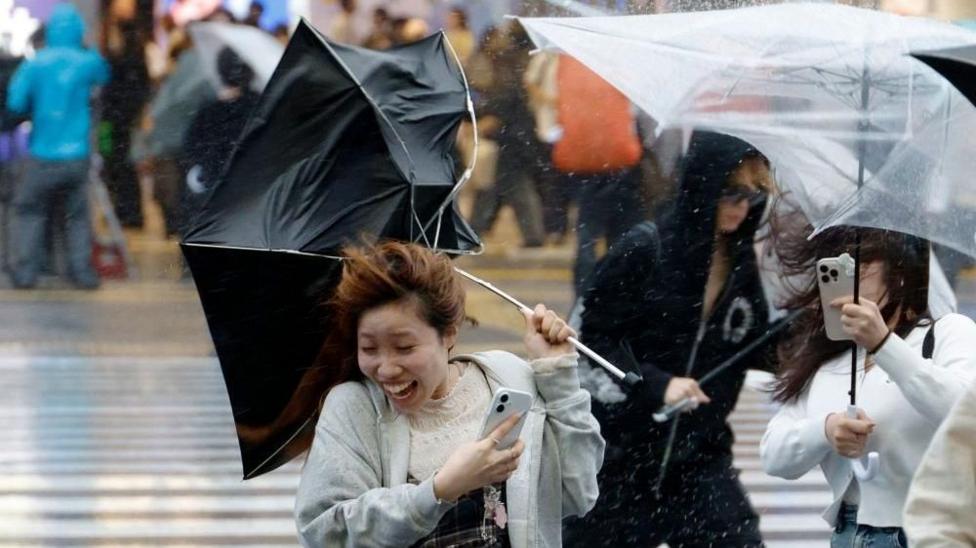
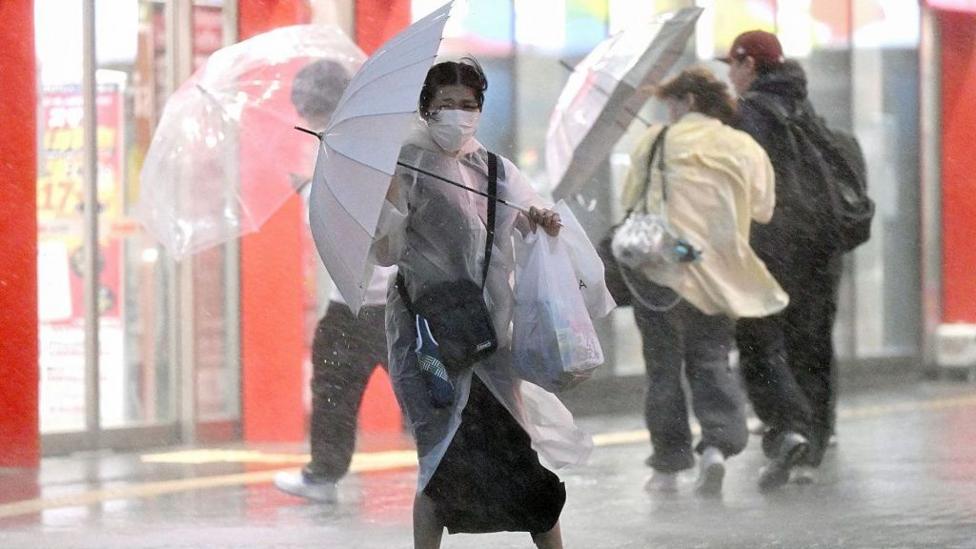
The typhoon has generated sustained winds of 130 kilometres per hour with gusts reaching 194 kilometres per hour. According to meteorological data, Dujuan had a central pressure of 975 hectopascals and maximum sustained winds near its centre of 108 kilometres per hour, with gusts up to 162 kilometres per hour at one measurement point.
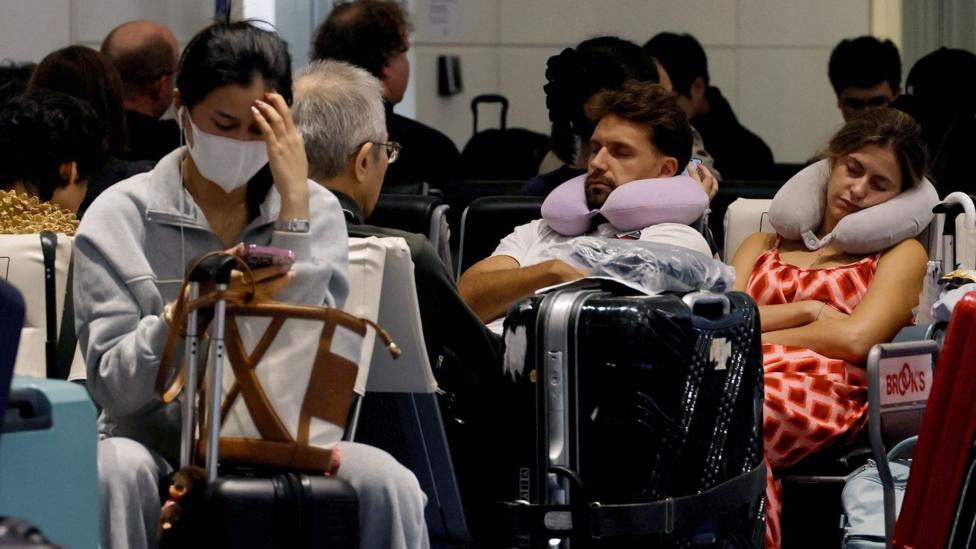
Infrastructure disruptions have been widespread. Power cuts have affected more than 50,000 people, while hundreds of flights have been cancelled and rail services suspended. According to reports from the approach phase, more than 1 million people were under evacuation advisories as the typhoon moved toward Tokyo.
What deaths and injuries have been reported?
Two fatalities have been confirmed so far, with four others reported missing. The Yokosuka City Fire Department reported that a woman in her sixties may have been swept away and was believed to have been buried alive. Following a search by rescue crews, she was discovered inside her home and pronounced dead.
In a separate incident, the Sodegaura City Fire Department in Chiba prefecture reported that a man in his fifties was rescued after becoming trapped while working to clear debris at a landslide site. The worker fell into a bamboo thicket along with heavy machinery and was taken to hospital, where his death was subsequently confirmed. Police are investigating the circumstances of the incident.
Firefighters in Kanagawa prefecture received a call from a man reporting that his house had been crushed by a landslide. Four people remain missing in Kanagawa prefecture.

Which events have been cancelled?
The typhoon has disrupted major cultural and entertainment events scheduled during Japan's five-day holiday period. Concerts planned for Monday at the Rock in Japan music festival have been cancelled, and the Tokyo Game Show, a major video game convention, has cancelled Monday's programme.
How is the government responding?
Prime Minister Sanae Takaichi issued a statement expressing her condolences to those affected by the typhoon.
"With a sense of urgency, I instructed Chief Cabinet Secretary Takehara and Minister Hosono to respond with utmost preparedness,"she wrote on social media. Despite the crisis, she proceeded with her scheduled trip to the United States as planned, boarding a flight to address the UN General Assembly in New York on Tuesday and to meet with US President Donald Trump.
Authorities have advised the public to remain attentive to weather information and warnings as conditions continue to evolve.
Why are typhoons becoming more intense?
Typhoon Dujuan is the latest in a series of powerful storms affecting the Pacific region, intensified by the current "super El Niño" phenomenon, which has warmed ocean waters and fuelled storm formation. According to reporting on the meteorological warnings, the Japan Meteorological Agency warned of flooding and landslides across eastern Japan as the typhoon approached the Pacific coast.
Research indicates that Japan has become more exposed to destructive storms in recent years. While climate change is not thought to be increasing the total number of typhoons globally and could even reduce them in some regions, typhoons that do form are likely to become more intense on average. Warmer ocean waters enable storms to accumulate more energy, resulting in higher wind speeds. Additionally, because a warmer atmosphere can retain more moisture, these storms may produce heavier rainfall.
El Niño, the natural weather phenomenon bringing warmer water to parts of the tropical Pacific, is a contributing factor this year. While El Niño does not have a clear effect on the total number of typhoons, it can influence where they form, their strength, and which countries they affect. Some El Niño events may expose Japan to stronger typhoons, for example.
What happens next?
Dujuan is continuing to travel along Japan's Pacific coast heading northward. The storm was expected to move away from Japan toward waters east of Tohoku by Monday night and become an extratropical cyclone by Tuesday afternoon. The next major phase involves the storm moving offshore into the northwest Pacific, with no longer a direct land threat to Japan, though warnings were expected to remain in parts of the Yokohama-Yokosuka area through the evening.
The full extent of damage from the typhoon may not be known until Tuesday. Authorities continue to monitor the situation closely as the system transitions away from Japanese territory.