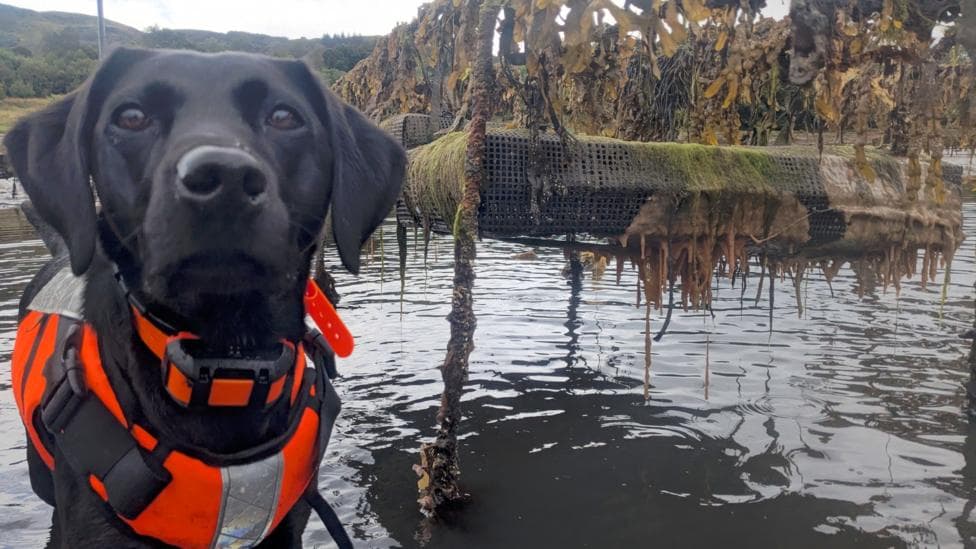
A working dog from the Scottish Highlands has been named animal of the year by a charity for her success in tracking down an invasive marine creature known as the carpet sea squirt, or colloquially as "sea vomit". The six-year-old black labrador, Sgiath, will receive the award from the International Fund for Animal Welfare (IFAW) at a ceremony on 15 October 2026 at BAFTA London, becoming the UK's first dog trained specifically to hunt this destructive organism.
Operating at low tide alongside her owner, Dr Texa Sim, Sgiath has located hundreds of colonies of the carpet sea squirt, which can smother and kill native species if left unchecked. The organism is particularly damaging to coastal wildlife and local economies, and efforts to control these problematic marine invaders cost millions of pounds annually across Europe.
Dr Sim, a marine ecologist based near Glencoe, has worked with Sgiath since the dog was a puppy.
"She's a natural,"Dr Sim says proudly.
"Sgiath is incredibly clever. Her problem solving and her ability to take on new challenges and learn so quickly are just phenomenal, and it's so amazing to watch."
How was Sgiath trained for this unusual role?
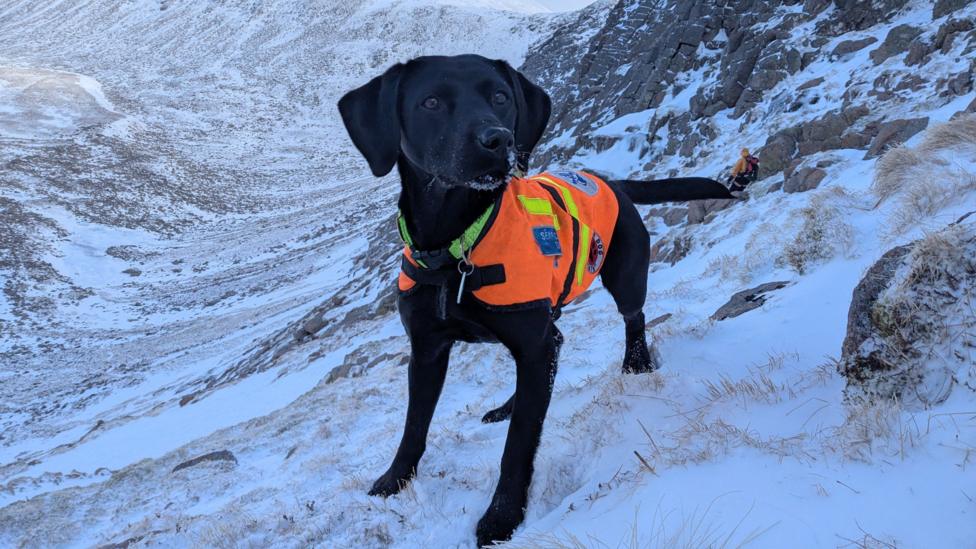
Originally trained as a mountain rescue dog, Sgiath proved so capable that Dr Sim recognised her scent-detection abilities could be applied to marine conservation. The labrador has been trained to recognise the distinctive odour of the carpet sea squirt and now joins her owner on beaches to identify infestations that would otherwise go unnoticed.
Dr Sim explained that she trains Sgiath to give what is known as a
"passive indication"when she finds the sea squirt.
"It's a kind of a stillness, or a stare - a sit stare, or just a freeze stare."This quiet approach differs markedly from Sgiath's mountain rescue training, where she is taught to bark and bounce around to attract attention to lost hikers on mountainous terrain.
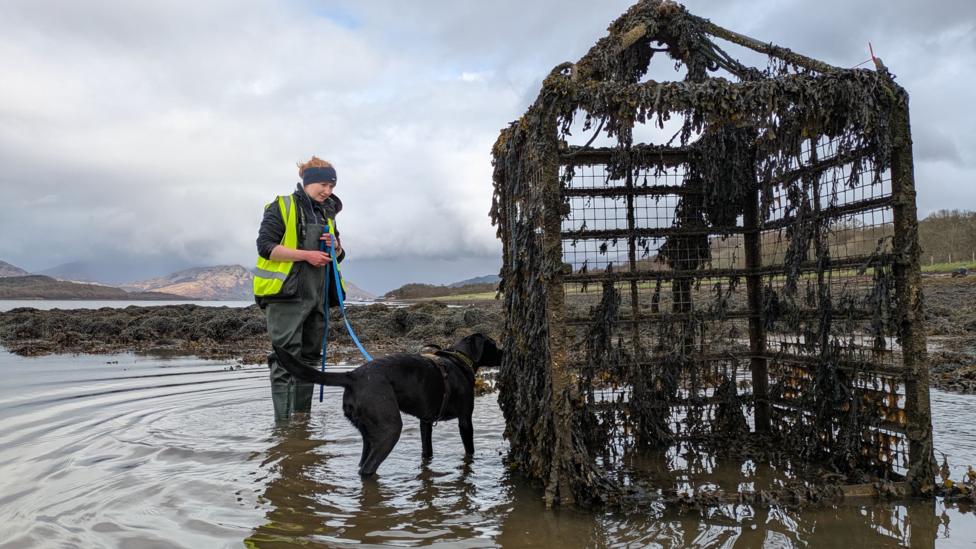
Dr Sim notes that Sgiath is consistently accurate when pointing out a sea squirt, which can be extremely difficult to spot as it resembles slime among seaweed and on structures like pontoons and oyster cages.
"When I first started this project, I genuinely didn't know whether it would work,"Dr Sim reflected.
"No one had really explored whether dogs could help tackle this problem in the marine environment. It began as a proof-of-concept project and has exceeded every expectation I had."
What makes carpet sea squirt such a threat?
Carpet sea squirt, formally named Didemnum vexillum, is believed to have originated in Japan and first arrived on the shores of southern England and Wales in 2008. The organism can appear in various shades ranging from orange to cream and has since spread to several seaside locations across the UK.
The species reproduces rapidly during warmer summer months, and with rising sea temperatures, marine scientists fear it could expand its range further. According to UK government environmental guidance, carpet sea squirt spreads through multiple routes including fouled boat hulls and fishing gear, contaminated shellfish transfers, and fragments carried by ocean currents.
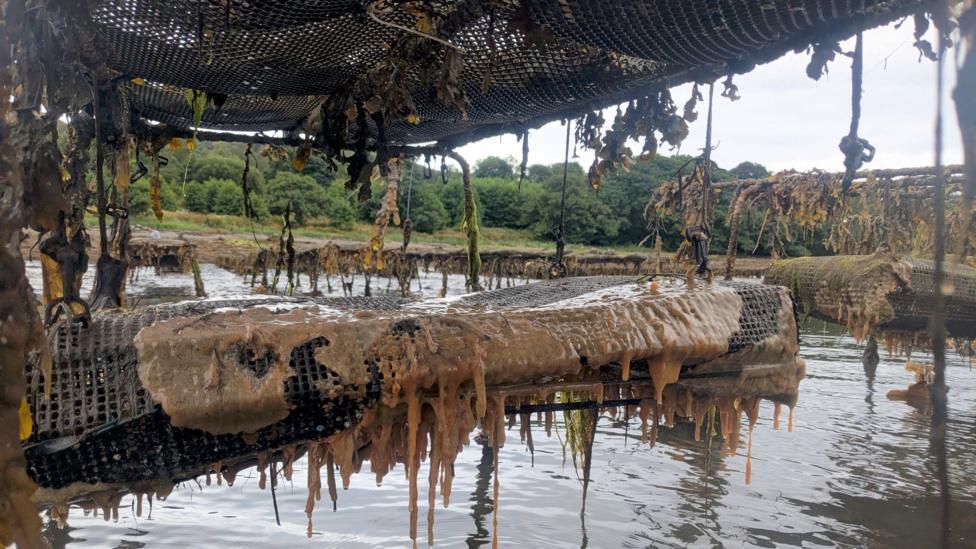
Dr Martyn Kurr, a marine biologist from Bangor University, explained that non-native or "biofouling" species like the carpet sea squirt can outcompete native wildlife for valuable nutrients.
"These species also clog up aquaculture pens, marine infrastructure, and machinery such as boat propellors,"he said. Control and eradication become increasingly difficult once the species becomes established; a long-running effort at a North Wales marina has cost approximately £800,000 and reduced, but not eliminated, the infestation.
How does Sgiath's detection work compare to other methods?
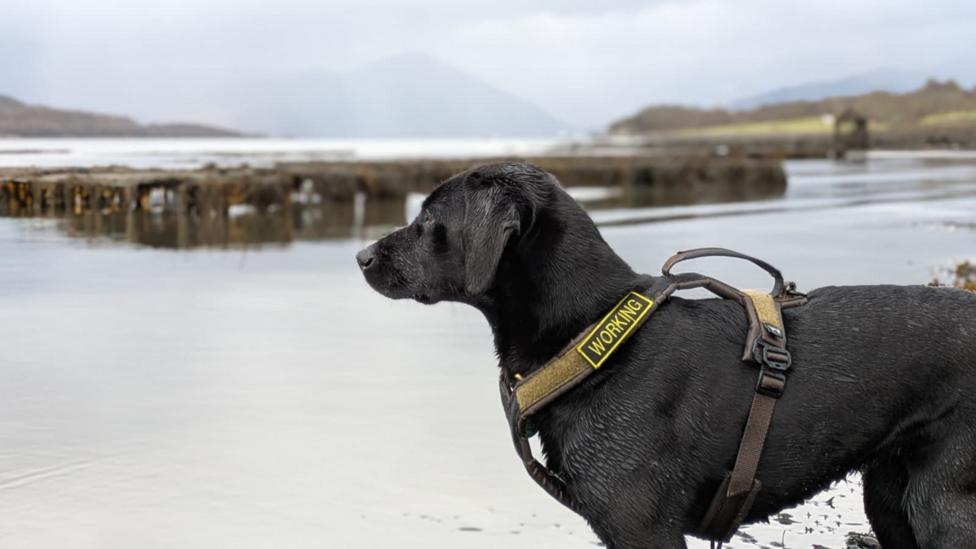
Dogs' scent detection skills have long been employed in conservation work on land, including tracking endangered species and investigating environmental crime. At low tide, Sgiath can, as Dr Sim describes it,
"dive down under the seaweed"to conduct surveys.
"She just does a survey with her nose, essentially, she can pinpoint exactly where it is, so it's much easier,"Dr Sim explained.
Dr Kurr noted that scientists are only beginning to recognise that
"these wonderful animals can smell changes in water that signal a marine invasion which otherwise might have gone unnoticed"."He added:
"It's fantastic to see Sgiath get this much deserved award, and I'm very excited to see what other wonderful work we can do with sniffer dogs."
What other dogs are being trained for this work?
Sgiath is not alone in this emerging field. A separate detection dog named Uisge is also being trained to detect carpet sea squirt and the invasive American slipper limpet; Uisge's name means "water" in Gaelic. Both dogs are working animals driven to perform their duties through treats and play.
When not out locating lost people or marine creatures, Sgiath enjoys relaxing in her dog blanket at home. Dr Sim shares her household with Sgiath and her younger labrador Uisage, both of whom are trained working dogs committed to their conservation roles.
What happens next?
Sgiath and Dr Sim are scheduled to receive the IFAW Animal of the Year award at a ceremony on 15 October 2026 at BAFTA London. The recognition marks a significant milestone in the application of canine detection to marine conservation, opening possibilities for expanded use of sniffer dogs in tackling invasive species across UK waters.
Key Facts:
- Sgiath is the UK's first dog trained to detect carpet sea squirt, an invasive marine organism that damages native species and coastal economies
- The six-year-old labrador has located hundreds of colonies of the sea squirt, which can be extremely difficult to spot visually among seaweed and marine infrastructure
- Carpet sea squirt arrived in UK waters in 2008 and has since spread to multiple locations; control efforts cost millions of pounds annually across Europe
- Sgiath was originally trained as a mountain rescue dog before her scent-detection abilities were applied to marine conservation work
- Additional detection dogs, including one named Uisge, are now being trained to identify carpet sea squirt and other invasive marine species