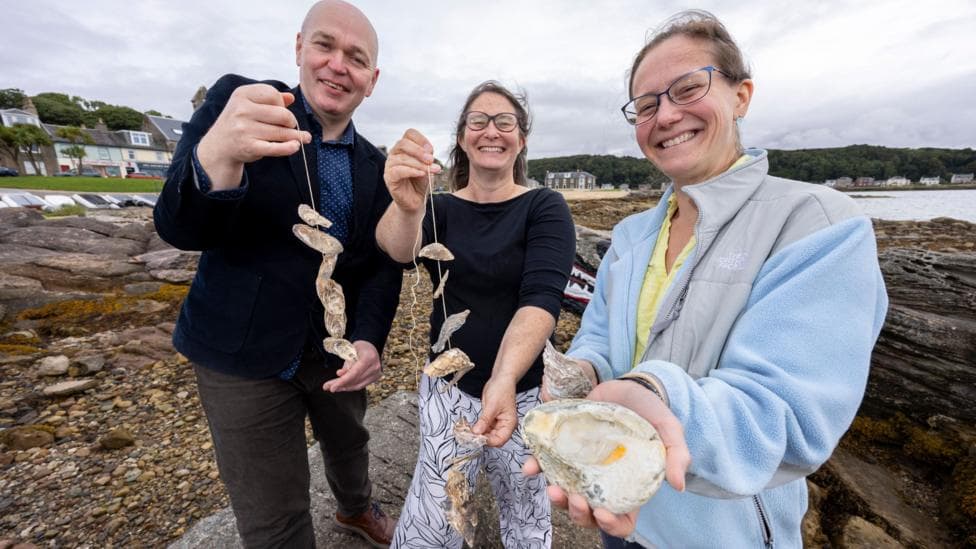
The Great Barrier Reef may be the world's most famous underwater ecosystem, but hidden in UK waters lies an ancient marine world many people have never heard of. In maerl beds, carpets of coral-like seaweed create some of the richest habitats in the sea, and after more than 40 years Prof Christine Maggs has helped solve the mystery of a tiny pink-striped seaweed she first spotted while studying one such bed for her PhD.
The discovery has now shown that the seaweed is a species unknown to science, and a sample has joined the Natural History Museum's official collection.
What are maerl beds?
Maerl beds may closely resemble corals, but they are actually thousands of pieces of free-living calcified seaweed that can interlock to form a carpet full of life. 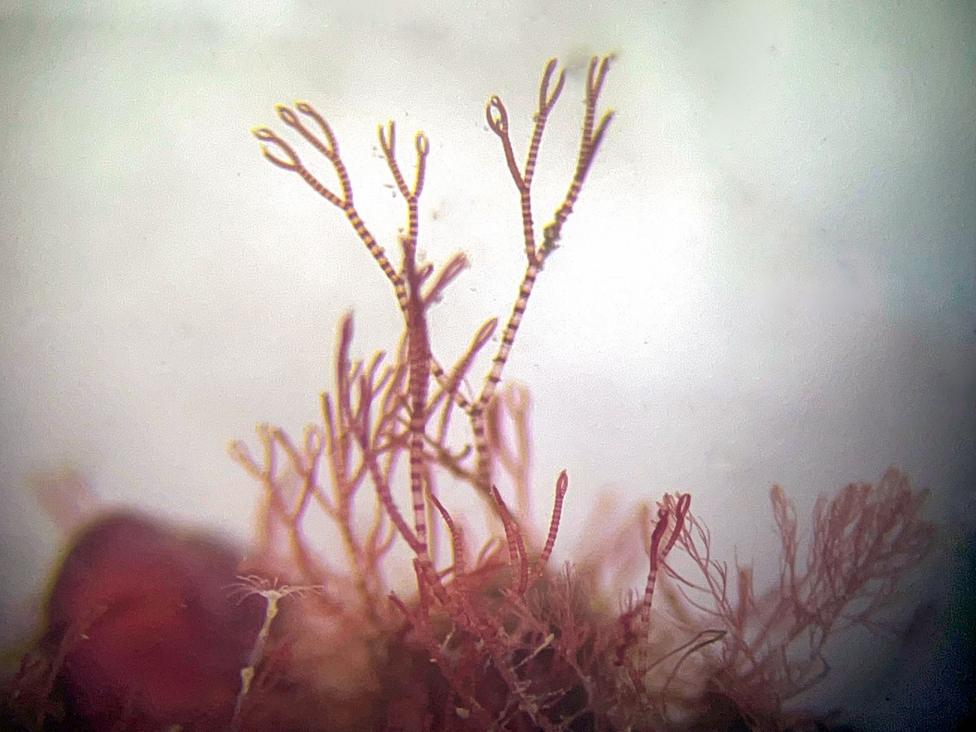
Hours of trawling through the literature seemed to confirm that no-one else had identified the small seaweed Prof Maggs found living on maerl either, leading her to suspect it was new to science. But she needed a larger piece for formal identification, and the search continued after her PhD.
The tiny seaweed stayed with her throughout her career, appearing only in fleeting glimpses, including once on an underwater animal called a sea squirt, but never in enough material to pin down its identity. 
How was the species finally found?
Two years ago, researchers surveying maerl beds in Cornwall found a sample they thought might be Prof Maggs' elusive seaweed. Prof Maggs bought a wine fridge in anticipation, the perfect dark, cool environment to store it while tests were carried out to prove whether it was indeed a new species.
"I just kept hoping that I would find out, it's been over four decades,"
She has now shared the discovery exclusively with the BBC, and a sample of the species has joined the Natural History Museum's official collection. 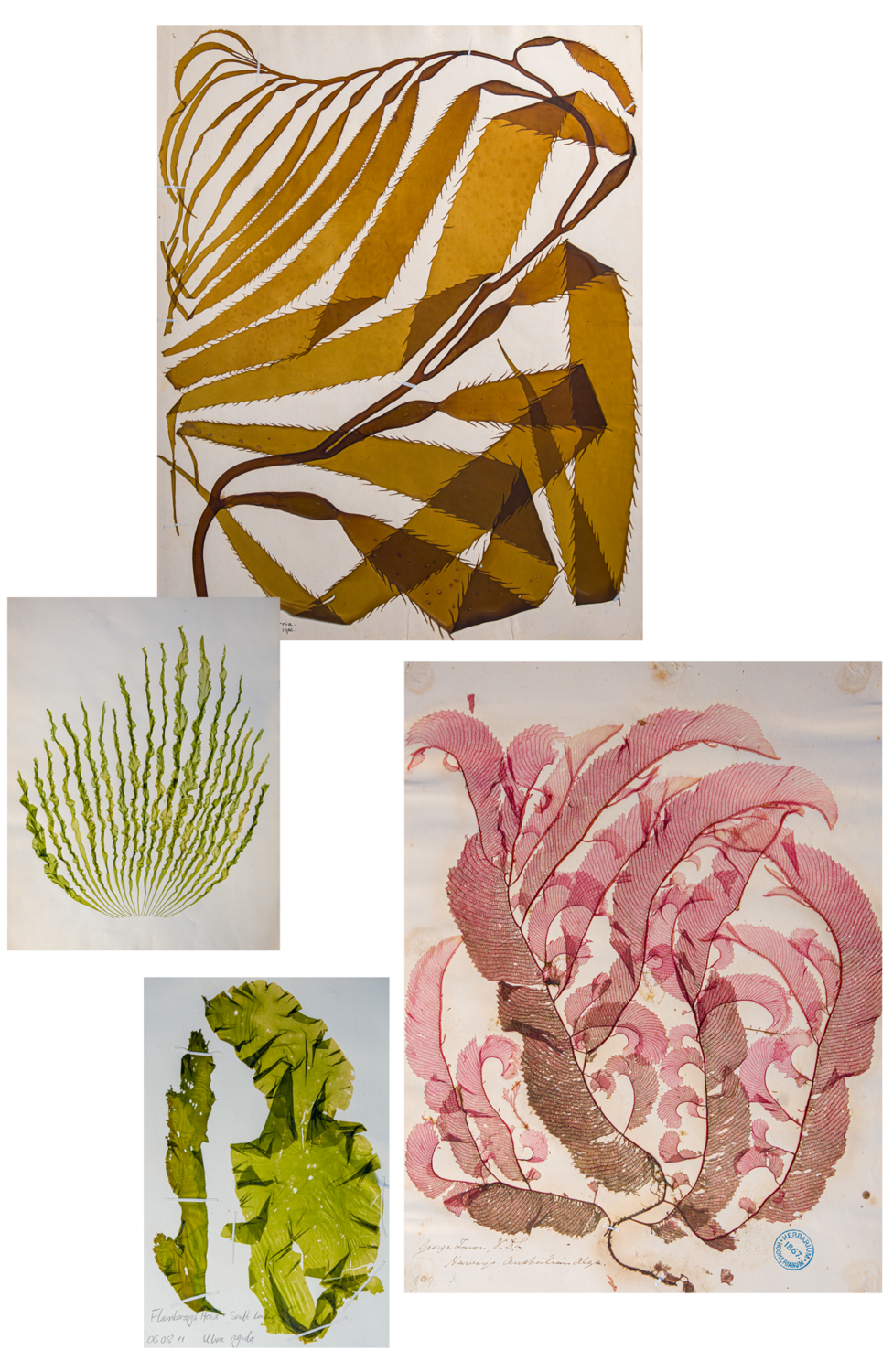
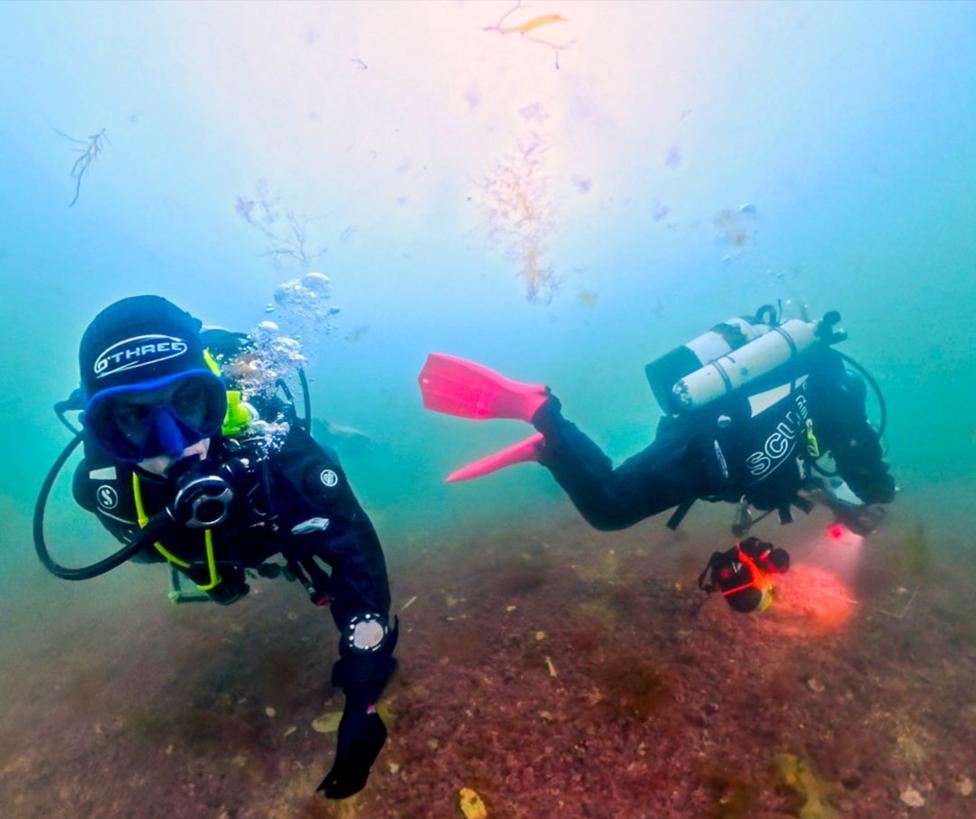
The scientific divers who found the sample were mapping and analysing seaweeds to check on the health of Cornish maerl beds, in a project organised by Natural England. This kind of diving is specialised and expensive, involving difficult logistics and a large amount of equipment, but those involved say it is extremely rewarding.
"It's magical. You're just at one with nature and in your own little world really,"
They have seen spider crabs taking a stroll, starfish, king scallops and goby fish. 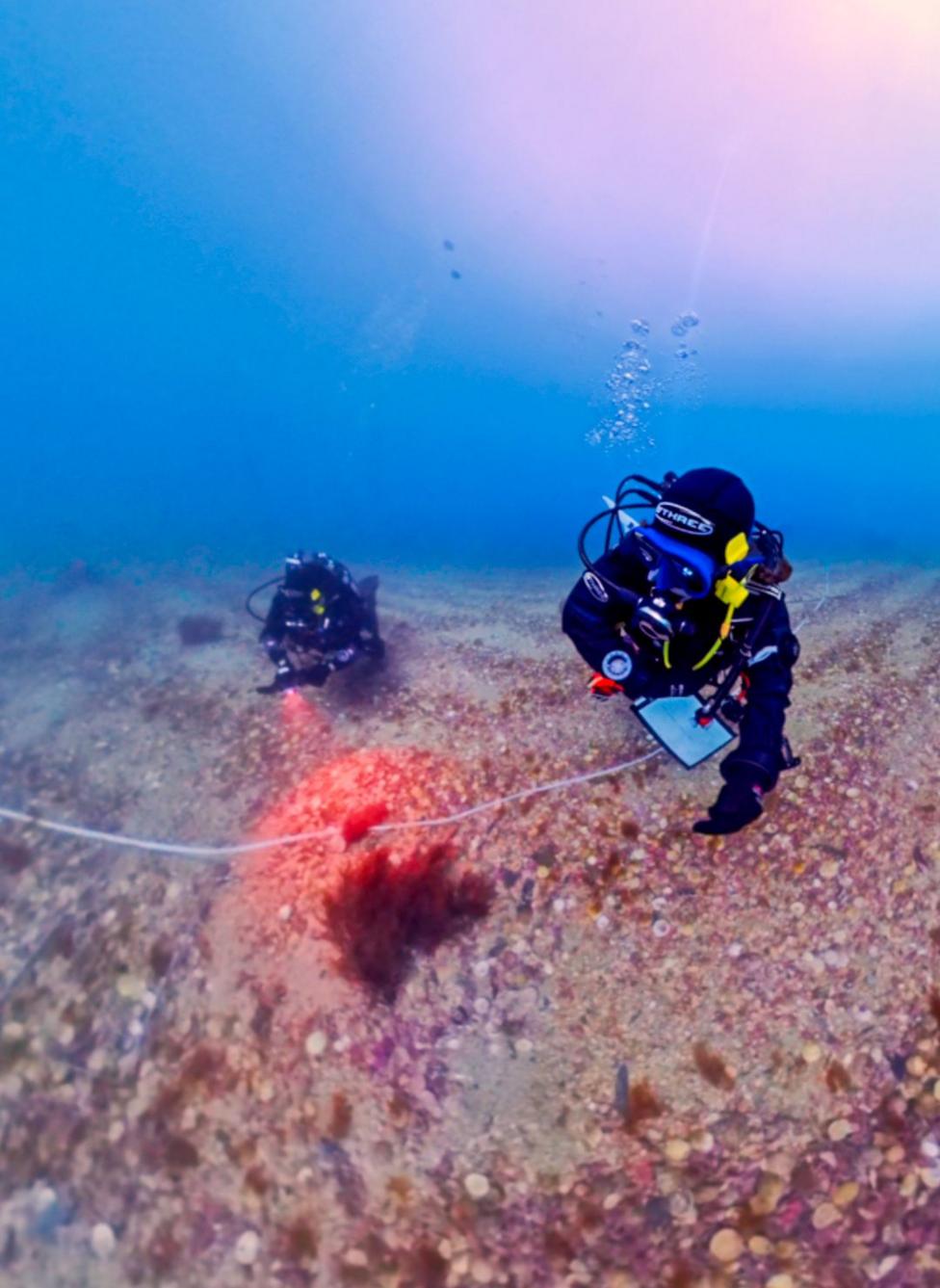
Among the bags brought up on one Cornish trip were cuttings of a small red algae pink-banded with pincer tips. 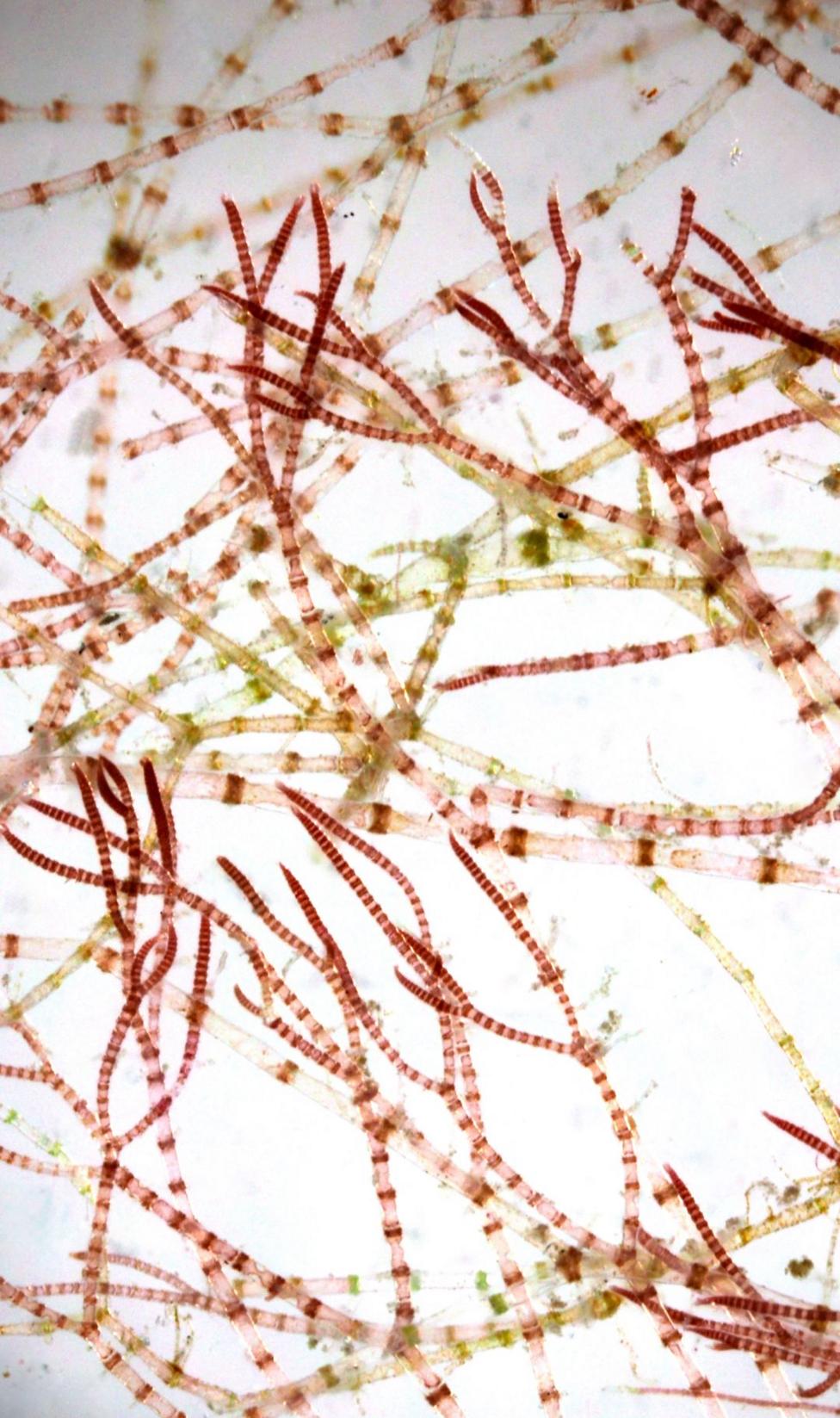
Francis Bunker, a freelance and independent marine biologist, kept finding the tiny seaweed in samples he collected on that survey.
"I suppose you've got to be a bit nerdy,"
"You've got to be awed by it all, which I never cease to be."
He suspected the tiny seaweed might be what Prof Maggs had been searching for over many years. He gathered as much as he could and sent it to her in London.
How was it confirmed?
Prof Maggs needed to grow the seaweed large enough to be DNA sequenced, so she turned to her trusted cool chamber, the wine fridge. 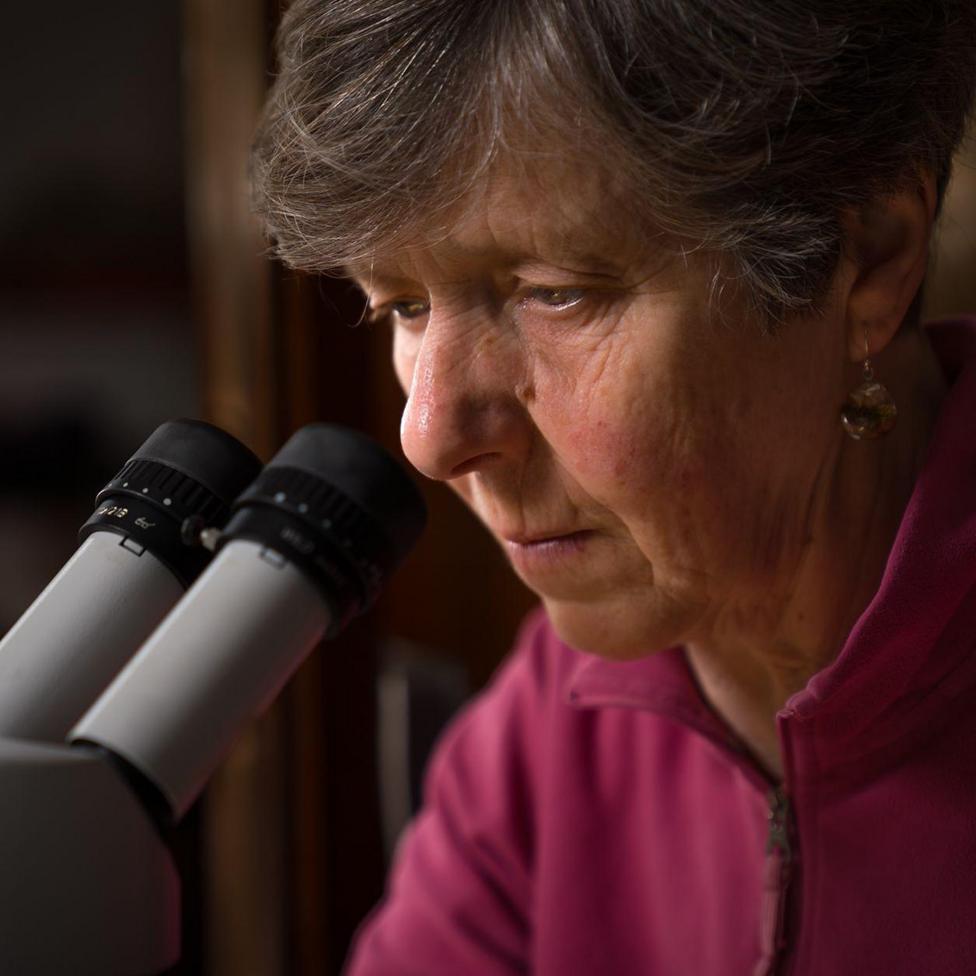
"This particular seaweed is so small I needed to get some molecular data,"
"That's why this has taken me 40 years."
With the help of Prof Beatriz de Barros Barreto, who worked on the DNA sequencing, Prof Maggs put the pieces of the puzzle together and confirmed the seaweed is new to science.
"We knew that maerl was a rich, biodiverse habitat, but we didn't necessarily realise that we'd be still finding new species that live on that maerl," Prof Maggs says.
"It's great,"
"I think it's what spurs you on really, finding a new species. It's like the icing on the cake, or the cherry on top."
Prof Maggs' findings are soon to be published in the peer-reviewed journal Phycologia.

Seaweeds are among the most ancient forms of life, having developed more than 1bn years ago, and many provide a critical food source for fish as well as a place for them to lay their eggs.
For humans, the abundant minerals and anti-inflammatory properties of some seaweeds have led to extracts being used in medicines ranging from acid reflux treatments to wound dressings.
In the vaults of the Natural History Museum, surrounded by a collection of seaweed pressings the new species is joining, Prof Juliet Brodie, a leading seaweed expert, says seaweeds must be protected and valued.
"We really have to look after seaweeds, we really have to love them,"
Finding a new species, she says, is important not only because it is exciting, but because it helps monitor the health of maerl over time.
"They're really precious,"
"I've often pondered to myself, what would the world be like without seaweeds? You would be taking away your nurseries for some of your economically important fish. But you would also [remove] the immense diversity that makes our world function."
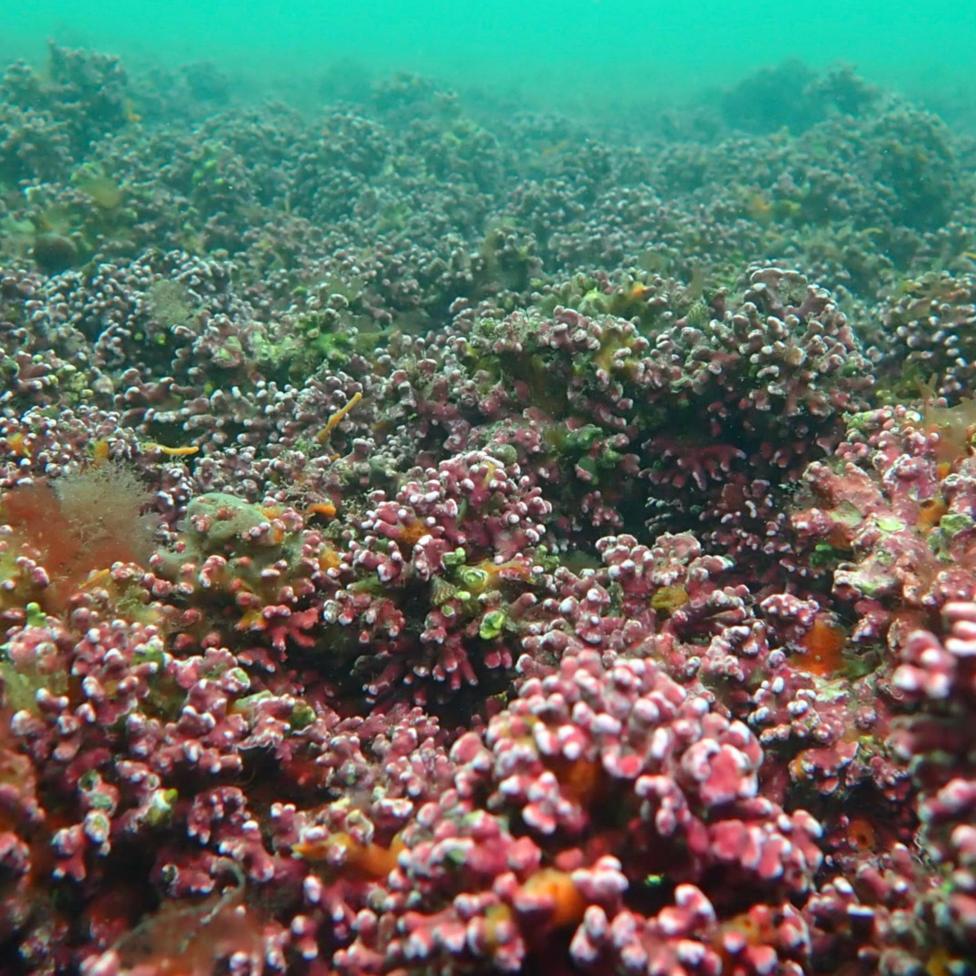
Prof Craig Schneider, professor of biology at Trinity College Connecticut, who was not involved in the study, says the discovery of the new species is "significant" to science.
"significant"
He said it could also add to interest in protecting maerl beds, which were "already of the greatest importance to all of the other plants, animals and microbes in the ecological community that they support".
Maerl beds are rare in Britain. They are classed as a threatened and declining habitat under the OSPAR convention, an international agreement for environmental protection in the North-East Atlantic.
There are currently four protected maerl sites in the UK, including the Fal and Helford Special Area of Conservation (SAC).
But the less studied beds off the south Cornish coast, where the new species has also been found living on the maerl, are not formally protected.
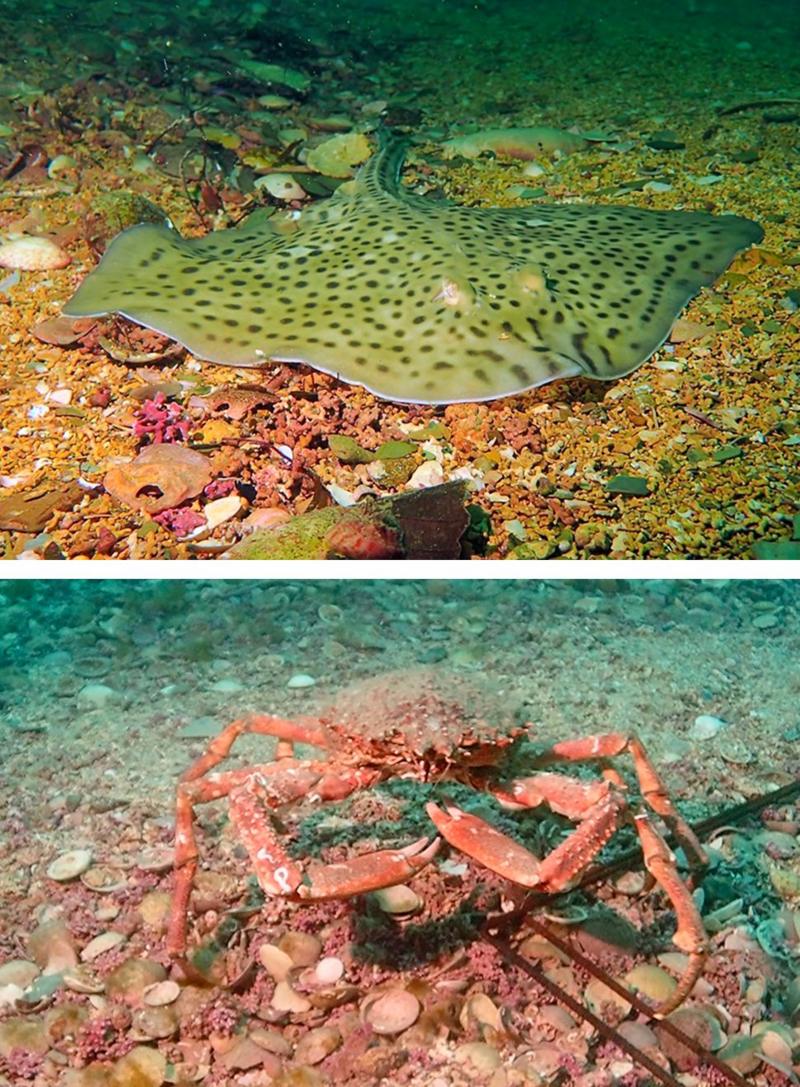
Defra says it may not be necessary to make this area of maerl beds an SAC, "nor is there a requirement, to protect all examples of a species or habitats."
Part of the reason, it says, is balancing nature recovery with "wider priorities including offshore wind development and fisheries."
While protection is debated, the researcher-divers continue their work to document and potentially recover new species, and perhaps the most exciting part, to name them.
Prof Maggs' new species will be known scientifically as ceramium ruenessianum, in honour of her colleague who has studied this type of species for the last 40 years.
As for the seaweed's common name, a firm favourite among the scientific divers is "pink-zebra weed". Other ideas include "pink-banded bandit" and "ribbon claw". Prof Maggs is inviting the public to make their suggestions. 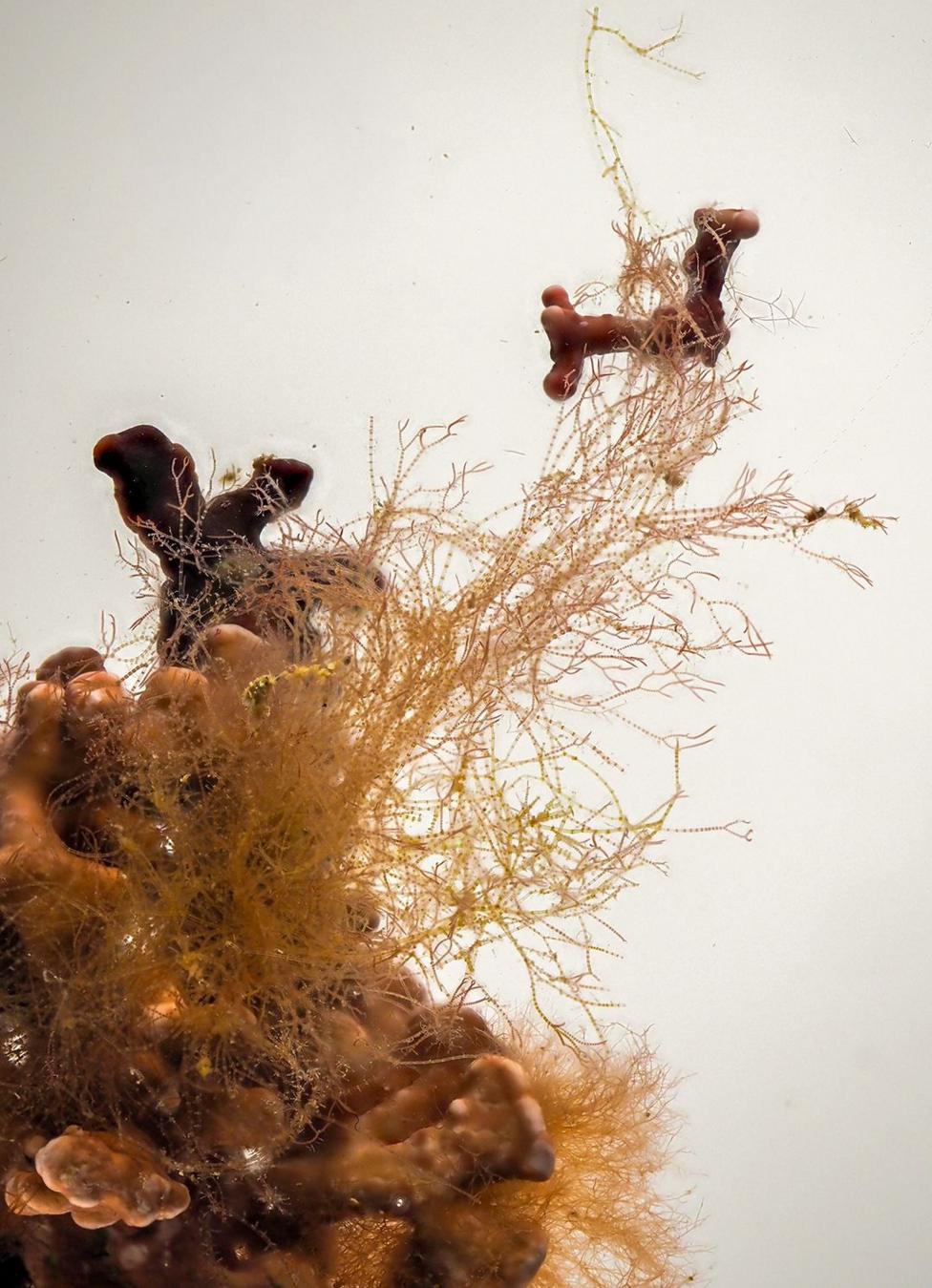
Key Facts
- Prof Christine Maggs first found the tiny pink-striped seaweed while studying a maerl bed for her PhD 40 years ago.
- Researchers in Cornwall found a sample two years ago, enabling DNA sequencing and confirmation that it is a new species.
- The species will be known scientifically as ceramium ruenessianum.
- Maerl beds are rare in Britain and are classed as a threatened and declining habitat under the OSPAR convention.
- Prof Maggs is inviting the public to suggest a common name; "pink-zebra weed" is a scientific divers' favourite.