Firefighters have tackled a small blaze at the site of a coastal wildfire that burned for five days on the Isle of Wight. The fire at Headon Warren on the West Wight coast started on 23 July and destroyed about nine hectares (22.2 acres) of heathland.
Hampshire & Isle of Wight Fire and Rescue Service said the fire, which crews dealt with about midday on Tuesday, involved peat burning below ground. The service said peat can smoulder for a long time when heat from a fire is trapped.
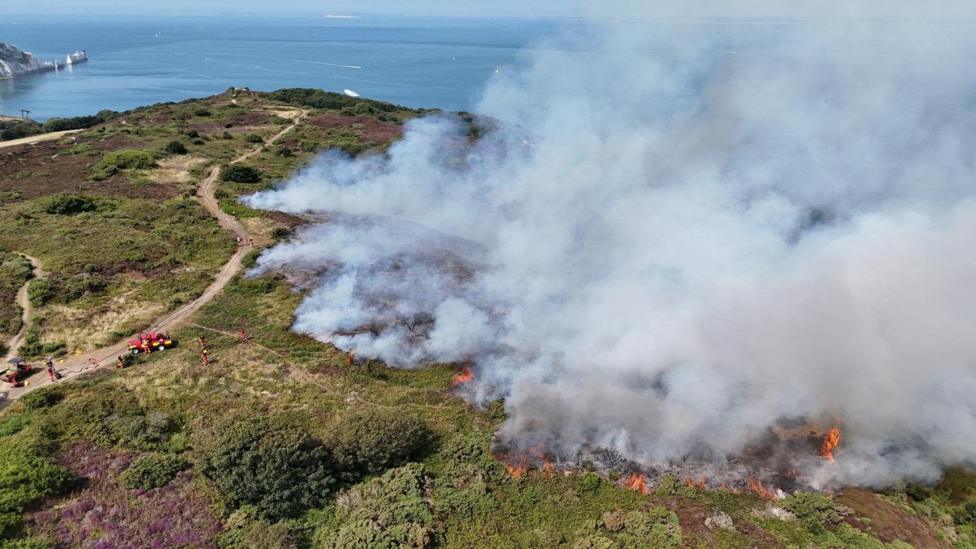
The fire's remote location, steep slopes and nearby cliff edge made it difficult to tackle. At its height, 80 firefighters battled the blaze, and a helicopter was brought in to drop seawater on the flames.
About 30 hectares (about 74 acres) of Headon Warren, which is cared for by the National Trust, is farmed by Warren Farm as part of a long-term partnership with Natural England to restore rare maritime heathland and limestone grassland habitats.
The land in West Wight, home to the Isle of Wight's largest maritime heathland and rare limestone grassland, will take years to recover, the National Trust has said.
Paul Davies, the island's National Trust countryside manager, said a large number of nesting birds will have died, as well as reptiles, small mammals and amphibians. Before the fire, the area's remote location meant there was little disturbance from walkers and dogs, allowing wildlife to thrive.
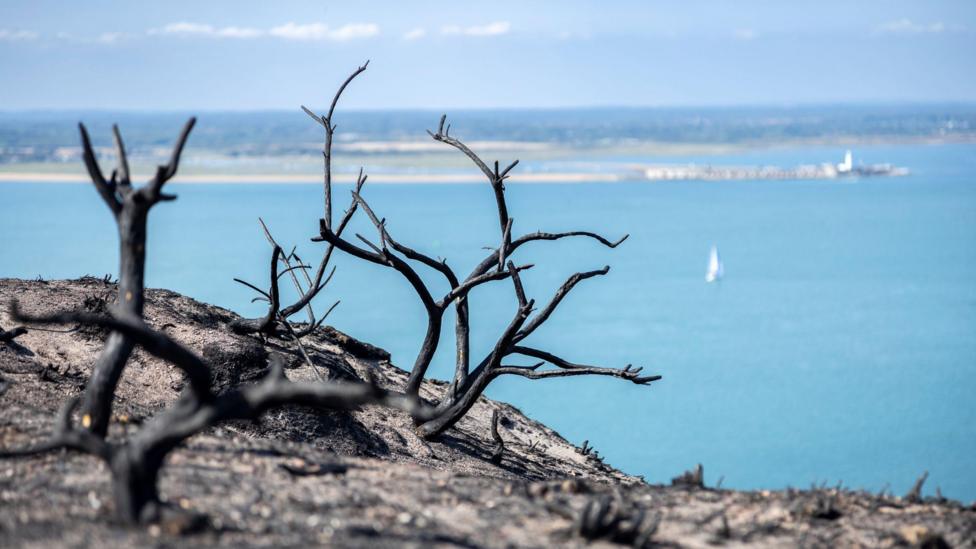
It could take three to four years for the vegetation to recover, the National Trust says
Footpaths have reopened, but walkers are being asked to avoid any burnt areas to protect wildlife and allow the site to recover.
How serious was the damage?
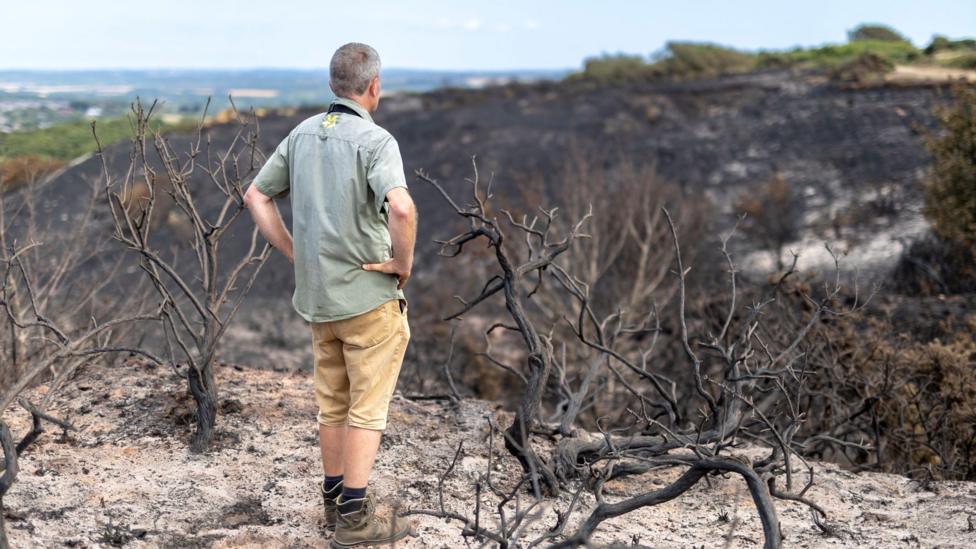
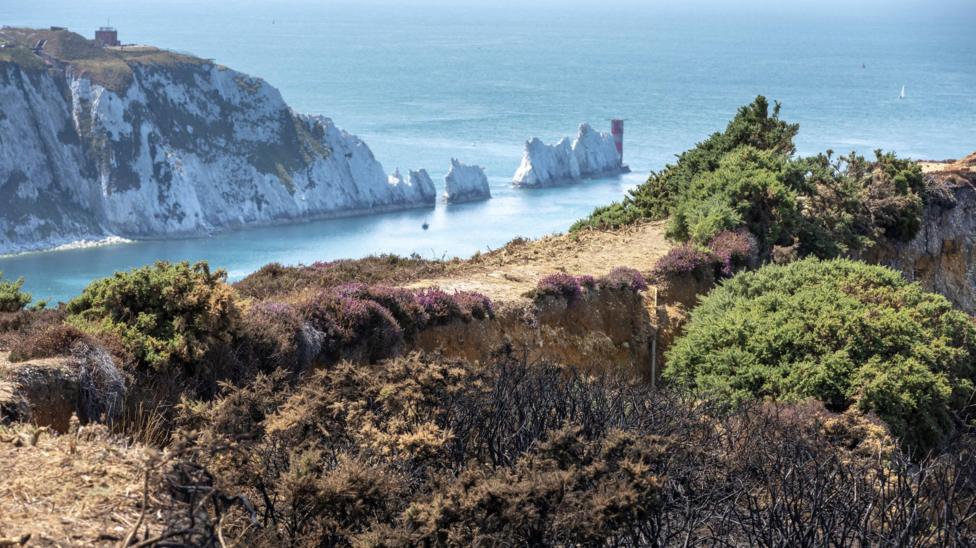
The heathland looks
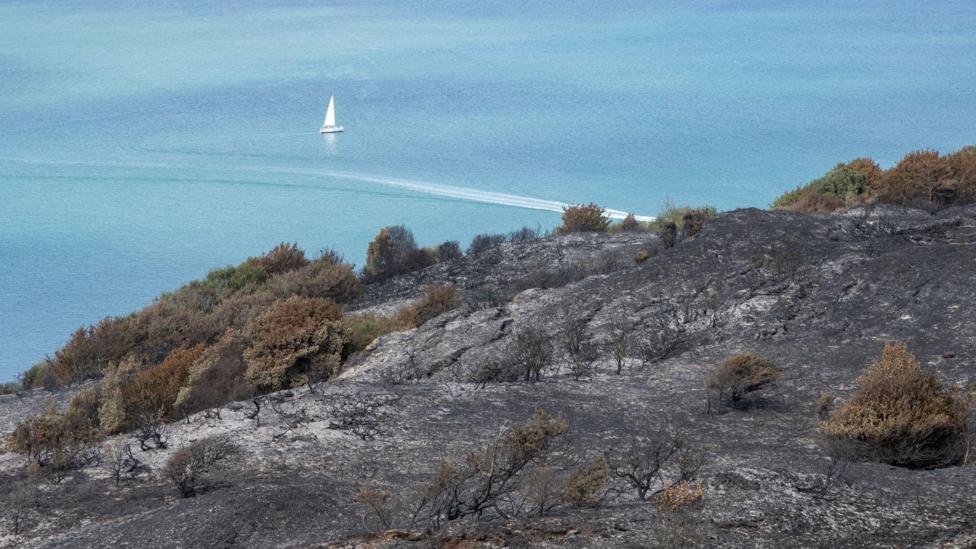
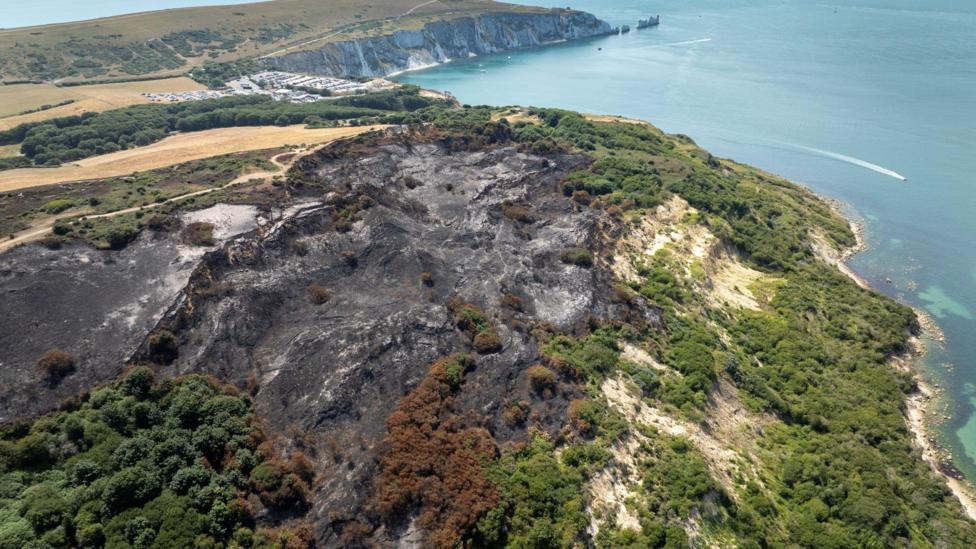
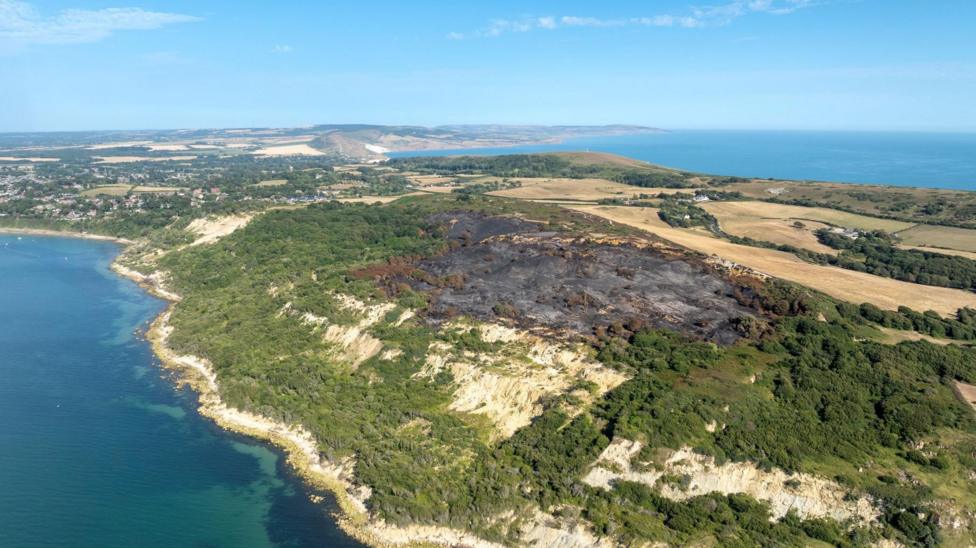
bleak, Paul Davies says, after the fire ravaged nine hectares. Looking out towards The Needles lighthouse, burnt land is visible across the site.
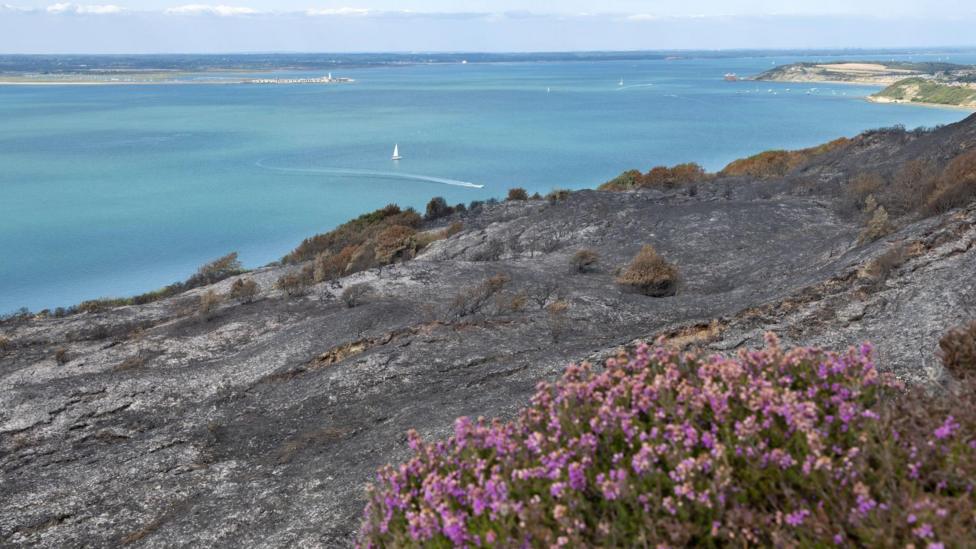
The blaze destroyed about nine hectares (22.2 acres) of heathland, leaving the landscape badly damaged in an area described as nationally important maritime heathland and rare limestone grassland.

The fire service said the difficult terrain and the cliff edge made it hard to get crews and equipment into position. Isle of Wight firefighters were supported by crews and engines ferried over from the mainland, while farmers worked to create fire breaks to stop the fire spreading.
At its peak, 80 firefighters tackled the blaze with farmers working to create fire breaks to stop the fire spreading
Fire service footage showed a helicopter dropping sea water on the flames as crews fought to contain the wildfire and protect the wider site.
What happens next for the site?
The National Trust says there is not a lot it can do to hasten recovery. Davies says vegetation recovery could take three to four years, and the area is expected to remain affected for some time.
Davies says there is not a lot they can do to hasten recovery
Davies has expressed his gratitude to businesses, farmers and the Rapid Relief Team, which worked alongside the National Trust and fire service throughout the fire.
Paul Davies has expressed his gratitude to businesses, farmers and the Rapid Relief Team, which worked alongside the National Trust and fire service throughout the fire
The site is one of the Isle of Wight's most important heathland habitats, and the National Trust has said recovery will be slow because the fire damaged an area that supports rare wildlife and sensitive vegetation. The burnt land is expected to remain visible for a considerable time as the habitat rebuilds.
Wildlife had thrived there before the fire because the remote setting meant there was little disturbance from walkers and dogs. The National Trust and fire service have asked people to stay away from damaged ground so the remaining habitat and recovering species are not disturbed.
Headon Warren is a nationally important maritime heathland and rare limestone grassland.
The area is being managed through a long-term restoration partnership aimed at restoring rare maritime heathland and limestone grassland habitats, and the recent fire has set back that work significantly.
Key Facts
- The fire at Headon Warren started on 23 July and burned for five days.
- About nine hectares (22.2 acres) of heathland were destroyed.
- At the height of the blaze, 80 firefighters were deployed and a helicopter dropped seawater on the flames.
- The National Trust says vegetation recovery could take three to four years.
- Paul Davies said a large number of nesting birds, reptiles, small mammals and amphibians are believed to have died.