

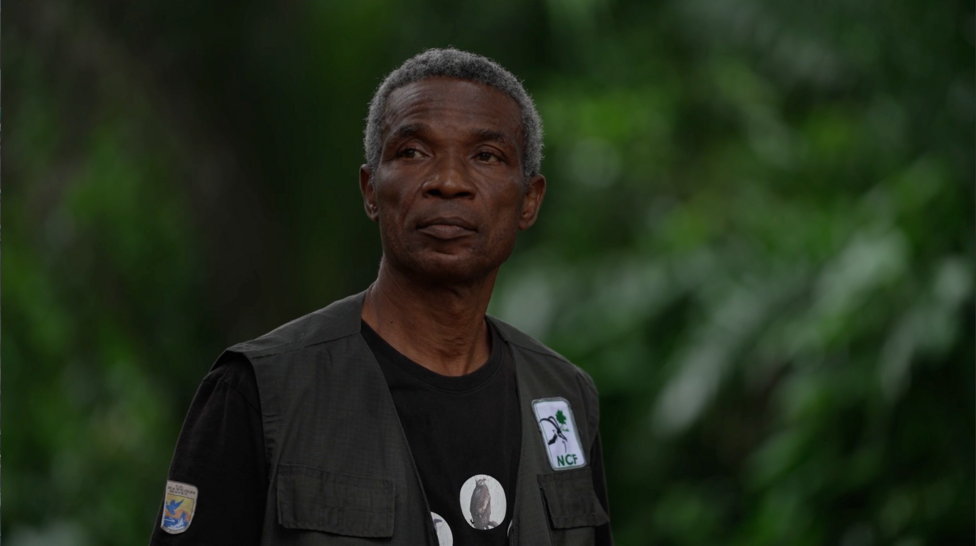
In a sacred forest in south-eastern Nigeria, a man known locally as the Vulture King is leading a grassroots effort to protect one of the region's last strongholds for vultures, a bird species now at severe risk of disappearing from West Africa entirely. Chukwuemeka Igwe, a resident of Awka-Etiti in Anambra State, has spent six years working with the Nigeria Conservation Foundation (NCF) to shield the birds from outside hunters, and local monitors say numbers in the town have risen from about 20 in 2017 to more than 160 today.
Vultures are widely feared and associated with death across much of Nigeria, yet conservationists say their disappearance carries serious consequences for public health, since the birds remove carcasses that would otherwise spread disease. Across the continent, hunting tied to traditional beliefs, habitat destruction and poisoning have pushed several vulture species toward extinction, prompting alarm among scientists who study the region's ecosystems.
Why do people in Awka-Etiti protect vultures rather than hunt them?
Residents of Awka-Etiti say the birds are tied to a local deity, Nguma, whose shrine sits within an ancient forest at the heart of the community. Locals occasionally leave fresh animal sacrifices at the shrine, and the arrival of vultures is regarded as a sign that the offering has been accepted in the spiritual realm.
"People fear the environment where the shrine is. No evil will ever happen here. So, nobody fights vultures that perch here," says Igwe.
"And there is an adage we use here that says: 'When you put down a sacrifice and you do not see vulture[s], know that something happened in the spirit world.'"
Igwe, who is in his 50s, says vultures have wandered freely alongside residents in Awka-Etiti for as long as he can recall, scavenging in the open without fear of being harmed.
What ecological role do vultures actually play?
Vultures consume dead animals within hours of death, preventing carcasses from becoming breeding grounds for dangerous bacteria. NCF conservation biologist Stella Egbe says the consequences of losing them are already visible elsewhere.
"In places where the total collapse of vultures has happened, there has been impact of rising zoonotic diseases," Egbe says.
Their powerful stomach acids let them safely digest infected carcasses, helping to contain diseases such as anthrax and rabies. Without vultures to perform this task, experts warn that ecosystems lose a key natural safeguard against disease spread. A recent piece on why vultures and other misunderstood creatures deserve more appreciation made a similar case, arguing that species widely regarded as unpleasant or frightening often perform vital ecological functions that go unnoticed until they vanish.
How severe has the decline become?
The scale of the collapse is stark. According to a June 2026 Mongabay report, Nigeria's vulture population has fallen to just two surviving species in recent surveys — the critically endangered hooded vulture and the palm-nut vulture — down from at least seven species recorded in the 1970s, according to a separate 2025 Mongabay report. A July 2026 Mongabay interview further notes that many of West Africa's historic vulture species have been locally wiped out across much of the region, with the surviving populations still in sharp decline, according to Mongabay's interview with conservationist Michael Williams.
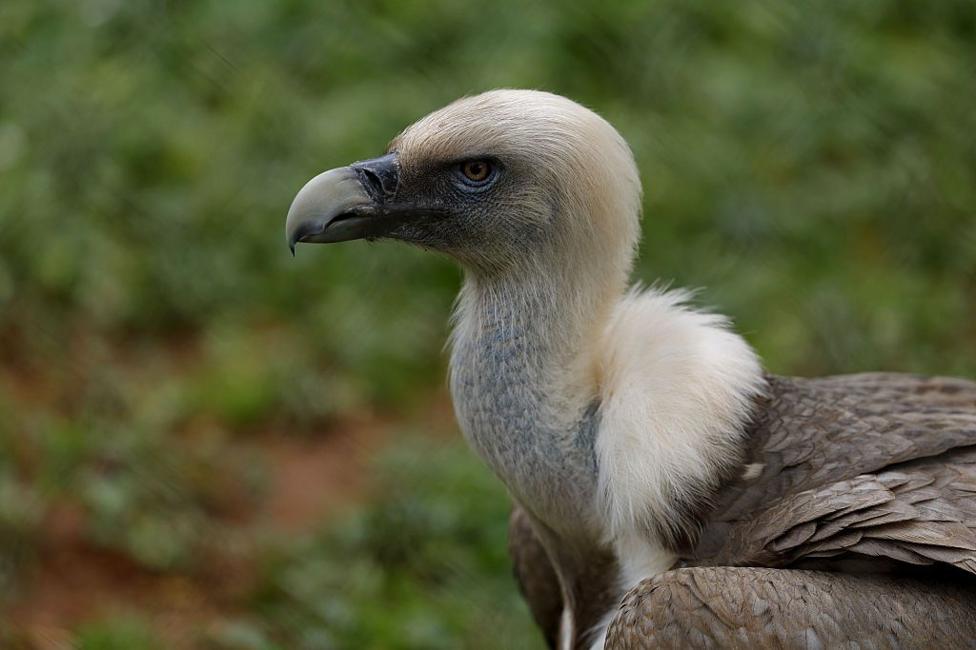
The trend is documented in granular detail in Plateau State, where a 2025 study found a 94% decline in hooded vultures over seven years, from 275 birds in 2017 to just 18 in 2024, with no palm-nut vultures recorded at all in the final year, according to Mongabay. Nigerian conservation reporting also indicates that the south-east — particularly Enugu, Anambra and Imo states — is now essentially the only zone in the country still hosting vultures in any noticeable numbers, according to a Nigerian conservation report.
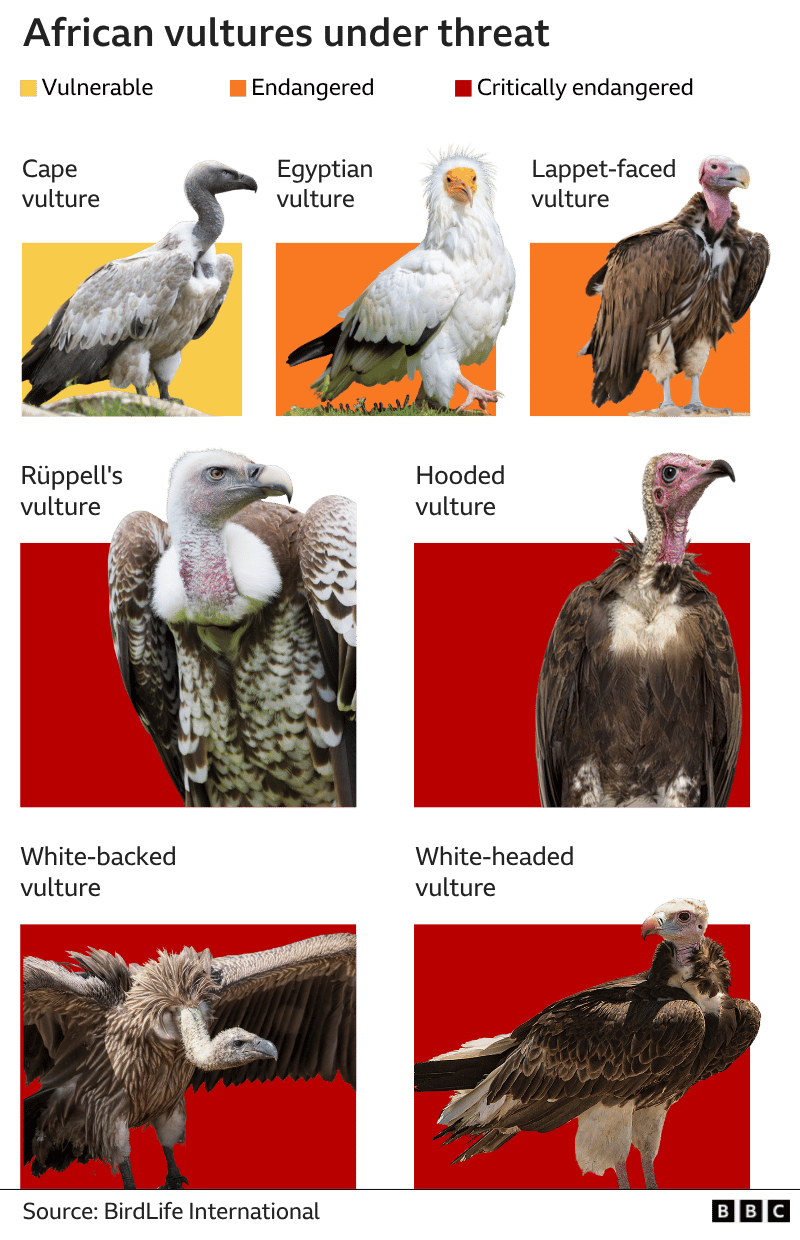
Seven vulture species across Africa are now classified as globally Endangered or Critically Endangered by BirdLife International, the authority for birds on the International Union for Conservation of Nature's Red List. A recent BirdLife report found that African vulture populations have dropped by between 80% and 97% over the past 50 years, and the organisation says that in January 2020 more than 2,000 hooded vultures were found dead in Guinea-Bissau, many with their heads removed — a pattern researchers attribute to belief-based practices rather than natural causes.
What is driving the losses beyond ritual use?
Poisoning is estimated to cause 60% of vulture deaths in Africa, according to BirdLife International. Rapid urban expansion across the continent has also destroyed many of the tall trees vultures depend on for nesting, while the NCF says habitat loss, the bushmeat trade and persecution of vultures as pests compound the threat alongside belief-based poisoning, according to the Nigeria Conservation Foundation.

The trade in vulture body parts has also become markedly more lucrative. Egbe says dead adult vultures in Nigeria once sold for roughly 25,000 to 30,000 naira ($18 to $22; £13 to £16) each, but can now fetch up to 200,000 naira ($145; £107) per bird. Eggs and nests are increasingly targeted too, a development Egbe calls catastrophic given how slowly vultures reproduce.
"And so you imagine what will happen if a nest is removed and eggs are removed. That means a pair of vultures will not have a next generation for that year. So in addition to hunting, you're removing their habitat, you're removing their homes," Egbe says.
Adult vultures typically do not reach sexual maturity until between five and seven years of age, and produce only one chick roughly every one to two years. Many young birds fail to survive their first year, making population recovery extremely slow even where protection succeeds.
Is there any sign the belief-based trade is easing?
There are early, tentative signs of change. Some practitioners of belief-based practices in southern and eastern Nigeria have begun shifting away from vulture parts toward plant-based alternatives, according to the June 2026 Mongabay report. Nigerian reporting has also traced how vultures elsewhere, including the Niger Delta, have been targeted specifically for traditional medicine and ritual use, according to a separate Nigerian conservation report, underscoring how uneven progress remains across the country.
What is being done to stop illegal trafficking?
Nigeria has become a significant transit point for the illegal wildlife trade, conservationists say, owing partly to its biodiversity and porous borders. Abdullahi Maiwada, a spokesman for the Nigerian Customs Service, says his agency is working to curb smuggling of protected species.
"We are doing everything possible to make sure that the smuggling of items, including vultures, including donkeys, and other species outside the country is suppressed to the barest minimum," Maiwada says.
He says customs officials have carried out seizures of protected wildlife and supported related prosecutions, part of Nigeria's obligations as a member of the Convention on International Trade in Endangered Species (Cites), which bars cross-border trade in endangered animals. Maiwada acknowledges, however, that enforcement alone will not solve the problem.
"We may not be able to do it without the cooperation or understanding of members of the community," he says. "If people understand why these species should be preserved, then our enforcement will only be complementary to those who decide to be recalcitrant."
How has community action changed Awka-Etiti?
That focus on community understanding is precisely what has driven change in Awka-Etiti. After noticing outsiders arriving to hunt the birds and vulture numbers falling, Igwe and fellow residents began actively organising to protect them.
Igwe visits markets, buses and other public spaces to explain the birds' ecological value.
"I tell them that vulture is helpful to human life," he says.
He embraces the nickname residents have given him, Ezeudene, meaning King of Vulture.
"I'm fighting to make nature exist the way it's supposed to be," Igwe says.
Working alongside the NCF, Igwe has rallied community leaders, local groups and security teams to guard against outside hunters, and local bylaws now help formalise protections for the birds. While rigorous population data remains scarce nationally, local volunteers monitoring Awka-Etiti's birds have recorded the rise from roughly 20 vultures in 2017 to more than 160 today.
"The missing vultures are almost back. If you go to the marketplace now, you see vultures. At one time they disappeared, but now they are coming back," Igwe says.
Egbe describes the town as proof that community-led conservation can work.
"What we've done in Awka-Etiti is one very good example of a success story where people have taken charge of what's going on in their environment. That makes us happy," Egbe says.
Nigeria's conservation efforts around threatened species have drawn wider international attention in recent months. Nigerian scientist Iroro Tanshi was recently awarded the Goldman Environmental Prize for her work protecting endangered bats threatened by wildfires, an effort that similarly focused on changing local perceptions of a misunderstood species and building community-led fire prevention. Conservationists say such efforts illustrate a broader pattern across Nigeria, where shifting public attitudes toward feared or misunderstood wildlife is increasingly seen as central to preventing extinction.
What happens next in Nigeria's vulture conservation effort?
Nigeria's Federal Department of Forestry developed a formal action plan to reverse the decline of vultures at a workshop held in Lagos on 1 July 2025, according to Nigerian environmental reporting. Implementation of that plan, along with efforts to curb demand linked to traditional medicine, is expected to be the focus of the next major public update on the issue.
Researchers from across West Africa are also due to meet in Abuja later this year to review the West African Vulture Conservation Action Plan, first drafted in 2022, with habitat loss, poisoning and belief-based hunting all expected to be discussed. Separately, a July 2026 Mongabay interview points to ongoing efforts to expand "belief-replacement" strategies among traditional practitioners, suggesting further outreach campaigns are likely as conservationists try to build on the plant-alternative trend already observed in parts of the country.

Key Facts
- Vulture numbers in Awka-Etiti have risen from about 20 in 2017 to more than 160 today, according to local NCF-backed monitoring.
- African vulture populations have fallen by 80% to 97% over the past 50 years, according to BirdLife International.
- Nigeria's vulture population has collapsed to just two surviving species — the hooded vulture and palm-nut vulture — down from at least seven in the 1970s, according to Mongabay.
- Hooded vultures in Plateau State fell 94% between 2017 and 2024, from 275 to 18 birds, with no palm-nut vultures recorded in the final year.
- Nigeria's Federal Department of Forestry drafted an action plan to reverse vulture decline at a Lagos workshop on 1 July 2025.


