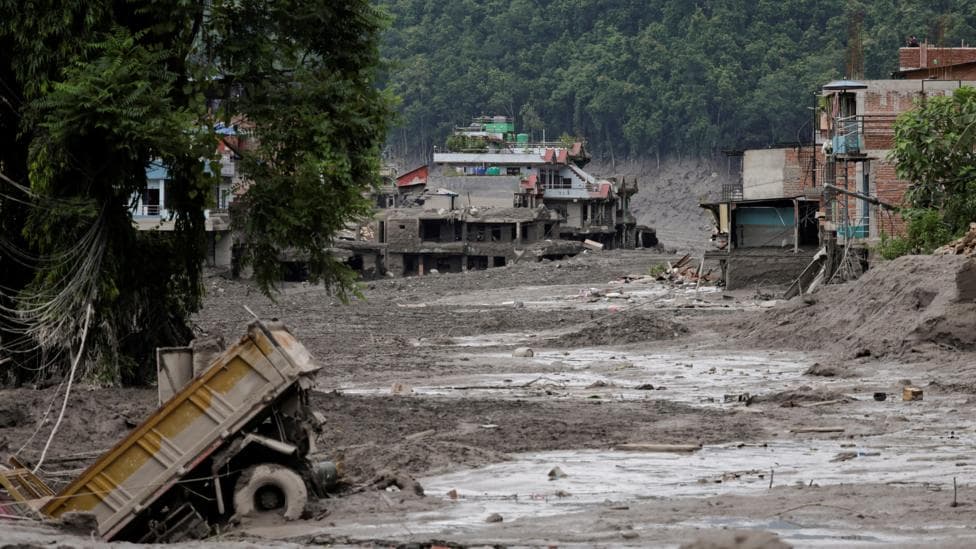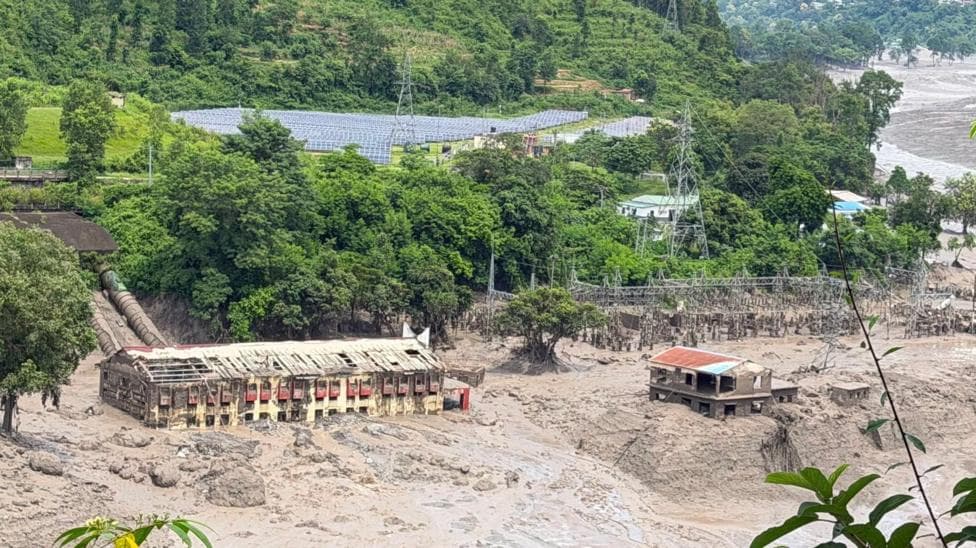
Thursday's newspapers lead with the catastrophic flash flood and mudslides that struck the Nepal-Tibet border region, with coverage reflecting the scale of the humanitarian crisis unfolding in the Himalayan region. The disaster has claimed more than 150 lives, with hundreds reported missing across both sides of the border, including dozens of foreign nationals feared dead.
According to reporting from a national broadcaster, Nepalese authorities later revised the missing figure upward to 579 tourists unaccounted for, comprising 466 foreign nationals from 28 countries. The scale of the disaster has made it the dominant story across the UK press, with papers publishing dramatic images of the destruction and accounts from survivors and rescue workers.
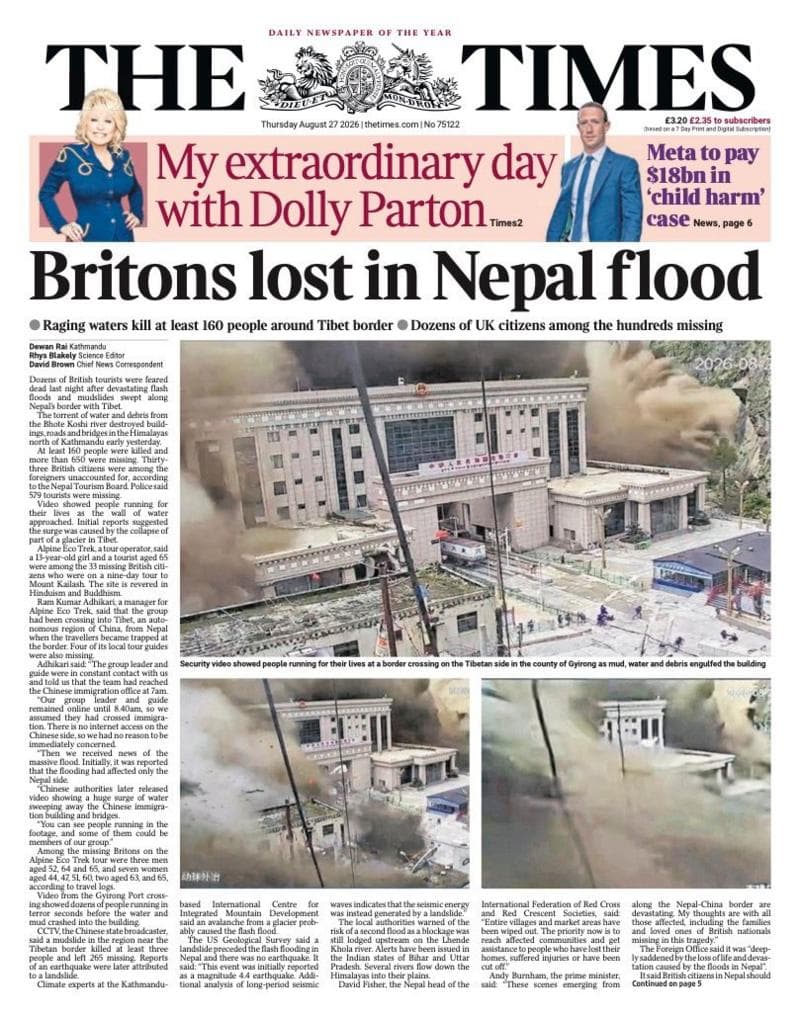
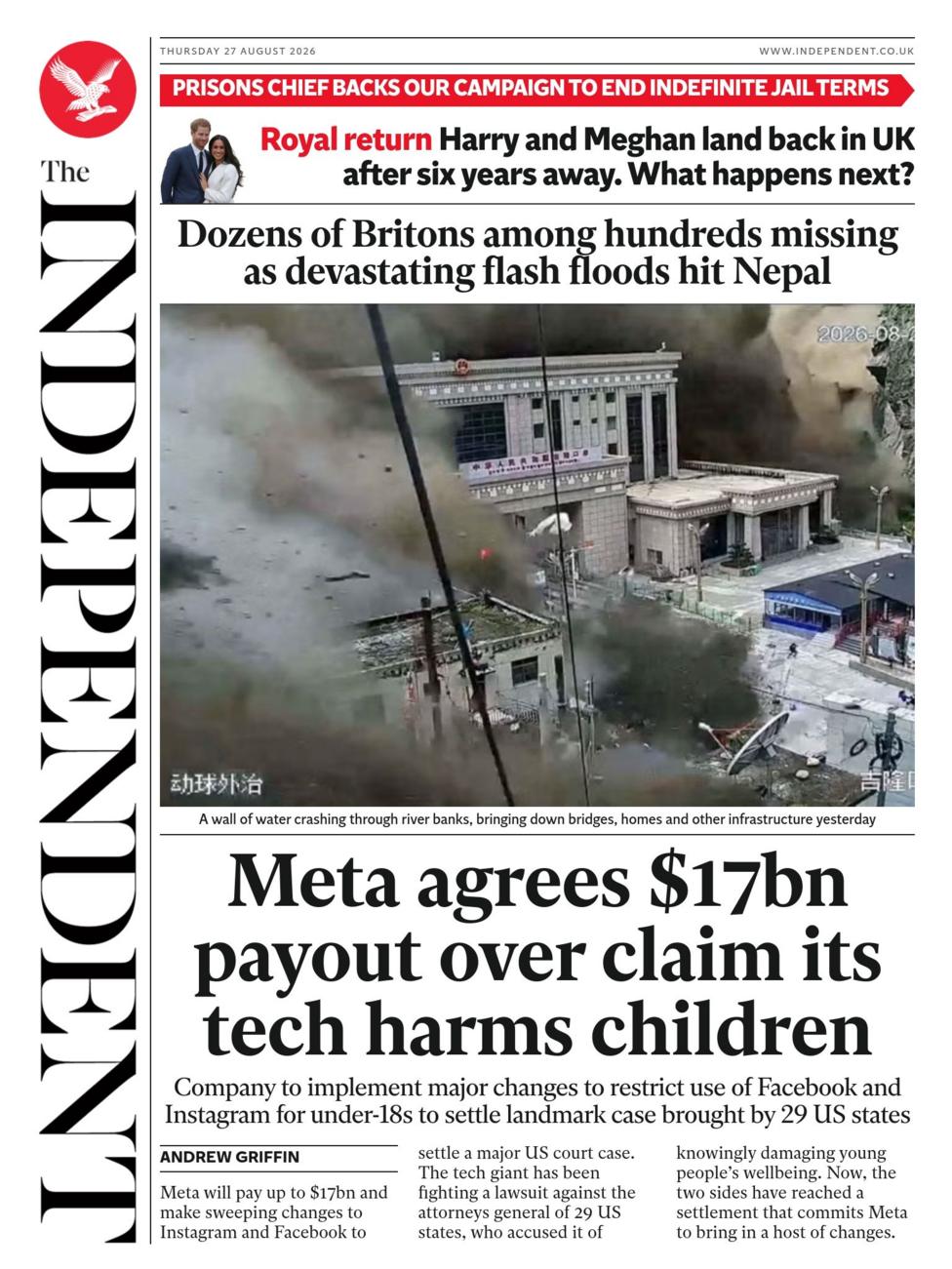
The Times features photographs from security video showing people fleeing as torrents of mud, water and debris engulfed buildings and swept away infrastructure. The Independent carries similar imagery of a wall of water crashing through settlements, homes and critical infrastructure along the border corridor.
publishes a photograph of rescue workers carrying an elderly woman pulled from the floodwaters. The paper notes that many foreign visitors are among those unaccounted for in the disaster, which was triggered when a massive mudslide collapsed into a Himalayan river, sending a destructive surge through settlements and roads connecting Nepal and China.

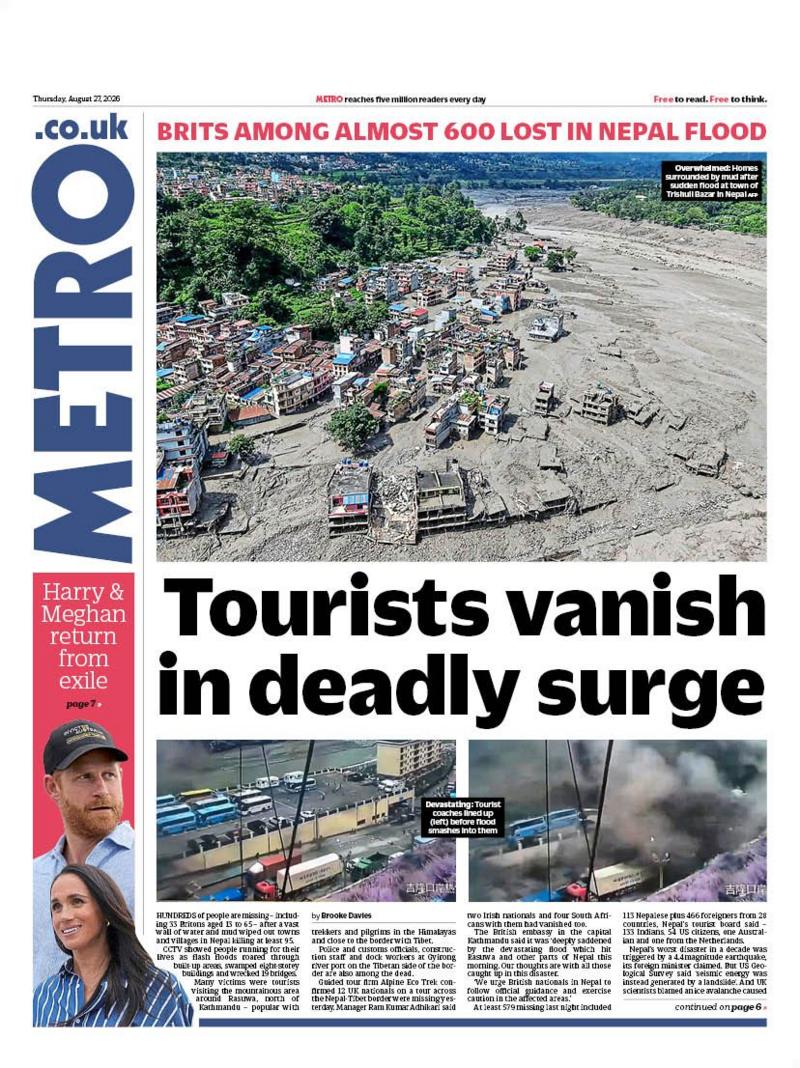
Metro's headline reads "Tourists vanish in deadly surge," highlighting how the mountainous region has long attracted trekkers and pilgrims visiting the Himalayas. The disaster struck an area heavily populated by international visitors, making the toll on foreign nationals particularly severe.
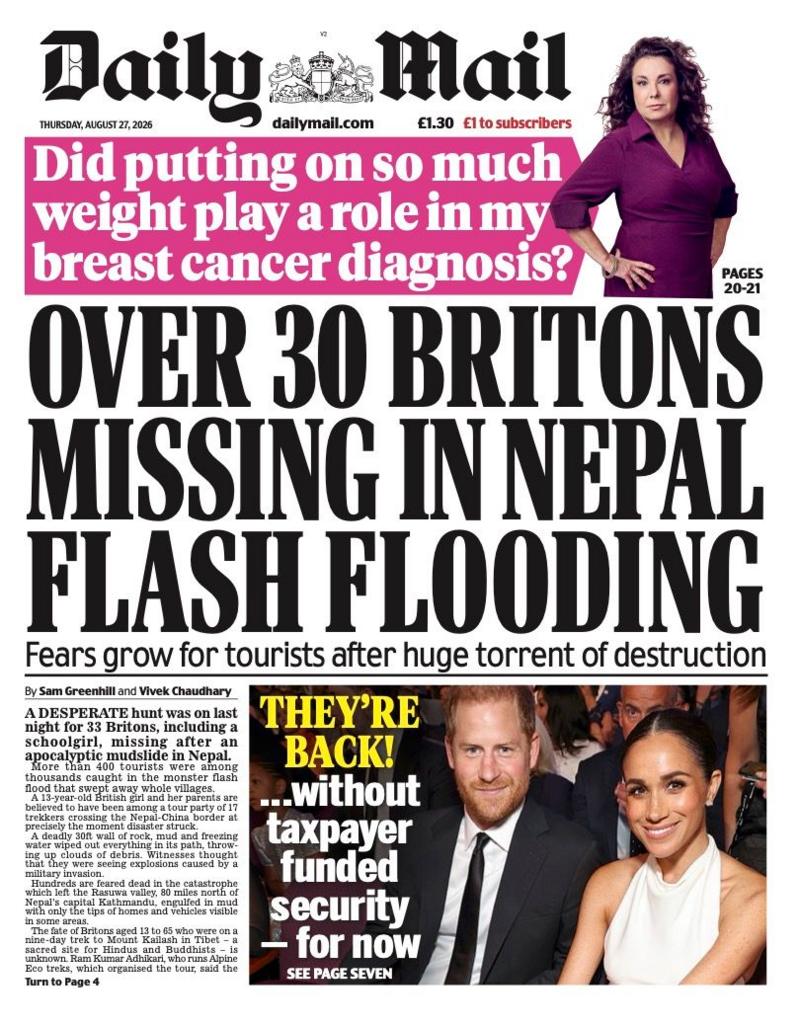
The Daily Mail characterises the event as "apocalyptic," reporting on a "desperate hunt" for more than 30 British citizens missing in the disaster, including a schoolgirl. Witnesses described seeing what they believed were explosions caused by military action as enormous clouds of debris were thrown into the air by the force of the floodwaters.
The Daily Telegraph's front page displays images of muddy floodwaters destroying a bridge. The paper quotes Nepal's prime minister, who stated that the tragedy has left the entire nation "shocked and deeply distressed." According to international news reports, the Nepal side alone has seen more than 400 tourists reported missing, with approximately 340 of them being foreign nationals, demonstrating how heavily the disaster affected travellers in the region.
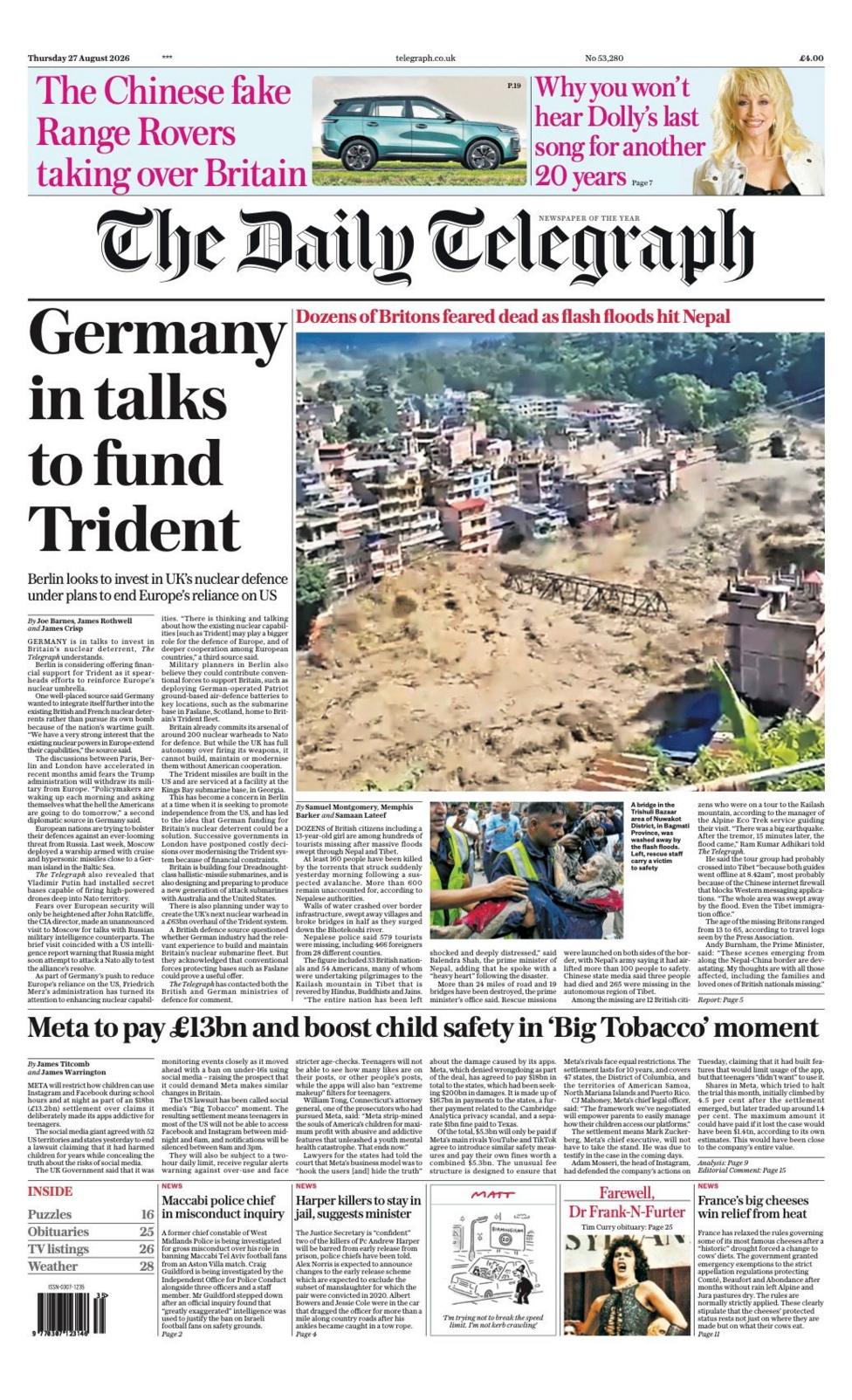
Beyond the Nepal flood coverage, the Telegraph also reports that Germany is engaged in discussions to invest in the UK's nuclear defence capabilities as part of broader European efforts to reduce reliance on the United States. Military planners in Berlin believe they could contribute air defences to strategic locations, including the Faslane base that houses submarines armed with the UK's Trident missiles.

The Daily Express warns that the UK's older population faces a "dire winter" as energy bills reach a three-year high. Campaigners express concern that elderly people already struggling financially may be forced to take "drastic action" following a 4% increase in the energy price cap effective from October.
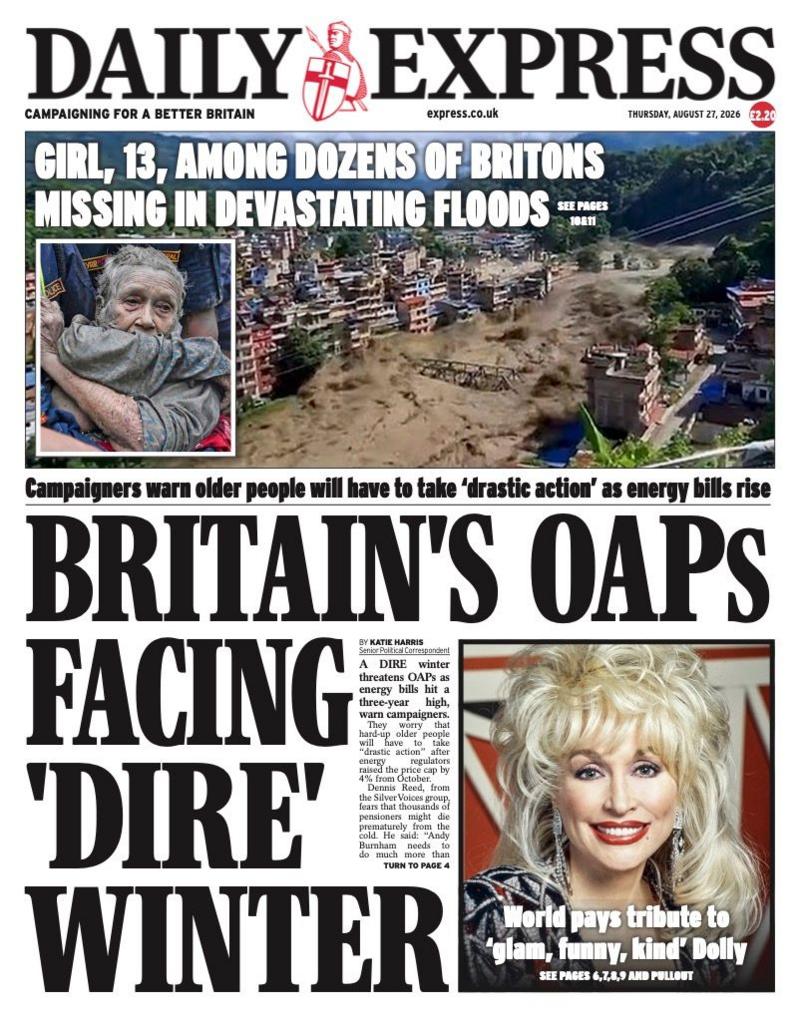
The Daily Star pivots to royal news, announcing the Duke and Duchess of Sussex's return to the UK ahead of their children's new school year with the headline "Regal has landed."

The Daily Mirror continues its tribute to country music icon Dolly Parton, who died on Tuesday following a brief cancer illness. Journalists who had the opportunity to interview the legendary performer are sharing their personal recollections of her warmth and humour.

Prime Minister Andy Burnham is pledging to "take pressure off" businesses in an attempt to ease corporate anxiety ahead of the forthcoming Budget, according to the Financial Times. In what the paper describes as his "most pro-business interview since becoming prime minister," Burnham stated:
I'm trying to make life easier for people.He acknowledged being "acutely conscious of how hard the operating environment is for businesses," though he declined to confirm whether corporate tax rates would increase in the Budget.
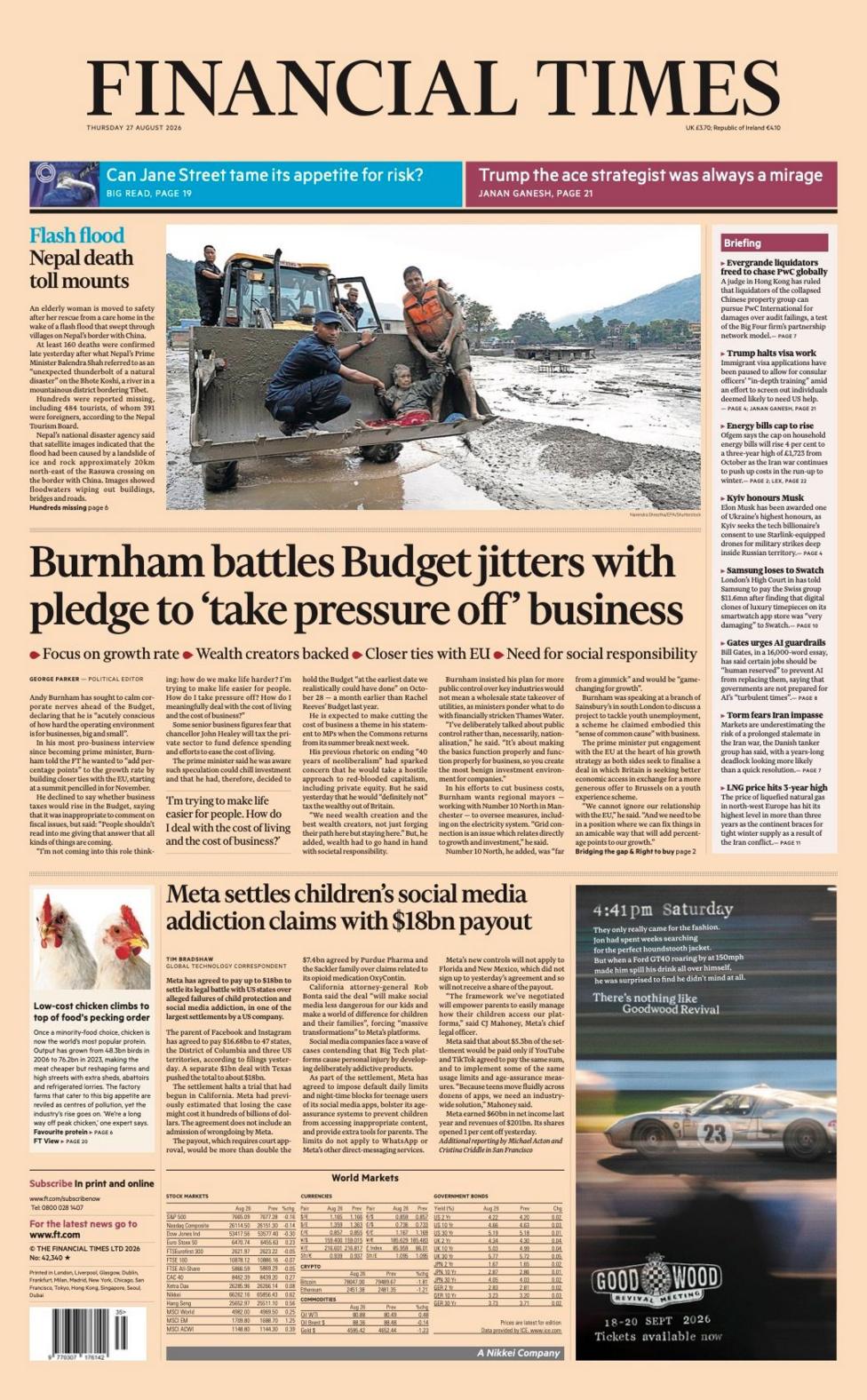
The i Paper reports that technology company Meta has agreed to pay $17 billion (£12.5 billion) to settle allegations that its social media platforms cause harm to children. Meta has denied claims that its applications deliberately targeted teenagers with addictive features. According to a national broadcaster's analysis, the firm's agreement to implement default protections for teenage users represents a significant concession and is expected to set a precedent that other technology companies may follow. The paper notes, however, that the firm's commitment to making applications safer for young people will not apply to the UK market.

A columnist for the Sun remarked on the settlement with the quip "Well that's told 'em," noting that the cost represents just over one per cent of Meta's $1.4 trillion market value.
The Sun's front page features seven-year-old Valentina Foster, who was killed along with her aunt in a house fire near Middlesbrough. Two men have been arrested on suspicion of murder, with police stating they are not ruling out connections to wider organised crime in their investigation.

What happens next in the Nepal disaster response?
Nepal's tourism board and police are continuing to compile comprehensive lists of missing persons and nationality breakdowns as rescue efforts remain ongoing. According to international reporting, Chinese authorities have reported at least three deaths and 265 people still missing on the Tibet side of the border, with rescue and recovery operations continuing there as well. Officials have warned that the final death toll could rise as search efforts progress and the full extent of the damage becomes clear.
The flooding has also damaged hydropower projects and critical infrastructure, adding to the wider economic and transport disruption affecting the Nepal-Tibet border region. The disaster destroyed villages, roads and bridges that form part of a crucial trading corridor between Nepal and China.
Key Facts
- More than 150 confirmed dead with 579 tourists reported missing across the Nepal-Tibet border region
- 466 foreign nationals from 28 countries are unaccounted for, including 33 British, 34 Australian and 24 Canadian citizens
- The disaster was triggered by a massive mudslide that collapsed into a Himalayan river, sending a destructive wall of water through settlements
- The region is heavily populated by international trekkers and pilgrims, making the toll on foreign visitors particularly severe
- Rescue operations continue on both the Nepal and Tibet sides, with officials warning the final toll could increase