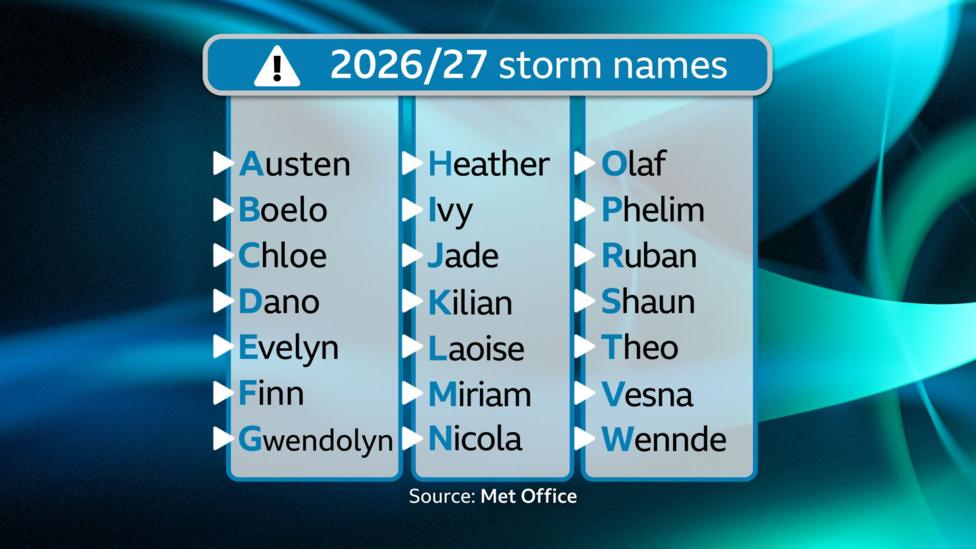
As meteorological autumn begins on 1 September, the UK's storm season officially starts, and the Met Office has announced the names that will be used to identify severe weather systems over the coming year. The 2026-2027 roster includes Austen, Boelo, Chloe, Dano and Evelyn as the first five entries on an alphabetical list compiled from public nominations. This marks the eleventh consecutive year that storms affecting the UK, Ireland and the Netherlands have been assigned official names rather than identified by meteorological data alone.
The naming system was introduced to help the public understand and prepare for severe weather events. According to the Met Office, the full list for the September 2026 to August 2027 season was unveiled on 1 September 2026 following a public voting process conducted in August.
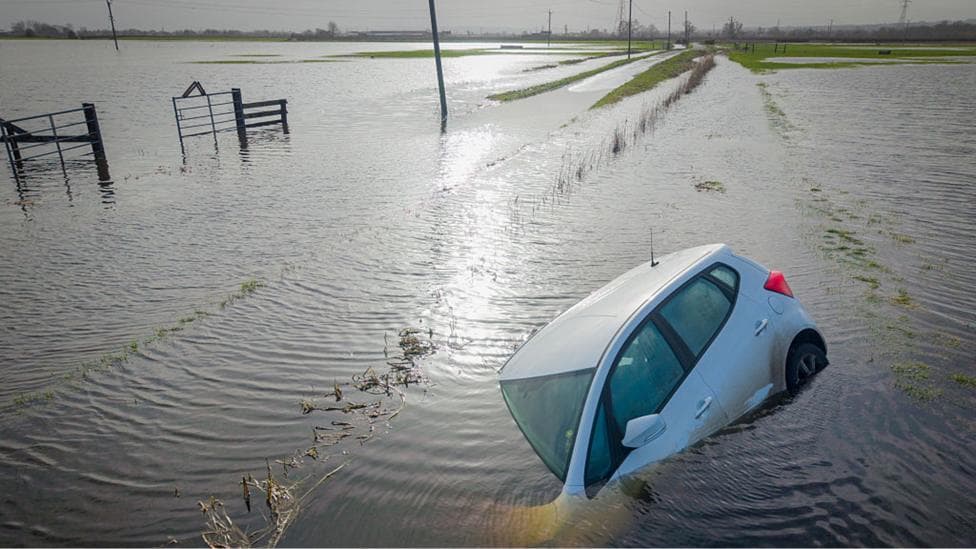
Storm Chandra demonstrated the impact of named storms earlier in 2026, when it swept across large parts of the country in late January, disrupting travel networks and leaving thousands without power. The decision to name storms reflects the growing recognition that giving severe weather systems identifiable names helps communities prepare and respond more effectively to dangerous conditions.
The current naming season replaces the 2025-2026 list, which ran through 31 August 2026 and included storms such as Amy, Isla and Marty. The transition to new names occurs annually as each season concludes and the next begins.
Why are storms named?
Storms receive official names when meteorologists forecast they will produce disruption or damage severe enough to trigger amber or red weather warnings. The decision to name a particular storm depends on two factors: the anticipated impact of the weather system and the likelihood of that impact occurring.
While strong winds are the primary reason storms are named, other weather phenomena are also considered. Heavy rainfall that could cause flooding, or significant snowfall that might disrupt transport and services, can also trigger the naming of a storm. A unified naming system across three nations ensures that clear, consistent information reaches the public, allowing people to take appropriate safety precautions and make informed decisions about their activities.
How are storm names selected?
The three meteorological agencies—the UK Met Office, Ireland's Met Éireann and the Netherlands' KNMI—work together to compile the annual storm name list. The selection process aims to reflect the diversity of communities across all three countries. In 2025, these agencies opened nominations to the general public, receiving more than 40,000 suggestions for potential storm names.

The 2026-2027 list draws heavily from those public submissions, balancing popularity with the personal stories behind individual nominations. Austen, for instance, was chosen to honour Austen Nagle, the founding director of the Irish Meteorological Service. Chloe was selected after being nominated more than 130 times, including by the mother of a five-year-old girl who is fascinated by weather but, as her parent noted, can
create a storm by herselfwhen tired. Ivy was nominated in memory of a nine-month-old Labrador puppy known affectionately as
the absolute destructor.
The public voting process also included a special partnership with Aardman, the animation studio behind the beloved Shaun the Sheep character. According to the Met Office's announcement, voters were invited to choose between Shaun and Timmy the Sheep as one of the 2026-2027 storm names, with the result of that vote revealed on 21 August 2026.
Tropical storms or hurricanes that cross the Atlantic and affect the region retain their original names assigned by the US National Hurricane Centre. For example, ex-Hurricane Erin, which brought large swells to South West England in August 2025, was designated Storm Erin when it reached UK waters. To maintain consistency with international naming conventions, the agencies do not use names beginning with Q, U, X, Y or Z.
Who decides when a storm should be named?
Europe's storm naming system is divided into five regional groups, each managed by meteorological agencies covering similar geographic areas. The UK, Ireland and the Netherlands form the western group, responsible for coordinating storm names across their territories.
In the UK, a storm receives an official name when forecasters determine it will cause disruption or damage likely to result in an amber or red weather warning. This assessment considers both the severity of the expected impacts and the probability of those impacts occurring. Strong winds are the most common reason for naming, though heavy rain leading to flooding or significant snow causing transport disruption can also trigger the decision.
It is important to note that storms named by Met Éireann or KNMI because of forecast impacts in Ireland or the Netherlands may not necessarily cause disruption within the UK itself. Each nation's meteorological service makes independent decisions about naming based on conditions affecting its own territory, though coordination ensures consistency across the western naming group.
What happens next?
The 2026-2027 storm season will run from September 2026 through August 2027, with the newly announced names in effect throughout this period. According to the Met Office's blog, the full roster was made public on 1 September 2026, allowing the public and emergency services to familiarise themselves with the names before the autumn storm season intensifies.
The announcement comes as forecasters warn of an intensifying El Niño event expected to bring wetter and stormier conditions to the UK during autumn and early winter. Earlier forecasts indicated that this developing El Niño could bring unprecedented strength and increased flooding risks, making the availability of clear storm naming conventions particularly valuable for public safety and preparedness.
Key Facts
- The 2026-2027 storm names were selected from more than 40,000 public nominations submitted in 2025
- Storms are named only when they are forecast to cause medium or high impacts, typically resulting in amber or red weather warnings
- The naming system is coordinated jointly by the Met Office, Met Éireann and KNMI across the UK, Ireland and the Netherlands
- This is the eleventh year of official storm naming in the UK
- Names beginning with Q, U, X, Y and Z are not used to maintain consistency with US hurricane naming conventions