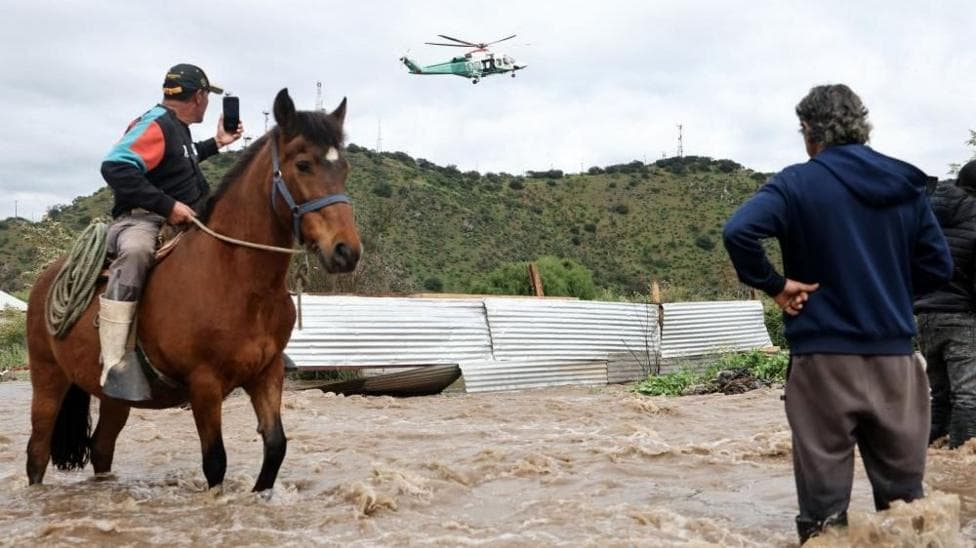
Police in central Chile have airlifted several residents to safety after rising floodwaters left them trapped in their homes following torrential rains that caused the Mapocho river to burst its banks. The flooding inundated large parts of Talagante, located 35 kilometres south-west of the capital Santiago, on 7 October 2026, prompting emergency evacuations across multiple communities.
Santiago recorded 74 millimetres of rainfall in the first seven days of October, marking the rainiest October for the area in 76 years, according to meteorologists. Some areas experienced even heavier precipitation, with rainfall reaching 146 millimetres at Tobalaba and 109 millimetres at San José de Maipo during the storm.
The national emergency agency Senapred ordered evacuations in Talagante and El Monte via emergency phone alerts, including the La Manresa and Pedro de Valdivia settlements in El Monte. According to Senapred figures, 63 people were isolated, 61 were placed in shelters and 18 were affected by the flooding, with 236 homes sustaining minor damage and two suffering major damage.
How did the rescue operation unfold?
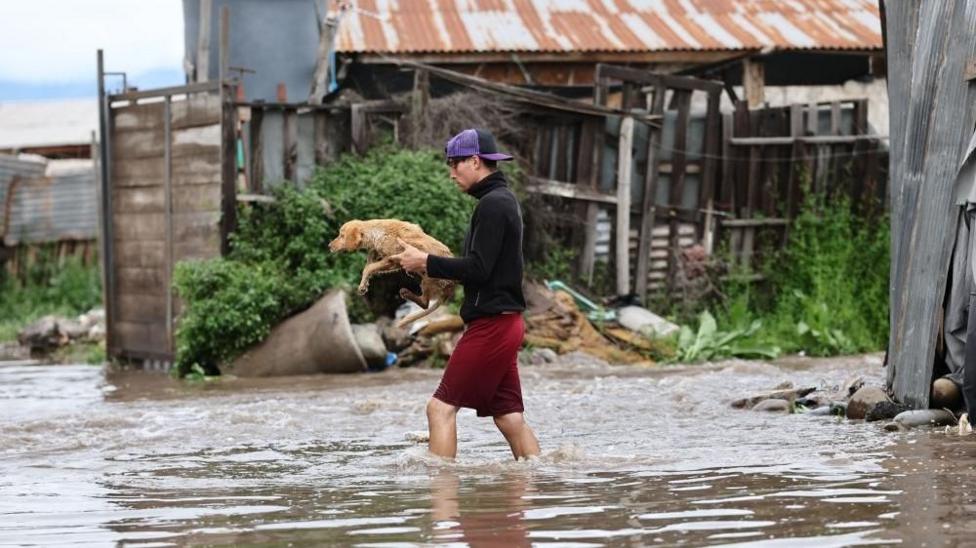
In Talagante, police used helicopters to rescue people and pets living on the banks of the Mapocho who had been caught off guard by the fast-rising waters overnight. A family of seven—five adults and two children—became stranded on an island in the Mapocho riverbed, prompting a Carabineros Air Prefecture rescue operation. Dirt roads transformed into rivers in the riverside community, which unlike during July's storms had not been evacuated in advance of the heavy downpours.
What was the human toll?
Officials reported that one person had been found dead in a flooded underpass in the city of San Bernardo, south of Santiago. The deceased was reported to be between 50 and 60 years old and was discovered in an underpass nearly three metres deep, though authorities had yet to confirm the official cause of death at the time of reporting.
What broader impacts did the storm cause?
The severe weather extended beyond Talagante and Santiago. The storm triggered a landslide in Melipilla and activated ravines in San José de Maipo, prompting warnings about debris flows and additional landslides. In the O'Higgins Region, approximately 30 people were temporarily isolated in San Fernando after a stream rose, while local roads were cut in Machalí.
Why is this weather pattern unusual?
Meteorologists have warned that this year's unusually strong El Niño climate phenomenon will likely continue to bring unusually wet weather, powerful winds and storms to the region during the southern hemisphere's spring. Climate experts have cautioned that the 2026-2027 El Niño is expected to cause major shifts in weather patterns around the world, intensifying droughts in some areas and floods in others. In central Chile specifically, the phenomenon is expected to trigger above-average rainfall.
What happens next?
Authorities stated that the Yellow Alert for the Santiago Metropolitan Region would remain in effect as long as weather and emergency conditions required. Further rain was forecast for the coming days, and teams continued monitoring conditions closely as the region braced for additional precipitation linked to the ongoing El Niño event.
Key Facts
- The Mapocho river burst its banks after torrential rains, flooding Talagante and surrounding communities on 7 October 2026
- October 2026 became the rainiest October in Santiago in 76 years, with some areas recording over 140 millimetres of rainfall
- Police conducted helicopter rescues including a family of seven stranded on an island in the riverbed
- One death was reported in a flooded underpass in San Bernardo; 63 people were isolated and 236 homes sustained damage
- The 2026-2027 El Niño is expected to continue bringing above-average rainfall and severe weather to central Chile