On 23 August, Cooper Freeman had no idea that clouds above Homer, Alaska, were being seeded with a silver compound designed to trigger rainfall. Thousands of other residents in the coastal town remained equally unaware that San Francisco-based Rainmaker had launched an experimental weather-modification operation in their region. The discovery that the company had conducted cloud-seeding flights without public notification sparked significant controversy and regulatory scrutiny across the Kenai Peninsula.
Rainmaker reported that its 10 flights that day produced an estimated mean of 57 acre-feet of precipitation, according to the company's analysis. The operation involved dispersing approximately 375 grams of silver iodide across 19 flares launched from two sites near the head of Kachemak Bay. The company initially claimed it had produced 19 million US gallons of water in the sky within three hours, though the actual precipitation impact remained modest—equivalent to roughly 0.01 inch of rain across 100 square miles.
Freeman, Alaska director of the Center for Biological Diversity, expressed concerns that extended beyond the lack of public notice. He questioned the safety of releasing silver iodide into the atmosphere and the absence of environmental monitoring to assess potential impacts on residents and ecosystems.
It doesn't appear that there was any downstream monitoring to verify that this silver iodide didn't impact the environment.
Freeman also questioned whether cloud seeding represented a genuine solution to water challenges.
Having a company come in to do this seeding isn't going to solve our water woes, and it feels like a distraction from solving the urgent issues related to water conservation.
Why cloud seeding matters in a water-stressed world
Global water security concerns have intensified in recent years. United Nations Secretary-General António Guterres stated in July that
our world is using freshwater faster than it can be replenished, a warning underscored by data showing the past five years have constituted the driest period for global rivers in more than three decades. More than 50 countries are now developing weather-modification programmes, and a growing wave of startups are engineering systems to artificially generate precipitation.
Cloud-seeding technology, which dates back more than 80 years, works by dispersing compounds such as silver iodide into clouds to form ice crystals. These crystals eventually grow heavy enough to fall as rain or snow, depending on atmospheric temperatures. The process essentially accelerates the natural condensation of water vapor within clouds. However, the technology functions optimally only in specific climatic conditions—mountainous or cold regions such as Alaska provide ideal environments, while other areas may see minimal results.
How does cloud seeding actually work?
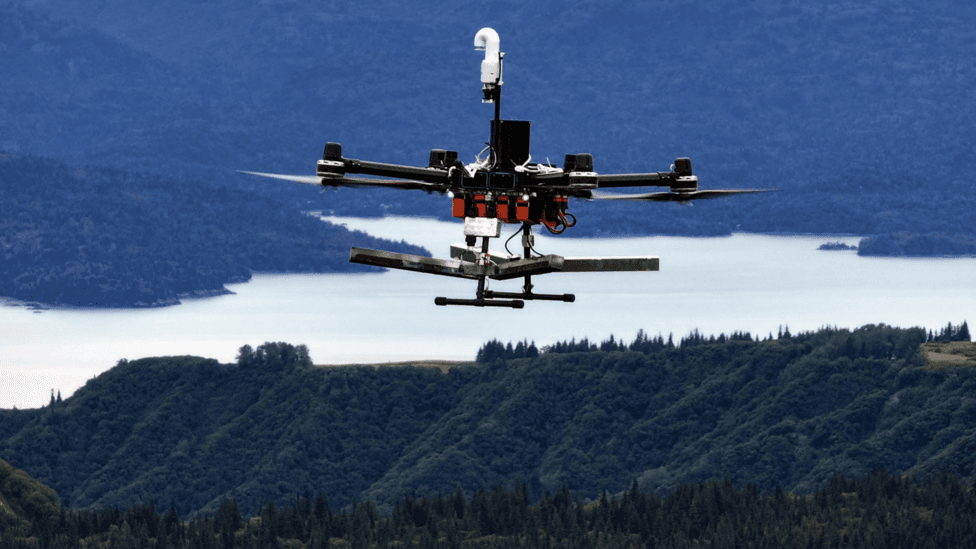
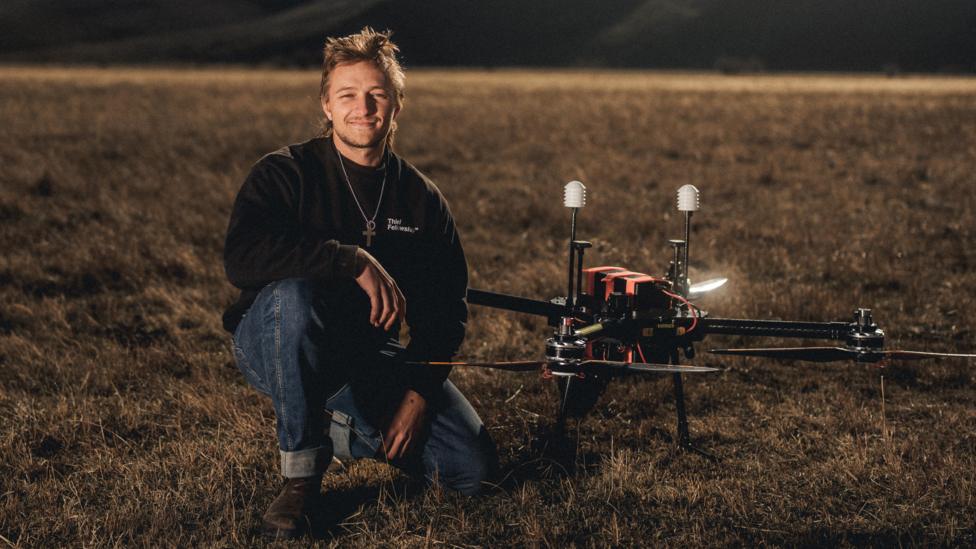
Rainmaker's approach relies on drones equipped with silver iodide flares. When ignited, these flares atomize water particles to sizes small enough to remain suspended in freezing clouds for hours, eventually crystallizing and transforming into precipitation. Augustus Doricko, Rainmaker's founder and CEO, emphasizes that the company releases silver iodide at 20 grams per flight, distributed across thousands of square kilometres. He argues that
the resultant increase in concentration on the ground is in the parts per quadrillion, way below the threshold laid out by the FDA on what is allowable.
A fundamental constraint of cloud seeding is that it requires existing clouds. Without cloud cover, the technology cannot function, meaning operators must wait for atmospheric conditions to develop before attempting to induce precipitation. Rainmaker currently operates in states including Idaho, Utah, and Colorado, as well as in Middle Eastern regions such as Jordan, where water scarcity is acute. Doricko notes that
Jordan residents often only have water for hours per week from their utility because of how scarce water is, and it's a privilege to try to help this storied region.
What does the science say about effectiveness?
Cloud seeding's history extends to 1946, when researchers at the General Electric Research Laboratory first used dry ice as a seeding agent. Within a year, scientists discovered that silver iodide proved more effective, as dry ice rapidly converts to useless gas. Despite these advances, the technology's actual precipitation gains remain limited. Jon Meyer, an assistant state climatologist with the Utah Climate Center, explains that
with the right conditions, cloud seeding squeeze out about an extra five to 10% of precipitation.
A landmark 2017 study provided encouragement to the sector by demonstrating that silver iodide functioned as expected—one of the first rigorous observations of cloud seeding using radar and precipitation gauges. Meyer has grown optimistic about recent industry innovation, particularly the introduction of drone-based systems.
Drones present this new avenue, and they offer a more targeted nature to these clouds we hope will be responsive.

What alternatives to silver iodide are being developed?
The compounds used in cloud seeding may be undergoing significant change. Recast Systems, also based in San Francisco, is experimenting with a protein derived from amino acids found in soil, according to CEO Olivia Li. While still undergoing testing at Texas A&M University, this alternative seeding agent represents a departure from silver iodide as the industry standard. Li argues that
it's safe, biodegradable and nucleates ice at a higher efficiency than silver iodide.Recast currently uses silver iodide to seed clouds across several US states while developing this new approach.
Meyer remains optimistic about the sector's trajectory.
We're going to see more demand for these services as so many regions are experiencing water demand, and they're going to be looking for ways to help bridge that gap.
What regulatory questions has the Homer operation raised?
The Rainmaker flights in Alaska occurred without public notification, exposing a significant regulatory gap. Alaska currently has no specific legal framework governing weather modification, and there is no requirement for operators to notify residents or report weather-modification activity. Alaska's Department of Natural Resources determined that the research drone use on state land did not require a permit, though the agency did not authorize the cloud-seeding itself. The Department of Environmental Conservation indicated it was reviewing available information regarding the operation.
Public concern about the lack of notice prompted swift action. On 17 September, the Kenai Peninsula Borough Assembly adopted a resolution urging state and federal governments to restrict or regulate weather modification. The resolution reflected broader frustration that residents had no opportunity to weigh in on an experiment conducted above their homes and communities.
What happens next for cloud seeding in Alaska?
The borough is moving toward formal regulation. The Kenai Peninsula Borough Assembly is scheduled to consider an ordinance requiring a borough permit for weather modification or geoengineering on borough land at its 15 October meeting. Such a measure would establish local oversight of future operations and require operators to seek approval before conducting experiments.
Meanwhile, Rainmaker's expansion continues. The company announced a $100 million Series B funding round on 21 September to scale its weather-modification work, signalling investor confidence in the sector despite ongoing questions about safety, efficacy, and the appropriate role of private companies in weather modification.