What happened as wildfires spread through France and Spain?
Thousands crowded into emergency shelters in France and Spain on Sunday after wildfires drove more than 300,000 people to flee their homes and holiday accommodation. France has been worst affected, with an approximate area of 42,000 hectares burnt by the flames, while major fires continued to burn in both countries.
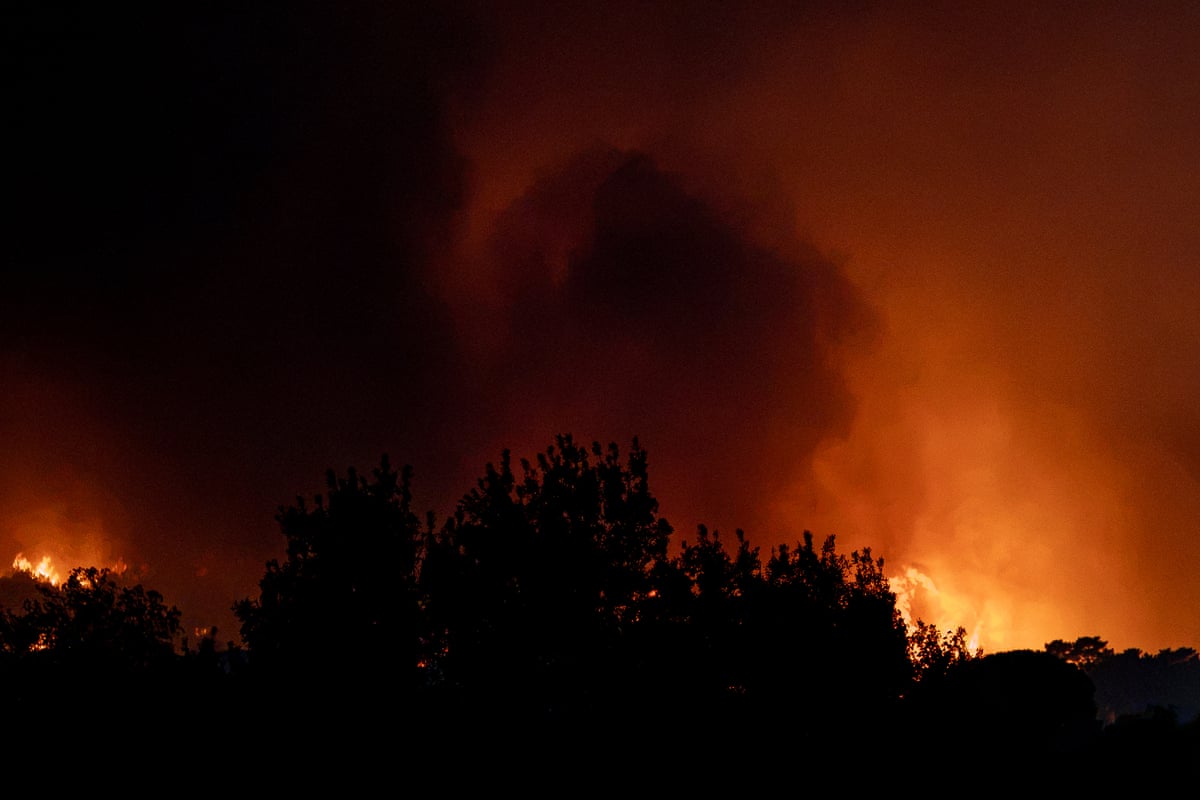
The blazes have destroyed houses, displaced people on a massive scale and triggered one of the largest peacetime civilian evacuation operations ever carried out in France. Hundreds of firefighters have worked to contain the fires, which have been fuelled by persistent heatwaves and the climate crisis, but were still unable to stop their advance.
France’s evacuations constituted “probably” the biggest peacetime evacuation the country has ever seen, its interior minister said.
How many people have been evacuated in France?
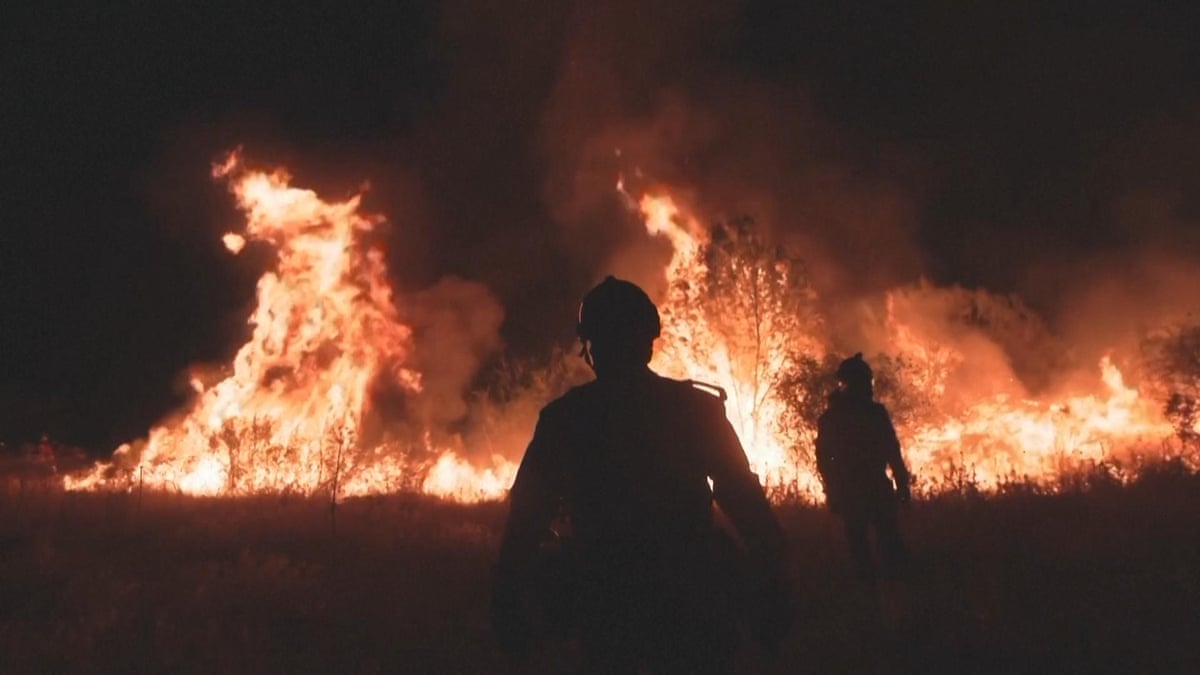
French authorities said that more than 220,000 people have now been evacuated from the main forest fire raging in the south-west of the country that now threatens the city of Bordeaux. About 55,000 people were ordered to leave villages around Bordeaux in the Gironde region during the night as flames from the wildfire spread.
About 220,000 people have now been evacuated from the main forest fire raging in the south-west of France that threatens the city of Bordeaux, according to French authorities. The latest evacuations have been in villages around Bordeaux while 60km (37 miles) of the main A63 highway from Bordeaux to the Spanish border has been closed because of the fires, regional authorities said.
Tens of thousands more people have been evacuated from other wildfires in France and central France.
Authorities in France’s Gironde region, where Bordeaux is located, issued overnight evacuation orders for five more localities including some on the city’s approaches. Their statement said gusting winds fed the flames overnight, accelerating the spread of the fire that has been burning out of control since midweek.

What is happening in Spain?
In Spain, over 90,000 people have been evacuated from the regions around Madrid and Ávila, as fires continue to spread there. Spanish authorities have ordered new evacuations near Toledo, south-west of Madrid.
The interior ministry said residents of Buenaventura, Navamorcuende, Real de San Vicente, Hinojosa de San Vicente, Castillo de Bayuela, Garciotum, Nuno Gomez and Pelahustan were told to leave their homes.

On Saturday evening, Spain’s interior ministry said a man had died in a fire in Manises, in Valencia. He had been found in a car in a ravine, officials said.
In Spain, wildfires are continuing to burn throughout the Madrid area and the province of Ávila, near the capital, according to authorities. The wildfires have burnt through about 24,000 hectares in the Madrid region and 21,000 hectares in Ávila, sparking mass evacuations.
Spain has evacuated tens of thousands of people from villages west of Madrid where extremely dry conditions have been worsened by heatwaves and strong winds. Over 30,000 people have been evacuated from Ávila and over 15,000 in the eastern Castellón province of Spain.
Spain has declared a national emergency, the first time the country has ever done so over a wildfire.
How are the authorities responding?
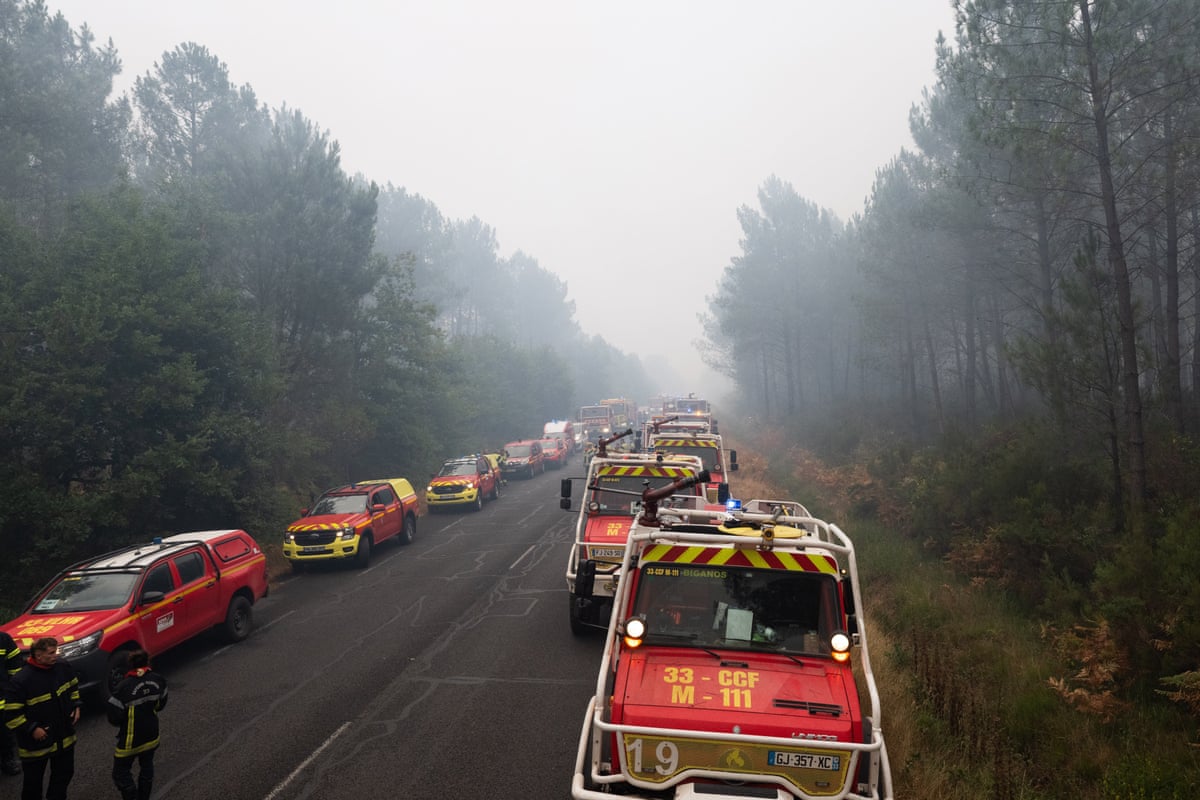
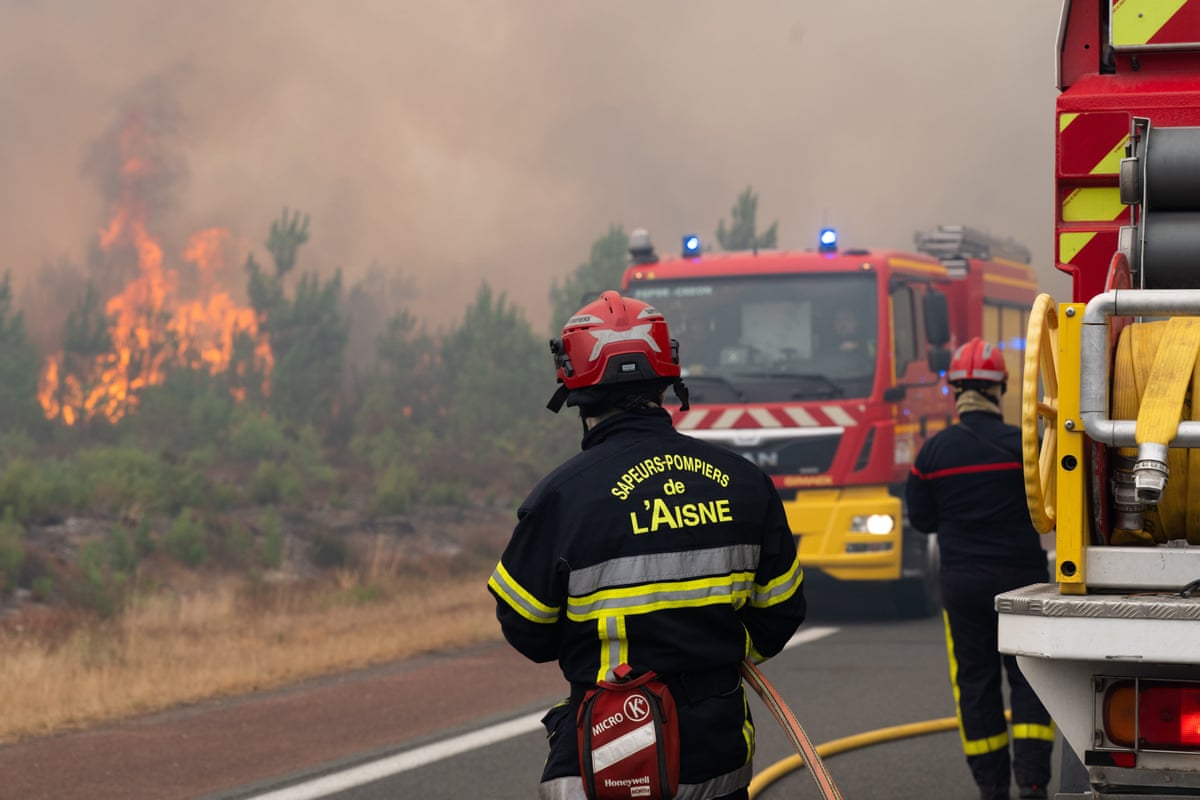
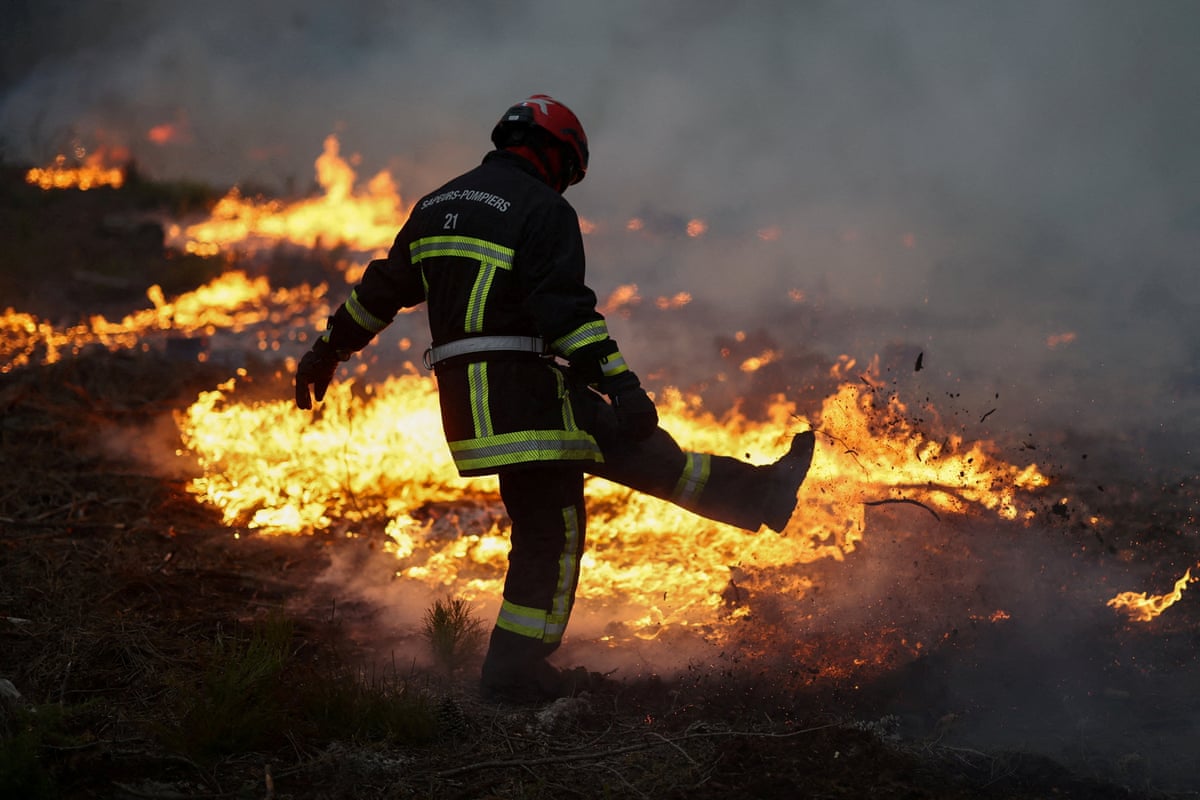
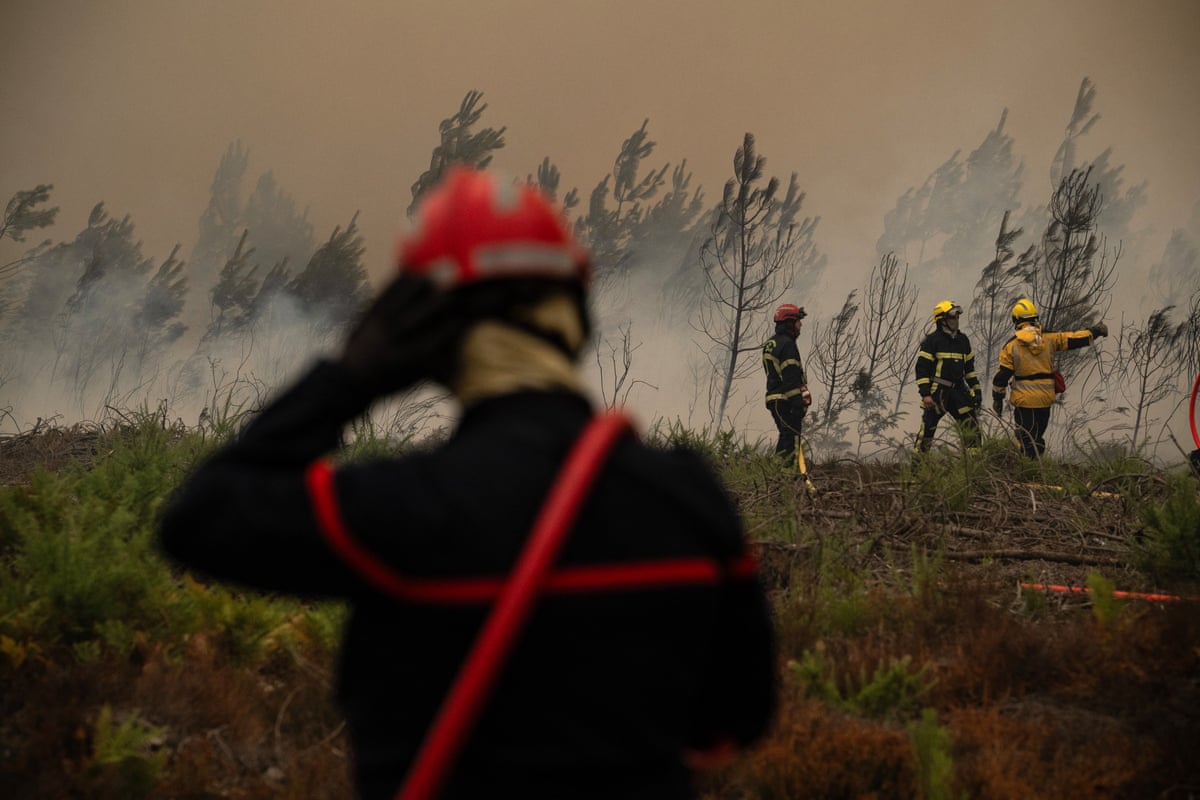
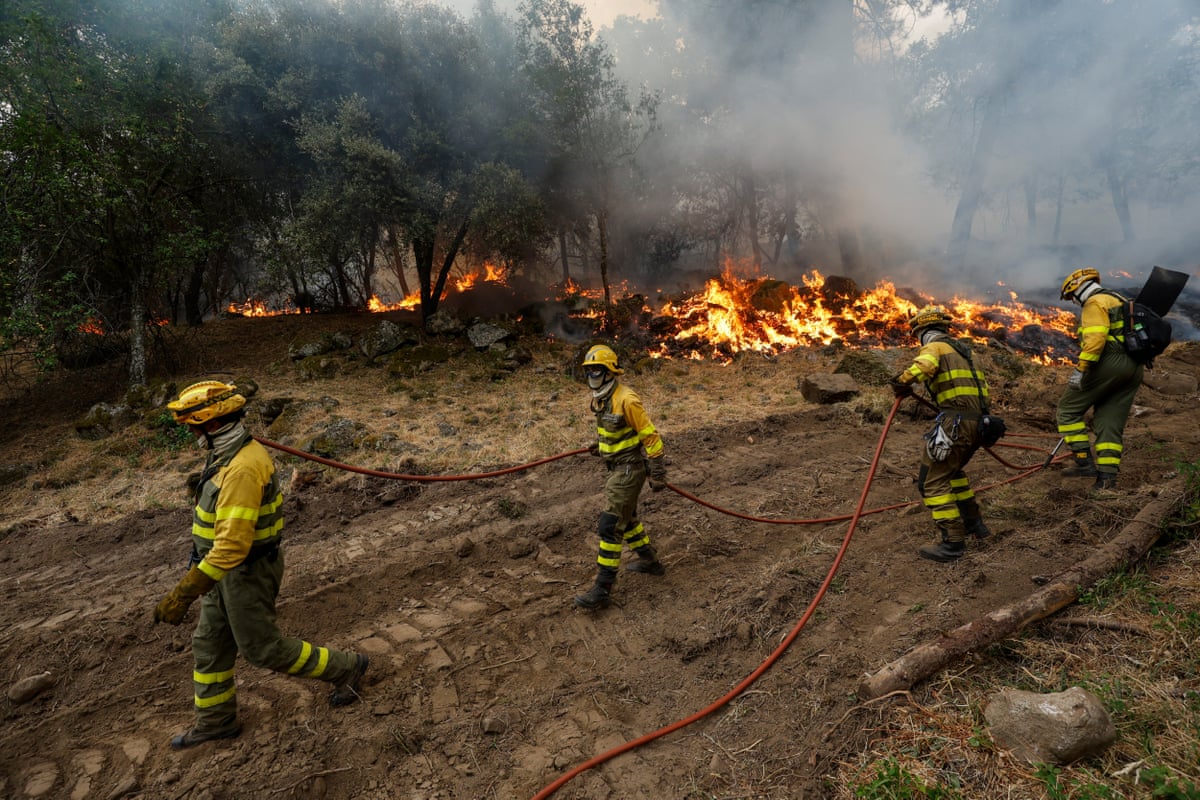
The French government has called in the military to help, deploying 1,500 soldiers, and has rushed 1.5m face masks to help protect people from smoke inhalation. About 1,500 French firefighters and military reinforcements have been deployed around the clock to fight the wildfires in south-western France.
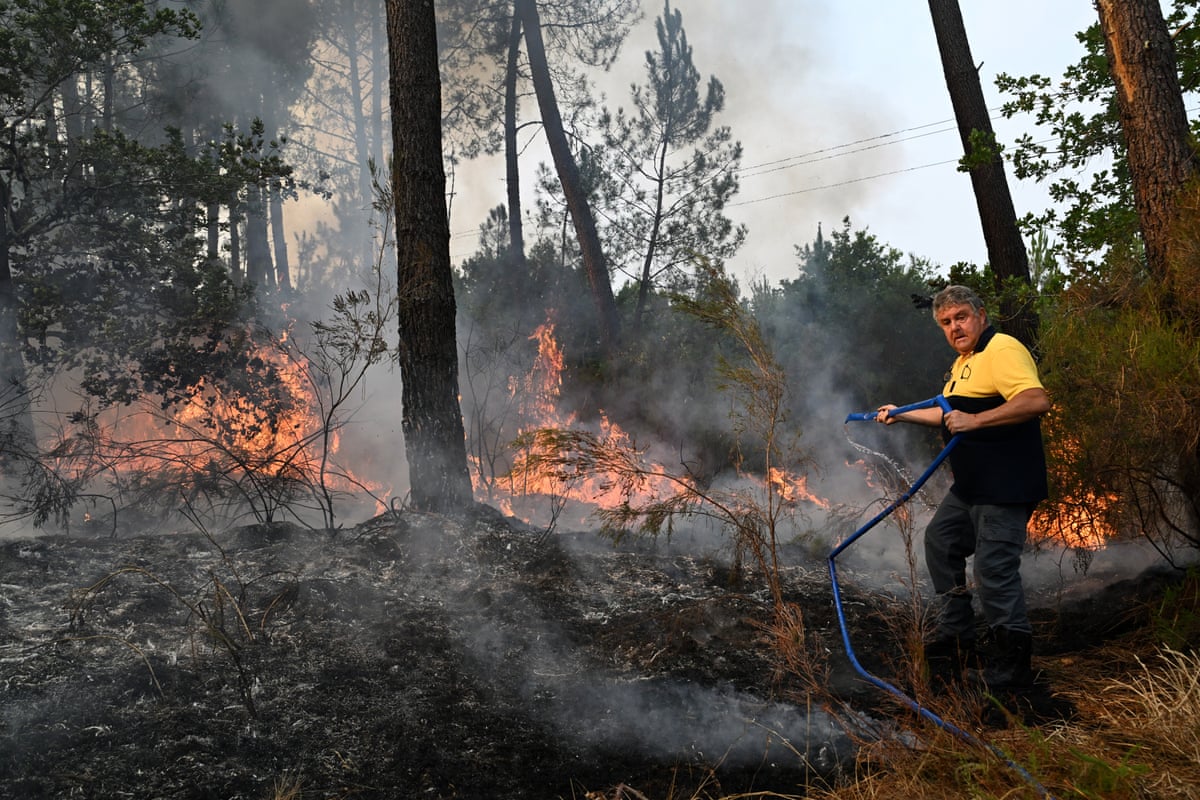
Firefighters have been working across the affected areas in France and Spain, including near Bordeaux, Ares, Lege-Cap-Ferret, Marcheprime, Lacanau, and the towns affected in Spain, as authorities tried to contain the fast-moving blazes.
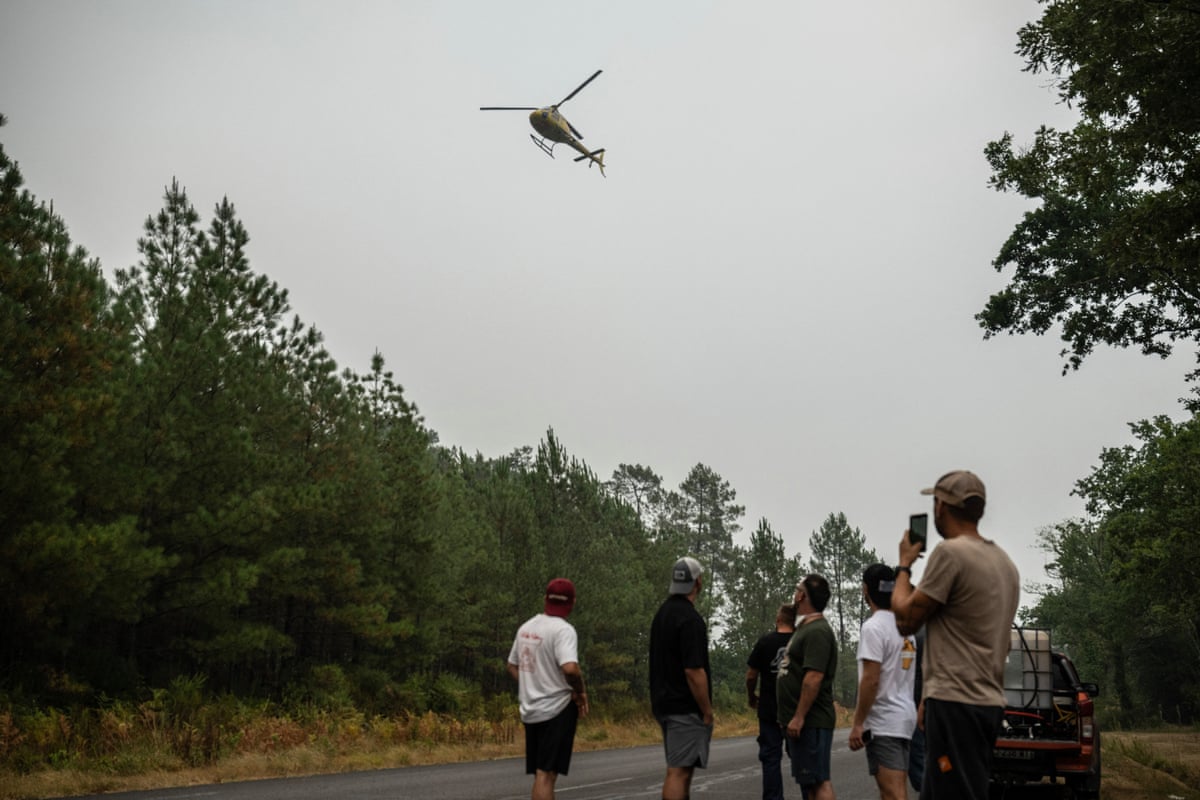
Some of the photos emerging from France and Spain paint a dramatic picture of the crisis.
The scale of the evacuations and the continued spread of the fires means the situation remains severe in both countries, with emergency services continuing to move residents away from threatened areas as winds and dry conditions persist.