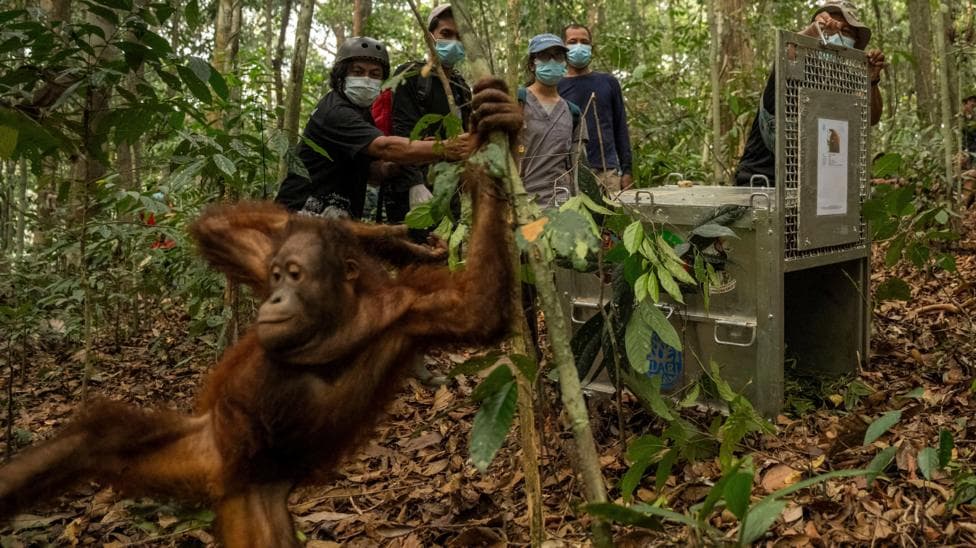
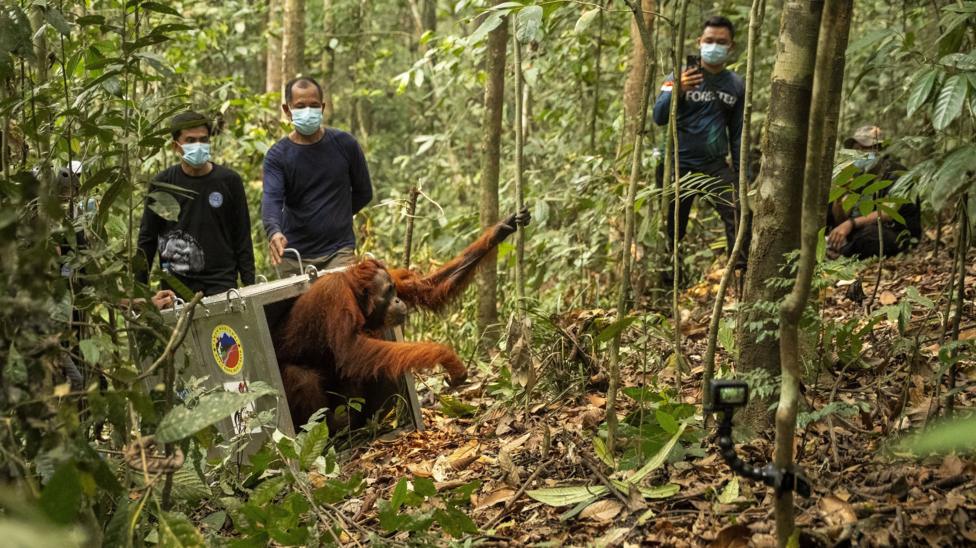
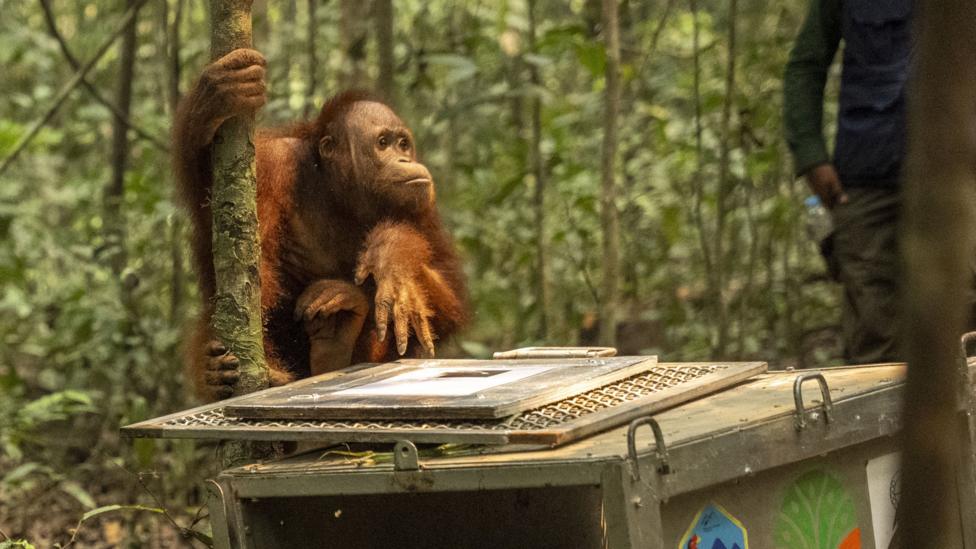
Eight orangutans have been returned to the wild in Borneo after authorities rescued them from wildfires that ravaged their habitats during the summer months. The group—comprising three mothers, their three daughters, and two adult males—was freed on Friday in a protected reserve on the western side of the island, according to International Animal Rescue Indonesia (Yiari) and the country's forestry ministry.
Indonesian authorities retrieved a total of 46 orangutans from the fires across August and September. While wildfires are a recurring phenomenon during Indonesia's dry season, this year's blazes proved significantly more destructive than usual, driven in part by the El Niño ocean warming phenomenon, which intensifies weather volatility and extreme conditions.
The species faces critical endangerment, with approximately 104,000 individuals remaining across Borneo and Sumatra—a steep decline from more than 230,000 a century ago, according to conservation group WWF. The habitat loss and fragmentation caused by fires and land-clearing practices have pushed the population toward the brink.
Why were these specific orangutans rescued?
The eight released orangutans had been living in increasingly precarious conditions as fires destroyed the forests around them. Mama Nopi and her three offspring—Nopi, Naufal, and Nopan—had taken refuge in a coconut and rubber plantation before their rescue in early September. The surrounding forestry had been incinerated, cutting off their access to food and forcing them into closer contact with human settlements.
Mama Lifa and her child Lifa were discovered in a small patch of acacia trees that was entirely encircled by oil palm plantations. The combination of habitat degradation from wildfires and the scarcity of natural food sources prompted their evacuation in mid-September.
Mama Man and her baby, Man, had been under observation by animal rescuers since June, when they were first spotted living in a plantation area adjacent to a small forest patch. When fires spread near their location in early September, the flames restricted their roaming area further and eliminated safe routes to other forested regions, necessitating their evacuation.
How were the orangutans prepared and transported?
Before their release, the animals underwent comprehensive health evaluations and received any necessary medical treatment at Yiari's rehabilitation facility in Sungai Awan. All eight were confirmed to be in good health and displaying natural behavior patterns, according to reports from Indonesian authorities.
The journey to their new home was arduous and carefully managed. The transfer required six hours by car, an hour by boat, and two hours on foot, with the animals' cages carried on bamboo poles to minimize stress during the relocation process, according to transport records.
Why was this particular reserve chosen?
The release site, Batu Nyambu Protected Forest, spans 23,000 hectares and contains both primary and secondary forest, providing the orangutans with diverse habitat types and abundant natural resources. The reserve was selected specifically because it offers adequate food and water supplies and maintains connectivity with other forested areas, allowing the animals to establish territories and interact with existing populations.
Yiari's Argitoe Ranting emphasized the importance of this approach:
We want to ensure that rescued orangutans are not simply moved from one place to another, but actually have a chance to survive in their natural habitat.
Karmele Llano Sanchez, CEO of Yiari, described the relocation of the eight orangutans as a
necessary stepwhen their original habitats became unsafe for habitation.
What is the broader threat to Borneo's orangutan population?
The scale of the wildfire crisis affecting orangutans is staggering. Last month, the International Union for Conservation of Nature warned that active wildfires were burning in habitats containing 52% of Borneo's entire orangutan population. The organization cautioned that if climate change continues at its current trajectory, a substantial portion of the ape's remaining habitat will become inhospitable to them.
This year's El Niño has become the strongest on record and is expected to influence climate patterns well into the following year. The Indonesian government warned that fires could persist until November, marking the country's most intense wildfire season in 11 years. Notably, fires were still ongoing when the orangutans were released into the wild.
What role do human activities play in the fires?
Experts have identified land-clearing practices used to establish plantations as a significant factor accelerating wildfire spread across Indonesia. When naturally fire-resistant forests are replaced with less dense and shaded vegetation, the landscape becomes far more susceptible to rapid fire propagation. This human-driven habitat transformation has fundamentally altered the fire dynamics of the region.
The degradation and fragmentation of orangutan habitats caused by wildfires had reached a critical point where the original forests could no longer sustain the primates, making relocation the primary solution available to conservationists.
Are other wildlife species affected?
The wildfire crisis extends beyond orangutans. A separate rescue effort supported by the International Fund for Animal Welfare documented that fires were also threatening Sunda pangolins and long-tailed macaques in the region, with recent figures including eight pangolins, six orangutans, and three macaques in their care.
Key Facts
- Eight orangutans—three mothers with three daughters and two adult males—were released into Batu Nyambu Protected Forest on Friday after rescue from summer wildfires.
- Indonesian authorities rescued 46 orangutans total from fires in August and September, with the global population of approximately 104,000 representing a 55% decline from a century ago.
- The 2026 El Niño is the strongest on record and contributed to Indonesia's most intense wildfire season in 11 years, with fires expected to continue until November.
- Wildfires were burning in habitats containing 52% of Borneo's orangutan population, according to the International Union for Conservation of Nature.
- Land-clearing for plantations has replaced fire-resistant forests with more flammable vegetation, accelerating wildfire spread across the region.