

As wildfires raced through northern Ontario in late July 2026, Hubert Wigwas, a councillor from Gull Bay First Nation, refused to leave his home. He rigged sprinklers on his roof to douse falling embers, checked in on elders who had also stayed behind, and kept four boats fuelled on the lake as a last-resort escape route.
Wigwas now faces a fine of roughly C$800 (about $570 or £425) for defying an evacuation order, but he says he was unwilling to abandon what he has spent decades building.
"This is everything I've built in my 58 years. I'm just not going to run away and let it burn."
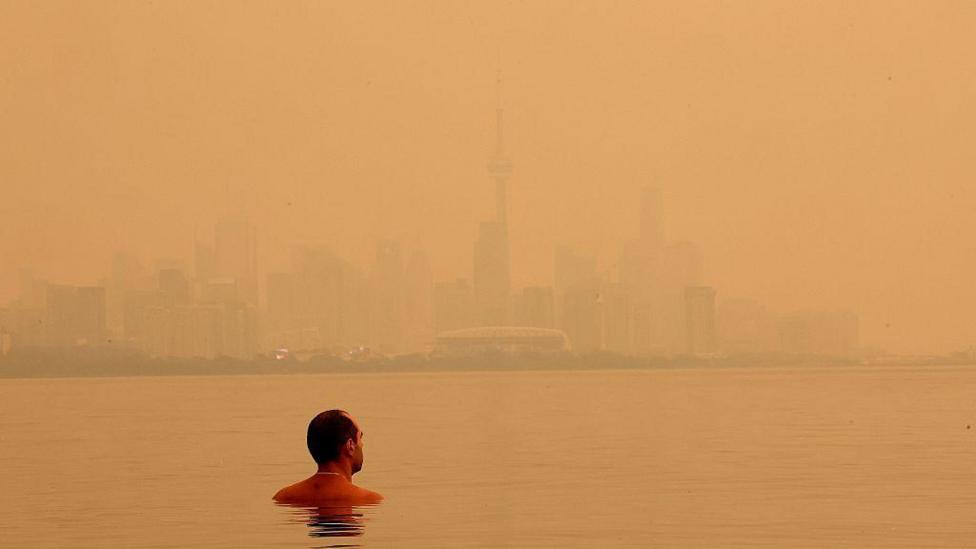
His decision reflects a broader debate playing out across Canada as the country grapples with increasingly severe wildfire seasons. The 2023 season remains the most destructive on record, having scorched an area of forest roughly the size of Syria. This year has proven no less brutal: as of early August 2026, more than 750 wildfires were actively burning nationwide, with smoke drifting as far as the American Midwest and choking the air in cities well south of the border. President Donald Trump has even threatened additional tariffs on Canada over what he called "filthy, polluted" air crossing into the United States.
How bad has Canada's 2026 fire season actually been?
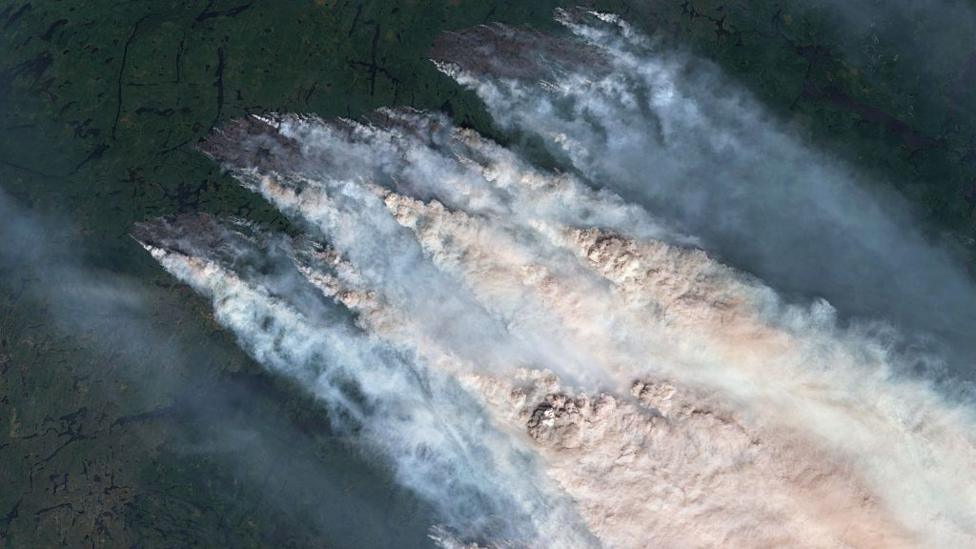
The scale of this year's fires has exceeded historical norms by a wide margin. According to , roughly 2.95 million hectares had burned across the country by 24 July 2026, well above the ten-year average of about 2.55 million hectares, with 90 active wildfires and 25 evacuation orders in British Columbia and 139 active fires in northwestern Ontario, 32 of them uncontrolled. Canadian Prime Minister Mark Carney has described the season as among the most intense on record, per the same report.
Federal figures paint a similarly stark picture. A government update covering the season through mid-June 2026 recorded 1,747 wildfires, with 95 active and 44 out of control at the time, alongside 166,400 hectares burned, and warned that fire danger was expected to climb further through July and August, according to Public Safety Canada. The National Weather Service's continental outlook separately put the tally at 1,463,723 hectares burned and 39,354 wildfires reported by 13 July 2026, both figures above the decade average, with activity concentrated in the Northwest Territories, north-central Quebec, central Labrador and the north-central and northeastern prairies, according to the North American seasonal outlook. For context, the 2025 season was the second-worst on record, with more than 89,000 square kilometres burned nationwide, according to a Canadian broadcaster's report.
This year's crisis follows a string of related developments. A recent scientific analysis found that human-driven climate change had made Canada's fire-prone weather conditions twice as likely, as nearly 700 fires burned across the country and smoke again spread south. Days earlier, a fast-growing blaze known as the Bald Range fire had doubled in size within a day, forcing the full evacuation of Summerland and Peachland in British Columbia. In Ontario, footage had already circulated of a freight train engulfed by flames near Armstrong, while smoke pushed air quality to hazardous levels in Toronto and beyond. The cross-border smoke also reignited tension between Trump and Prime Minister Carney, with Ontario Premier Doug Ford pushing back against the criticism as more than 900 fires burned at the time.
Why did Hubert Wigwas choose to stay behind?
Wigwas said he stayed because he had not seen outside firefighting crews arrive to protect properties or check on elderly residents who remained in Gull Bay First Nation, also known as Kiashke Zaaging Anishinaabek. Leaders there had urged residents to evacuate since mid-July as more than 150 wildfires burned across northwestern Ontario, and the chief wrote a letter on 29 July pleading with remaining residents to leave immediately, warning that provincial firefighters could not safely do their jobs with people still in their homes.
Despite that plea, Wigwas — speaking in late July with a wildfire burning 24km outside his community — said the experience convinced him that his First Nation needed its own wildfire response system and training for residents on how to protect their homes.
"Everybody talks about climate change, but nobody is doing something to unite the (First Nations) reserves and have a system like that set up."
Dave Bradley, a spokesperson for Ontario's Ministry of Natural Resources, did not directly address Wigwas's account of the lack of outside help, but said the province has remained in constant contact with First Nations leaders and that firefighting resources are allocated according to fire behaviour, weather conditions and the level of risk to specific communities.

What backup exists for remote communities?
In British Columbia, some communities are already doing what Wigwas envisions for his own First Nation. Sonja Leverkus, a wildfire researcher and specialist, has helped train more than 400 people in and around Fort Nelson over the past three years through a group she co-founded, the Northeast BC Rural Incident Management Team.
Leverkus said her effort stems from a conviction that Canada's approach to fighting wildfires must change as climate change drives fires to become more frequent and more intense.
"There are not enough human beings in Canada" with the appropriate training "to fight the fires that we have currently, especially over the last five years".
She said remote communities — sometimes hundreds of kilometres from the nearest town — can be pushed down the priority list for provincial firefighting crews when larger population centres are also under threat. Her team, made up primarily of Indigenous members, has carried out prescribed burns to clear flammable fuel before it can feed larger fires, and has used self-funded fire wagons, purchased through fundraising and grants, to put out smaller blazes before they grow out of control — sometimes arriving before provincial crews and then working alongside them.
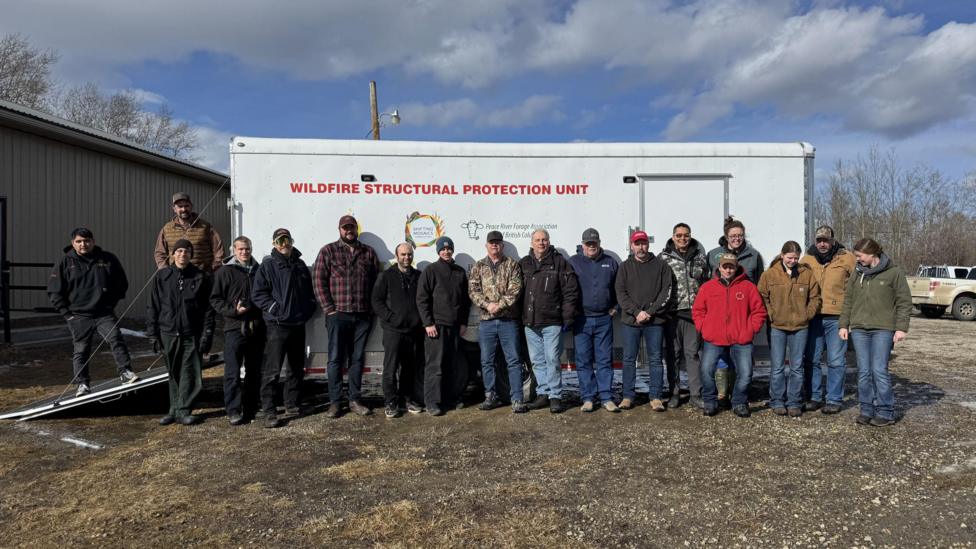
When a major wildfire tore through Fort Nelson in 2024, Leverkus said she and 40 members of her team stayed behind and were hired by the province to clear flammable material and support fire suppression work. She has also run a structural protection course teaching locals how to shield buildings from wind-blown embers capable of igniting entire towns.
"We have mechanics, we have carpenters, we have real good problem solvers. We're all not afraid to stay."
Cam Allen, a 70-year-old former helicopter pilot in Fort Nelson who has fought fires from the air, recently completed Leverkus's course to learn ground-level fire suppression techniques and how he might help if a blaze reaches his town. He pointed to John Carr, a California man who drew widespread attention last year for staying behind and fending off flames with a garden hose during the Palisades fire, ultimately saving his home while others nearby burned down.
"It makes you wonder, if 100 people had stayed or 1,000 people had stayed behind and actually did what he did, how much more could have been saved?"
Not everyone who stayed behind during the Los Angeles fires was as fortunate as Carr. Those fires killed 29 people in total, including some residents who had likewise defied evacuation orders in an attempt to protect their homes even as officials urged thousands to leave the area.
How are officials responding to residents who refuse to evacuate?
Leverkus's group has no official recognition from the British Columbia government, and the tension between residents determined to stay and officials enforcing evacuation orders has surfaced repeatedly this season. Last week, wildfire crews in British Columbia were forced to rescue a man whose home in the Village of Clinton had become surrounded by flames after he refused to evacuate.
In a wildfire update issued on a Tuesday, the province's minister responsible for emergency management reiterated that anyone under an evacuation order should leave.
"We may not be able to get back to you if an emergency happens," ... evacuation orders are made as "a last resort to keep people and communities safe".
A spokesperson for British Columbia's Ministry of Forests said self-organised rural groups can be temporarily hired by the province during an active wildfire, but only once provincial firefighting crews in the area are exhausted. The ministry added that BC Wildfire's full-time staff has grown by 56% in recent years in response to increasingly frequent fires, in addition to seasonal hires.
Should residents stay and defend their own homes?
Paul Kovacs, a researcher at the University of Western Ontario and director of its Catastrophic Loss Reduction Institute, said Canada's relatively low wildfire fatality rate — despite the frequency of fires — is partly attributable to its evacuation-first approach. He said the


