Britain could face shortages of certain foods after parts of England were hit by a punishing drought, the president of the National Farmers’ Union has warned. Farms across the country also faced floods over the winter, making planting extremely difficult, while irrigation has now been restricted in many parts of England because of drought.
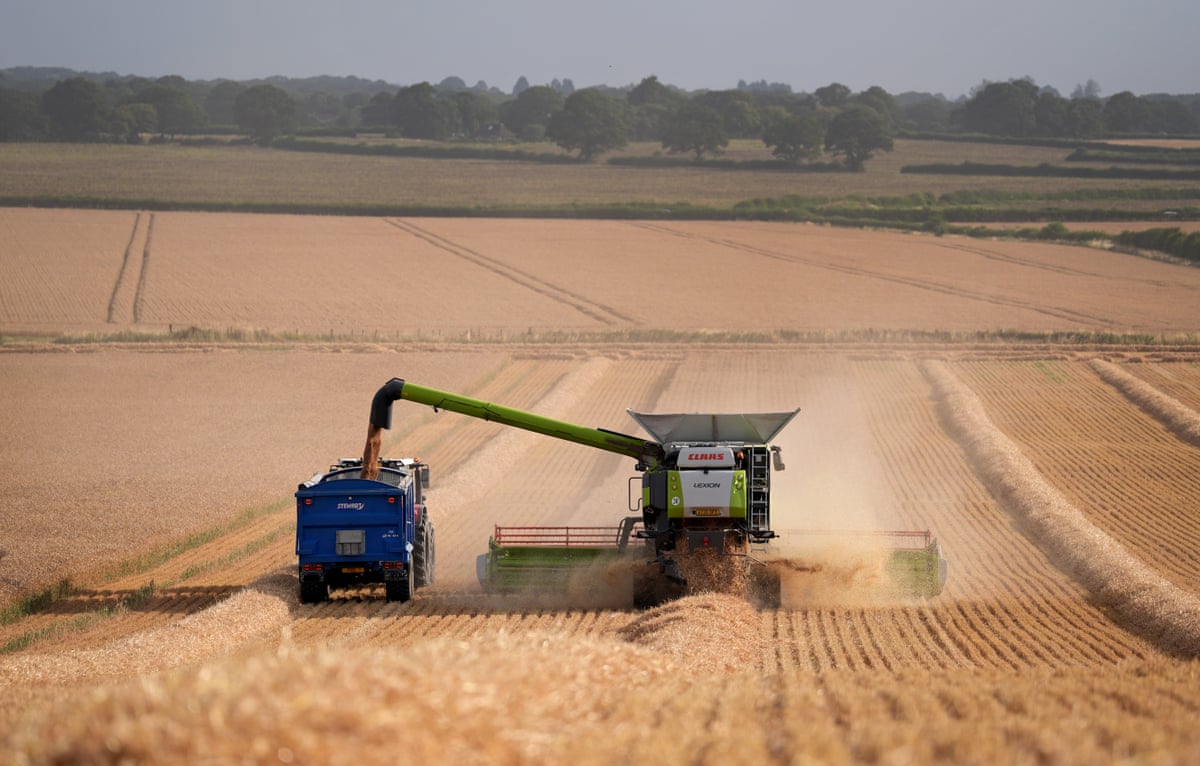
This is the third drought in five years, farming groups said, warning that this was the “new normal” for agriculture in Britain. Wheat farmers have said wheat is half its normal height, and England is seeing its earliest ever harvest as farmers battle to salvage what they can of their crops.
In some areas, it hasn’t rained for over a month, while multiple record-breaking heatwaves have hit the country since early summer, drying out the soil. Tom Bradshaw, president of the FU, said this could lead to food shortages and he has asked the prime minister to take action.
What is happening to water supplies on farms?
Water supplies are under severe pressure because irrigation is being restricted in many parts of England due to drought. The combination of a very wet winter and a prolonged dry spell has made it harder for farmers to plant, grow and protect their crops.
“Those other countries around the world that we currently rely on to produce our food and vegetables, their climates are changing as well,” he said. “It does feel like there is going be some shortages of [food] products.”
Tom Bradshaw told BBC Radio 4 that farmers should be given tax breaks to build water storage systems on their land to prepare for the years ahead.
How is the weather affecting harvests?
The weather is affecting harvests across England, with wheat especially badly hit and England recording its earliest ever harvest. The Met Office said this summer that England saw just 8% of its meteorological average rainfall for July and that it is likely to be confirmed as the driest July on record.
Approximately 23 million people across England and Wales are affected. The dry weather has also fuelled devastating wildfires across the country, while the heatwave is expected to continue into this week.
The UK Health Security Agency has issued heat-health alerts for eight regions of England. These amber alerts will be in place for the East Midlands, the east of England, the south-east, and London regions from 9am on Monday 3 August to 9am on Wednesday 5 August. The north-west, Yorkshire and The Humber, West Midlands and the south-west regions will be under a yellow alert during the same period.

Bradshaw said to Andy Burnham:
“Let’s draw a line in the sand and make sure we prioritise domestic food production to deliver growth across the UK.”
The Agriculture and Horticulture Development Board (AHDB) said cereals such as wheat and barley have been particularly affected. Its first found the hot weather has resulted in the earliest harvest since records began in 2006, with many farmers across the south and east of England completing harvest two to three weeks ahead of the long-term average.
Anthony Hopkins, the AHDB’s director of cereals and oilseeds, said combines have been working earlier than usual this year, with many farmers working through the night to avoid the most extreme daytime temperatures. He said cereal yields have generally been below the 10-year average so far, with some farms experiencing significant reductions, and that the financial pressures are becoming increasingly acute for those businesses hardest hit after successive years of difficult weather and rising costs.
“Across much of the UK, combines have been rolling earlier than usual this year, with many farmers working through the night to avoid the most extreme daytime temperatures. Cereal yields have generally been below the 10-year average so far, with some farms experiencing significant reductions. Following successive years of difficult weather and rising costs, the financial pressures are becoming increasingly acute for those businesses hardest hit.”
Anthony Speight, senior analyst, cereals and oilseeds, added that the picture points to disappointing cereal yields in many areas, although a clearer understanding will emerge as harvest continues.
“At this stage, the emerging picture points to disappointing cereal yields in many areas, but we’ll gain a clearer understanding as harvest continues.”
Why are farmers warning the situation could worsen?
Farming is becoming unprofitable as the government removes the EU-derived subsidies that once kept the industry afloat, while the climate crisis is causing extreme weather that can wipe out any profits from crops. A recent report found a third of British farmers were making a loss or only breaking even.
Gavin Lane, the president of the Country, Land and Business Association, warned that for many farmers this could be their last harvest. He said a sodden winter followed by drought has left wheat at half its usual height and some crops not worth harvesting.
“Farmers are telling us this is the worst harvest in years. A sodden winter followed by drought has left wheat at half its usual height and some crops not worth harvesting.”
He added that this is the third drought in five years and that what was once extraordinary is becoming part of farming in Britain. He said the government must start planning for it and that investment in resilient farming systems, from reservoirs to wildfire prevention, could help farmers cope with the new extremes.
“This is the third drought in five years. What was once extraordinary is becoming part of farming in Britain, and government must start planning for it. We know that proper government investment in resilient farming systems, from reservoirs to wildfire prevention, could help farmers cope with these new extremes.
“Farmers have shown again and again that they can adapt and deliver solutions, but resilience has limits. If we want them to keep feeding the country, they need proper support. Otherwise, this harvest could be their last.”
Farmers have shown again and again that they can adapt and deliver solutions, but resilience has limits, he said. If they are to keep feeding the country, he said, they need proper support.
Key Facts
- Britain is facing a third drought in five years, according to farming groups.
- England saw just 8% of its meteorological average rainfall for July, and it is likely to be confirmed as the driest July on record.
- Approximately 23 million people across England and Wales are affected.
- The UK Health Security Agency has issued amber and yellow heat-health alerts for eight regions of England from 9am on Monday 3 August to 9am on Wednesday 5 August.
- The AHDB said the earliest harvest since records began in 2006 has arrived, with some farms harvesting two to three weeks ahead of the long-term average.