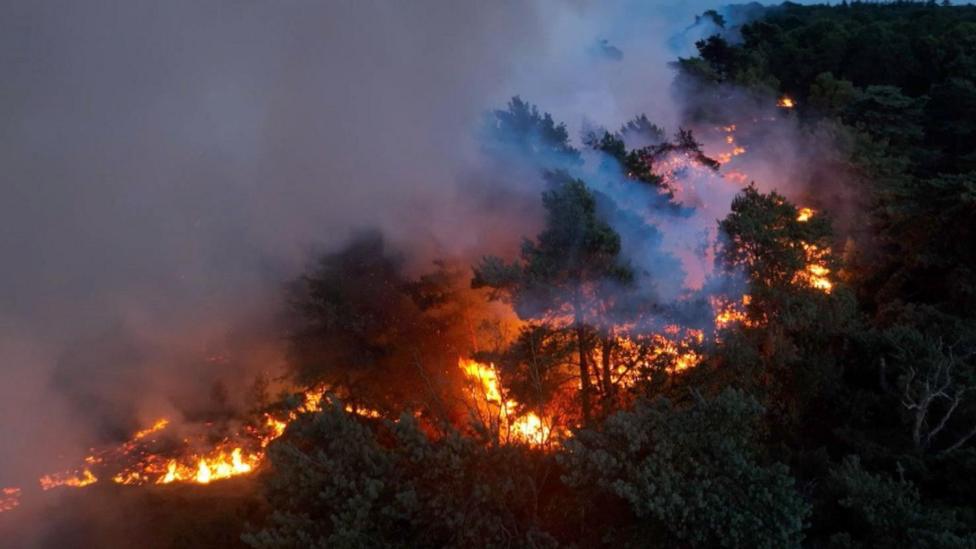
Fire crews remain on site to tackle any hotspots and fires as they emerge. The blaze that has devastated heathland in Suffolk is now "stable" but crews have continued to tackle hotspots on what is the fourth day since the flames took hold.
The fire affecting RSPB Minsmere and Dunwich Heath started at about 17:00 BST on Wednesday and engulfed 371 acres (150 hectares) at its height - equivalent to the size of 210 football pitches. Wildlife habitats of some of the UK's rarest species have been destroyed.
The National Trust has launched a fundraiser to help the habitats "recover and thrive in a changing climate". Meanwhile, local people have started returning to normal life.
A scheduled market went ahead at nearby Westleton earlier, which an organiser said was the chance for people to take their minds off recent events.
What is the latest situation at the fire?
The situation remains stable, although firefighting operations continue and crews are responding to hotspots where they emerge, a Suffolk Fire and Rescue Service spokesperson said.
"The situation remains stable, although firefighting operations continue and crews are responding to hotspots where they emerge," said a Suffolk Fire and Rescue Service spokesperson.
"Roads and footpaths in the area remain closed. Thank you to everyone who is staying away from the local area."
The National Trust, which looks after Dunwich Heath, has said it only recently showed signs of recovery following extreme heat and drought in 2022.
"Moving forward we will need to create a healthier, more resilient landscape that can support wildlife long into the future," a spokesperson said.
Volunteers would be needed to help with recovery in the future, the trust added. Celia Richardson, the charity's director of communications and fundraising, said any money donated as part of the appeal would only go to "this site".
How badly has wildlife been affected?
Last year RSPB Minsmere saw its largest number of fledged sandwich terns for more than half a century, following a project to improve the islands where they gather.
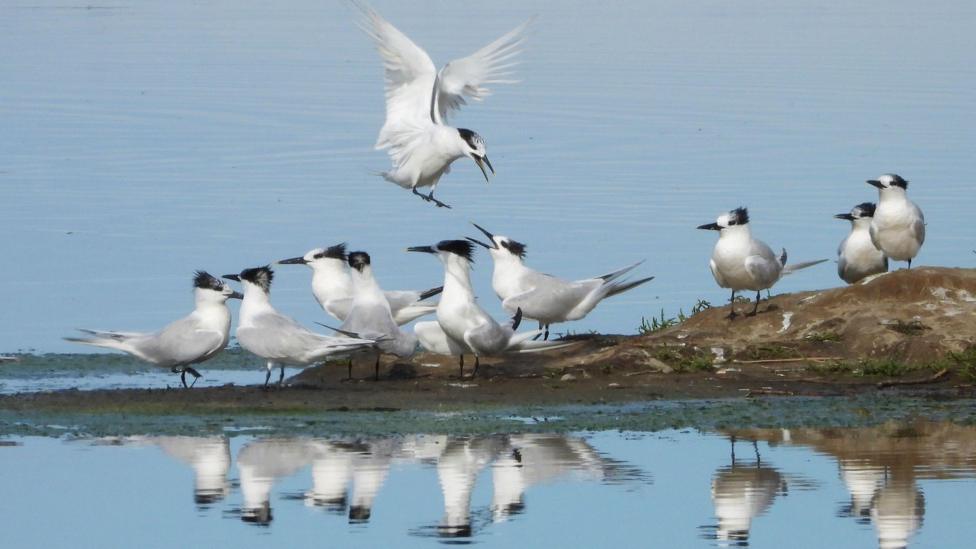
RSPB Minsmere is home to avocets, bearded tits and bitterns. Its landscapes include grasslands, lagoons, heathland and vegetated shingle, which supports a range of creatures, flora and fauna - not just birds.
Konik, Dartmoor and Exmoor ponies also graze there, and the RSPB says they are all safe and being cared for.
It said "recovery will be a long process" but that "nature is resilient, and so is the community".
"recovery will be a long process"
"nature is resilient, and so is the community"
The charity's area manager, Adam Rowlands, has said it will take some habitats 25 years to recover.
The blaze started at RSPB Minsmere before spreading rapidly to Dunwich Heath located next to it.

What happened when the fire was at its worst?
At the height of the inferno, more than 100 firefighters were deployed to the scene and up to 150 residents and holidaymakers were estimated to have been forced from the area. No injuries have been reported, and a relief centre for those affected was set up at Westleton Village Hall.
A trio of friends from Welwyn Garden City in Hertfordshire, who were camping at Cliff House Holiday Park, ended up sleeping in a cosy VW Golf on Wednesday night.
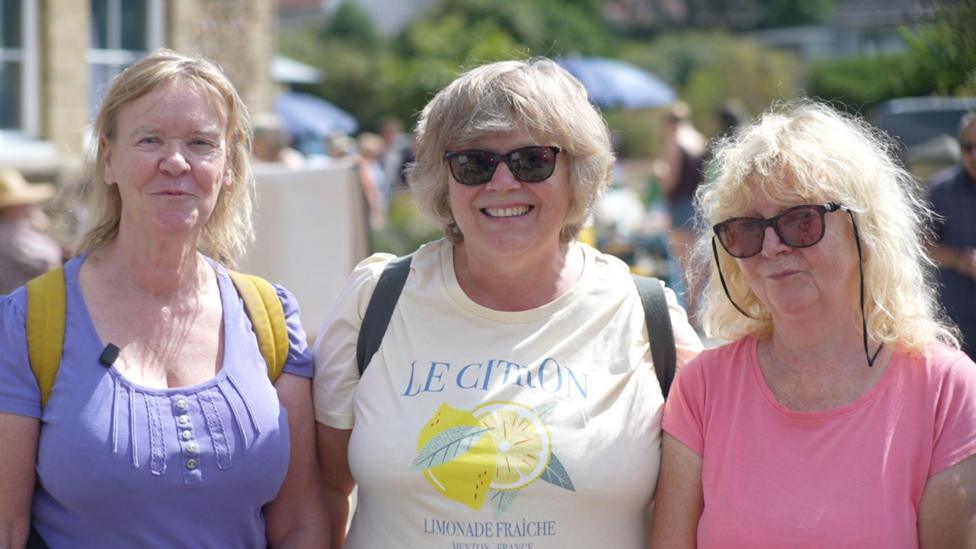
"We didn't get much sleep," said Lynne Sawyer.
Crowds attended the market earlier and Barbara Buckley, chairwoman of the trustees of Westleton Village Hall, said:
"I thought it would be a good thing for people to be able to chat about things that aren't about the fire."
She was "incredibly touched" by people's response to the fires, adding that the hall would join fundraising efforts to help restore the heath.
What has been the political response?
Meanwhile, Green members at Suffolk County Council have called for the authority's climate emergency declaration to be reinstated following the wildfire, saying that the blaze "makes it abundantly clear that Suffolk, like the rest of the world, is indeed experiencing a climate emergency".
The Reform UK-led council voted to rescind the declaration earlier this month. The council has been contacted for comment.
The fire has taken hold about three miles (5km) north up the coast from the Sizewell B nuclear power plant.
On Friday evening, an EDF spokesperson said the blaze had not affected operations but that they continued to "closely monitor the situation".
Do you have a story suggestion for Suffolk? Contact us below.
Get in touch
Follow Suffolk news on , Facebook, external, Instagram, external and X, external.
Wildfire still growing and unpredictable, says fire service
Watch: Thick smoke and flames as crews tackle Suffolk wildfire
Related internet links
Suffolk Fire and Rescue Service