Permission has been refused for a guga hunt that would have seen hundreds of young seabirds killed on an uninhabited Hebridean island. The decision affects Scotland's last remaining guga hunt this year and was taken by NatureScot's board following a recommendation by officials.
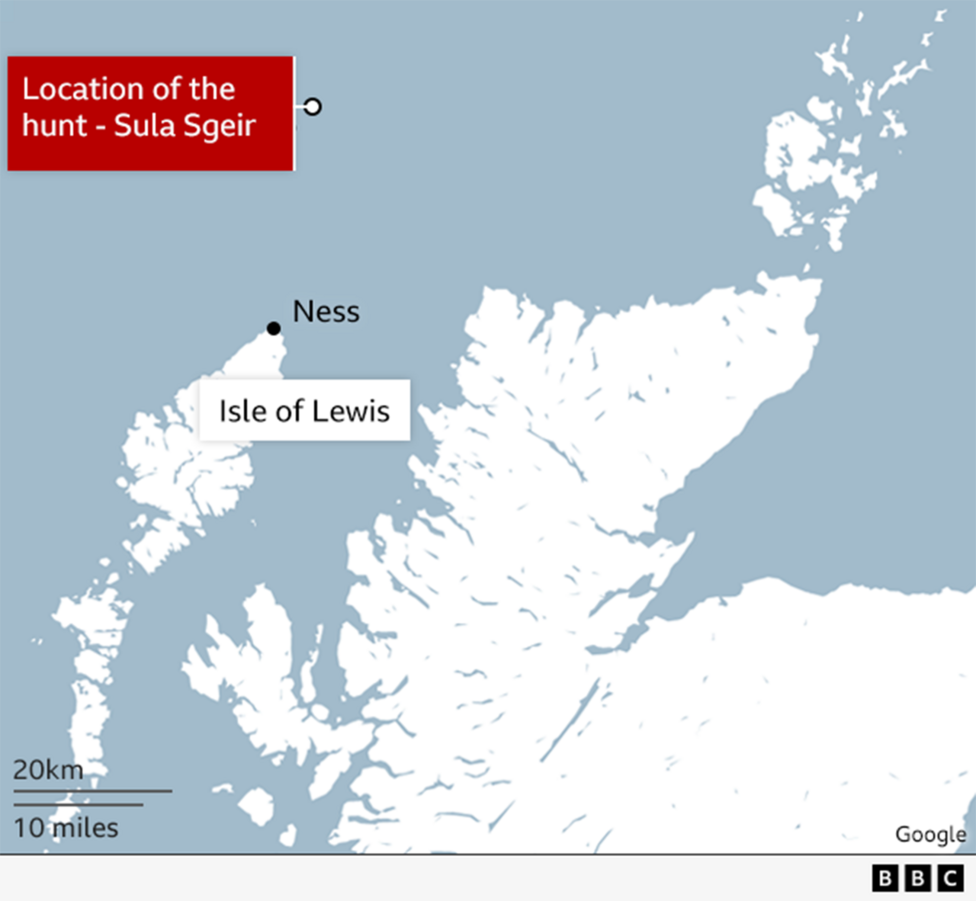
For centuries, gannet chicks have been hunted for their meat each summer on Sula Sgeir, a small rocky island 40 miles (64km) north of Ness on Lewis. Modern hunts require a licence from public agency NatureScot, which rejected the application this year due to concerns about the impact on the gannet population.
Animal welfare groups have welcomed the decision, but supporters accused campaigners of "bullying" a small island community.
What is the guga hunt?
Hunting seabirds on Sula Sgeir goes back to the time of the Vikings, according to historian Donald S Murray, author of the book The Guga Hunters.
Murray told BBC Radio Scotland Breakfast that historically birds were a vital source of food for people living in Ness, Lewis, on the North Atlantic coast.
He said the area had "geographical difficulties". Rough seas made fishing hazardous and there were challenges around the quantity and quality of the land, which was mostly moorland.
"It was a case of survival," said Murray.
A group of 10 islanders, known as the Men of Ness, would spend about 10 days in August harvesting chicks, which are known as guga.
In the past, other parts of Scotland - including Orkney and Shetland - also had seabird hunts.
On St Kilda, before the archipelago was abandoned in 1930, birds were killed for their meat and also oils for fuel and waterproofing, while the feathers were used for clothing and bedding. Eggs were also collected as food.
Gannet chicks taken from Bass Rock in the Firth of Forth were sold in a market in Edinburgh.
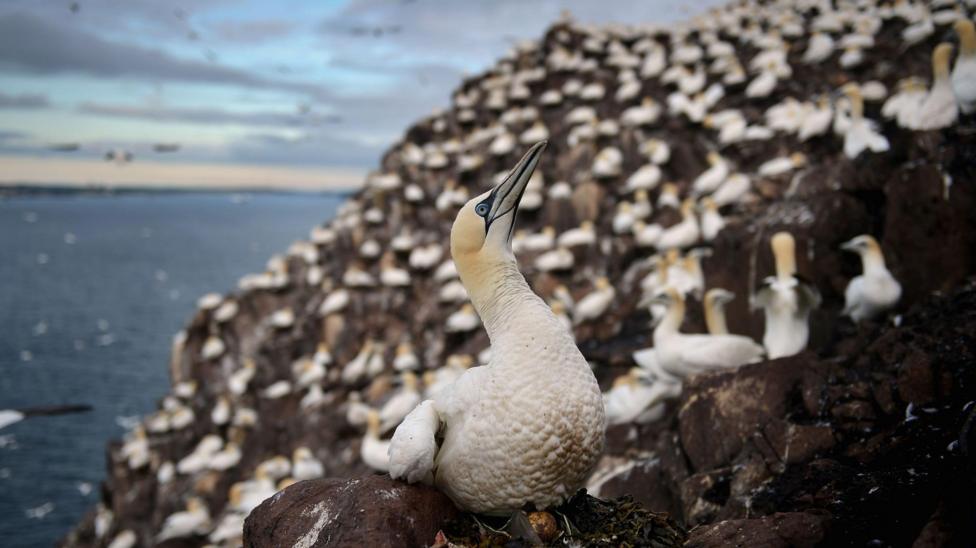
The meat has been described as tasting like a cross between kipper and steak or "salty goose" and, less flatteringly, as "rotten leather and fishy beef", external.
Other descriptions have included it being like a mix of anchovy paste and high-strength cod liver oil.
The hunt takes place on Sula Sgeir, a small island north of Lewis in the Outer Hebrides.
What are the arguments for and against the hunt?
Opponents say the hunt is no longer needed to feed islanders and describe the method used to kill the chicks as cruel.
Harvesting methods have remained largely traditional, according to a report by the Scottish Seabird Centre, external.

Hunters use long poles fitted with a noose to catch chicks in their nests before being killed, usually by a blow to the head.
The birds are gutted, plucked and salted on Sula Sgeir before being taken by boat to Lewis where they are counted by a NatureScot official.
Harvests did not take place in 2022, 2023 and 2024 due to concerns around bird flu.
A total of 485 birds were taken at the 2025 hunt. Hunters had sought a licence to take either 2,000 or 500 birds this year.
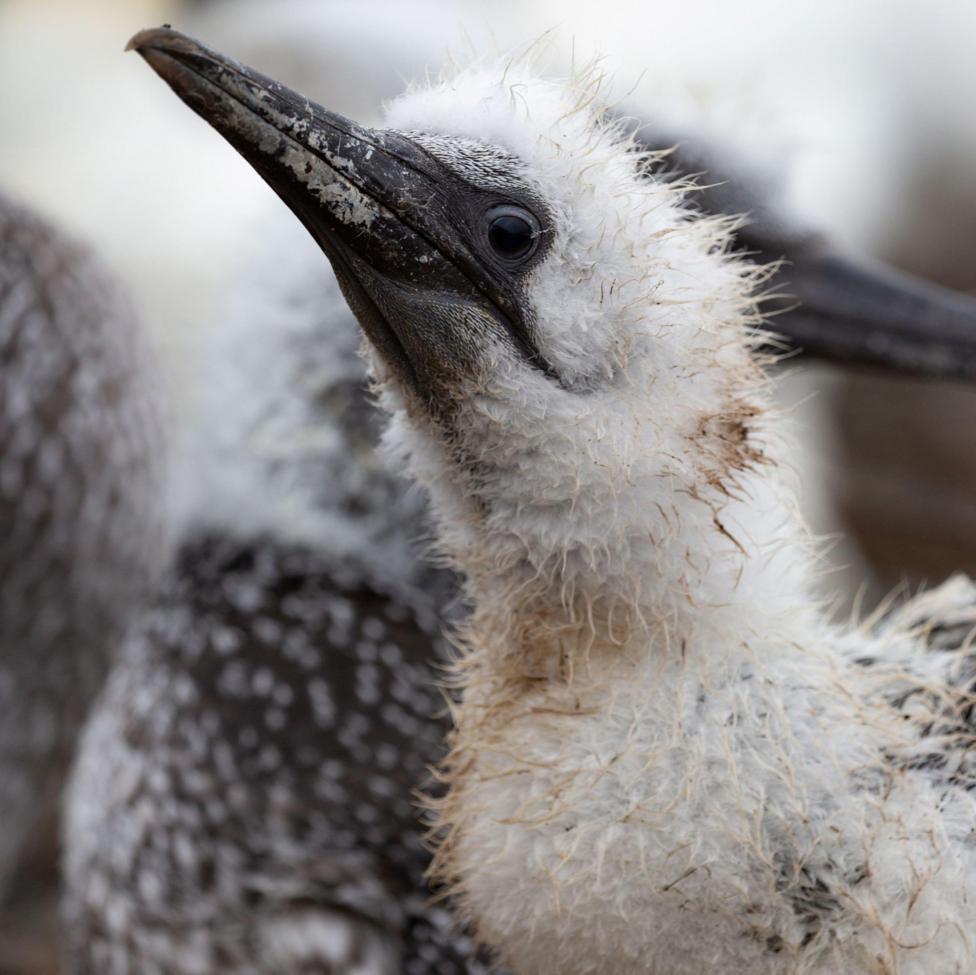
Devon Docherty, Scottish campaigns manager at Protect the Wild, said refusing a licence was a "victory for compassion, for science and for common sense".
"Thousands of young seabirds have been spared from a brutal death because NatureScot chose to follow the evidence rather than simply rubber-stamp another licence to kill."
More than 106,000 people signed a petition, external calling for the Scottish government to prohibit the hunt.
The cultural significance of the hunt is recognised under the Wildlife and Countryside Act 1981, and modern hunts require a licence from NatureScot.
Agnes Rennie, chair of Urras Oighreachd Ghabhsainn, the local community land group for the north of Lewis, said the hunt remained central to local identity.
"The guga hunt is a centuries-old tradition which reinforces our unique communal identity and helps families keep ancient Gaelic customs alive and relevant in the modern world."
Historian Donald S Murray said food security was not guaranteed, and argued that the hunt was not unique.
He said that in New Zealand sooty shearwater, also known as muttonbirds, were traditionally hunted on Rakiura, which is also known as Stewart Island.
Murray described the campaign against the guga hunt as "monstrous".
Anti-guga hunt graffiti was sprayed on walls at NatureScot's headquarters in Inverness in February, and was followed by a rooftop protest in March.
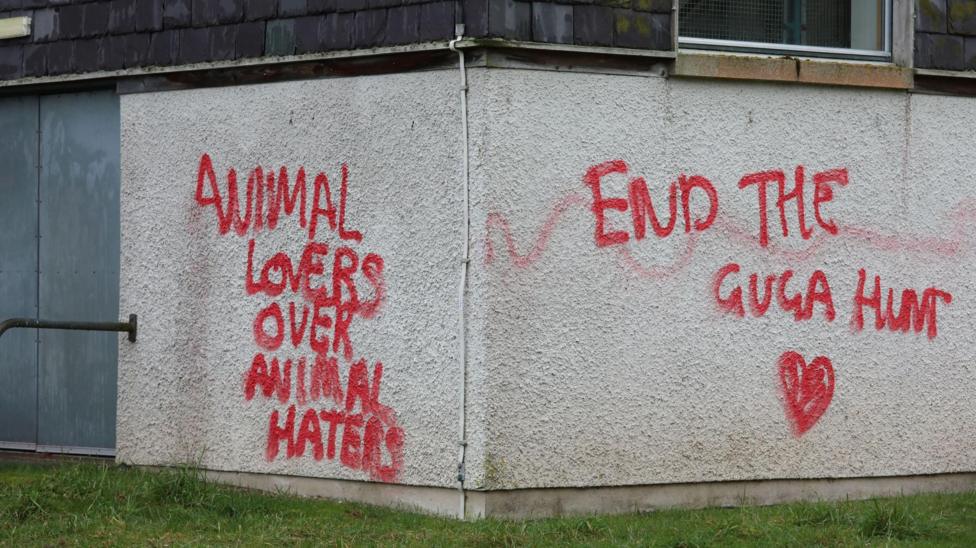
Murdo MacRitchie, of the Save Our Guga Harvest group, said peaceful protest was "entirely legitimate", but criticised some of the opposition.
"People in Ness will understandably feel that this recommendation risks rewarding a campaign in which members of a small island community have been bullied and abused and publicly-owned property has been vandalised."
He said Sula Sgeir's gannet population projections were "positive" and he could not understand why a harvest of 500 birds was not supported by officials.
Scotland's centuries-old guga hunt could be refused licence
Permission sought for traditional guga hunt to take place this year
Campaigners outside the Scottish parliament during a protest in January