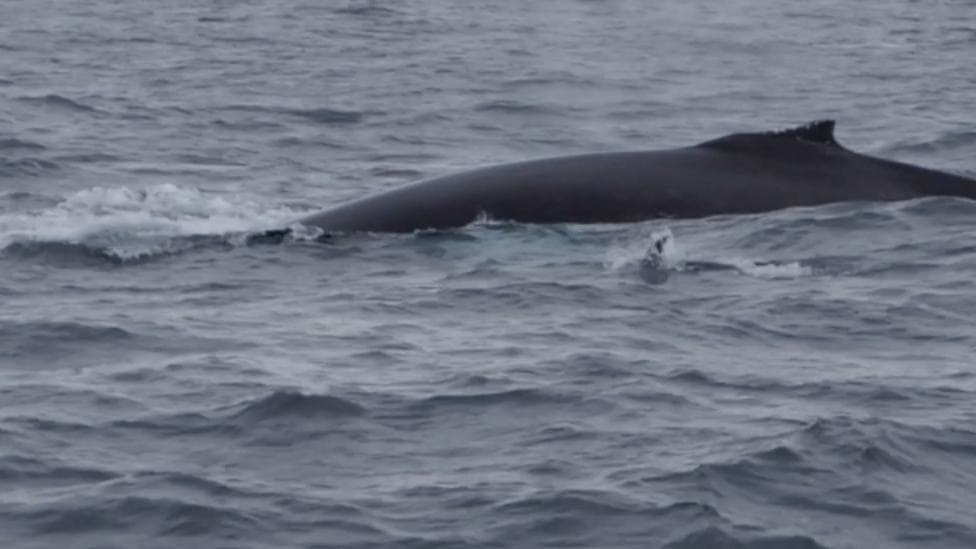
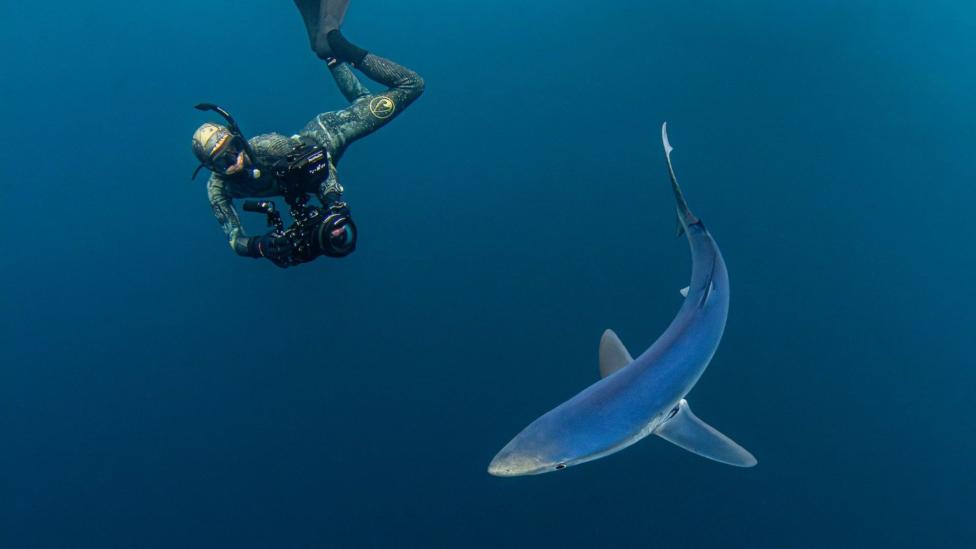
A wildlife cinematographer working as a shark guide experienced an unexpected moment of wonder when a humpback whale surfaced near his boat off the Pembrokeshire coast on 25 September. Dan Abbot, who operates under the social media handle Sharkman Dan, was leading a scheduled blue shark snorkelling trip in the Celtic Sea when the encounter unfolded, turning what had already been a successful day into something far more remarkable.
Although Abbot has encountered humpback whales before on dedicated whale-watching expeditions, this sighting proved entirely different. The group had completed their snorkelling activity and were positioned 25–30 miles offshore when a guest spotted a distant whale blow. Abbot initially suspected it might be a minke or fin whale, the two species most frequently observed in Welsh waters, but as the boat moved closer to an area where bluefin tuna, dolphins and gannets were actively feeding, he began to notice distinctive features.
"As we got a bit closer and parked the boat a bit to let things develop around us, I noticed that when it came up for a blow, it actually had white pectoral fin, which fin whales don't have," Abbot said. "And then the other thing they don't do is they don't lift their tails out of the water, which humpbacks do. You could see barnacles around the front of the head, which fin whales don't have."
The identification became clear: the animal was a humpback whale. According to wildlife photography reports, Abbot filmed the whale approximately one minute after making this realisation. The encounter was particularly striking given that only a couple of humpback sightings had been recorded in the area during the previous five or six years.
Why was this sighting so unusual?
Lloyd Nelmes, an aquarium manager and marine project officer with Sea Trust Wales, contextualised the rarity of the moment. For someone like Abbot who spends his working life observing the water, such an encounter remains genuinely exceptional.
"The sighting was unusual for someone who works in the field... who probably has their eyes on the water every day,"Nelmes explained, adding that
"for a normal person, it's insanely rare."
Humpback whales are substantial animals; they can reach 14.5–19 metres in length and weigh around 40 tonnes. Despite their size, they remain uncommon visitors to Welsh waters. Nelmes noted that humpback sightings in the region occur roughly once every two or three years, though he observed that the frequency appears to be increasing. The Celtic Deep, where this encounter took place, is designated as an Important Marine Mammal Area where fin and minke whales occur regularly, while humpbacks are also recorded along the Celtic Sea and show signs of recovery from historical whaling pressure.
What made this moment special for the cameraman?
For Abbot, the emotional impact of the sighting transcended his professional experience.
"I don't really get that excited, which sounds strange. I'm usually one of the quietest ones on the boat, but I think it was just because it was such a surprise to see that species. I'm a wildlife cameraman but when something happens like that unexpectedly and catches you off guard, there's something about it that kind of makes it even more special."
The guests aboard had already spent four hours snorkelling and observing multiple sharks, leaving them in celebratory spirits. The unexpected appearance of a humpback whale provided a culminating moment that transformed the day into something unforgettable. Abbot reflected that
"then to see a humpback whale was just an incredible way to finish the day."

How common are humpback whales in UK waters?
Nelmes himself experienced a memorable humpback encounter in Pembrokeshire during 2024.
"The whale jumped out right in front of us. It was incredible, and it's still probably my top wildlife moment of my life."His perspective on the species' presence in Welsh waters reflects cautious optimism about their recovery.
"We've seen humpbacks here on the rare occasion... but it seems to be becoming more common, which is awesome. It's quite likely just an indication of how much food is about at the moment."
The abundance of marine life in the region during late September appeared to be drawing larger cetaceans to the area. Nelmes had conducted an expedition to the Celtic Deep the day before Abbot's discovery and observed six fin whales, tuna balling up, and over 1,000 dolphins—conditions that suggested the presence of humpbacks in the vicinity was not entirely surprising, even if their appearance remained statistically uncommon.
The identification features that Nelmes highlighted—overall body shape, white pectoral fins, and the distinctive knobbly skin formed by barnacles—serve as reliable markers for distinguishing humpbacks from the more frequently encountered fin and minke whales. Behavioural cues, particularly the characteristic tail-fluking display that humpbacks perform when diving, provide additional confirmation of identity.
What does this sighting suggest about marine recovery?
The increasing frequency of humpback whale observations in UK waters aligns with broader patterns of cetacean recovery following the end of commercial whaling. A 2024 humpback nicknamed "Humpy" was tracked from Fishguard to Cornwall through photo-identification, marking the first documented match between south-west England, Wales and the Isle of Man, demonstrating that individual whales are moving across wider ranges in the region. However, a 2026 Natural Resources Wales assessment notes that while humpbacks have been reported across UK waters, evidence remains limited to confirm a perceived increase in numbers with certainty.
The convergence of abundant food resources—bluefin tuna, dolphins and seabirds all feeding together—creates the conditions that attract larger marine mammals to specific locations. For wildlife professionals and casual observers alike, such moments remind us that even in well-studied waters, nature retains the capacity to surprise and inspire.