The glow worm, despite its name, is actually a beetle.
It is a warm but windy evening in East Sussex and we are on the hunt for glow worms. As the sun sets on the Benfield Hill Nature Reserve, just outside Hove, a distinct green glimmer starts to flicker in the chalk grasslands.
This site is hailed as a "stronghold" for glow worms in Sussex and with the insects' summer breeding season well under way, conservationists say they have spotted 60 glowing females on one evening at the reserve. It is Brighton and Hove's oldest local nature reserve and a team of volunteers has been helping to manage the grasslands to promote glow worms.
The glow worm population is thought to be at risk nationally from loss of habitat, climate change and light pollution.
Sally Wadsworth, chair of Benfield Wildlife and Conservation Group, says some areas of grass are kept longer so that the females can crawl up the stalks for mating.
"We're trying different techniques and I think it is working because we've got such a good population here," she added.
On a windy summer's evening, she is out on the nature reserve trying to spot them.
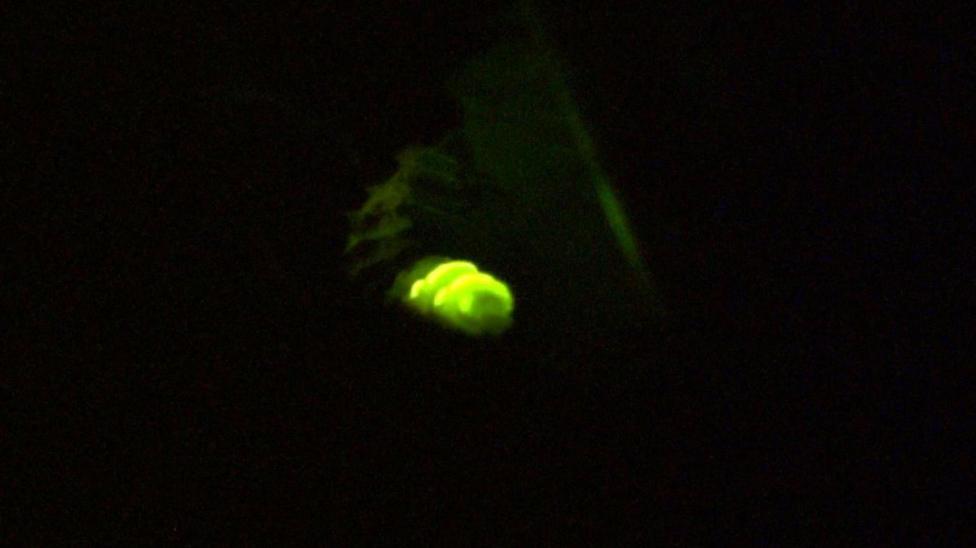
"The females stick their bottoms in the air and switch on a green light, which is bioluminescence," she says.
"You can see little green stars all dotted around."
Female, adult glow worms only 'glimmer' for a short period in June and July
Every summer, female glow worms put on a remarkable display, emitting a bright green light to attract males.
It is a spectacle that has fascinated people for centuries and one that conservationists are working hard to protect.
"If there's a lot of light pollution around, the males can't see the females and come in and mate with them," Wadsworth says.
The experience of seeing a glow-worm never loses its magic for Sally Wadsworth
Protecting existing populations is particularly important because glow worms don't spread far.
While males can fly, females have no wings and rarely move far from where they hatch.
Wadsworth explains that if you lose glow worms in an area, they are lost forever unless you carry out a reintroduction program.
Earlier this year, volunteers and rangers from the South Downs National Park released 250 glow worm larvae at a site near Alton in Hampshire, in an attempt to reintroduce them to an area where they had disappeared.
The larvae were sourced from Devon and introduced with the help of specialist consultants.
"It's a bit of an experiment," says Jan Knowlson, biodiversity officer for the South Downs National Park.
"We don't know quite what's going to happen, but hopefully they'll survive and thrive and we'll have lots of little glow worms in the future."
Light pollution is thought to disrupt the breeding pattern of the glow worm
Across Europe, five species of glow worm are threatened with extinction, while the common glow worm is classified as near threatened.
According to the Wildlife Trust, the UK has lost more than 80% of its chalk grasslands since World War Two - a habitat the glow worms enjoy.
Artificial light is also thought to have had an impact on glow worm populations.
The South Downs National Park is considered one of the best places in the region for glow worms because it contains some of the country's darkest skies.
This year marks the 10th anniversary of the South Downs being designated an International Dark Sky Reserve and protecting those dark landscapes has become an increasingly important part of conservation efforts.
Knowlson says keeping that dark sky is vital for the glow worms' survival, saying that during the summer, adult females have "got one job to do".

"They don't eat, they just breed and then lay eggs and die. If there's light pollution that's going to really disrupt that final stage of their life cycle," she says.
The National Park Authority has also made increasing dark sky coverage a priority within its five-year Partnership Management Plan, with ambitions to expand the darkest core areas by 10% by 2031.
Follow BBC Sussex on Facebook, external, on X, external, and on Instagram, external and listen to BBC Radio Sussex on Sounds. Send your story ideas to southeasttoday@bbc.co.uk, external or WhatsApp us on 08081 002250.
What makes Benfield Hill Nature Reserve important?
Benfield Hill Nature Reserve is one of Sussex's key glow worm habitats and Brighton and Hove's oldest local nature reserve. Volunteers manage the chalk grasslands there in ways that help the insects breed and survive.
The reserve has become known as a stronghold because conservationists have seen as many as 60 glowing females in a single evening during the summer breeding season.
Why are glow worms at risk?
Glow worms are thought to be threatened nationally by habitat loss, climate change and light pollution. Their dependence on suitable grassland and darkness makes them vulnerable where land is altered or illuminated.
Although males can fly, females have no wings and rarely move far from where they hatch, which means local populations do not spread easily.
How do volunteers help the insects?
Volunteers and conservationists manage the grassland by leaving some areas longer so that females can crawl up the stalks for mating. Sally Wadsworth says different techniques are being tried to support the population.
"We're trying different techniques and I think it is working because we've got such a good population here," she added.
On a windy summer's evening, she is out on the reserve trying to spot them and describes the females' light display as bioluminescence.
"The females stick their bottoms in the air and switch on a green light, which is bioluminescence," she says.
"You can see little green stars all dotted around."
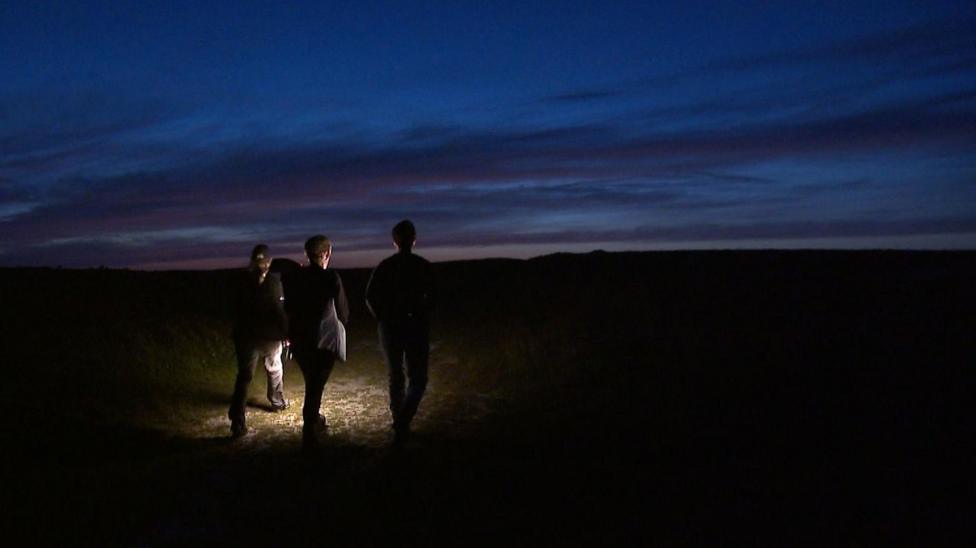
Female adult glow worms only glimmer for a short period in June and July, when their bright green light is used to attract males. Conservationists say that makes the breeding season a brief but important window for protection.
That display has fascinated people for centuries and remains one of the reserve's most distinctive natural sights.
Why does light pollution matter?
Light pollution can stop males finding the glowing females and disrupt mating. Wadsworth says that if there is a lot of artificial light around, males cannot see the females and come in to mate.
"If there's a lot of light pollution around, the males can't see the females and come in and mate with them," Wadsworth says.
Artificial light is thought to have affected glow worm populations more widely, and the South Downs National Park is regarded as one of the best places in the region for them because it contains some of the country's darkest skies.
This year marks the 10th anniversary of the South Downs being designated an International Dark Sky Reserve, and protecting those dark landscapes has become a more important part of conservation work.
What are conservationists doing elsewhere?
Protecting existing populations is seen as essential because glow worms do not spread far. If they disappear from an area, Wadsworth says, they are lost forever unless a reintroduction programme is carried out.
Earlier this year, volunteers and rangers from the South Downs National Park released 250 glow worm larvae at a site near Alton in Hampshire to try to bring them back to an area where they had disappeared.
The larvae were sourced from Devon and introduced with the help of specialist consultants.
"It's a bit of an experiment," says Jan Knowlson, biodiversity officer for the South Downs National Park.
"We don't know quite what's going to happen, but hopefully they'll survive and thrive and we'll have lots of little glow worms in the future."
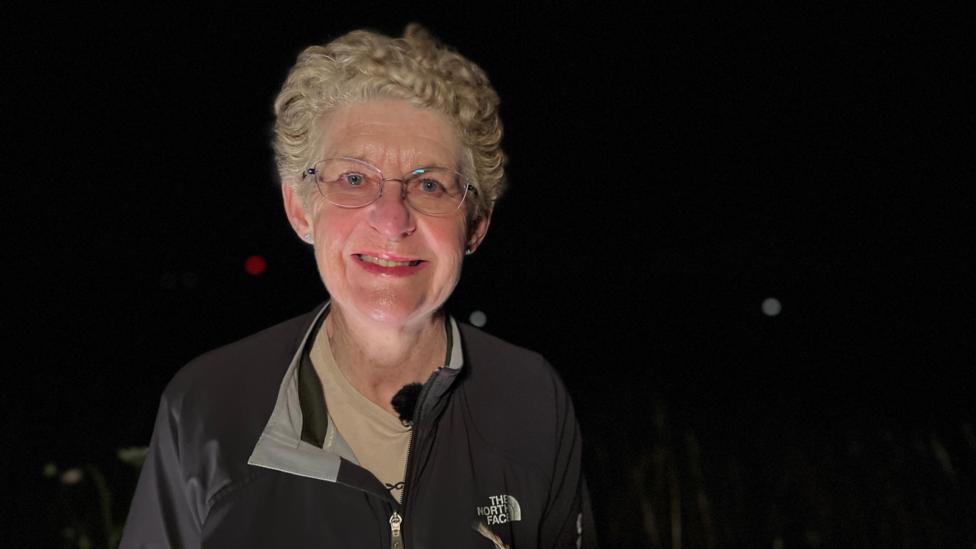
Knowlson says keeping the dark sky is vital for the glow worms' survival because adult females have "got one job to do" during the summer.
"They don't eat, they just breed and then lay eggs and die. If there's light pollution that's going to really disrupt that final stage of their life cycle," she says.
The National Park Authority has also made increasing dark sky coverage a priority within its five-year Partnership Management Plan, with ambitions to expand the darkest core areas by 10% by 2031.
Key Facts
- The glow worm, despite its name, is actually a beetle.
- Benfield Hill Nature Reserve is Brighton and Hove's oldest local nature reserve.
- Conservationists say they spotted 60 glowing females on one evening at the reserve.
- Earlier this year, 250 glow worm larvae were released near Alton in Hampshire.
- The South Downs aims to expand the darkest core areas by 10% by 2031.
Follow BBC Sussex on Facebook, external, on X, external, and on Instagram, external and listen to BBC Radio Sussex on Sounds. Send your story ideas to southeasttoday@bbc.co.uk, external or WhatsApp us on 08081 002250.