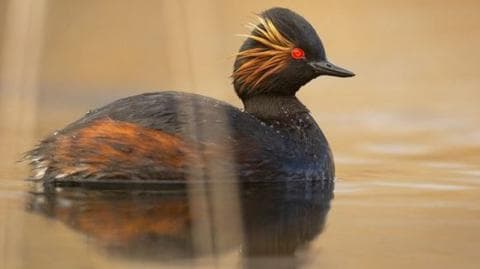
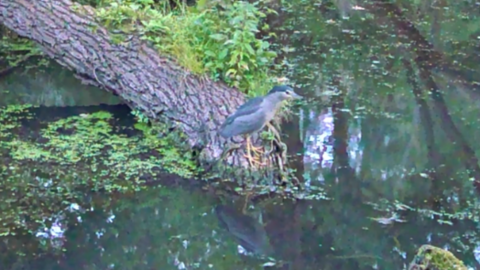
A bird rarely seen in the UK has been caught on camera in Somerset, raising hopes that work to restore freshwater habitats could provide a refuge for it. The black-crowned night heron has been spotted at National Trust's Holnicote Estate, near Minehead, where conservationists have introduced new freshwater habitats for wildlife.
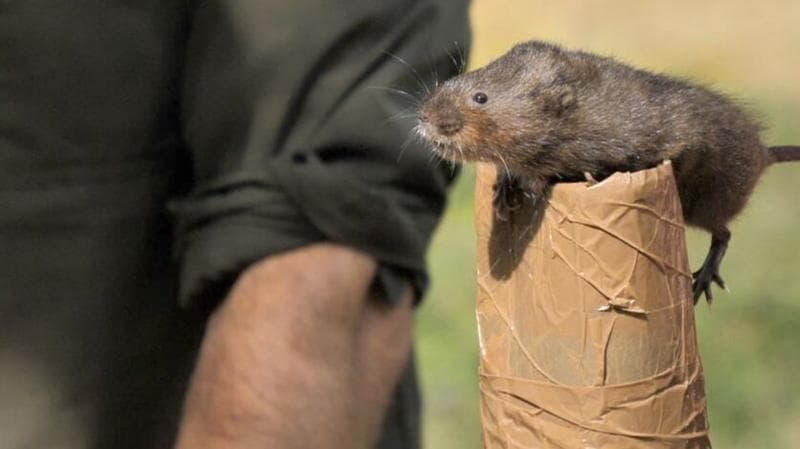
The species is widespread across Africa, Asia, the Americas and Europe, but it remains a scarce visitor to the UK. The work at the estate is intended to provide a refuge not only for the heron, but also for water voles, otters, pine martens and even white-tailed eagles.
Ben Eardley, project manager for Somerset Coast and Countryside, said:
It's rare to see this wetland species in the UK and so exciting that we have observed one on our estate cameras.
Wildlife cameras captured the night heron at the Holnicote Estate in Somerset.
Eardley added:
The UK has lost over 97% of its wetlands through drainage and changes in land management. Renewing existing wetlands and identifying opportunities to create new areas will help wildlife thrive, improve water quality, reduce flood risk and create more resilient landscapes for future generations.
The first confirmed breeding of night heron in the UK was recorded in Somerset in 2017, but the bird is still rarely seen in the country. As its name implies, it is mainly active at night, making it doubly difficult for people to spot.
Holnicote Estate beaver and wetlands project officer Jack Siviter said:

We are continuing to focus on wetland creation through our project work, as well as letting beavers modify and produce these habitats at scale.
If we can do this successfully, we are likely to see more wetland specialists arrive at Holnicote, and who knows – night herons might continue to appear.
The estate’s conservation work continues as part of efforts to create and restore freshwater habitats that can support a wider range of species in Somerset.
Get in touch
Tell us which stories we should cover in Somerset
Follow BBC Somerset on Facebook, external and X, external. Send your story ideas to us on email or via WhatsApp on 0800 313 4630.
Crane chick gives hope that species is flourishing
Delight as white-tailed eagle visits Somerset
Bitterns attract wildlife tourists to Somerset