

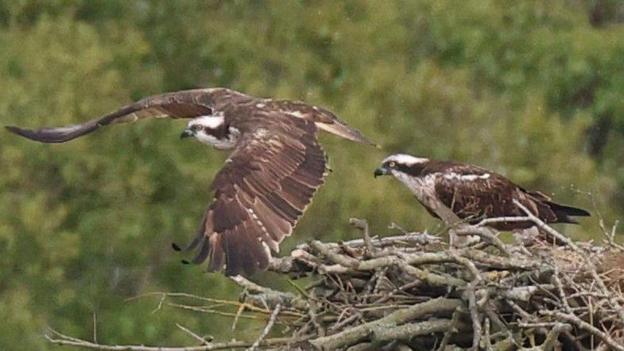
The RSPB has confirmed a conservation milestone after a pair of ospreys hatched three chicks at Campfield Marsh, a wetland nature reserve on the shores of Solway Firth in Cumbria, marking the first time the rare birds of prey have bred at one of the charity's English reserves. The eggs were laid between 30 April and 6 May 2026, and the chicks hatched in June 2026, prompting relief among reserve staff who had closely monitored the nest throughout incubation.
The nest sits on a platform specifically installed at the reserve to attract breeding ospreys, according to a report by LBC. The adults are both believed to be breeding for the first time: the male was ringed in Dumfries in 2021, while the female remains unringed.
Why does staff relief matter so much here?
Site manager Mhairi Maclauchlan said the team faced an anxious wait to see whether the eggs would successfully produce chicks.
We were on tenterhooks after the eggs were laid and throughout the incubation period until they hatched.
There was a huge collective sigh of relief when they did.
Maclauchlan also described the parents' behaviour around the nest in warmer terms than their fearsome reputation might suggest.

Osprey parents are surprisingly tender despite their large size and sharp talons.
They can also offer good comedic value with nest tidying exploits and antics.
She added that ospreys tend to return to familiar sites and partners, raising hopes for continued breeding success at Campfield Marsh in future years.
Ospreys are frequently site- and partner-faithful, so we're hoping to see more of them and their offspring in the future.
How is the species linked to Britain's conservation history?
Ospreys were hunted to extinction as a breeding species in the United Kingdom during the early 20th century, according to the LBC report. The birds did not return to breed in Britain until they recolonised parts of Scotland in the 1950s, before gradually spreading and establishing nests in other regions of the country in the decades since.
The species is migratory, wintering in west Africa before travelling to Europe each spring to breed, which makes any new successful breeding site significant for tracking the population's recovery and spread across England.
What happens to the chicks next?
All three chicks, along with their parent, have been fitted with identification rings, allowing conservationists to track their movements in the years ahead. A local primary school helped name the trio Ash, Bowness Bobbi and Beau after they hatched in June 2026.
According to the LBC report, the chicks are expected to fledge in August 2026, after which they will likely remain in the vicinity of the reserve to practise fishing and develop the skills needed to survive independently. From September 2026, they are expected to begin their weeks-long migration south to Africa for the winter.
Elsewhere in England, a separate reintroduction effort has also seen breeding success this year. The only breeding osprey pair in southern England, known as CJ7 and 022, hatched their first chick of the 2026 season at Poole Harbour in Dorset, while the first of four juvenile ospreys from that same Dorset programme has since fledged, continuing to return to the nest for feeding ahead of its own migration to West Africa.
Key Facts
- Three chicks hatched at Campfield Marsh in Cumbria in June 2026, the first osprey breeding success at an RSPB reserve in England.
- Eggs were laid between 30 April and 6 May 2026; the male parent was ringed in Dumfries in 2021, the female is unringed.
- All three chicks and their parent have been ringed to allow future tracking; a local primary school named them Ash, Bowness Bobbi and Beau.
- Ospreys were driven to extinction as a UK breeding species in the early 20th century before recolonising Scotland in the 1950s.
- Fledging is expected in August 2026, with migration to Africa beginning from September 2026.


