
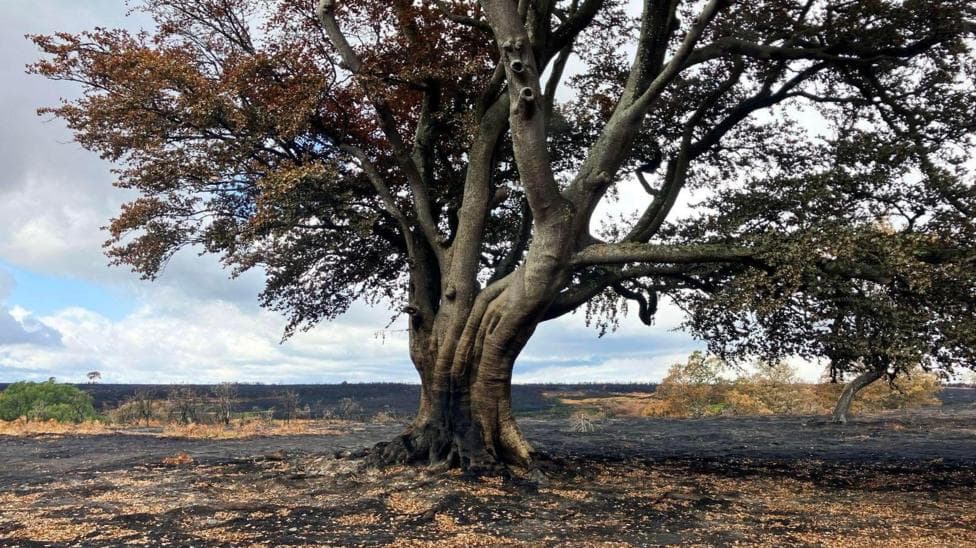
A major wildfire that swept through the New Forest national park on 9 August has devastated centuries-old woodland, rare wetland plants and wildlife habitats across an extensive area, according to an initial damage survey by Forestry England.
The blaze consumed more than 1 sq km of protected landscape, with later assessments indicating the affected zone covered approximately 1.6 sq km (roughly 165 acres). The fire began after a vehicle caught fire on the A31 dual carriageway between Ringwood and Cadnam, then spread first to Bratley Wood before advancing across surrounding heathland in the national park.
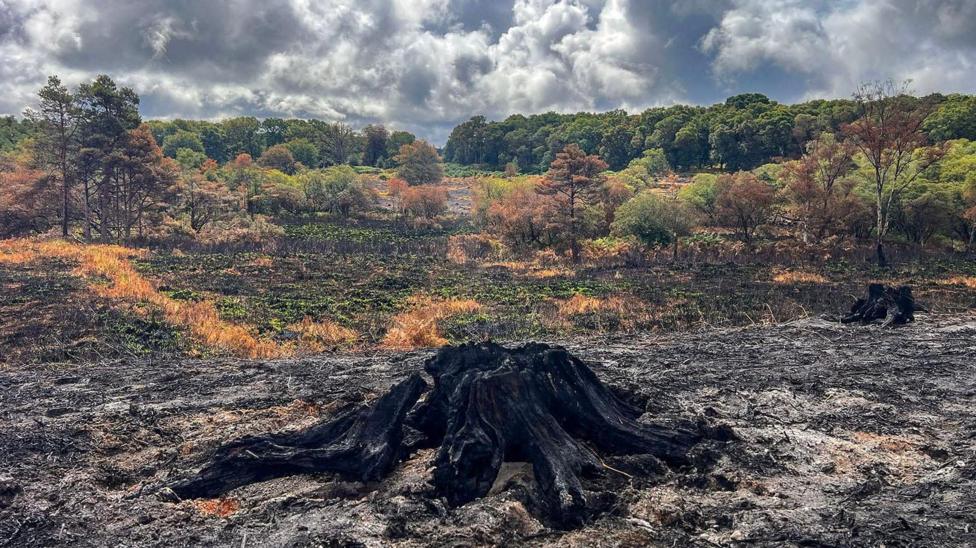
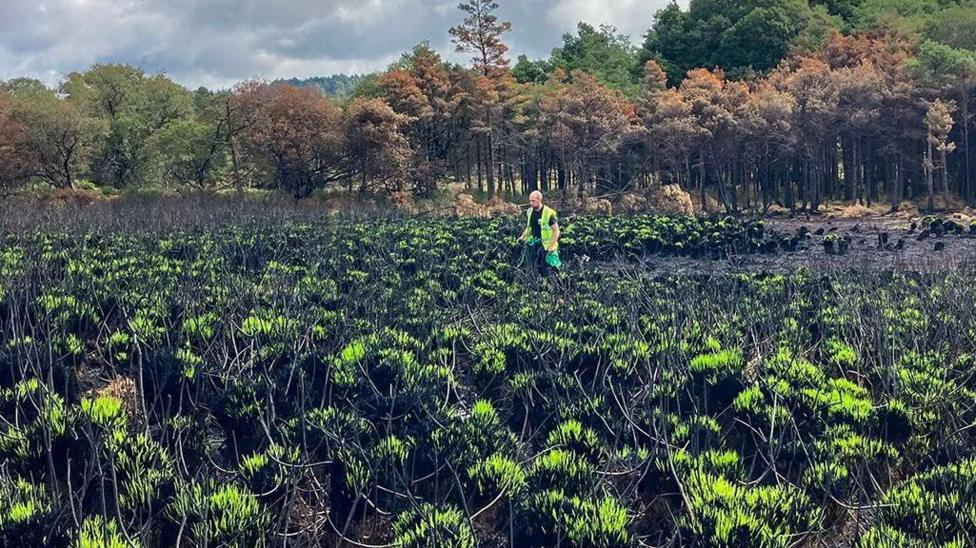
An inspection of the damage revealed areas stripped of all vegetation, deceased wildlife and scorched bogland. Forestry England warned that full environmental recovery would require decades of restoration work.
What damage did the fire cause to the forest?
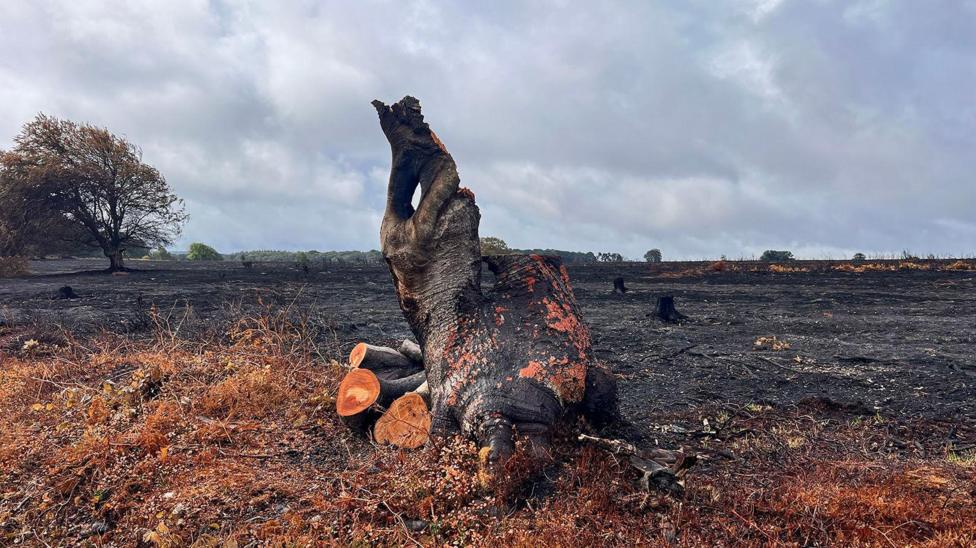
The destruction extended to ancient oak and beech trees, some several centuries old, as the intense heat penetrated their root systems and killed them. Bogs, which are normally resistant to fire damage, were burnt and partially destroyed across the affected zone.
Among the lost vegetation was pillwort, a rare wetland plant for which the New Forest represents a stronghold population. The fire also damaged car parks and sections of the cycle network in the area, which remain closed to allow emergency crews continued access.

What wildlife was affected?
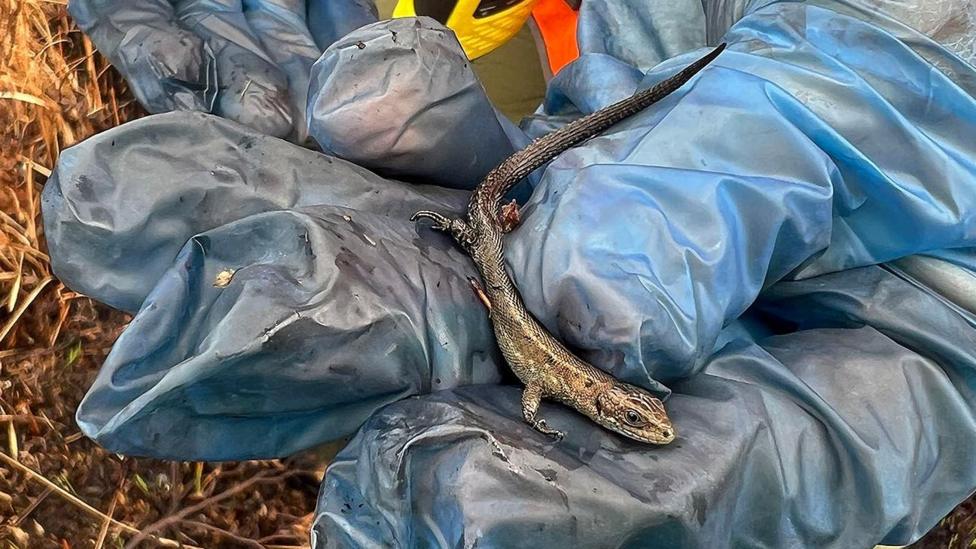
Amphibian and reptile experts conducted a rescue mission on Wednesday following the blaze, discovering dead wildlife throughout the burned zone. However, some survivors were located, collected and relocated to safer areas. A sand lizard was among the creatures rescued during this operation.
How will recovery be managed?
Forestry England has developed restoration plans based on lessons learned from a large-scale heathland fire in Wareham, Dorset, in May 2020. The recovery strategy involves using heather cuttings to form a protective layer over the soil, which will help stabilise the ground and initiate the restoration process. Despite these efforts, the affected area will require many years before it returns to its pre-fire condition.
What did officials say about the emergency response?
Michael Pittock, head of planning and environment at Forestry England, described the scale of destruction as devastating.
It is devastating to walk around the area of the wildfire and see so much destruction. Without the remarkable response from the fire and emergency services it could have been so much worse.
According to the New Forest National Park Authority, the fire was no longer classified as a major incident by mid-August, though crews remained on site checking for hot spots and making the area safe. Hampshire and Isle of Wight Fire and Rescue Service indicated that firefighters were expected to stay on scene for several days after the blaze was brought under control.
When will the A31 reopen?
The A31 dual carriageway, which passes through the national park between Ower and Ringwood in both directions, has been closed since the fire began. National Highways reported that repairs needed to the road surface include damage to safety barriers, bridge parapets and boundary fencing. The closure was expected to last until at least Thursday, 20 August 2026, though repairs could not commence until the area was officially declared safe by emergency services. The extended closure has forced traffic onto long diversion routes around the affected zone.
Key Facts
- The wildfire began on 9 August 2026 after a vehicle fire on the A31 near Ringwood and spread across approximately 1.6 sq km of the New Forest national park
- The blaze destroyed ancient oak and beech trees, rare wetland plants including pillwort, and damaged bogland that is normally fire-resistant
- Forestry England plans to use heather cuttings as a protective soil layer to begin restoration, drawing on experience from the 2020 Wareham heathland fire recovery
- The A31 remained closed in both directions between Ower and Ringwood for repairs until at least 20 August 2026
- Full environmental recovery of the affected area is expected to take decades


