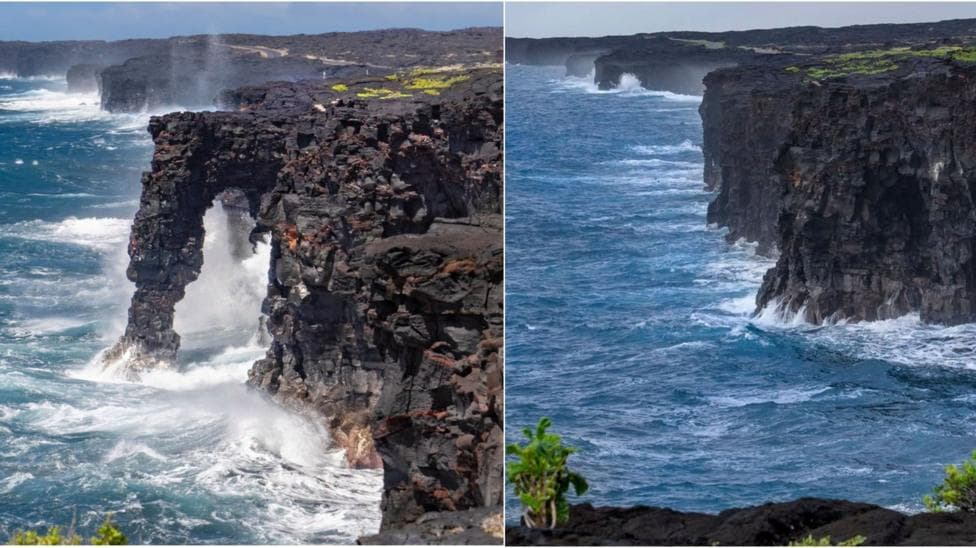
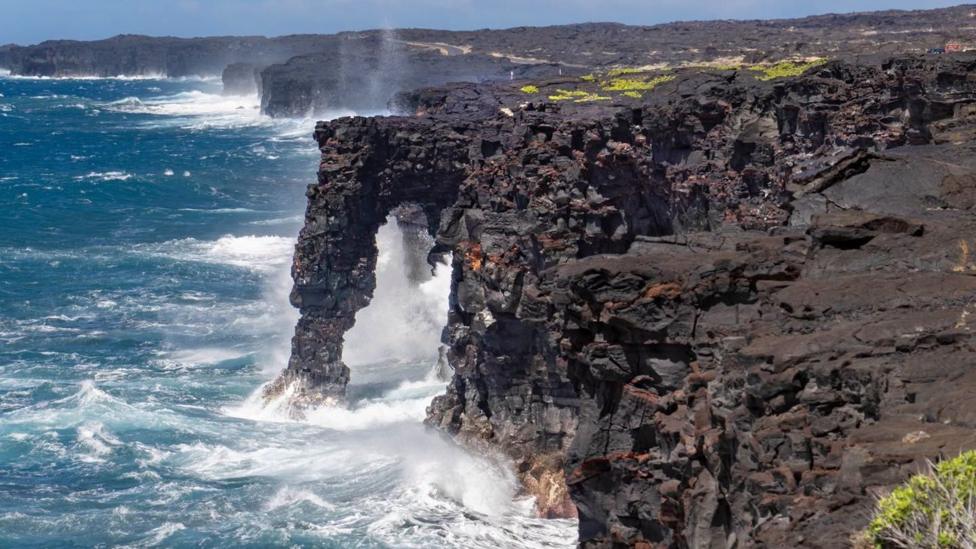
A towering lava rock formation that stood as one of Hawaii's most recognizable natural landmarks has vanished into the ocean. The Hōlei Sea Arch, a 90-foot-tall (27.4 metres) structure that took approximately 550 years to form, collapsed into the Pacific sometime between 23 and 27 September, according to the National Park Service (NPS).
The arch was still visible projecting from the coastline at Hawaii Volcanoes National Park on 23 September but had disappeared by 27 September, the NPS confirmed. The exact moment of collapse remains unknown, though park officials believe it fell during a period when the park was temporarily closed due to Tropical Storm Nolo. However, the park has not confirmed whether the storm's high surf conditions directly contributed to the collapse.
What caused the arch to fail?
Structural damage accumulated over years before the final collapse. The NPS had warned as early as 2021 that the formation would eventually crumble, noting that the coastline surrounding the sea arch displayed persistent signs of instability. The 2018 Kīlauea volcano eruption and subsequent summit collapse generated earthquakes that damaged the cliffs in the vicinity of the arch, weakening the rock structure.
The arch itself was carved into an ancient lava flow through a process called differential erosion, in which softer rock layers wore away faster than harder, more resistant layers. This same process that created the arch over centuries ultimately led to its vulnerability.
Tropical storms had previously damaged the formation. In 2020, waves from a tropical storm broke off a chunk of rock from the arch's base. More significantly, large surf from Tropical Storm Darby in 2022 broke off a substantial portion of the arch, weighing nearly half a ton.
Why was the arch so important to visitors?
Located at the end of Chain of Craters Road on Hawaii's Big Island, the Hōlei Sea Arch had become one of the most photographed natural features in the state. Thousands of visitors travelled to the park each year specifically to see and photograph the dramatic formation rising from the ocean. The arch represented a tangible connection to Hawaii's volcanic geology and the ongoing processes that continue to shape the islands.
Following concerns about visitor safety, the NPS closed the original arch viewing area in January 2020 after new cracks and instability appeared in the surrounding cliffs. A replacement viewing area opened in March 2020 at a safer distance from the unstable cliff edges.
What happens next?
The National Park Service issued a formal news release on 1 October confirming the collapse and urging all visitors to keep away from unstable coastal cliff edges, which can drop vertically into the ocean without warning. The agency emphasised that cliff collapses can occur suddenly and without advance notice.
Despite the loss of this particular formation, the NPS has indicated that the coastline will continue to evolve.
This formation is beautiful, but temporary, and has a limited life span. The sea arch will eventually crumble into the sea. However, others will replace it as the cliff slowly migrates inland.The collapse represents what the park service describes as
the latest transformation of the park's remote and rugged coastline.
The loss of the arch has resonated with many people who visited it over the years. Social media posts about the collapse drew thousands of comments from visitors sharing memories and photographs of the formation. One commenter reflected on the impermanence of natural wonders, writing:
Nothing and no one is here forever. Millions of years from now the sun will die. Appreciate the good, the beauty, now.
Key Facts
- The Hōlei Sea Arch stood 90 feet (27.4 metres) tall and formed approximately 550 years ago from lava rock
- The arch collapsed between 23 and 27 September, likely during Tropical Storm Nolo when the park was temporarily closed
- Damage from the 2018 Kīlauea volcano eruption and multiple tropical storms weakened the structure over time
- The NPS had warned since 2021 that the arch would eventually collapse due to ongoing coastal erosion and instability
- A safer viewing area was established in March 2020 after cracks appeared in the surrounding cliffs