

A project to protect some of Scotland’s rare “wee trees” has secured key funding to support conservation work in Lochaber. The woodland, which grows high up on mountainsides and includes juniper and globally-endangered whortle-leaved willow, will be mapped and used to guide nursery development.
Landscape restoration partnership Loch Abar Mòr will use a £108,000 award from the Scottish government to map the woodland in Lochaber and support the Wee Trees Lochaber project’s nursery plans. The trees do not grow to full height because of harsh mountain conditions and remain small and shrub-like.
Cuttings are to be taken of some of the trees for growing in a nursery.
How rare is this mountain woodland?
Abel McLinden, partnership manager for Loch Abar Mòr, said less than 37 acres (11ha) of the woodland was known to survive in Lochaber.
“Due to historic land management, including overgrazing, mountain woodland is one of Scotland’s rarest and most fragmented habitats,”
McLinden said the woodlands supported ecosystems, stabilised slopes and helped to regulate water flow.
He added:
“But these habitats are now restricted to isolated crags and gullies with little or no natural regeneration.
Without targeted intervention, the remaining populations will further decline, threatening the unique upland ecosystems and the species that rely on them.”
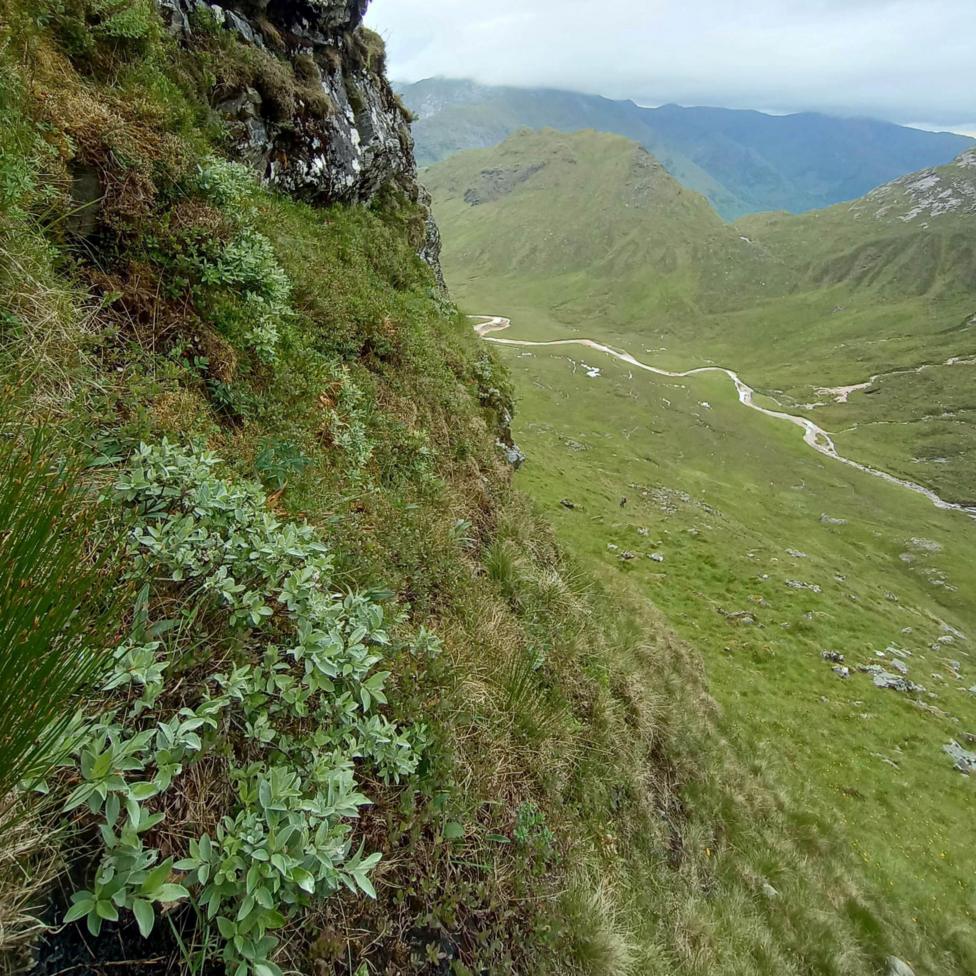

The woodlands have been described as some of the rarest in Scotland, and some of Scotland’s remotest and most difficult to access landscapes are to be mapped for the trees, including Creag Meagaidh, Glen Roy, Ben Nevis and Corrour.
Seeds and cuttings will also be collected so more trees can be grown in the nursery.
Why does NatureScot say the habitat matters?
Dr Katherine Leys, NatureScot’s head of biodiversity, said mountain woodland supports a huge range of plant and animal species while helping to relieve flooding and erosion.
“Mountain woodland supports a huge range of plant and animal species while helping to relieve flooding and erosion.
Without targeted action, we’re at risk of losing this rare and incredibly important habitat.”
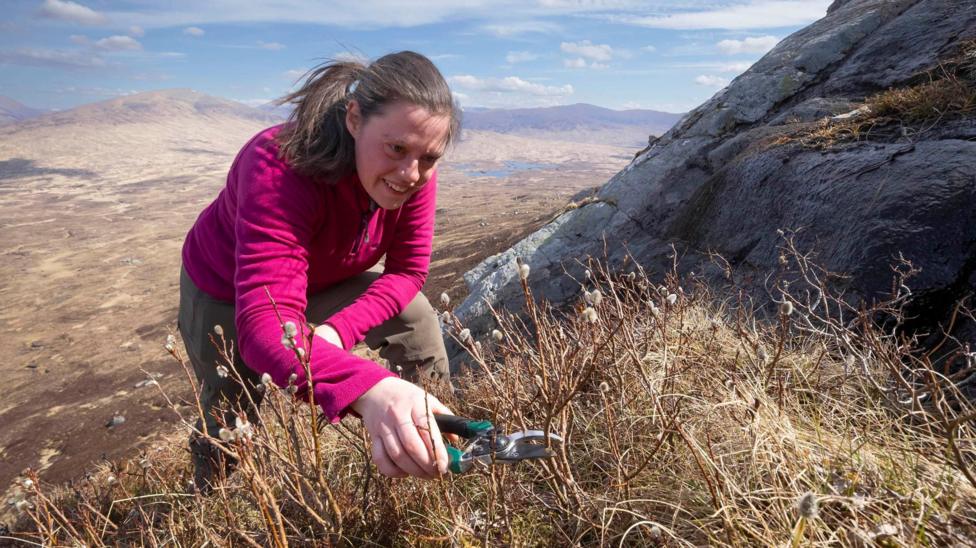
Sarah Watts, pictured, is a researcher in mountain woodland restoration.
Trees have been found at heights of more than 3,281ft (1,000m) on some of Scotland’s highest peaks.
The trees reach the mountains as seeds - often blown on winds or deposited in bird droppings after being eaten.
Scotland’s hilltops were once a landscape full of woodlands but tree cover disappeared over thousands of years due to human activity.
Key Facts
- Loch Abar Mòr has secured a £108,000 Scottish government award.
- Less than 37 acres (11ha) of the woodland is known to survive in Lochaber.
- Sites to be mapped include Creag Meagaidh, Glen Roy, Ben Nevis and Corrour.
- Trees have been found above 3,281ft (1,000m) on some of Scotland’s highest peaks.


