Crane Chick Birth Offers Hope for Species Recovery
The RSPB is celebrating the birth of a healthy crane chick on a nature reserve, signaling hope that the species is returning after a 400-year absence.
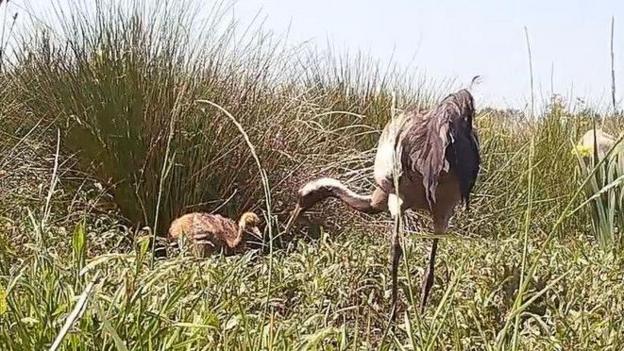
Staff and volunteers at RSPB Ham Wall have been thrilled to observe a 12-week-old crane chick preparing for its first flight on the Somerset Levels.
The chick's mother, Meg, is the offspring of two first-generation Somerset cranes that were hand-reared and released as part of The Great Crane Project between 2010 and 2014.
Steve Couch, RSPB Warden at Ham Wall, stated, "We are proud to see that cranes are naturally breeding. They choose to breed at Ham Wall because when nesting in the reedbeds it's almost impenetrable to predators."
Historical Context of Cranes in the UK
Cranes were once widespread and likely very common across the UK, but they disappeared as a breeding species during the Elizabethan Era, according to RSPB experts.

This decline is believed to have resulted from a combination of hunting for food and the extensive drainage of wetlands for agricultural development.
Ongoing Success at RSPB Ham Wall
This marks Meg's third successful year raising a chick at RSPB Ham Wall. It is probable that the unringed father is the same mate, as cranes often form lifelong pairs.
Steve Couch added, "RSPB Ham Wall has great feeding areas for cranes too, such as Broomfields, which is more fen-like and drier than other areas. There are lots of tussocks and rushes where they can safely hide while feeding on seeds, roots, worms, snails, and insects."
This summer, the RSPB Ham Wall team is appealing to visitors for support in protecting all breeding birds and fledglings on the reserve during this critical stage of the breeding season.
Community Engagement and Contact
Readers are encouraged to share story ideas related to Somerset by following BBC Somerset on Facebook and X, or by sending suggestions via email or WhatsApp at 0800 313 4630.
and Further Reading
- Cranes return to the UK due to rewilding effort
- Somerset garden birds at risk of 'parasitic disease'
- Rare bird brings wildlife tourists to county