
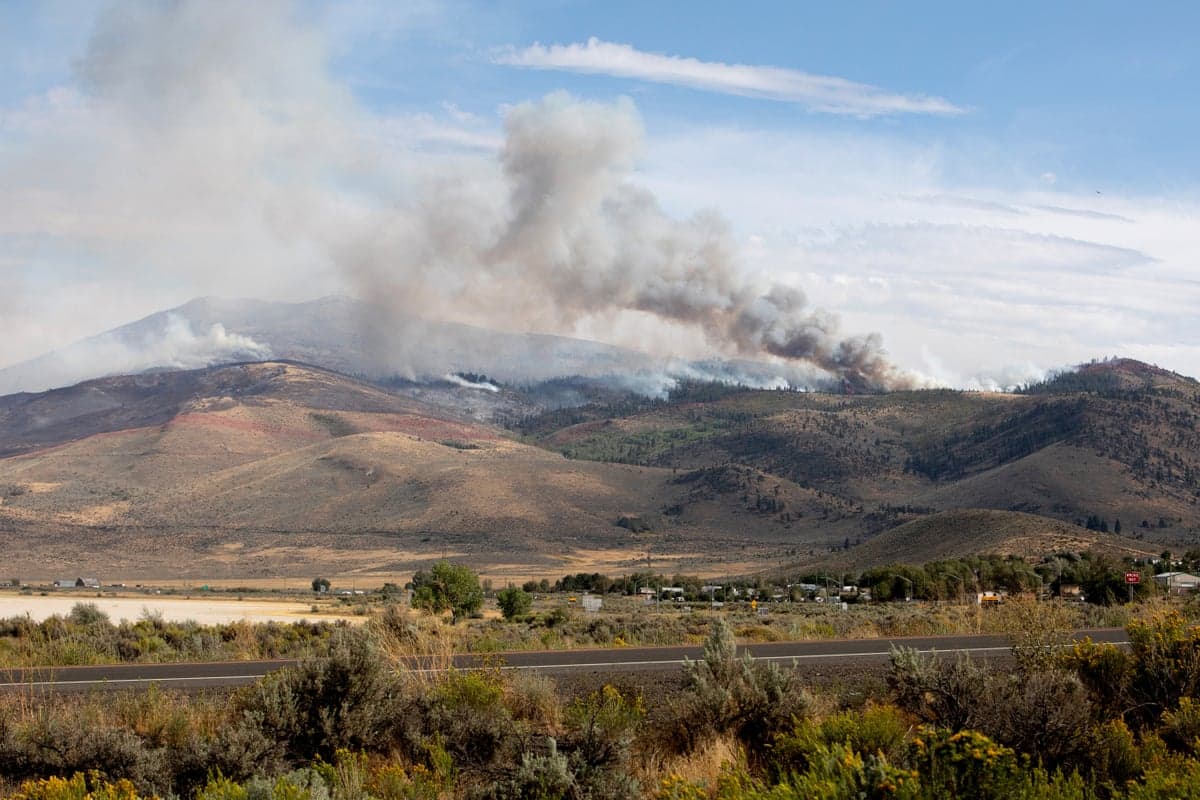
The Hawk fire stood at approximately 27% containment on Monday afternoon, two days after the wind-driven blaze ignited northwest of Reno, Nevada. Tens of thousands of residents remain displaced, though the number under active evacuation orders has declined significantly since the fire's rapid initial spread.
As of Monday afternoon, 23,000 people were under "go-now" evacuation orders while 40,000 remained under "get-set" warnings—a substantial decrease from the 90,000 residents under evacuation orders or warnings reported that same morning. The fire had consumed just over 15,000 acres by Monday afternoon, with authorities reporting that containment efforts had secured regions along the southern portion of the fire and areas east of US Route 395.
Richard Edwards, chief of the Truckee Meadows Fire Protection District, reported that more than 900 personnel were assigned to firefighting operations. Damage assessment teams working in the field had identified 32 destroyed homes and six damaged structures, though Edwards cautioned that these figures would likely increase as surveys continued. Canine search teams were clearing the affected area, and while authorities had not yet identified any fatalities, they reported four civilian injuries and three firefighter injuries to date.
How did the fire start and spread so rapidly?
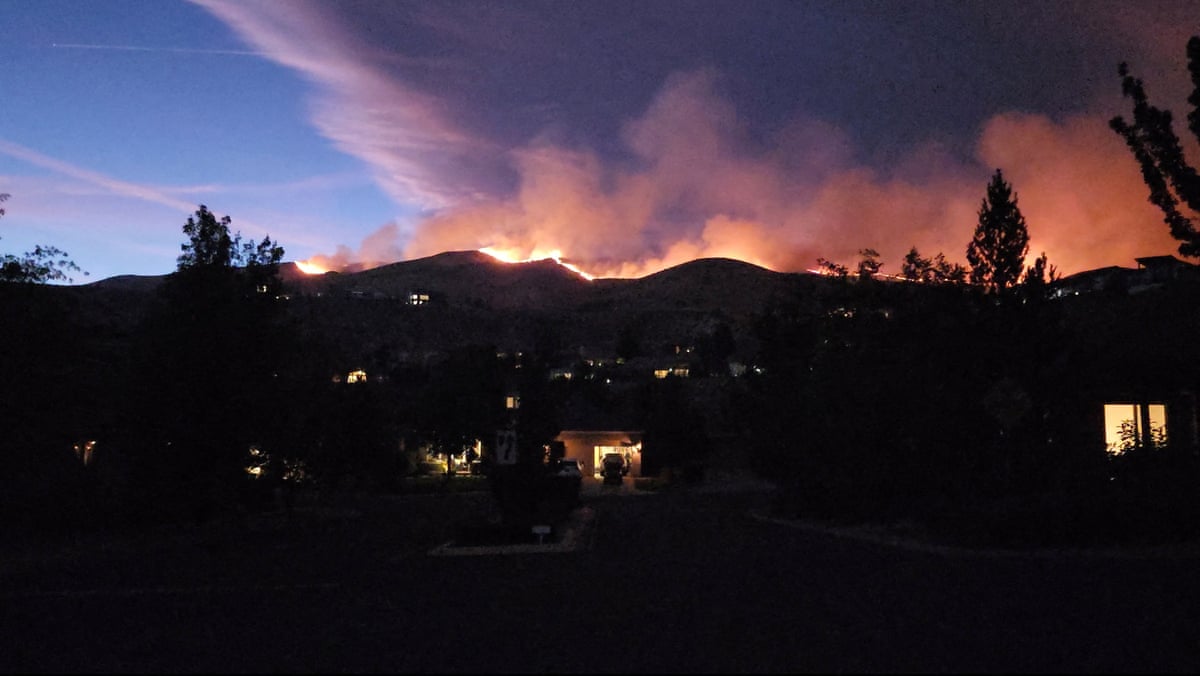
The Hawk fire began on Saturday in the Somersett area, originating off Hawk Meadow Trail approximately one mile north of Cold Creek Trail. The blaze exhibited what officials described as "extreme fire behavior," moving with exceptional speed through foothill neighborhoods in Nevada's second-largest city. Sheriff Darin Balaam described the Saturday night conditions as "extremely confusing," noting that shifting winds sent flames in multiple directions, making it difficult for responders to reach hotspots while residents fled.
The fire jumped over fire trucks and moved so quickly that residents had minimal time to evacuate. The unified command structure for the incident includes the U.S. Forest Service, Truckee Meadows Fire Protection District, and Reno Fire Department, coordinating response efforts across jurisdictions. The fire's rapid expansion through the Peavine Peak area of the Humboldt-Toiyabe National Forest contributed to its swift movement toward residential zones.
Edwards confirmed that investigators had determined the fire was human-caused, though they had not yet established whether the ignition was intentional or accidental. County incident updates continued to list the fire as human-caused, with investigators withholding further details pending their investigation. This marks the third large wildfire in the Reno area within two weeks, with fire officials attributing all three to human activity.
What impact has the fire had on the community?
The evacuation experience proved chaotic and frightening for residents. Evacuee Teresa Lenshyn described the stress of not knowing whether shifting winds would worsen the situation:
You don't know if the winds are going to shift and it's going to get worse.Ruby Delatorre, who discovered her home was in the evacuation zone while returning from a concert, expressed the emotional toll of the rapid displacement:
Honestly, I thought it was like in a movie.She returned on Sunday to retrieve additional possessions, saying
I literally want to cry and go back for all my stuff. I just got what I thought I needed.
Infrastructure across the region sustained significant damage. Nearly 10,000 homes and businesses in Washoe County lost power, and portions of US Route 395, a major north-south highway, were closed. Jesse Murray, vice-president of NV Energy, reported that 11 crews were working to restore electricity and expected to return service to customers as evacuation orders were lifted.

All but one school in Washoe County remained closed on Monday to keep roads clear for first responders, though the University of Nevada, Reno, announced that campus operations would continue despite the fall semester having begun on Monday. The local sheriff's department urged residents to avoid hiking and flying drones in airspace where firefighting crews remained active.
What resources have been mobilized to fight the fire?
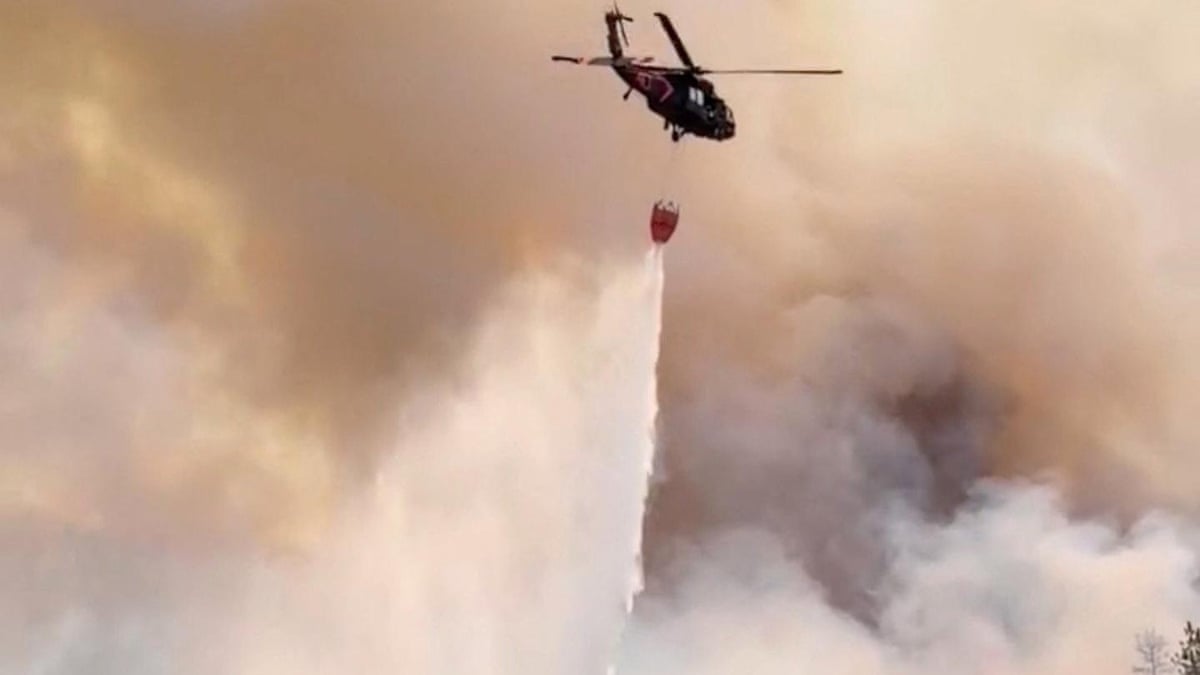
Approximately 800 people were supporting firefighting efforts, including specialized crews from Australia and New Zealand. California's emergency services mobilized local fire agencies to support firefighters near Reno through a cooperative agreement between the two states. Governor Joe Lombardo declared a state of emergency in Washoe County and warned that the situation remained
active and rapidly evolving, urging residents to remain vigilant and prepared to evacuate immediately when instructed.
Firefighters worked
around the clock to protect lives, property, and communities, according to authorities. An information line for the Hawk Fire was established at 775-244-6988 to provide residents with updates and guidance.
How does this fire fit into the broader wildfire crisis?
The Hawk fire is part of an exceptionally severe fire season across the western United States. Earlier this month, a fast-moving blaze north of Reno forced approximately 5,500 people to evacuate. In California, the Gann fire—which officials believe was sparked by a man using a chainsaw—scorched more than 10,000 acres and destroyed nearly 50 buildings, resulting in one fatality.
The Pacific Northwest has experienced particularly intense conditions. In early August, fires forced the evacuation of 60,000 people in and around Spokane, Washington. Three fires burned around the city, with one allegedly set by an arsonist, and collectively destroyed approximately 900 buildings. Oregon has experienced its worst year on record for land burned by large wildfires, with more than 3,670 square miles (9,500 square kilometers) scorched.
Nationally, the scale of the crisis is unprecedented. This year alone, more than 50,000 wildfires have burned across the United States—the highest number in the last decade for the same time period—consuming more than 7.8 million acres, according to the National Interagency Fire Center. The combination of extremely dry conditions and record-breaking temperatures has created ideal conditions for rapid fire spread and intensity.
What happens next?
A community meeting on the Hawk Fire was scheduled for Monday in Reno to provide residents with updates and information about recovery efforts. As containment increases and evacuation orders begin to lift in some areas, damage assessment teams will continue their work to document destroyed and damaged structures. Investigators will continue their examination into the fire's cause, with further details expected as their investigation progresses.
Key Facts:
- The Hawk fire was 27% contained on Monday afternoon, two days after ignition, with 15,000+ acres burned
- 23,000 people remain under "go-now" evacuation orders and 40,000 under "get-set" warnings, down from 90,000 on Monday morning
- Authorities have confirmed 32 destroyed homes and 6 damaged structures, with damage assessment ongoing
- The fire is confirmed human-caused but investigators have not yet determined if ignition was intentional or accidental
- More than 900 personnel, including crews from Australia and New Zealand, are assigned to firefighting operations


