Queensland's proposed legislation would significantly restrict the ability of residents and environmental groups to challenge mining projects in court, sparking fierce criticism from conservation advocates and community campaigners who argue the changes undermine democratic participation and environmental protection.
The Mineral Resources Objections Reform and Other Legislation Amendment Bill 2026, introduced in parliament on 15 September 2026, would prevent objectors from being heard in the Land Court unless they own or occupy property within 125 kilometres of a proposed mine and receive ministerial approval to proceed. The government has framed the measure as necessary to streamline approvals and reduce project delays, but opponents contend it represents a fundamental erosion of public rights.
Under the current framework, any objection to a mining lease or associated environmental authority is automatically referred to the Land Court for independent judicial review. The new bill would remove that automatic referral, instead granting discretion to decision-makers—the resources minister for mining leases and the environment department director-general for environmental approvals—to determine whether an objection warrants court consideration.
What would change for objectors?
The legislation would fundamentally alter who can formally oppose mining projects. Currently, any person may object to a mining lease or associated environmental authority, and those objections are ordinarily referred to the Land Court. The objection period for a mining lease application is at least 20 business days, with objections required to be lodged by 4.30pm on the last day.
Under the proposed changes, only those with property interests within the 125-kilometre radius would retain standing to object. A government clarification noted that some First Nations people who do not own or occupy land within the 125-kilometre boundary may be excluded from formal objection processes. The minister introducing the bill stated that
activists based thousands of kilometres away and green groups funded by foreign overseas entities are no longer eligible to have a say, and that
objections received from a person or group outside the 125km boundary whose interests would not be affected will no longer be accepted.
Why are conservation groups opposing the changes?
Environmental and community organisations argue the bill strips away essential democratic safeguards. Anthony Gough, acting director of Queensland Conservation Council, warned that the minister of the day could
pick and choose which community objections get heard in open court, and which mines get waved through without that scrutiny. He emphasised that the bill
strips community members of their right to have their objection to damaging mining projects heard in court.
Gough noted that
the vast majority of objections are made by local groups and landholders to protect agricultural land as well as local bushland, native habitat or water resources. He pointed to the successful campaign against sand mining on World Heritage-listed K'Gari (Fraser Island) as an example of how the current process has enabled communities to prevent environmentally damaging projects.
Queenslanders should be able to protect every inch of the state from inappropriate and invasive mining. They shouldn't be denied that right simply because they live more than 125km away from a particular mine, he said.

The Greens have characterised the legislation as
corrupt, while Lock the Gate Alliance, a national community action group, stated the government was
tearing up democratic and environmental protections just to make life easier for mining companies. Ellen Roberts, national coordinator of Lock the Gate Alliance, said the government was
following Campbell Newman's playbook to the letter, referencing a previous Queensland LNP administration.
What prompted the government's push for reform?
The government has justified the changes by citing delays in project approvals. The resources minister stated that objections were
one of the biggest hindrances on project timelines and delaysand that the government was
laser focused on improving approval timeframes. He pointed to the protracted legal battle over the Carmichael coal mine as evidence that the current process requires reform.
The Carmichael mine dispute lasted 11 years and reached the High Court before the project eventually proceeded. A spokesperson for the Oakey Coal Action alliance, the group of local farmers that litigated the case, observed that
King Coal also heard and had the Queensland Government change the laws so we could not win again. The spokesperson added that
what the laws are designed to do is to stop anyone who understands we are in a climate crisis from objecting to putting more CO2 in the atmosphere.
The government cancelled a months-long independent review of mining objection laws last year, weeks before it would have released its findings, and replaced it with a review conducted by a cabinet sub-committee instead.
What is Queensland's mining context?
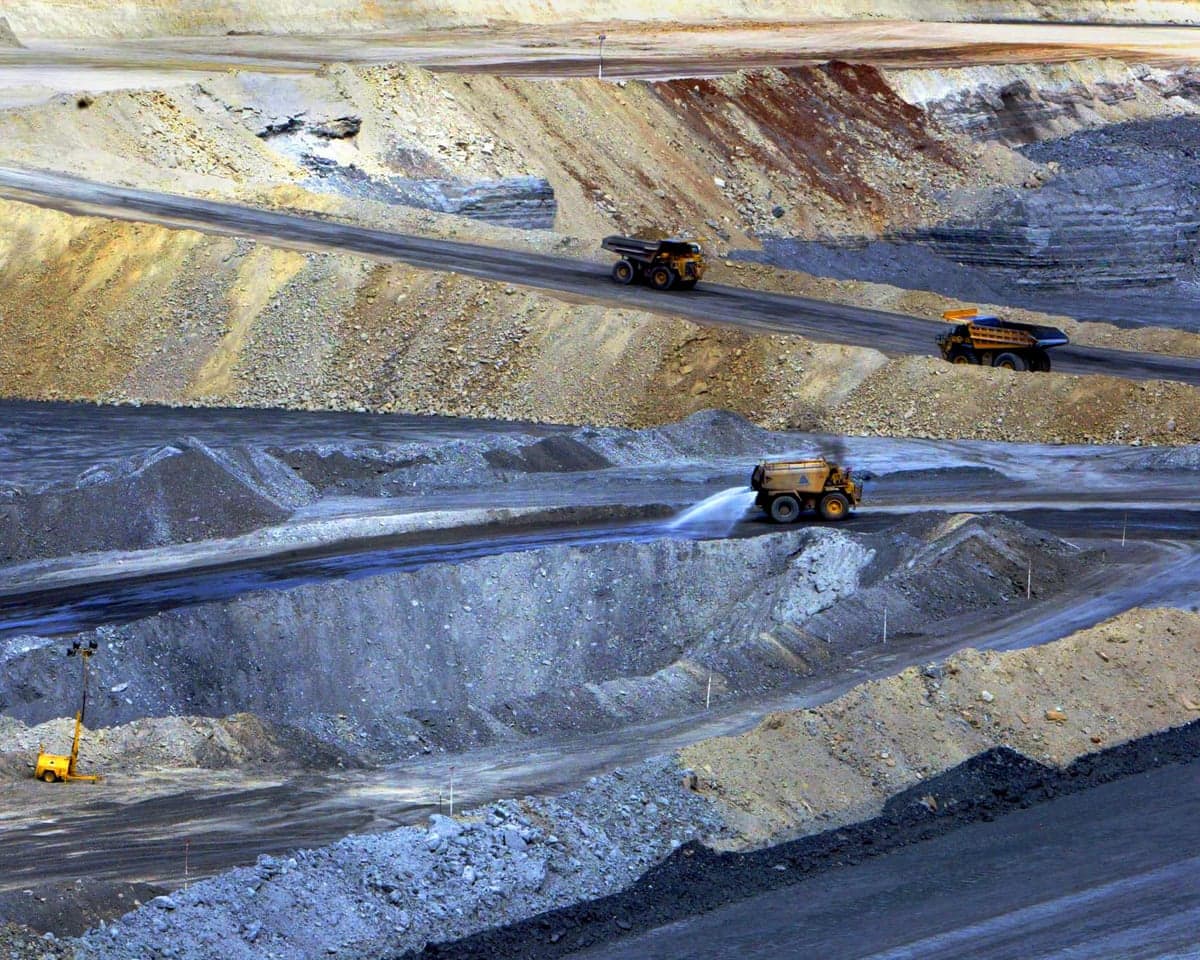
Queensland produces the majority of Australia's coal and operates the country's second-largest mining industry, behind Western Australia. The state is also Australia's most polluting jurisdiction. The proposed legislation reflects ongoing tension between the government's commitment to mining sector efficiency and community demands for environmental protection and democratic participation in resource management decisions.
What happens next?
The bill remains under parliamentary consideration following its introduction on 15 September 2026. Public objection deadlines continue for individual mining lease applications, with some having final objection dates in late September 2026. The parliamentary process will determine whether the legislation proceeds to a vote and, if passed, when it takes effect.
This is not the first time Queensland has narrowed objection rights. A 2014 overhaul of mining laws had already restricted some public objection rights, demonstrating that this issue has been contested for years. However, industry views remain divided: a 2026 parliamentary submission from the Australian Minerals and Energy Council argued the bill would not change the statutory framework for mining lease and environmental authority objections, highlighting disagreement within the sector itself.