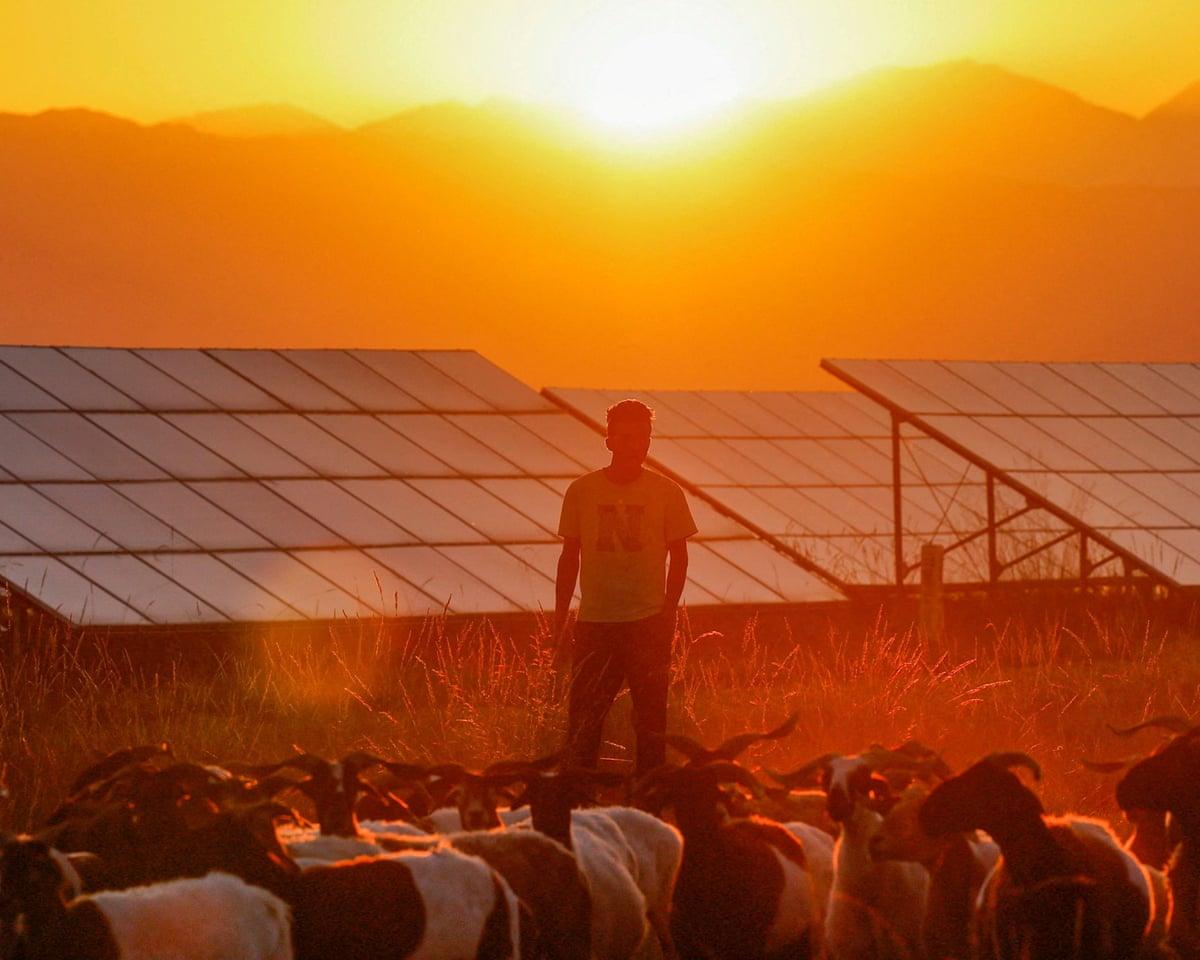
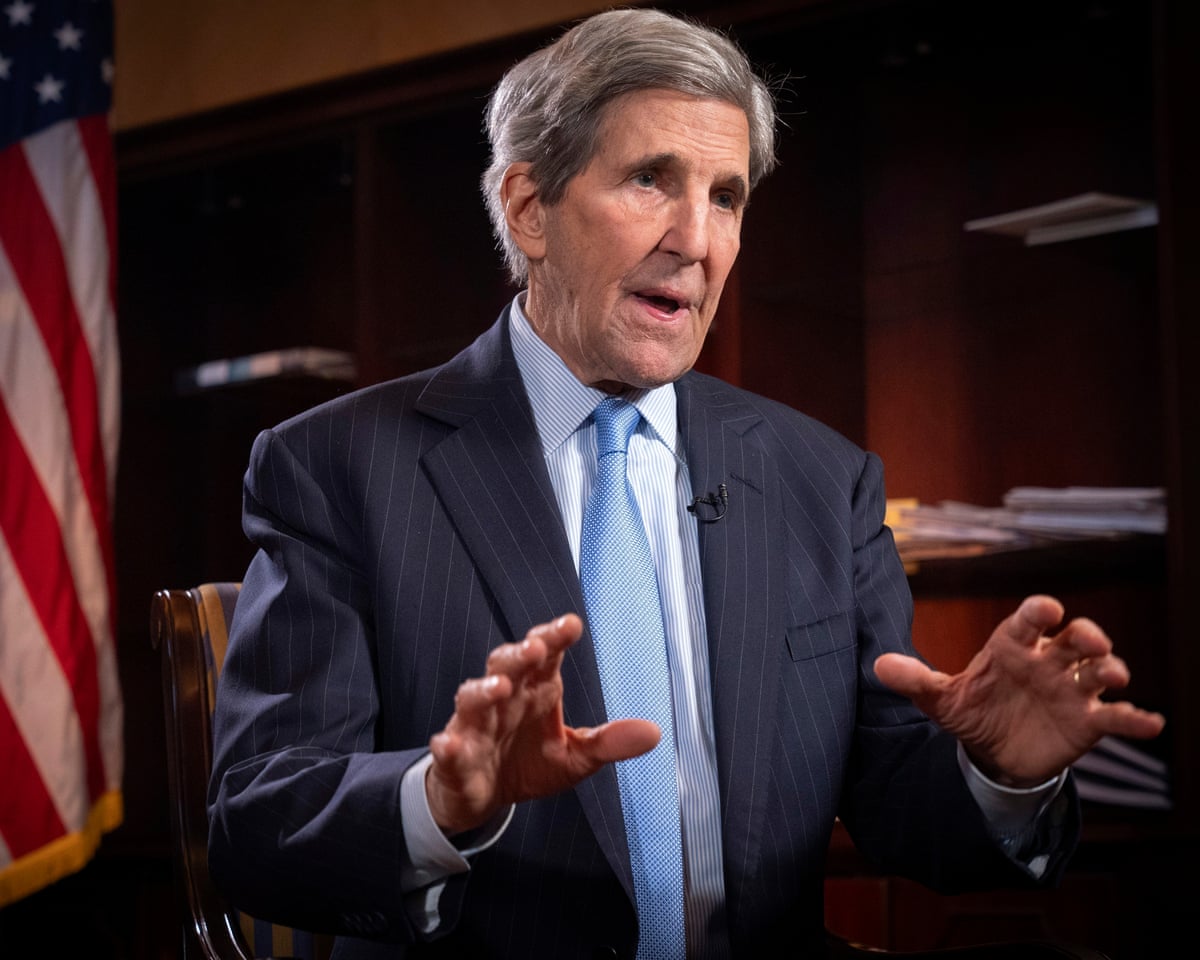
China is outpacing the rest of the world in clean energy deployment, and other nations—including the United States—must now adopt similar strategies or risk economic and environmental consequences, according to former US secretary of state John Kerry. Speaking to The Guardian, Kerry highlighted Beijing's acceleration of renewable technology as a model for global climate action as Cop31 unfolds in Antalya.
The climate conference, which runs from 9 to 20 November 2026 in Antalya, Türkiye, has drawn attention to whether China will finally assume the leadership role it has historically avoided. In its five-year plan adopted in March 2026, China pledged for the first time to "actively participate in and lead global climate governance." Cop31 could signal whether Beijing intends to translate that commitment into concrete action.
China's clean-tech dominance reshaping global markets
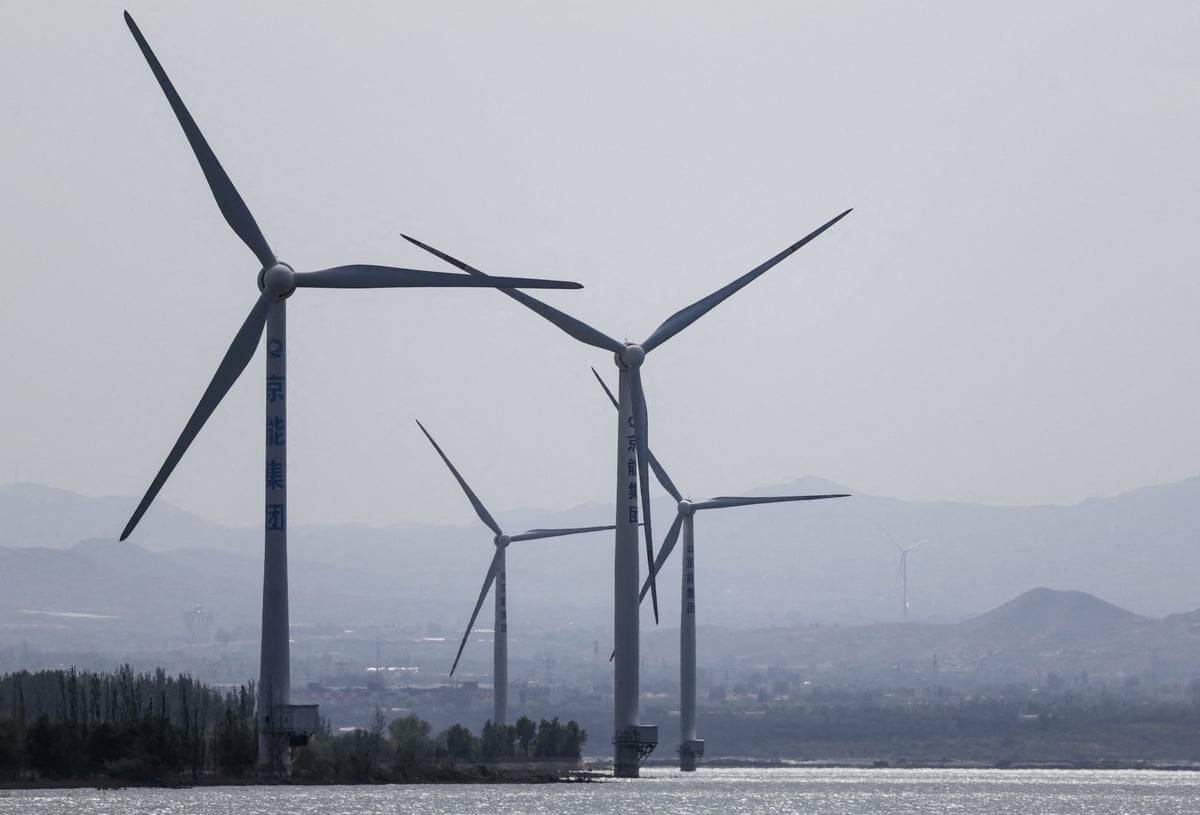
Clean energy has become central to China's economic strategy following sluggish post-pandemic growth. The sector has compensated for the nation's structural weakness in boosting domestic consumption by driving exports to record levels. In 2025, clean-tech exports exceeded $220 billion, and growth is expected to continue this year. China now holds the position of the world's largest supplier of clean energy technology despite being the world's largest emitter, accounting for a dominant share of global supply chain production capacity. Nearly 75% of electric vehicles manufactured globally in 2025 came from Chinese factories.

Strategic positioning in the clean energy sector could establish China as a linchpin in a future electrified global economy, encourage international cooperation, and strengthen its influence across the developing world. The value of green energy deals within China's Belt and Road Initiative in the first half of 2026 has already surpassed the entire total for 2025, demonstrating the scale and momentum of these initiatives.
Why other nations are falling behind
Kerry expressed concern that countries outside China, particularly the United States under the Trump administration, are losing competitive ground.
"The only country that has hugely accelerated is China. The rest of the world is stumbling along while Mother Nature is sending us more powerful signals every week, every day,"he said.
He attributed China's rapid transition partly to energy security concerns.
"[China] realised suddenly they had way too much dependency on oil and gas from other places, and they decided they needed to be independent. Other countries, since the war in Iran, and since the strait of Hormuz has been interrupted, have made a similar decision, and they're moving independently. There's been a massive uptick in deployment of renewables."
The geopolitical disruptions in the Middle East and Ukraine have underscored the vulnerability of fossil fuel-dependent economies. These conflicts have highlighted how energy transition carries profound implications for global power structures. As Isabel Hilton, founder of the specialist environment outlet China Dialogue, noted, the shift away from oil trading in US dollars—which historically granted Washington what she termed "the exorbitant privilege of being the global lender of last resort"—weakens American economic dominance. Combined with China's control of clean technology supply chains, this repositioning makes US global influence appear increasingly vulnerable.
Economic incentives driving the transition
Kerry argued that economic self-interest, rather than environmental obligation, will ultimately persuade nations to embrace low-carbon growth.
"They'll see where the market is going, and they will recognise where the cheaper alternatives are. Even they can read a spreadsheet, and understand where costs are exorbitant [in fossil fuels], and where you have a better deal."He emphasized that renewables combined with energy storage and transitional natural gas now offer superior economics compared to fossil fuels.
"The marketplace has made its decision and globally is moving to electrons, and electro state status. People are going to electricity and they're going to try to do that as clean as humanly possible. That's the choice that I see being implemented in many different places. It is unstoppable."
Recent data supports this assessment. Fossil fuel emissions have entered a "flat or falling" trend since March 2024, with projections indicating that fossil fuel emissions could flatline in 2026 as renewable energy expansion and geopolitical tensions moderate carbon output, though total emissions including land-use change continue rising.
China's climate governance ambitions and trade tensions
China has signaled its intention to use Cop31 to discuss the free flow of green technology, a proposal set against a backdrop of escalating geopolitical conflicts—widely understood as references to US and EU tariffs on Chinese electric vehicles and solar products. Li Shuo from the Asia Society Policy Institute framed the central question facing Beijing:
"In a world where climate action was once seen as a constraint on growth but is now increasingly a driver of it, China faces a singular question: will it step into a leadership role not out of obligation, but out of self-interest?"
Kevin Tu from the Oxford Institute for Energy Studies observed that Beijing views the energy transition as "central to economic modernisation and energy security, with significant implications for international influence." The wars in Ukraine and the Middle East have only reinforced this strategic calculus.
President Xi Jinping has described China as a "doer and go-getter working for the cause of global development," and state media regularly highlight Chinese renewable projects across Indonesia, Pakistan, Kenya, and other nations. Should China succeed in bringing trade-related tariffs into Cop31 discussions,
"China is likely to find support from Brazil, India, South Africa and other developing countries concerned about the costs and market-access effects of climate-related trade measures,"Tu said.
Obstacles to Chinese leadership
Despite its technical capacity and economic incentives, China has historically resisted policy ambition and agenda-setting at major climate forums. Its response to proposals for a global electrification target has been ambivalent, even though China would easily meet such a goal. Kate Logan from the Asia Society Policy Institute attributed this caution partly to China's aversion to prescriptive external targets, but also to its efforts to balance the divergent interests of its developing-world partners.
Yixian Sun, a professor of sustainability governance at the University of Bath, identified a fundamental mismatch:
"I still think there is a mismatch between Chinese policymakers' views on the role that China can play in global climate governance and international expectations on the influence that China should exert."Sun argued that for the world to accept Chinese leadership, attitudes must shift.
"They have to be ready to accept China's leadership, and I don't think this is the case, especially for global north countries."
What analysts will watch at Cop31
Observers will scrutinize China's commitments on climate finance and its support for a "just transition"—a framework designed to protect workers' rights and livelihoods as economies shift away from fossil fuels. They will also monitor whether Beijing signals interest in hosting Cop33 in 2028; officials are reportedly weighing whether hosting would prove strategically beneficial.
The leaders' summit is scheduled for 11–12 November, with the EU and its 27 member states, together with 77 members of the Organisation of African, Caribbean and Pacific States, reaffirming their commitment to implementing the Paris Agreement and strengthening cooperation on 9 November. Türkiye's Murat Kurum serves as host-country president, while Australia's Chris Bowen is President of Negotiations.
Logan suggested that China would likely be satisfied with a Cop that produces a "relatively cooperative outcome" without necessarily delivering monumental breakthroughs.
"So no major drama."Yet the stakes extend far beyond procedural harmony. China's willingness to translate its clean energy dominance into genuine global leadership could reshape the trajectory of the climate transition and the geopolitical order that accompanies it.