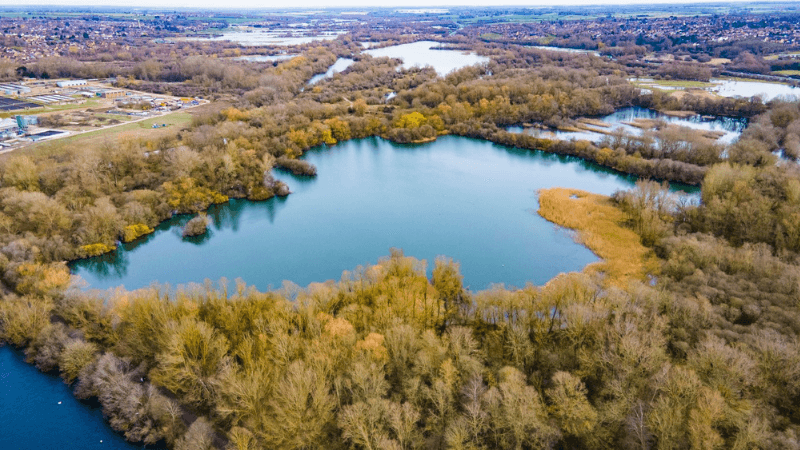
West Northamptonshire Council has given formal approval to its inaugural Local Nature Recovery Strategy (LNRS) on 18 September 2026, a mandatory requirement under the Environment Act 2021 that applies to all local authorities across England. The strategy sets out plans for expanded tree planting, wetland restoration and drainage improvements designed to reverse wildlife decline and rebuild natural habitats across an area described as among the nation's most ecologically depleted.
The region faces significant environmental challenges. Council officials characterised West Northamptonshire as one of England's
"most nature-depleted areas"where
"wildlife sites are often small, in poor condition, and isolated from one another."Landscapes across the authority area are
"under unprecedented pressure"with several species populations in decline, prompting the need for coordinated intervention.
The strategy emerged from collaboration between the council and multiple partner organisations. A council spokesperson outlined the rationale for the initiative:
"A healthy natural environment is essential for tackling climate change and wider environmental challenges. The diversity of habitats and species provide essentials such as clean and plentiful water, food, clean air, productive soil, flood protection, shading and cooling, as well as benefits like space for recreation, exercise and wellbeing."
What does the strategy include?
The approved strategy incorporates a local habitat map and a statement of biodiversity priorities developed through extensive stakeholder engagement. According to the council's consultation documentation, the draft strategy underwent public review until 25 March, allowing residents and organisations to contribute feedback before final approval. As local reporting confirms, the strategy is explicitly intended to reverse wildlife decline and restore habitats across the entire area.

What are the long-term targets?
The council has established ambitious environmental goals as part of its broader climate response. According to the council's tree and woods strategy, West Northamptonshire aims to achieve 20% tree canopy cover by 2045, representing a substantial expansion of woodland across the landscape. This objective forms part of the council's wider climate change response, which recognises nature recovery as central to environmental resilience.
What is the council's vision?
Nigel Stansfield, Reform UK's cabinet member for environment, recycling and waste, articulated the authority's overarching aim:
"Our aim is to safeguard nature for generations to come, and create cleaner, greener spaces that meet the needs of local communities and offer them an opportunity to connect with nature."He emphasised the importance of a
"workable strategy that sets out how we intend to safeguard nature for generations to come."
Stansfield expressed hope that the strategy would mobilise action across multiple stakeholders. He stated:
"I hoped the strategy would get organisations, landowners and local people to take action to ensure our natural environment becomes more robust and resilient to provide the benefits we often take for granted."This collaborative approach reflects recognition that habitat restoration and species recovery require engagement beyond local government alone.
How will the strategy be used going forward?
The approved Local Nature Recovery Strategy will now inform future local plans and decision-making across West Northamptonshire, shaping planning applications, land management decisions and investment priorities. As the UK government's responsible authorities register confirms, West Northamptonshire holds formal responsibility for LNRS number 24, positioning the council as the lead body for implementing nature recovery across the designated area.
The strategy represents a shift in how the authority approaches environmental management, moving from isolated conservation efforts toward an integrated landscape-scale approach. By identifying priority habitats and species, mapping ecological networks and setting clear recovery targets, the council aims to create conditions where wildlife populations can stabilise and expand rather than continue their current decline.
Key Facts
- West Northamptonshire Council approved its first Local Nature Recovery Strategy on 18 September 2026, fulfilling a requirement under the Environment Act 2021
- The region is classified as one of England's most nature-depleted areas, with wildlife sites that are small, isolated and in poor condition
- The council targets 20% tree canopy cover by 2045 as part of its environmental strategy
- The strategy incorporates habitat mapping and biodiversity priorities developed through public consultation
- Implementation will inform all future local planning decisions and land management across the authority area