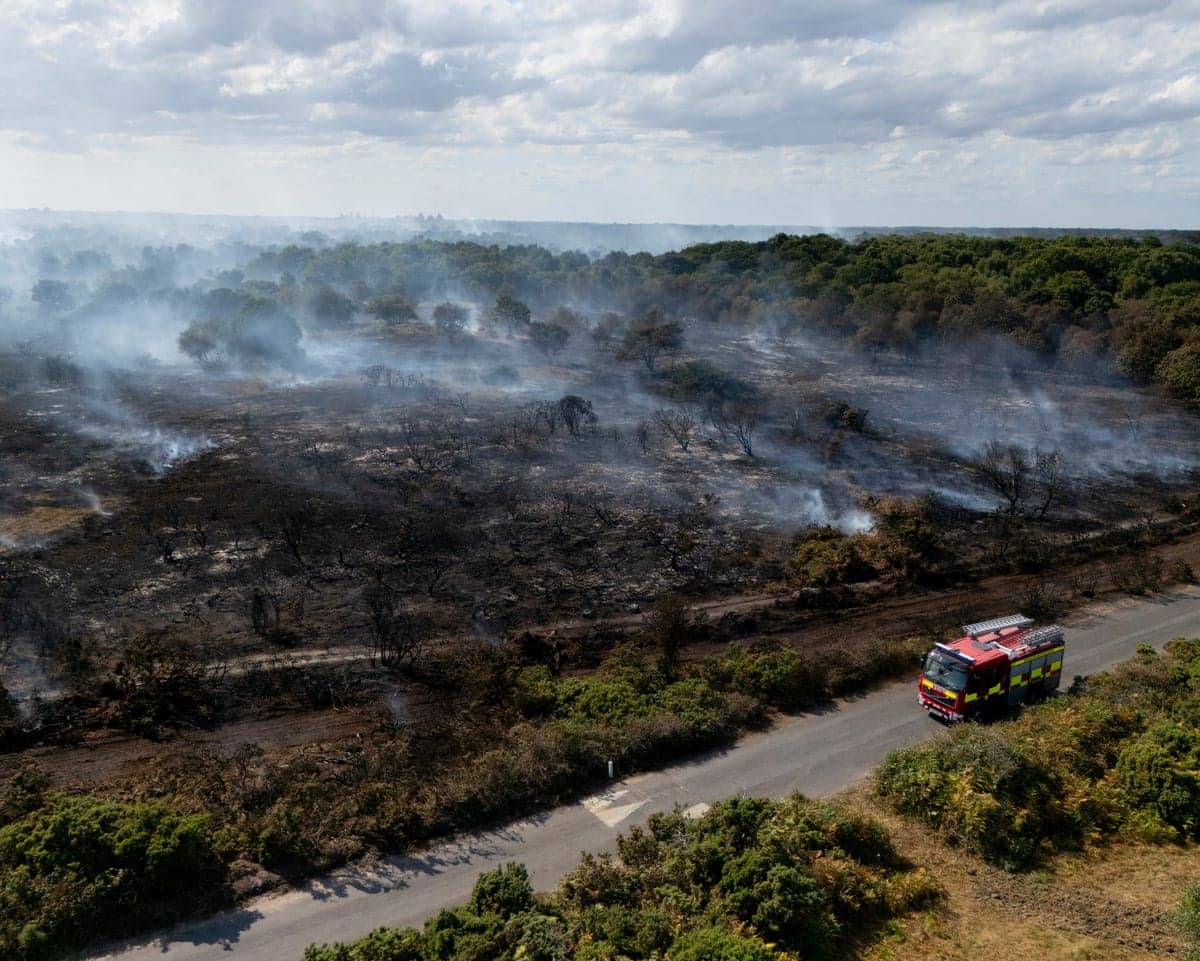
Australia's highest court has invalidated the approval of MACH Energy's Mount Pleasant coalmine expansion in Musswellbrook, marking the nation's first high court judgment to consider climate change as grounds for overturning a fossil fuel project. In a 3-2 split decision, the court found that the state's planning authority failed to assess how to reduce greenhouse gas emissions from the coal once it is exported and burned overseas.
The ruling represents a watershed moment for environmental law in Australia. The majority of judges determined that the Independent Planning Commission was legally required to consider imposing conditions to minimise scope 3 emissions – the carbon released when coal is combusted abroad – to the greatest extent possible, and that its failure to do so rendered the approval invalid. According to the High Court's official summary, the court unanimously rejected the argument that the Commission had complied with its separate statutory duty to consider the public interest; the majority's finding on the emissions condition was the basis for the result.
The case, formally titled MACH Energy Australia Pty Ltd v Denman Aberdeen Muswellbrook Scone Healthy Environment Group Inc & Anor [2026] HCA 35, was brought by a Hunter Valley community group after the state's planning system initially approved the expansion. The proposed project would have doubled the mine's coal output to 21 million tonnes per annum until 2048, with approximately 98 per cent of projected emissions classified as scope 3 emissions – those generated downstream when the coal is used.
The High Court's decision differs from an earlier ruling by the NSW Court of Appeal. On 24 July 2025, the NSW Court of Appeal unanimously found the approval invalid and remitted the matter to the Land and Environment Court to consider whether orders could validate it; MACH Energy later obtained special leave to appeal to the High Court on 4 December 2025.
What does the ruling mean for climate accountability?
The judgment establishes that decision-makers cannot approve major fossil fuel projects without assessing their downstream climate impacts, even when those emissions occur overseas. This principle now binds future environmental assessments across Australia and sets a precedent that advocates argue will reshape how fossil fuel developments are evaluated nationally.
Wendy Wales, a retired science teacher and president of the Denman Aberdeen Muswellbrook Scone Healthy Environment Group (Dams Heg), which brought the original case, said the ruling vindicated the community's long campaign.
Today the high court has said what we have always known: we cannot dig up coal, ship it overseas, watch it drive climate change, and then pretend the consequences have nothing to do with us and won't be felt by us. The droughts, the bushfires, the floods – are directly connected to greenhouse gases, and massive fossil fuel projects like Mt Pleasant Optimisation simply add fuel to the fire.
Wales emphasised that the ruling acknowledged the reality of climate impacts already experienced by Australians.
We can't ignore physics, chemistry and biology. We must live within nature's limits and this ruling endorses that.She called on lawmakers to prioritise climate action and ensure that
the true and complete long term costs of export coal on Australians, via the climate impact from burning that coal, must be considered.
How significant is the emissions impact?
The Mount Pleasant expansion would have generated an additional 870 million tonnes of carbon dioxide over its extended operational life, according to project assessments. The mine had originally been approved to operate until December 2026 and extract up to 10.5 million tonnes of coal a year before the expansion proposal sought to extend its life and double output.
Wales and her partner Tony Longeran, along with the Dams Heg community group, pursued the case through the courts for more than four years. The proceedings began in the Land and Environment Court, where that court initially ruled in favour of MACH Energy before the community group successfully appealed to the NSW Court of Appeal.
What is MACH Energy's response?
A MACH Energy spokesperson said the company was disappointed with the outcome but accepted the court's decision. The company indicated it would carefully review the judgment
to understand its implications for future project assessments and environmental approvals.
The spokesperson stated that MACH Energy would
continue to actively pursue all available options to ensure the long-term continuity of the Mount Pleasant Operation. The company emphasised that
thousands of Hunter residents who relied on the Mount Pleasant mine for employment and income had lived with fear and uncertainty for too long.
MACH Energy noted that the state government's approval of a separate modification to the mine in August would extend its operational life for six years, providing some continuity. The company said its focus was now on
working constructively with regulators, governments, local communities and other stakeholders to understand the practical implications of today's High Court decision.
The company's statement emphasised that it had pursued the appeal to
obtain clarity on important questions regarding the scope of mandatory considerations in environmental decision-making, and that it believed
the NSW planning system functions best when decision-makers apply the statutory framework established by the NSW Parliament consistently, transparently and predictably.
What happens next?
The invalid approval is expected to return to the NSW Land and Environment Court or the Independent Planning Commission for further assessment. The courts will need to determine how to proceed in light of the High Court's findings on scope 3 emissions and the requirement to consider mitigation measures. No scheduled date for that step has been announced.
The case represents the first time Australia's highest court has been asked to consider a matter on climate grounds, making it a significant development in how Australian law addresses the environmental consequences of fossil fuel extraction and export.