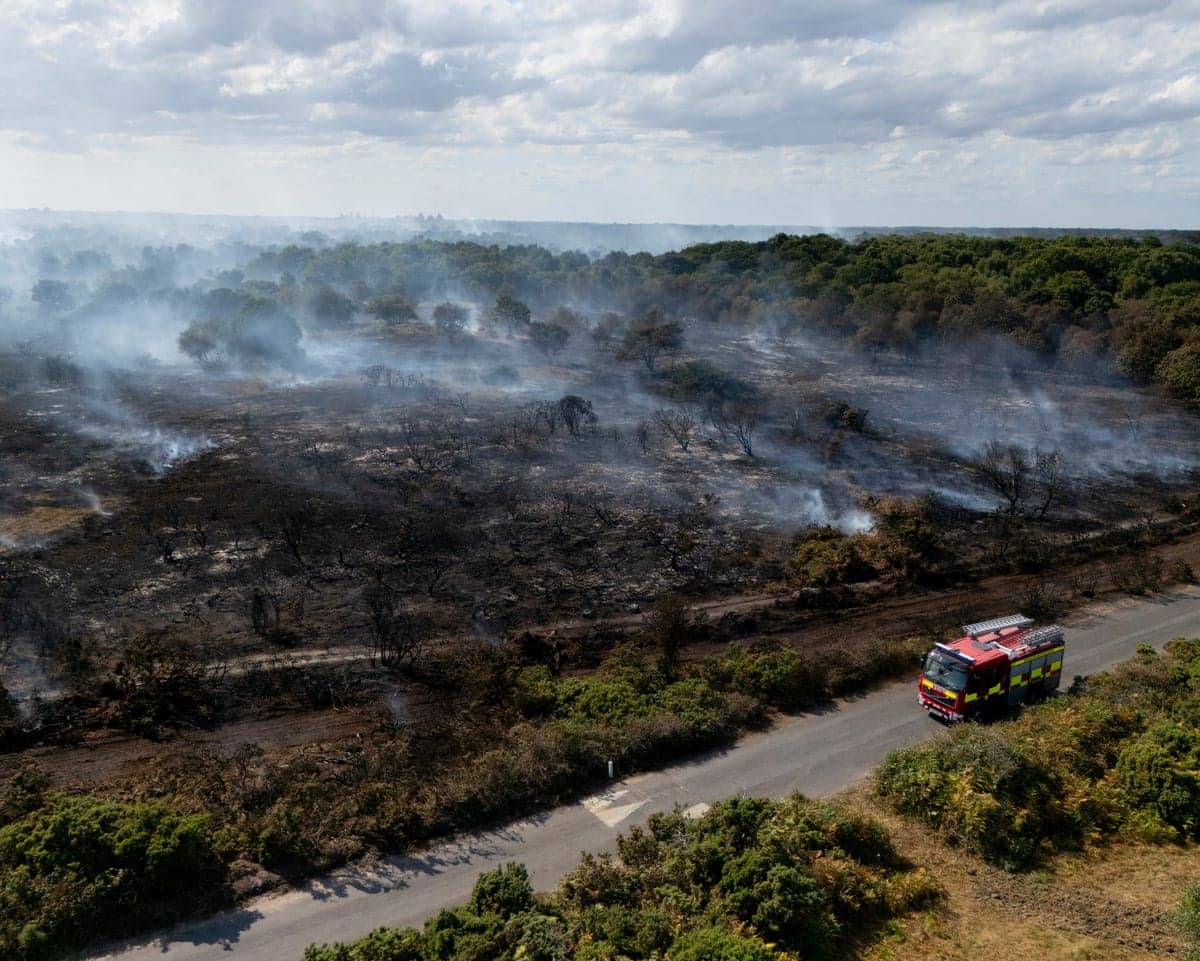
The government abandoned a planned programme to prepare England's countryside for wildfires, despite mounting evidence that fire services lack essential protective equipment to combat them safely. A freedom of information request has exposed that a commitment made in the Conservative government's third national climate adaptation programme, published in July 2023, was never implemented.
The scheme was intended to run from 2023 to 2027 and would have adapted land management practices across England to mitigate wildfire risk. The current government has acknowledged the initiative "was made by the previous government but was not brought into effect."
Environmental campaigner Guy Shrubsole, who uncovered the abandoned plan through the freedom of information request, described the decision as "appalling," noting that ministers "couldn't be bothered to pay attention to wildfire risks until jolted into doing so by Britain burning this summer." He added that "successive governments have been asleep at the wheel in preparing us for the impacts of the climate crisis."
The revelation comes as new data underscores the operational challenges facing fire services. According to information obtained by the Country Land and Business Association, more than half of the 29 fire services that responded to requests had no wildfire personal protective equipment (PPE) specifically designed for such incidents.
Standard particle-filtering respirators do not shield against hazardous gases such as carbon monoxide, which are prevalent in wildfire smoke. Additionally, conventional PPE can prove excessively hot and cumbersome in wildfire conditions, leading firefighters to overheat or remove their equipment entirely, thereby exposing them to greater danger from heat, smoke and radiation.
The Suffolk fire and rescue service, which confronted an "apocalyptic" wildfire earlier in the summer that burned close to Sizewell nuclear power station and destroyed extensive areas of heathland, was among those lacking adequate wildfire PPE. Training deficiencies compound the problem: in Cleveland, only five staff members (1.2%) held qualifications to provide tactical advice or command wildfire operations, while in Cheshire just 8.62% of employees were trained for wildfire operations.
Alistair Carmichael, a Scottish Liberal Democrat MP and chair of the Commons environment food and rural affairs committee, expressed alarm at the government's failure to prioritise land adaptation for wildfire risk. "It begs further serious questions about whether this summer's wildfires could have looked different with more resources on the ground," he said.
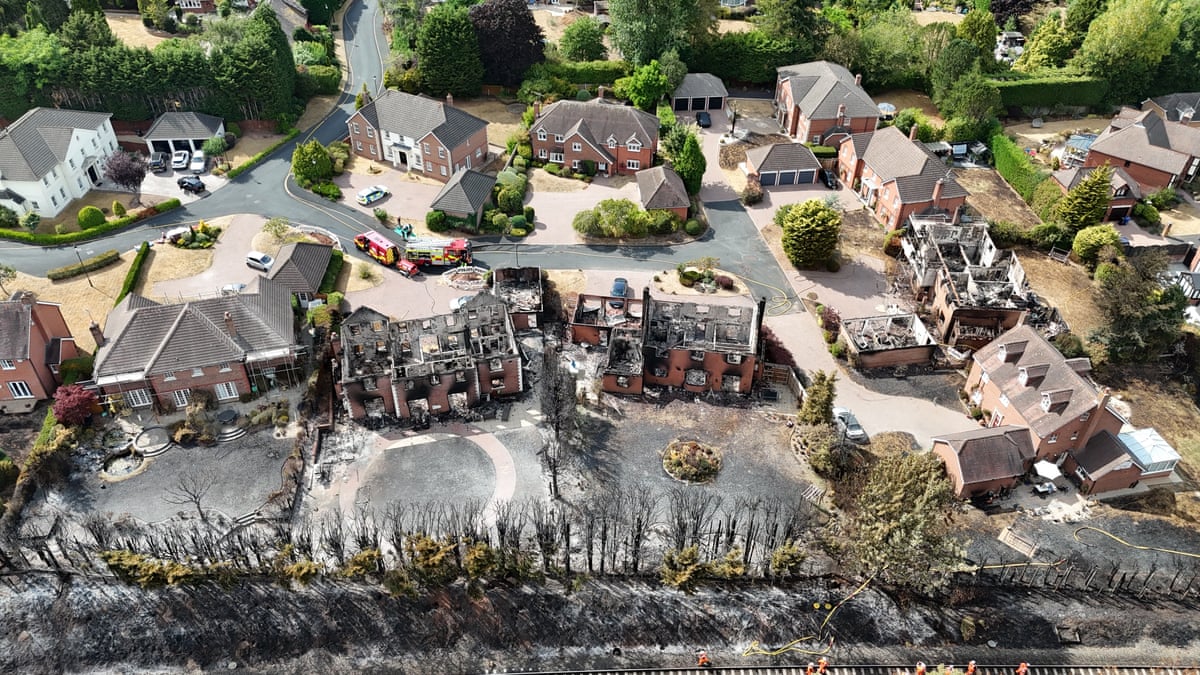
According to provisional government statistics published on 29 September, wildfire incidents in England through August 2026 reached unprecedented levels. A report citing National Fire Chiefs Council figures put the 2026 England-and-Wales total at 1,350 wildfires, the highest on record. Analysis of European Forest Fire Information System data found that 19% of large wildfires in England and Wales in 2026 came within 500 metres of built-up areas, highlighting the proximity of these incidents to populated zones.
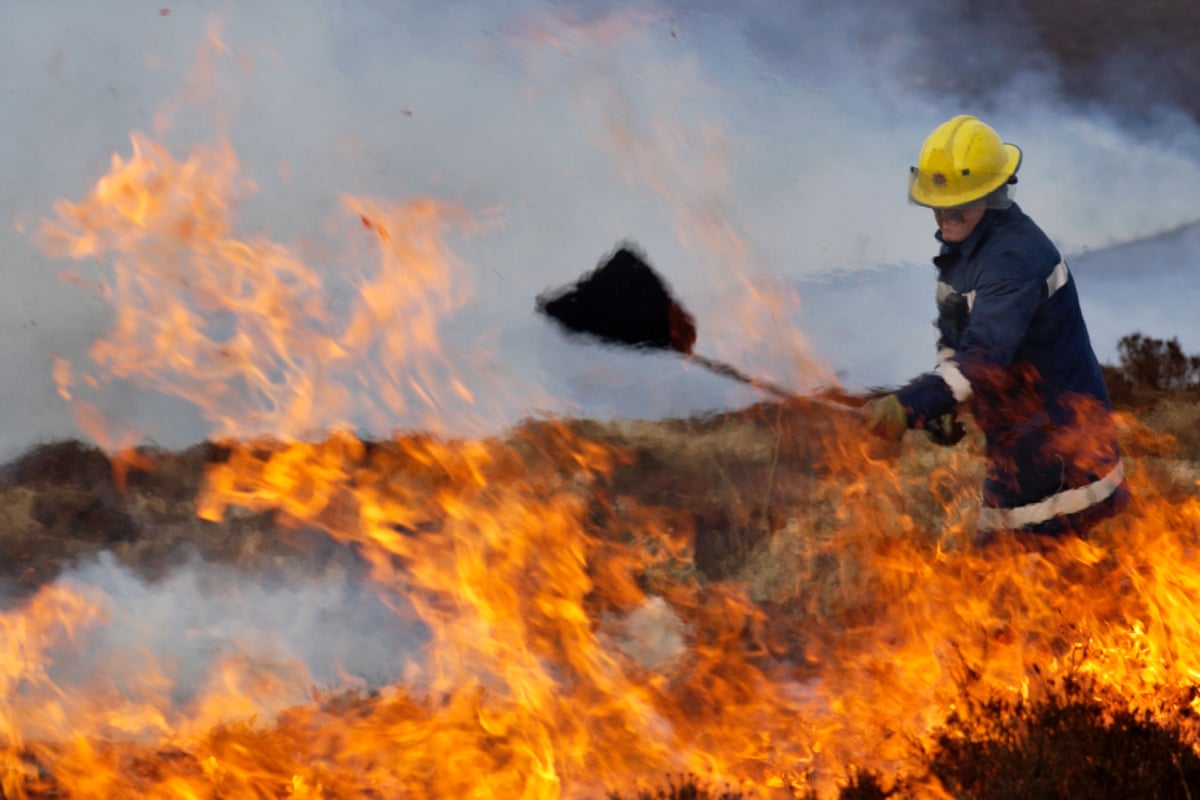
The Fire Brigades Union has called for correct PPE to be provided to all members combating wildfires, alongside comprehensive training programmes. Steve Wright, the union's general secretary, stated:
It is vital for our country's wildfire resilience to have better land management, stronger public awareness campaigns and long-term prevention measures. Only by proper investment and a wildfire strategy can we make the country more resilient.
Shrubsole has urged the government to implement a comprehensive plan to re-wet the UK's peat bogs, restore lost ponds in farmers' fields, and halt grouse moor owners from setting fire to moorland—measures that could significantly reduce wildfire risk.
What is the government's response?
Following a major wildfire incident in August, the prime minister convened an emergency COBR meeting and issued a response package that critics characterised as insufficient. A government spokesperson stated:
We have made wildfire preparedness a government priority and, following incidents this summer, we are convening a summit with fire and rescue service partners to make sure we are as resilient as possible. This includes making sure services have the right equipment and resources, building on the £100m we previously gave to upgrade our national resilience assets.
The government has announced £97 million for wildfire resilience, including six specialist firefighting teams based in Lancashire, Greater Manchester, Northumberland, London and South Wales and deployable across England. Additionally, the government has introduced an emergency phone alert system, military support in South Wales, emergency funding for fire services under pressure and a temporary nationwide ban on disposable barbecue sales.
The government spokesperson added:
Land management and landscape adaptation play an important part in this, and we work closely with land managers and experts to support the restoration of peatlands, the creation of firebreaks and other adaptations that help to prevent fires from starting or from spreading as quickly during incidents.
What happens next?
Ministers have committed to holding a national wildfire summit later in 2026 to discuss preparedness and additional response capabilities. This summit will bring together fire and rescue service partners to develop a coordinated strategy for enhancing the country's wildfire resilience heading into future fire seasons.
Key Facts
- A wildfire preparedness programme planned for 2023–2027 was abandoned without implementation by the previous government
- More than half of 29 fire services surveyed lack wildfire-specific personal protective equipment
- England and Wales recorded 1,350 wildfires in 2026, the highest number on record
- The government has allocated £97 million for wildfire resilience, including six specialist firefighting teams
- A national wildfire summit is scheduled for later in 2026 to address preparedness and response capabilities