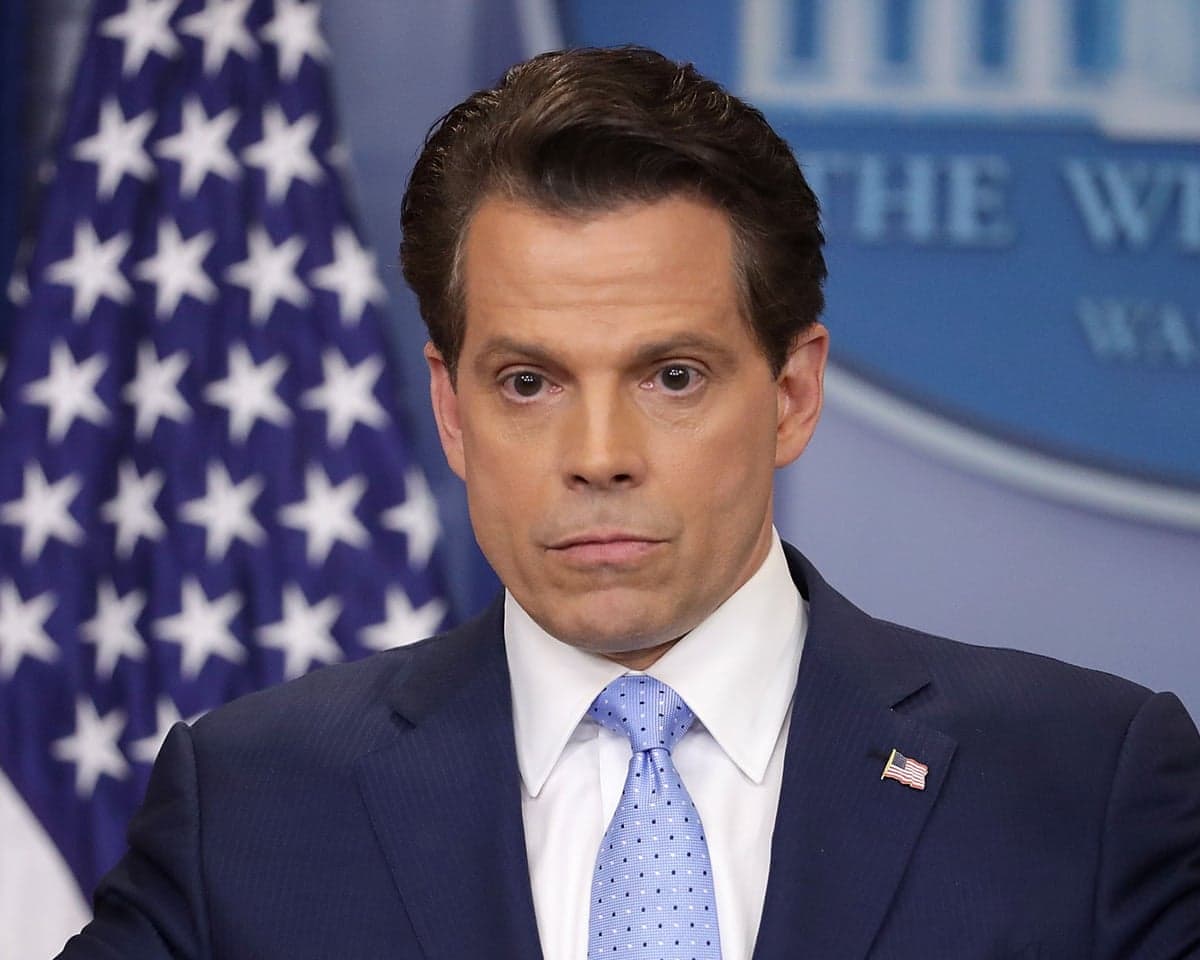
Anthony Scaramucci's memoir All the Wrong Moves arrives as a confessional account from a Wall Street financier who spent 11 days as Donald Trump's communications director before being dismissed. The book, published on 17 September 2026, presents itself as an insider's diagnosis of how decades of bipartisan policy missteps created the conditions for Trump's rise and deepened American division.
The most compelling section traces Scaramucci's own journey into the Trump administration. In summer 2017, the hedge fund manager accepted the communications director role, believing his New York roots and financial acumen would translate to political success. He describes this decision as symptomatic of "Potomac fever"—the affliction that strikes Wall Street figures who arrive in Washington convinced they possess the insight and authority to reshape the nation. His tenure lasted only 11 days, a period so brief he missed the birth of his son, yet long enough to generate profound regrets about his "pride, egotism and asinine stupidity."
What distinguishes this account is Scaramucci's willingness to acknowledge the warning signs he ignored. He identifies Trump's embrace of racist rhetoric and hateful politics as a defining feature of the administration, tracing it back through the Obama birther conspiracy and earlier statements about Mexican immigrants. Yet the author never fully reckons with a harder truth: by the time he joined the White House in 2017, Trump's character was already transparent to anyone paying attention. A person guided by genuine values, the argument goes, would have recognized this and declined the position altogether. This gap between Scaramucci's self-awareness and his actual choices undermines the moral force of his later analysis.
What are the three catastrophic errors Scaramucci identifies?
The book's central thesis rests on three policy failures that Scaramucci argues hollowed out American prosperity and stability. The first was the decision to privilege China during the era of globalisation, allowing manufacturing to migrate to regions with lower wages and decimating domestic employment prospects. The second was the decision to wage wars—particularly in Iraq—without corresponding tax increases to fund them, beginning after 9/11. The third was the 2008 financial crisis bailout, which rescued Wall Street institutions while ordinary Americans faced foreclosure and unemployment.
These arguments carry weight, and Scaramucci is correct that each had devastating consequences. Yet he arrives at conclusions that were vigorously debated in real time. Political insurgents from the right raised concerns about China policy during the 1992 election. The anti-globalisation left mobilised during the so-called Battle of Seattle in 1999 and in subsequent demonstrations worldwide. Pacifists and anti-imperialists opposed the Iraq War before it began. The Occupy movement in 2011 articulated sophisticated critiques of the financial bailouts. Scaramucci's admission that he should have listened more seriously to these voices is honest, but it glosses over the institutional and political forces that prevented such arguments from gaining traction at the time. He mentions Ronald Reagan's union-busting only in passing, despite its central role in weakening the labour movements that might have resisted these policies.

Does Scaramucci's economic history hold up?
The author frames American history through a reductive lens: money as the sole animating force. He argues that the founding fathers were fundamentally investors, that Alexander Hamilton's central bank reflected nothing but financial calculation, and that the United States itself was "unified—by money." This framework flattens the historical record. The fact that millions can sing the thousand other ideas embedded in the musical Hamilton suggests the author may not have fully grasped the ideological complexity of the nation's founding. More problematically, if money has always been America's highest value, then Scaramucci's claim that leaders lost their "moral purpose" from the Clinton era onwards becomes contradictory. How can Clinton's motivations be judged as less moral than Franklin D. Roosevelt's if neither era transcended economic self-interest?
What is the book's fundamental weakness?
All the Wrong Moves reads as a work of constant catch-up—a man who believed he understood the world slowly surrendering to analyses that were correct all along, but now too late to matter. China no longer seeks validation from American markets. Contemporary American military interventions lack the strategic coherence of earlier eras, driven instead by fragmented funding streams and impulse rather than doctrine. Wall Street's dominance has ceded ground to technology billionaires. Scaramucci gestures toward breaking up Silicon Valley monopolies in his closing pages, but he never seriously examines how far the world has actually shifted from the assumptions that guided his earlier career.
The book remains engaging and offers genuine insights into Trump's inner circle and the psychology of ambition in high finance. In media appearances on 21 September 2026, Scaramucci discussed the book's argument about America's "missteps", framing it as a call for national reckoning. The comparison to figures like Alastair Campbell—the British political operative who has similarly offered hard-boiled critiques of past decisions—is apt. Both men present themselves as insiders who have seen the machinery of power up close and now wish to warn the public.
Yet there remains something unsatisfying about an argument whose kernel is "sorry, I wasn't listening" delivered by someone still embedded in broadcast media and the attention economy. The book's subtitle, "How Three Catastrophic Decisions and Years of Sh*tshow Politics Led to Trump – and How We Find a Way Out", promises solutions alongside diagnosis, yet the path forward remains vague. Scaramucci identifies what went wrong with clarity, but offers little sense of how institutional power might be rebuilt or redirected toward different ends.
What happens next?
Scaramucci is undertaking a book tour to promote All the Wrong Moves, with events scheduled across major American cities. The tour runs from 23 to 30 September 2026, covering Washington, New York, Connecticut, and Massachusetts, allowing him to present the book directly to audiences as an insider account of how America became deeply divided and how it might move forward. The ebook edition became available on 22 September 2026, expanding access beyond the hardcover release.