Ben Macintyre's latest work of espionage narrative, Redwood: The Untold Story Of The Cold War's Most Extraordinary Spy, examines the relationship between a disillusioned Soviet intelligence officer and his British handler during one of the twentieth century's most volatile geopolitical moments. Published on 15 September 2026 by Penguin Random House, the 416-page hardcover ($35) tells the story of Vladimir Kuzichkin, a KGB operative stationed in Tehran who chose to betray his country's secrets to British intelligence—driven by circumstances far more mundane than traditional espionage lore might suggest.
Macintyre opens with an unconventional motivation for betrayal. The author employs the acronym MICE to categorise why individuals commit treason: Money, Ideology, Coercion or Ego. Yet Kuzichkin's case introduces a fifth factor entirely. Stressed, consuming excessive alcohol, living under constant surveillance, enraged by the dishonesty of his colleagues and dissatisfied with his personal circumstances, the Soviet agent approached his British counterparts with an unusual request: assistance with a medical condition that had begun to undermine his confidence. Only then would he consider offering intelligence about Soviet operations and their Iranian communist allies.
This opening exemplifies Macintyre's distinctive approach to historical narrative. The author combines a journalist's instinct for compelling human detail with a historian's commitment to factual precision. The remainder of Redwood sustains this standard throughout; the narrative proves absorbing enough to consume in a single sitting.
Who is Ben Macintyre?
For those unfamiliar with Macintyre's work, he has authored numerous bestselling volumes examining warfare, statecraft and intelligence operations, many of which have been adapted for film and television. One of his earlier books, Operation Mincemeat, was transformed into both a West End and Broadway musical. While some dismiss his writing as popular rather than literary—the kind of non-fiction favoured by golf club members and retired military enthusiasts—Redwood demonstrates a sophistication far removed from conventional military history.
What was happening in Iran in 1979?
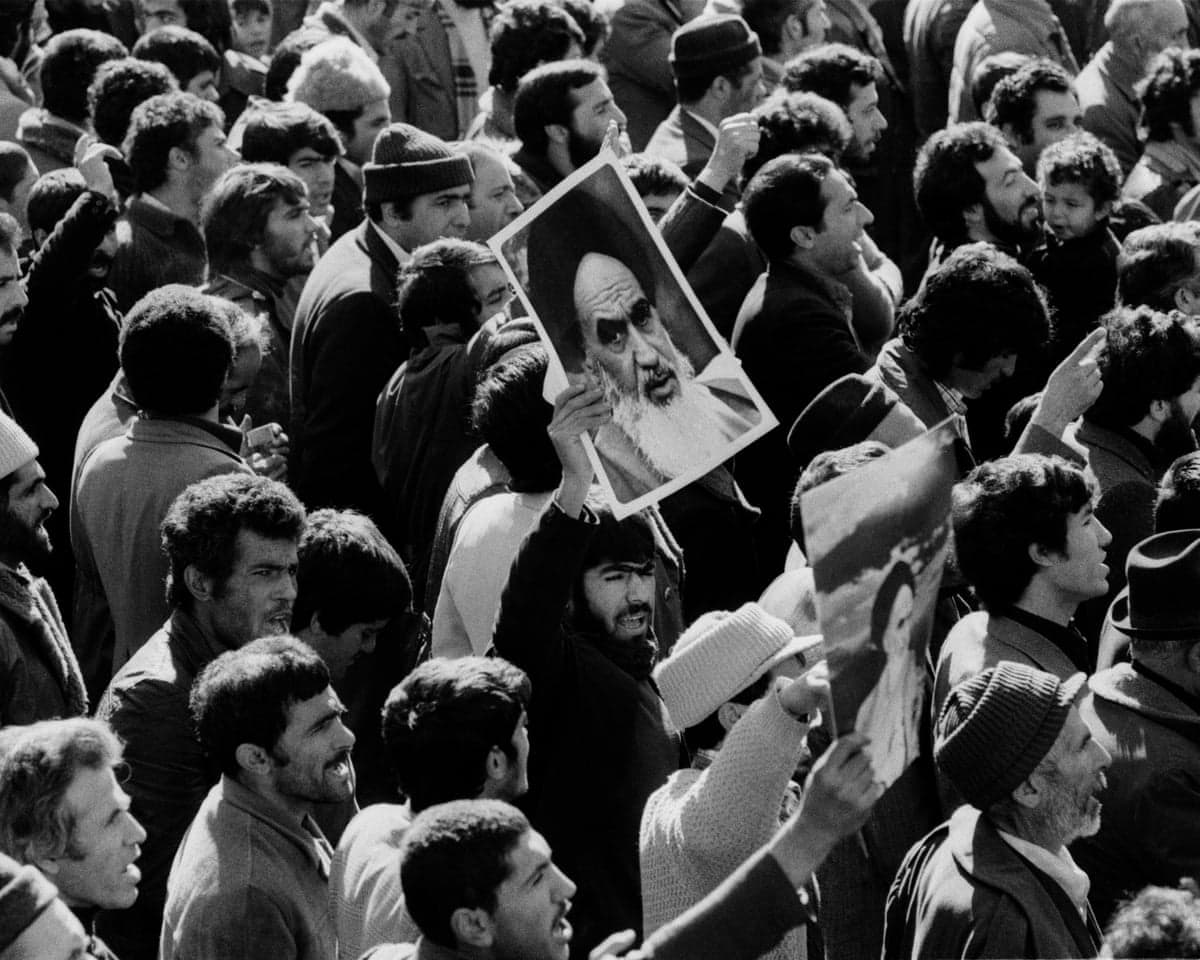
The narrative unfolds in the immediate aftermath of the 1979 Iranian revolution that installed the country's Islamic leadership. The Western powers found themselves in a weakened position, having lost a crucial regional partner. American officials were particularly alarmed by the seizure of their embassy and the detention of its personnel. Soviet leadership, by contrast, perceived an opening to expand their influence southward into a strategically vital nation possessing substantial oil reserves and access to warm-water ports.
Kuzichkin's assignment involved advancing this objective by channelling financial support, military equipment and political backing to the Tudeh party, a communist organisation led by a doctrinaire Stalinist who had spent decades in exile in East Germany. Operating from the sprawling Soviet embassy compound, he oversaw an operation staffed largely by ineffectual colleagues who marked even minor achievements with elaborate vodka celebrations. The work frustrated him deeply.

How did the British intelligence officer become involved?
Directly across the street, within an equally imposing British embassy building, worked Ian McCredie, a relatively junior MI6 operative who had recently relocated to Tehran with his wife and infant child. His mission was to rebuild British intelligence capabilities in the city after the previous team had been compelled to evacuate. While Kuzichkin struggled with alcohol consumption, McCredie benefited from a fortunate discovery: fifty crates of whisky that a predecessor had imported as a gift for the Shah and abandoned in storage, allowing him to navigate the revolutionary authorities' alcohol prohibition with relative ease.
The dynamic that developed between these two men—evolving into a handler-and-asset relationship—forms the emotional and narrative centre of the book. Their interactions occur perpetually under the threat of exposure by the Revolutionary Guard, and gain additional emotional weight from the fact that neither man fully grasps that they are operating during a profound geopolitical transformation. The communists are losing their foothold while the Islamists consolidate power, a shift that would render much of their intelligence work ultimately inconsequential.
What happened after Kuzichkin was extracted?
The consequences of this geopolitical realignment become starkest after Kuzichkin's safe removal to Britain for interrogation. Soviet leadership directed him to travel to Pakistan to transmit his intelligence regarding communist activities to Iranian officials, hoping to cultivate goodwill in Tehran. The strategy backfired catastrophically. Instead of winning favour, the disclosure triggered systematic violence and torture against Tudeh members, further solidifying the Islamic Republic's authority and providing no strategic advantage to the West.
Throughout this weighty subject matter, Macintyre maintains a lighter touch through clever observations and witty characterisations. An obsolete encryption device becomes
not so much user-unfriendly, as overtly hostile. The head of Britain's diplomatic mission is described as
a master of the art of thinking twice before saying nothing. McCredie's wife Lucy, the author notes,
had nothing to fear from living under an oppressive regime because she had been educated in an English girls' boarding school.
What is the book's broader significance?
According to an NPR broadcast interview with Macintyre published on 19 September 2026, the narrative explores how individual human vulnerabilities intersect with epochal historical forces. The author frames the espionage as occurring during a period of nuclear tension and ideological confrontation, lending the personal story of Kuzichkin and McCredie broader geopolitical resonance. American review coverage in a major national publication on 13 September 2026 emphasised the book's success in balancing intimate human drama with large-scale historical analysis.
The work merits recommendation as a gift, though readers should consider sampling it themselves before passing it along. Redwood represents Macintyre at his most accomplished, combining meticulous research with narrative momentum and genuine insight into the psychology of espionage and the contingencies of Cold War statecraft.