

Thieves in Spain have targeted the Treasure of Villena, one of Europe's most significant prehistoric collections, in a swift and coordinated raid on the museum housing the bronze age artefacts. The operation, which unfolded in the early hours of Thursday morning, has left local officials devastated and prompted investigations into what authorities believe was a meticulously planned criminal operation.
The Villena Museum in the town of Villena, located in the province of Alicante, was breached at approximately 5.20am local time. According to a spokesperson for the town council, the thieves had vacated the building by 5.24am, completing their operation in under four minutes.
"The alarm at the Villena Museum went off around 5.20am [4.20am BST]," the spokesperson said, adding that the thieves had left the building by 5.24am. "The operation was super-fast and super-professional."
The collection targeted in the raid comprises 66 mostly gold objects dating to approximately 1000BC. According to reporting, the stolen cache weighs roughly 10 kilograms and includes bowls, bracelets, and ornaments crafted from gold, silver, amber, and iron. The material value of the stolen pieces is estimated to exceed €1.5 million, with the gold alone valued at approximately €1.7m (£1.45m), according to the mayor.
Fulgencio Cerdán, the mayor of Villena, expressed the profound emotional impact of the theft on the community.
"They've taken most of the treasure,"Cerdán told journalists, his voice breaking.
"We are absolutely devastated, I'm even trembling. The truth is that for those of us from Villena, this destroys us. It's part of our heritage, of our wealth."
Local media reports indicate that the thieves left behind only a handful of items, including three silver vessels, a bracelet, and portions of the ornamentation from the bastón del reyezuelo, a prehistoric ceremonial scepter known as the "Kingfisher staff." According to some accounts, the raiders also removed three crowns of the Virgin and Child that were displayed alongside the main collection.
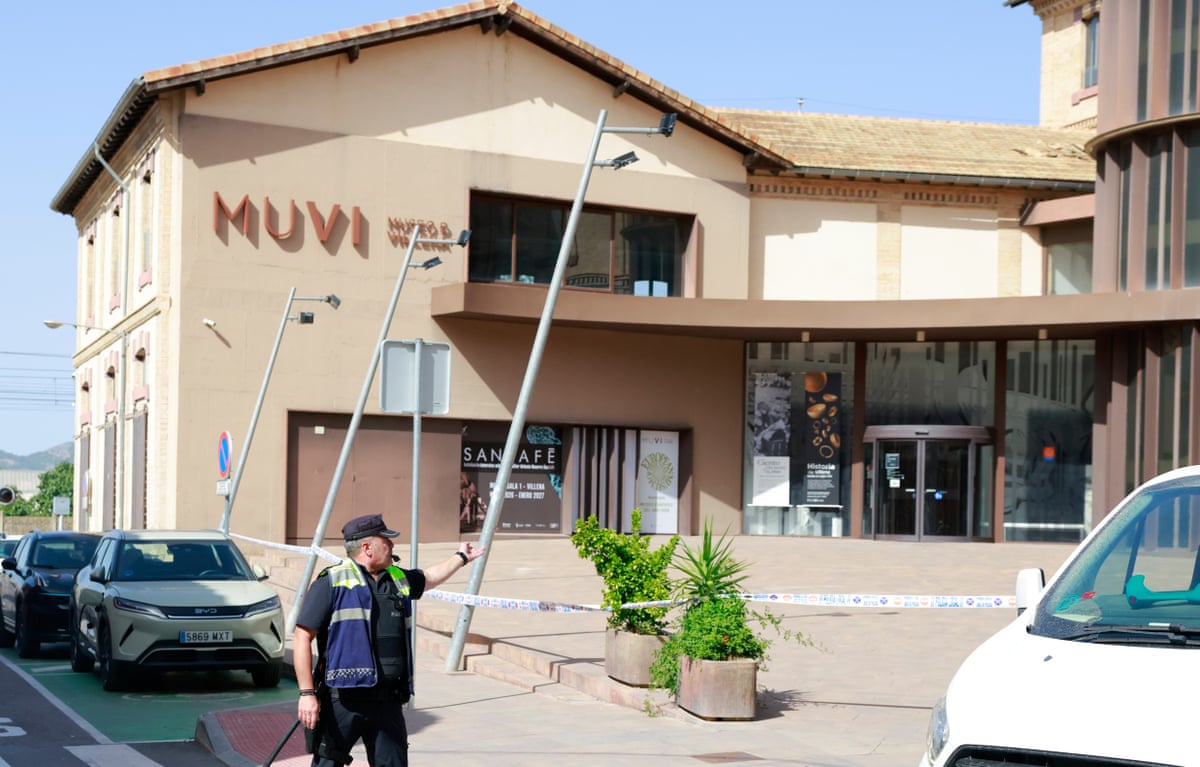
The Treasure of Villena was discovered in 1963 by archaeologist José María Soler in a vessel buried in a dried-out riverbed in the town. The hoard comprises 29 bracelets, 11 bowls, three bottles, and various other pieces of exceptional archaeological significance. Since May 2024, the collection had been on permanent display in a specially designated room within the newly opened, municipally owned Villena Museum.
The unusual composition of certain items in the collection has long captivated researchers and scholars. While predominantly gold, some pieces incorporate silver, iron, amber, and a dark leaden material covered in a ferrous-looking oxide. A recent academic study published in a peer-reviewed journal proposed that these items were likely forged from rare meteoritic iron, adding to their scientific and historical value.

How did the thieves enter the museum?
According to Manuel Pineda, the Spanish government's deputy representative in Alicante, the perpetrators arrived in several vehicles and apparently gained entry through a window. Some reports suggest the thieves removed a window on the side of the building to access the interior. According to available reports, all security systems at the museum were activated at the time of the breach, and a spokesperson for Villena insisted there had been "no failure" by the museum in its security protocols.
Investigators are now examining whether a false alarm that occurred shortly before the robbery at the city's sports centre was deliberately triggered as a diversion. The timing and coordination of the two incidents have raised suspicions among authorities that the sports centre alarm was part of the thieves' strategy to draw attention and resources away from the museum.
What do experts say about the planning?
Mauro Hernández, a professor of archaeology at the University of Alicante and a recognised expert on the Treasure of Villena, has indicated that the operation bore clear hallmarks of extensive preparation.
"They had it very well planned,"Hernández told the broadcaster Cadena SER.
"They knew how to do it, how to act and how to escape."His assessment suggests that the perpetrators possessed detailed knowledge of the museum's layout, security arrangements, and the location of the artefacts.
How does this fit into a broader pattern of European museum thefts?
The Villena heist represents the latest in a series of high-profile raids on cultural institutions across Europe. In October 2025, thieves broke into the Louvre Museum in Paris in broad daylight, stealing jewellery valued at €88m. Four Renaissance panels by Antonello da Messina were stolen from a Sicilian museum on 15 August 2026, with two later discovered abandoned outside the institution. Additionally, Italian police recovered paintings by Renoir, Cézanne, and Matisse valued at more than €9m which had been stolen from the Magnani-Rocca Foundation Museum near Parma.
In a report published at the start of the week, Europol, the EU's police agency, identified a recent shift in criminal tactics "towards violent and forceful methods" that could indicate the involvement of new criminal networks with specific focus on cultural artefacts.
"Some thieves apprehended in recent cases appear to coordinate their efforts on an ad hoc basis, often recruited locally through social media and instant communication channels, without prior connections to each other,"the Europol report stated.
"This differs from the usual structure of criminal networks involved in cultural goods trafficking, which typically operate in a core group organised around a leader."
What happens next?
The Civil Guard and local police are reconstructing the events and collecting evidence at the Villena Museum. Investigators will continue their inventory work, forensic analysis, and review of security footage to establish the exact extent of the loss and identify the perpetrators. Authorities are working to determine whether any of the stolen pieces can be recovered and are coordinating with international law enforcement agencies given the significance of the artefacts and the likelihood that they may be moved across borders.
Key Facts:
- The Treasure of Villena comprises 66 mostly gold objects dating to approximately 1000BC, discovered in 1963 by archaeologist José María Soler
- The theft occurred in under four minutes on Thursday morning, with thieves entering through a window and departing by 5.24am
- The stolen collection weighs approximately 10 kilograms and is valued at over €1.5 million, with the gold alone worth €1.7m
- The raid is part of a broader pattern of high-profile museum thefts across Europe, prompting Europol to warn of new criminal networks targeting cultural artefacts
- Authorities are investigating whether a simultaneous false alarm at a nearby sports centre was used as a deliberate diversion


