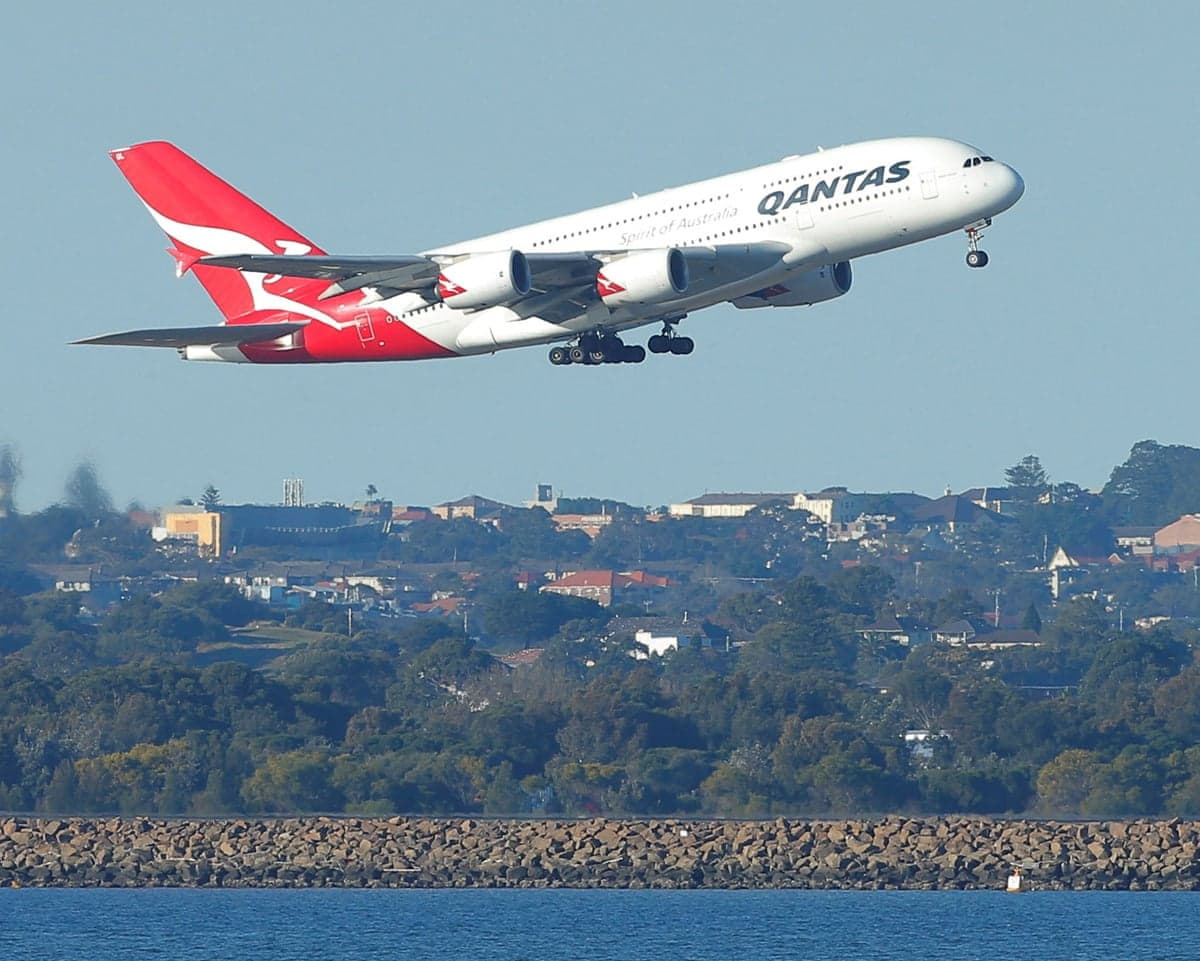
Qantas announced plans to increase ticket prices and expand ancillary charges at its budget subsidiary Jetstar after reporting underlying pre-tax profit of A$2.06 billion for the year to 30 June 2026—its lowest result in four years. The airline attributed the decline partly to elevated fuel costs stemming from the Middle East conflict, which delivered a net impact of A$420 million on full-year results.
Chief executive Vanessa Hudson signalled the airline would pursue additional revenue opportunities despite cost-of-living pressures affecting consumers.
We are not saying that everything that can be done has been done, because we're going to continue to drive where we see demand. We're going to continue to push to maximise revenue and clearly, obviously, maximise earnings.
The airline's overall revenue climbed 7% to A$25.5 billion over the 12 months, yet profitability contracted as fuel expenses across the network rose by A$610 million. The impact fell disproportionately on Qantas's ageing A380 fleet, prompting the company to accelerate retirement of those aircraft to 2028 rather than 2032.
How will Jetstar's new fees affect passengers?
Jetstar, Qantas's low-cost carrier, is expanding its ancillary revenue strategy by introducing charges for services previously bundled into ticket prices. The subsidiary recently launched a carry-on luggage fee for overhead locker storage, scheduled to begin on 2 February 2027 and potentially reaching A$52 per flight depending on the route. Jetstar chief executive Stephanie Tully told investors the carrier had
a whole pipeline of ancillary initiativesin development beyond baggage charges.
Non-seat fees—encompassing checked baggage, preferred seating, cancellation rights, and food and beverages—already generate more than A$1 billion of Jetstar's A$6 billion annual revenue. Tully indicated this contribution would expand significantly as the carrier unbundles more services from base fares to maintain lower advertised prices.
The median Jetstar fare reached approximately A$150 in the year to June, up sharply from nearly A$100 in 2022, reflecting the carrier's pricing strategy during a period of elevated fuel costs.
Why is Qantas accelerating its fleet overhaul?
Qantas is retiring its A380s earlier than previously planned because maintenance expenses and operational disruptions are expected to rise. The company intends to purchase up to 20 additional wide-body aircraft from 2030 onwards as part of its broader fleet renewal programme. Hudson indicated that Airbus A350-1000s and Boeing 787 Dreamliners were under consideration for the international network, though no decision has been finalised on additional ultra-long-haul A350s beyond those already committed to Project Sunrise.

The airline has firm orders for 12 Airbus A350-1000s and 12 Boeing 787s, with deliveries commencing in financial year 2027 and 2028. These new aircraft are expected to improve fuel efficiency and reduce maintenance burdens compared to the A380 fleet.
How is Jetstar performing relative to the wider airline group?
Jetstar remains a cornerstone of Qantas's profitability strategy. Jetstar Domestic earnings rose 15% and Jetstar International revenue climbed 14% in financial year 2026, with domestic operations generating A$3.2 billion in revenue and international operations A$2.6 billion. This performance underscores the low-cost carrier's resilience and its role in offsetting headwinds in the mainline international business, where profitability has deteriorated compared to previous years.
Qantas's loyalty programme also contributed meaningfully to group earnings, growing underlying profit by 12% to A$625 million in the year, supported by a 6% increase in active members. The company expects the points business to generate at least 5% additional earnings in the coming financial year and reach A$800 million in underlying profit by 2030.
What impact did the Middle East conflict have on the airline industry?
The Iran conflict in late February 2026 triggered a sharp spike in jet fuel prices that rippled across the global aviation sector. Qantas benefited from a temporary advantage as passengers rerouted away from airlines with Middle East stopovers, boosting ticket sales to new customers. However, the airline's overall fuel bill increased substantially, offsetting some of these gains.
The broader industry faced similar pressures. Other major carriers reported significant headwinds: American Airlines warned that soaring jet fuel prices could cost the carrier approximately US$4 billion in 2026, while EasyJet cautioned that the conflict had increased fuel costs by £25 million and delayed bookings, leading to an expected pre-tax loss of up to £560 million for the six months to March. British Airways announced plans to raise fares to offset a £1.7 billion rise in fuel costs due to the conflict.
In the six months to December 2025, before the conflict escalated, Qantas had delivered record pre-tax profit of A$1.46 billion as passengers continued to travel despite cost-of-living pressures.
What happens next for Qantas?
Jetstar's overhead-locker carry-on fee will commence on 2 February 2027, with the airline expected to roll out additional ancillary offerings in the months ahead. The first Project Sunrise A350-1000ULR aircraft is due to arrive in the second half of calendar 2026, with further wide-body aircraft deliveries scheduled across financial years 2027 and 2028 as the fleet renewal programme progresses.
Qantas's share price rose more than 4% in early afternoon trading on the day results were announced, reflecting investor confidence in the airline's revenue management strategy and fleet modernisation plans.
Key Facts
- Qantas underlying pre-tax profit fell to A$2.06 billion in FY26, the lowest in four years, with the Middle East conflict contributing a net negative impact of A$420 million
- Jetstar Domestic earnings grew 15% and International revenue rose 14% in FY26, with the low-cost carrier generating A$6 billion in annual revenue
- Jetstar's overhead-locker carry-on fee will launch on 2 February 2027 and could reach A$52 per flight, with further ancillary services planned
- Qantas is accelerating A380 retirement to 2028 and plans to order up to 20 additional wide-body aircraft from 2030, with new A350 and 787 deliveries beginning in FY27
- The airline's loyalty programme grew underlying earnings 12% to A$625 million, with the company targeting A$800 million in points business profit by 2030