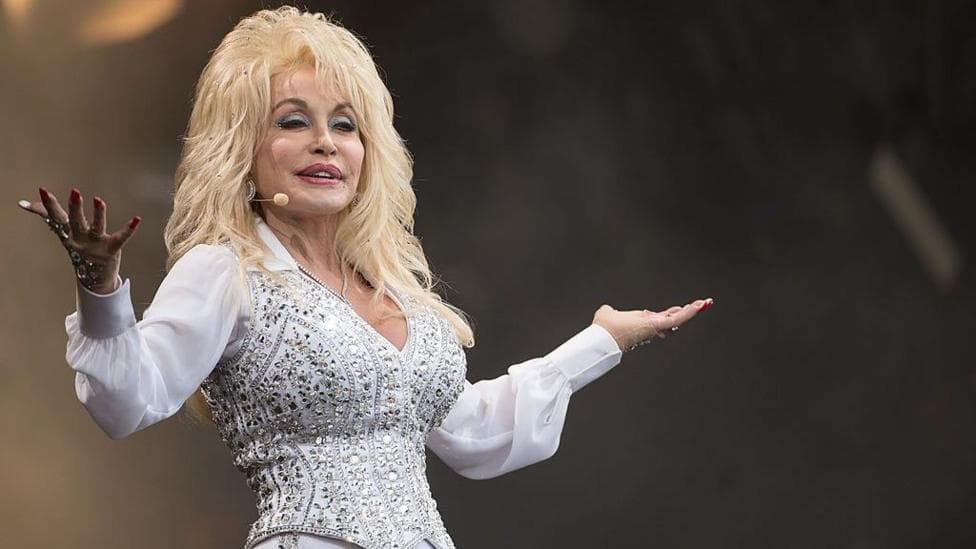
Few musicians would have the courage to decline an opportunity to collaborate with Elvis Presley. Yet when Dolly Parton rejected such an offer, her decision ultimately generated millions in revenue for her.
In 1974, following the creation and recording of I Will Always Love You, Parton received a request to allow Presley to record a rendition of the composition. She declined after Presley's manager insisted on receiving half of the song's rights.
"Of course, I cried all night about that,"she reflected in a later interview about the experience.
However, her perspective shifted dramatically in 1992 when Whitney Houston's rendition of the ballad achieved commercial success. The song accumulated global sales exceeding 20 million copies, generating more than $10 million in royalties for Parton, according to business magazine Forbes.
This entrepreneurial dimension represents the lesser-known aspect of Parton's career. While country music and film roles established her reputation, her business ventures and strategic investments created her substantial wealth. The country music icon negotiated contracts, established enterprises, and made strategic investments that Forbes estimates accumulated a net worth of $450 million by the time of her death on 25 August 2026.
As the country music legend's passing marked the end of a nearly six-decade career spanning music, film, business and philanthropy, her financial legacy underscores how she transformed her artistic platform into a diversified business empire.
Where did her business instincts originate?
Parton's path to wealth did not begin with privilege. Her childhood unfolded in poverty, and her 1971 composition Coat of Many Colours recounts how she attended school wearing garments her mother had assembled from scraps of fabric.
During a 2017 interview, Parton credited her father with instilling business principles from the early stages of her professional life.
"My dad wasn't an educated man, he wasn't able to read and write, but my daddy had a great sense of business,"she explained to the BBC's World Service.
"So when I got into the music business, I thought of it as a business. And so I started early on keeping my own songs and my own publishing company."
Her publishing company served as a foundation for accumulating wealth, yet Parton pursued numerous additional commercial ventures beyond music rights management.
What business ventures did she establish?
Parton's entrepreneurial reach extended across entertainment, hospitality, and consumer goods. In 1985, she co-founded Sandollar Productions, a film and television production company that contributed to creating the 1990s cult thriller Buffy The Vampire Slayer.
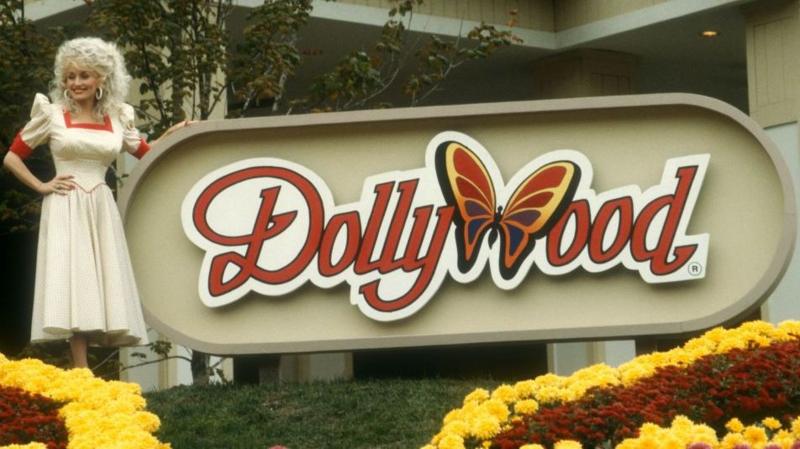
Her most visible business achievement emerged through Dollywood, the theme park situated in Tennessee's Smoky Mountains foothills. She became co-owner in 1986, taking over a facility that had changed ownership multiple times since its establishment 25 years prior. Her involvement dramatically increased visitor attendance and transformed the operation.
Parton continuously enhanced the park's offerings. In 2015, she opened the DreamMore Resort, a four-star hotel and spa adjacent to Dollywood. Today, numerous family members maintain employment at the theme park, which functions as the largest employer in its county. According to reporting from the Tennessean, Dollywood's NightFlight Expedition, the park's 11th roller coaster and its largest single investment ever, opened in August 2026.

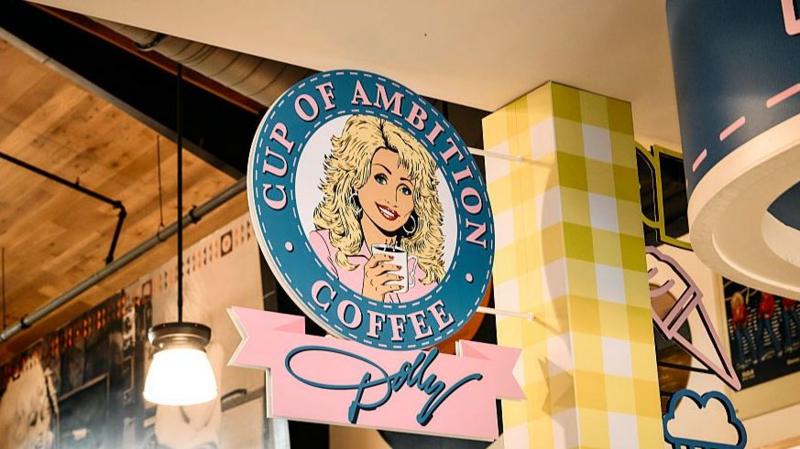
Beyond the theme park, Parton launched the Dolly Beauty cosmetics line in 2025 and opened Dolly's Tennessean Travel Stop in June 2026. The establishment features a signature coffee brand called Cup of Ambition, referencing her Grammy-winning single 9 to 5.
Paul Milliken, a reporter from Fox 5 Atlanta who conducted numerous interviews with Parton, identified diversification as fundamental to her commercial achievements.
"It's a lesson that continues from her to this day to young artists,"he stated during an appearance on the BBC's Wake Up to Money programme.
How did she maintain her wealth-building drive?
Despite achieving substantial financial success into her 80s, Parton maintained perspective about her origins. In her 2017 BBC interview, she emphasized that prosperity never diminished her awareness of humble beginnings.
"Being brought up poor means I don't take things for granted, and no matter how much money I make, I'll always count my blessings quicker and more often than I count my money."
She demonstrated consistent frugality regarding expenditures.
"Even now if I go in a store it's hard for me to pay a huge amount of money for one item. I say 'good Lord', what could mummy and daddy have done with that!"
Parton's father's guidance remained central to her approach.
"He said: 'Don't let other people take advantage of you. You keep your mind on your business'."
How did she use her wealth?
Financial success served purposes beyond personal accumulation for Parton. She distributed substantial sums toward child literacy initiatives, wildfire relief efforts, and research into COVID-19 treatments. In 2022, she received the Carnegie Medal of Philanthropy recognizing her charitable contributions. Her Imagination Library has inspired reading among children internationally, with Scottish communities recently dedicating an annual celebration to honour her legacy in this area.
During her 2017 BBC conversation, Parton expressed enthusiasm about her numerous initiatives.
"I just wish I was 30 years old so I could start over again and get all this stuff done... I'm gonna' be working till I fall over bad."
What made her brand so valuable?
Parton's influence and commercial success derived partly from her status as a unifying figure in American culture. She deliberately avoided political involvement, declining the Presidential Medal of Freedom on two occasions—once when offered by Donald Trump and again when offered by Joe Biden—to preserve her brand's universal appeal.
Maike Currie, vice president of personal finance at savings firm PensionBee, highlighted Parton's significance as a role model during an appearance on the BBC's Wake Up to Money.
"Brilliant businesswoman, but also an iconic investor and a real example to women about the power of what happens if women are financially independent."
Her business philosophy influenced subsequent artists. While country music megastar Taylor Swift's musical style has drawn comparisons to Parton's work, Currie suggested Swift may have adopted comparable business strategies, choosing to rerecord her earlier compositions to secure ownership of the master recordings.
What projects remained in development?
Even as health challenges emerged in mid-2026, Parton continued advancing multiple ventures. According to reporting from the Washington Times, she remained engaged with the Songteller Hotel, the Life of Many Colors Museum in Nashville, and a Broadway musical adaptation of her life story. She had been scheduled to appear at the NightFlight Expedition dedication on 14 August but missed the event due to health concerns, though early preview days for the ride ran from 15–18 August, with the attraction opening to all guests on 19 August.
Key Facts
- Parton's decision to retain publishing rights to I Will Always Love You generated over $10 million in royalties when Whitney Houston's 1992 cover became a global hit with 20 million sales
- Her estimated net worth reached $450 million through diversified ventures including Dollywood, Sandollar Productions, cosmetics, and hospitality businesses
- Parton became co-owner of Dollywood in 1986 and transformed it into her county's largest employer through continuous expansion and enhancement
- She distributed millions toward literacy programmes, disaster relief, and medical research while receiving the Carnegie Medal of Philanthropy in 2022
- Her business strategy of diversification and brand protection influenced subsequent artists, including approaches to ownership and creative control