The UK could gain entry to the EU's proposed industrial protection scheme without being forced to impose import taxes on Chinese electric vehicles, according to draft proposals being considered by European officials. BBC News reports that Ireland, which holds the EU's rotating presidency, has drawn up the proposal and will present it to European ambassadors for discussion.
The development marks a significant shift from earlier EU suggestions that Britain would need to align its tariffs on Chinese electric vehicles as a precondition for participation. Senior figures in the British government have responded with cautious optimism, signalling their willingness to engage with the scheme on terms the UK finds acceptable.
The "Made in Europe" scheme, formally known as the Industrial Accelerator Act, aims to shield EU manufacturing through restrictions on goods from outside countries, with particular emphasis on China and the automotive sector. According to Reuters, EU countries have been leaning toward including British-built electric vehicles in the scheme, with Ireland's latest proposal also covering Iceland and Liechtenstein.
Remaining outside the EU would ordinarily expose Britain to restrictions designed to protect other nations' industries. Adopting higher EU tariffs on Chinese electric vehicles would have increased their cost in the UK market at a time when they have grown increasingly popular with consumers. Such a move would also have risked triggering Chinese retaliation through tariffs on vehicles manufactured in Britain.
Why the UK-EU automotive relationship matters
The rationale behind Ireland's proposal centres on the deep integration and mutual dependence between UK and EU car industries. The automotive trade between the two regions is worth €80 billion annually, and industry groups have called for British vehicles, parts and batteries to receive equivalent treatment under any new rules. The scheme would establish European-content requirements for companies seeking EU subsidies or contracts to supply EU governments and agencies, according to Reuters.
The proposal would also apply to Switzerland and countries in the European Economic Area such as Norway, and would depend on these non-EU nations granting the EU access to their subsidy and procurement schemes in return.
What are the next steps?
The proposal remains in its early stages. Following the ambassadors' discussion, EU industry ministers are scheduled to debate the proposal in Brussels on 3 December, with member states aiming to reach a common position shortly afterwards. The scheme will also require approval from the European Commission and the European Parliament, which is expected to vote on the matter in early December.
The European Parliament's draft report has proposed a 50% threshold for "Made in Europe" and low-carbon products in strategic sectors by 2036. The broader Industrial Accelerator Act, which the EU Commission published on 4 March 2026, aims to raise manufacturing's share of EU GDP from 14.3% in 2024 to 20% by 2035.
What have British officials said?
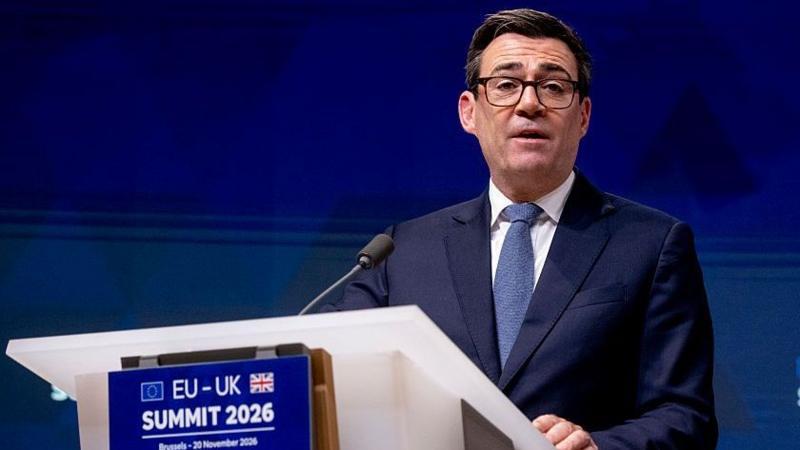
Following last week's EU-UK summit in Brussels, Prime Minister Andy Burnham described Made in Europe as a
"source of real concern across the British economy, particularly for our car makers". He added that
"it will come as a relief to workers that the UK and EU committed in Brussels to avoid measures that would harm each other's industries".
Chancellor John Healey has been pushing EU finance ministers to design the scheme in a way that strengthens UK ties rather than excludes British firms. The government's engagement reflects broader concerns about trade friction at a time when stricter automotive rules of origin under the UK-EU Trade and Cooperation Agreement are scheduled to take effect on 1 January 2027.
Key Facts
- Ireland's proposal would allow UK participation in the "Made in Europe" scheme without requiring Britain to match EU tariffs on Chinese electric vehicles
- The scheme aims to protect EU manufacturing by setting European-content requirements for companies seeking subsidies or government contracts
- EU industry ministers will discuss the proposal on 3 December, with the European Parliament expected to vote in early December
- The UK and EU automotive industries trade €80 billion worth of goods annually and are heavily integrated in supply chains
- The broader Industrial Accelerator Act targets raising manufacturing's share of EU GDP from 14.3% to 20% by 2035