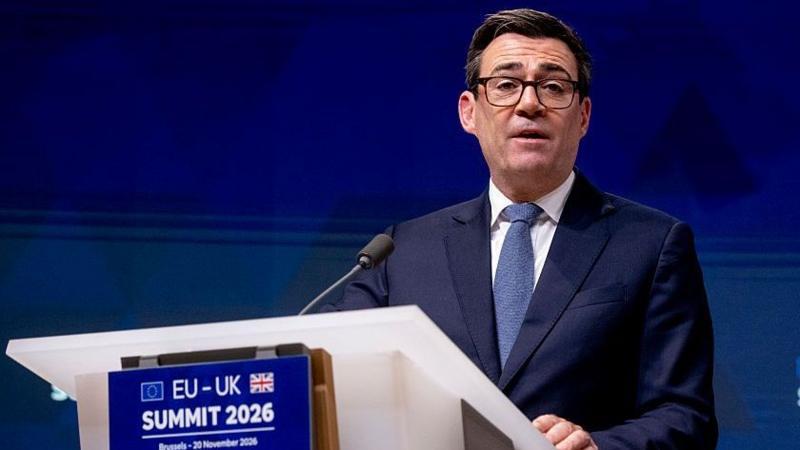
Prime Minister Andy Burnham secured a deal with the European Union in Brussels on Friday covering food exports, emissions trading and a youth mobility scheme. He will present the agreement to Parliament on Monday as a transformative moment for Britain, arguing it represents a genuine opportunity to move beyond years of economic stagnation and political division.
According to BBC News, Burnham will characterise the accord as
the single biggest growth measure to be delivered in this parliament, repeating his assertion that it could inject £17 billion into the British economy annually. He will frame the choice before MPs as one between maintaining a dysfunctional status quo or embracing meaningful change.
The negotiations, which intensified ahead of the Friday deadline, culminated in three main agreements addressing longstanding post-Brexit trade friction. The food trade component will eliminate most checks on British exports in exchange for the UK adopting certain EU regulations, with implementation scheduled for 1 March 2028. The government says the deal will restore market access for fresh sausages, burgers, Welsh mussels and Scottish seed potatoes, and reduce paperwork for trade between Great Britain and Northern Ireland, according to UK government sources.
The removal of export health certificates—which can cost up to £200 each—represents a significant reduction in trade friction. According to government documentation, phytosanitary certificates cost approximately £25 each, with inspection fees of at least £127.60 per load, meaning the elimination of these checks will substantially lower costs for exporters.
What does the youth mobility scheme entail?
The new youth experience programme will permit up to 100,000 young people aged 18 to 31 from EU member states to travel, work and study in the UK for up to three years, with reciprocal access granted to the same number of British citizens. The scheme is visa-based and capped, with participants barred from accessing benefits or bringing dependants. Young people participating will be able to work, study, volunteer, au pair or travel, with UK participants permitted to move between up to three EU member states during their three-year stay. The scheme is due to launch no later than January 2030.
How does the emissions trading agreement work?
The third pillar of the deal addresses carbon pricing. The UK and EU carbon markets were separated following Brexit; the new agreement is intended to link them again, allowing both sides to coordinate climate policy and create a more integrated emissions trading system.
Burnham will tell MPs that the agreement
holds out the very real prospect that the next decade can be a much better one for Britain than the one we have just lived through. He will emphasise the opportunity to
draw a line on a decade of drift and divisionand present the deal as a choice
between easing pressure on the cost of living or allowing food prices to rise furtherand
creating opportunities for young people or denying them. Burnham believes polling evidence suggests the UK public
want closer tieswith the EU and that the agreement
delivers that.
What is the Conservative response?
Opposition parties have mounted swift criticism. Conservative leader Kemi Badenoch will use a speech at the Confederation of British Industry annual conference on Monday to attack the deal, arguing that Burnham should be
aiming a lot higheron driving economic growth. She will contend that
Europe will always remain an important market, but it is not the market of the future. Reform UK leader Nigel Farage will tell the same conference that establishing closer ties with the EU would be a
disasterfor British businesses attempting to compete and innovate.
The Conservatives have branded the arrangement unfair, arguing that UK farmers would be forced to follow rules established by Brussels without direct representation in their creation.
What about the long-term relationship with the EU?
On Friday, Burnham indicated that over the coming months both sides will
seek to conduct an informal brainstorming processto examine options for the UK's long-term relationship with the EU. He acknowledged that the current deal was
probably the limit of what we can achieve in this Parliament, given what needs to be done to implement it, but expressed intent to
inform the Parliament after this one, so that decisions can be taken about that long-term relationship.
Burnham has previously suggested that future options could encompass rejoining the customs union, the single market or holding a fresh referendum on full EU membership. However, he has ruled out major changes to the UK-EU relationship before the next general election, committing to honour Labour's 2024 manifesto pledge not to return to the single market, customs union or freedom of movement.
A number of former prime ministers have warned against reopening the EU debate. Rishi Sunak told Sky News the issue was
divisiveand
ends up being a huge distraction for government. Baroness Theresa May told the BBC she was
aghastBurnham could be considering rejoining the EU, urging him to
accept Brexit and move on. Former Labour Prime Minister Sir Tony Blair, a prominent opponent of leaving the EU, told the Sunday Times that Britain should only rejoin the bloc if it reforms and allows greater innovation in technology.
What happens next?
The government expects the first young people to travel under the scheme no later than January 2030. The food agreement is subject to UK and EU procedures and is due to apply from 1 March 2028. Parliament will debate the deal on Monday, with the government seeking to build support for what it characterises as a transformative reset of the UK-EU relationship.

Have your say on this story. Share your views with BBC News.