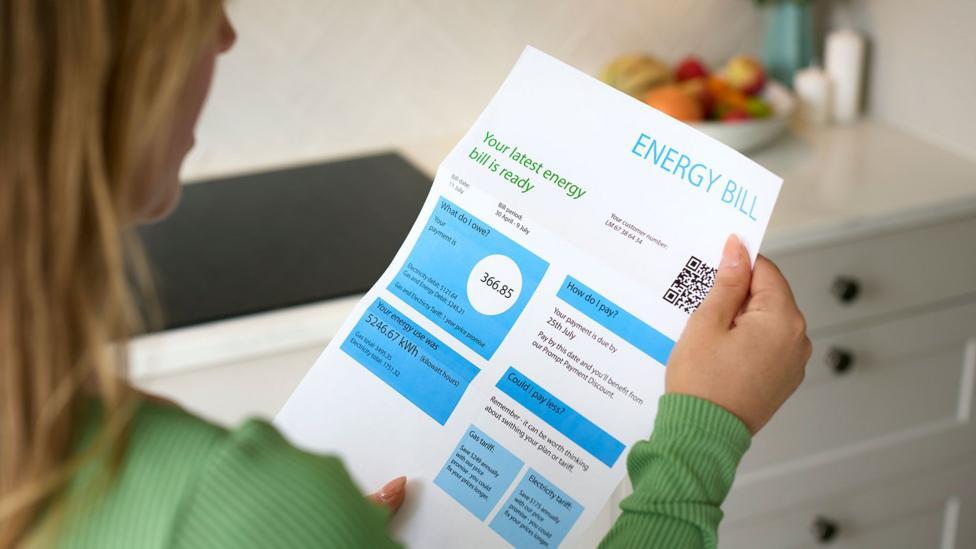
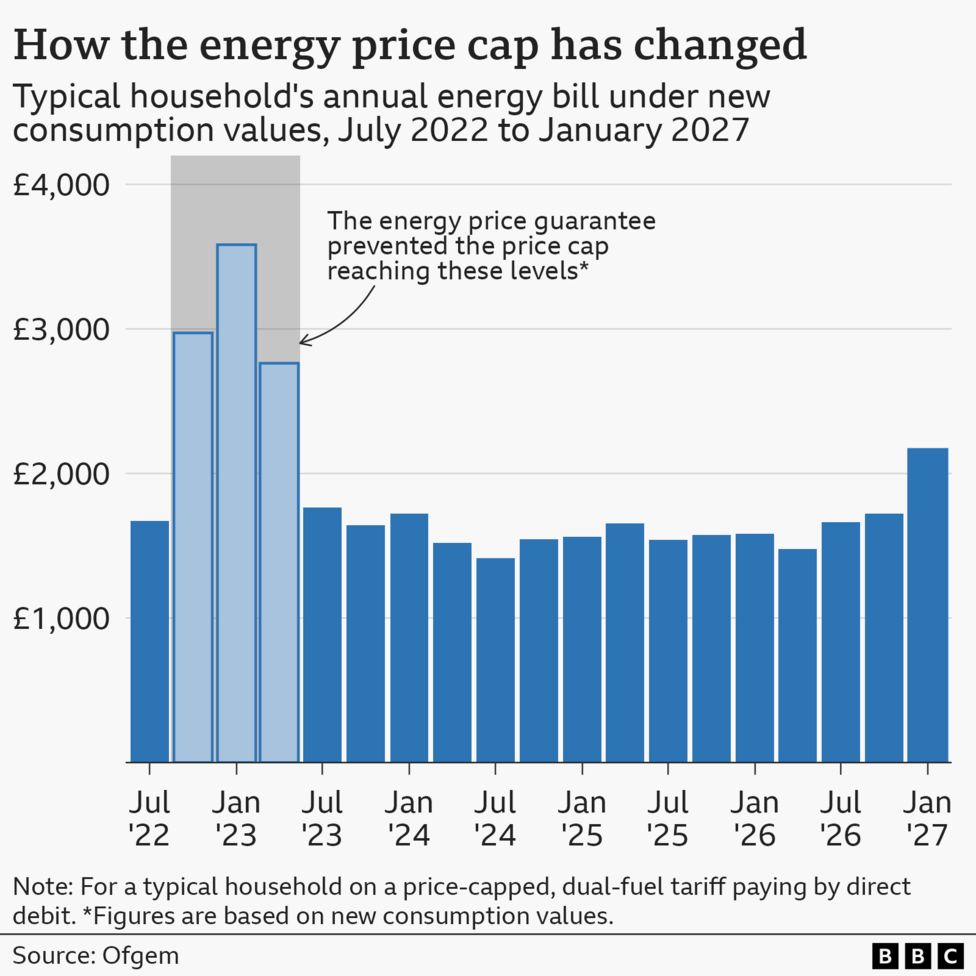
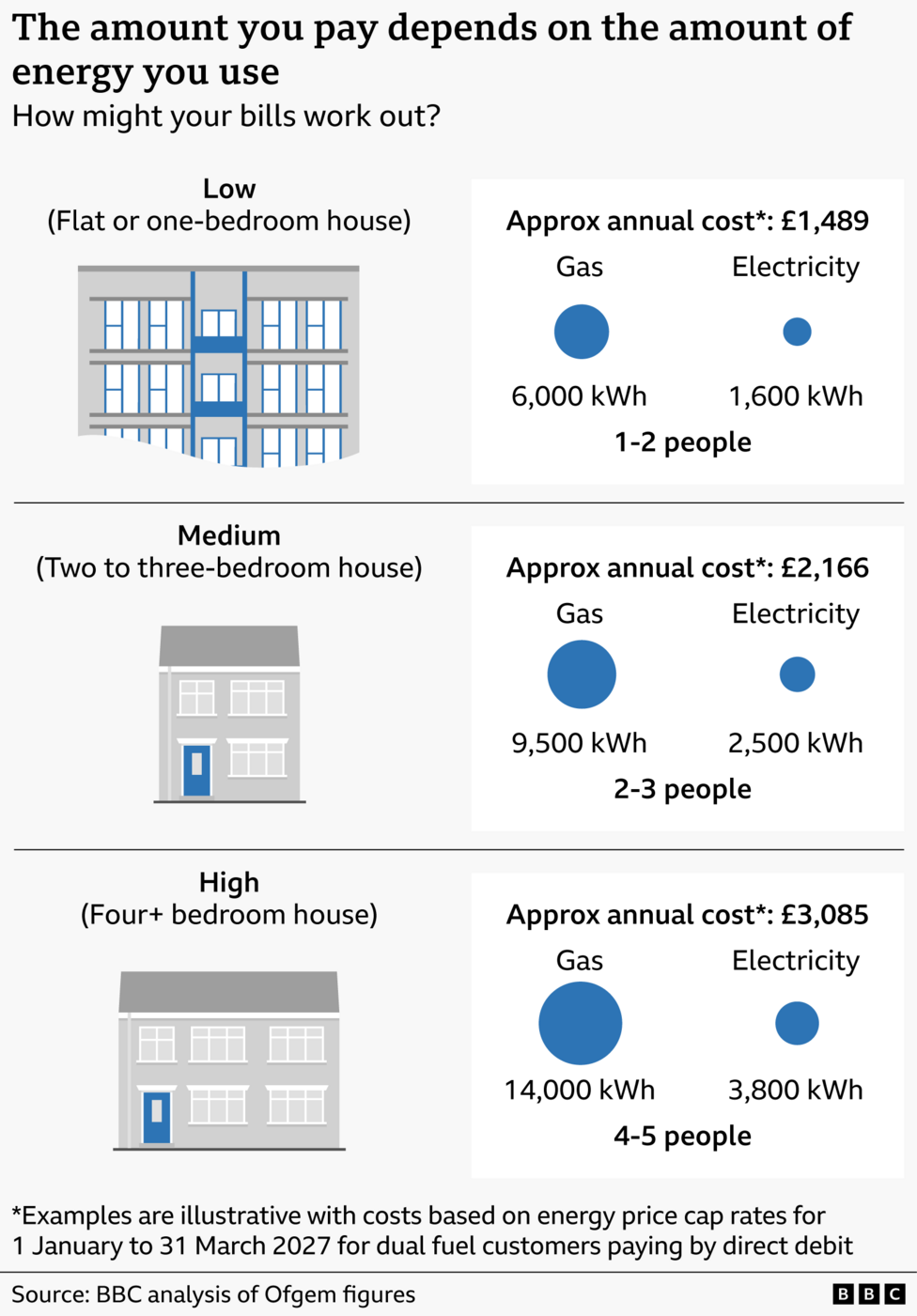
Household energy bills will increase by 26% from 1 January 2027 following a sharp rise in wholesale gas prices linked to geopolitical tensions in the Middle East. According to BBC News, a typical dual-fuel household paying by direct debit will see annual bills climb from £1,723 to £2,166 if the increase persists throughout the year, representing an additional £443 annually.
The monthly impact will vary depending on household consumption patterns. Households may face increases of approximately £37 per month during the first quarter, though winter usage could push this closer to £60 monthly for those with higher energy demands. Ofgem's published figures show standard-credit customers' annualised cap rising 25%, from £1,861 to £2,328, while prepayment customers face a 26% increase from £1,678 to £2,108, and Economy 7 direct-debit customers a 21% rise from £1,046 to £1,265.
What is driving the price increase?
Ofgem attributed the rise entirely to elevated wholesale costs incurred by energy suppliers, primarily stemming from the Iran conflict. Wholesale gas prices paid by suppliers climbed 33% during the three-month period used to calculate the January to March cap. This represents the largest increase since Russia's invasion of Ukraine significantly elevated energy costs. The timing compounds the challenge, as the price rise coincides with the coldest months when household consumption peaks.
How much will unit prices change?
The price cap sets a maximum charge per unit of energy rather than a fixed total bill. For customers on variable tariffs, electricity unit prices will rise from 26.32p per kilowatt-hour to 32.69p from 1 January, while gas will increase from 7.97p per kilowatt-hour to 10.96p—surpassing the levels seen immediately after Ukraine's invasion. Daily standing charges will be 54.77p for electricity and 29.65p for gas. Those on fixed-rate deals will remain unaffected until their contracts expire.
The cap is recalculated every three months based on supplier costs and system operation expenses. Because the calculation uses data ending approximately six weeks before implementation, recent declines in international wholesale prices will not appear in the January cap but are expected to influence April's adjustment. Ofgem will publish the next price-cap levels for 1 April to 30 June 2027 by 23 February 2027.
What government support is available?
The government will distribute £100 payments to eligible households from 4 January 2027 to help offset winter costs, supplementing an existing VAT reduction on electricity. The government says 13 million households will automatically receive the £100 payment where councils hold verified direct-debit details; eligible households must use the property as their sole or main residence on 4 January 2027. Up to 20 million households across England, Scotland and Wales are eligible for equivalent payments.
The £100 Household Energy Payment applies to eligible homes in council tax bands A to D in England; one payment is made per household, and councils may use a £100 million discretionary fund for households most acutely affected. The scheme runs from 4 January to 31 May 2027, with most payments expected by 31 March.
The warm home discount will provide £150 relief for six million households receiving benefits this winter. Charities and campaign groups have called for this support, funded through all bills, to be extended beyond its current scope.
Who will be hit hardest?
Prepayment meter customers face particular hardship, as their spending occurs when energy is actively needed rather than costs being distributed across the year as with direct debit arrangements. Citizens Advice warned that the £100 payment will be consumed rapidly by those on prepayment meters, likely triggering a surge in requests for emergency assistance.
Dame Clare Moriarty, chief executive of Citizens Advice, stated:
We are staring down the barrel of a brutal winter. Charities and suppliers anticipate rising energy debt and increased demand for emergency support services.

How are households responding?
Stacey, a 40-year-old single mother from Bristol, exemplifies the coping strategies many households are adopting. She has reduced her central heating from 22°C to 19.5°C, purchased electric blankets, and keeps curtains closed to retain warmth. Her daughters wear thermal clothing indoors when temperatures drop. She manages her bills through direct debit payments, a method that allows costs to be spread throughout the year.
What are energy companies and campaign groups saying?
Campaign groups Friends of the Earth and Global Witness contend that major oil and energy companies are accumulating substantial profits due to soaring oil costs, placing the burden on households. Energy UK, representing suppliers, countered that energy firms have capped profits and do not benefit from the same gains as international energy-generating companies. The industry body emphasised that the UK must develop additional domestic clean power capacity and accelerate the electrification of homes and transport systems.
Neil Kenward, Ofgem's director general for markets, stated that Ofgem had written to energy suppliers
reminding them of their responsibilitiesto customers this winter. Suppliers have been instructed to identify vulnerable customers early, ensure support is easily accessible, and establish affordable and sustainable repayment arrangements.
Energy UK stated that the £100 payment was poorly targeted and insufficient to prevent rising customer debt levels. The government countered that councils have access to a £100 million discretionary fund to support vulnerable households outside the main scheme.
What is the political response?
Energy Secretary Miatta Fahnbulleh acknowledged that people will be
deeply concernedby the latest bill increase. She stated:
For too long, British families have been paying the price for conflicts overseas and volatile fossil fuel markets. Andrew Bowie, shadow energy secretary, criticised the government's approach, saying:
It is an outrage that, as bills soar, Labour are not only piling green levies and taxes onto bills but signing us up to an EU scheme that risks pushing them even higher.
Key Facts
- A typical household bill will rise from £1,723 to £2,166 annually from 1 January 2027, an increase of £443
- Electricity unit prices will rise to 32.69p per kilowatt-hour and gas to 10.96p per kilowatt-hour
- The government will provide £100 payments to eligible households from 4 January, with 13 million receiving automatic payments
- Wholesale gas prices increased 33% in the three-month period used to set the January to March cap
- Prepayment meter customers face particular hardship as costs are not spread across the year