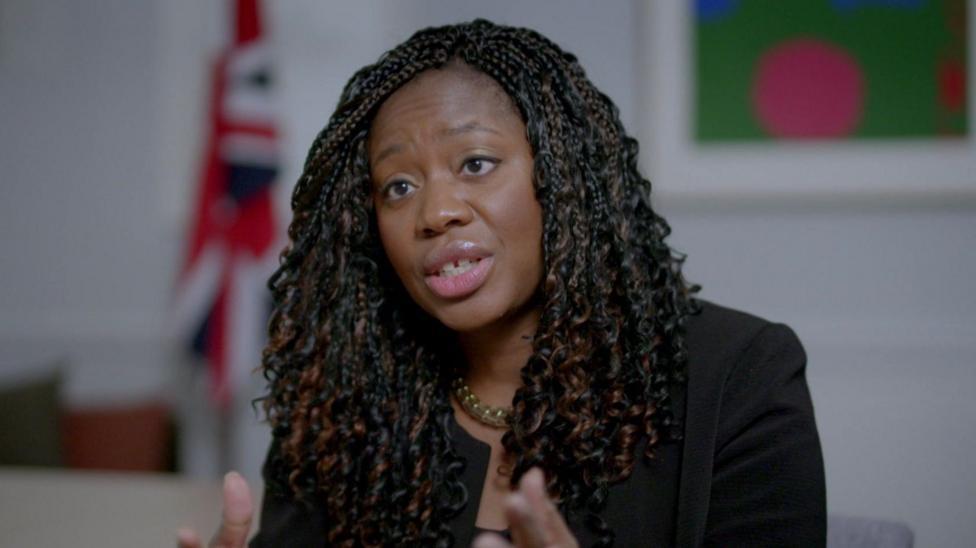
The energy secretary has made clear that keeping bills affordable represents her "overriding objective", emphasizing that lower costs are essential to sustaining public backing for the transition to cleaner power. Speaking to BBC Panorama, Miatta Fahnbulleh stated that the government's commitment to renewable energy would ultimately help reduce household bills, though she acknowledged that the current push to cut carbon emissions faces headwinds from public concern about rising prices in recent years.
According to BBC News, the energy secretary's comments come as the government prepares to address a forecast spike in energy prices scheduled for January, which is anticipated to represent the largest increase in four years. The political climate surrounding climate policy has shifted markedly, with Reform UK gaining ground in polling and the Conservative Party under Kemi Badenoch abandoning its previous commitment to achieve net zero emissions by 2050.
Both opposition parties have intensified criticism of public subsidy programmes that support renewable electricity generation, contending that the pursuit of cleaner energy has inflated consumer costs. UK households currently face some of the highest electricity rates across Europe, with bills rising due to both renewable subsidies and elevated global gas prices driven by international tensions.
What is the energy secretary's strategy for balancing climate and affordability?
Fahnbulleh framed Labour's renewable energy agenda as fundamentally aligned with cost reduction.
"The drive to clean power is about decoupling our dependence on global fossil fuel markets,"she explained, adding that
"if we have homegrown renewables, nuclear, that's the way in which we will drive bills in the long term."When asked during her recorded interview what her primary responsibility entailed, she responded:
"With the cost of living biting, affordability is my overriding objective, without a doubt."
She characterised the government's shift toward greener electricity as
"one of our routes to delivering affordability"and argued that building domestic renewable and nuclear capacity would insulate Britain from volatile international energy markets.
Why is the climate consensus facing pressure?
Fahnbulleh conceded that public anxiety over energy affordability has contributed to erosion of the broad consensus supporting climate action.
"People want to blame net zero for that. Now, I don't believe that's the case."However, she recognised the political imperative to demonstrate tangible benefits to households.
"I'm very clear that part of the way in which we build and maintain public consent is that we've got to show that this transition, which we have to do on climate grounds, is good for people's pockets."
The UK experienced a record number of heatwaves during the summer of 2026, alongside successive destructive wildfires. The Met Office determined that climate change made such extreme conditions 130 times more probable. In September 2026, whilst convening the nation's inaugural summit on wildfires, Andy Burnham acknowledged that
"the summer we've just had is likely to be a more regular situation going forward"as a consequence of climate change.
How is the government balancing climate commitments with cost pressures?
Despite pledging to lead a "cost of living government" and revitalise the economy, the administration has taken steps that have troubled environmental advocates. The government diverted funding from the energy department toward defence spending targets, redirecting money that had been designated for energy efficiency initiatives. In October 2026, ministers authorised drilling at the Jackdaw gas field, a decision that drew objections from some campaigners, though officials contended it would reduce reliance on imported fuels with higher carbon footprints.
A determination remains outstanding regarding whether production can commence at Rosebank, Britain's largest known undeveloped oil field situated off Shetland's coast. Fahnbulleh reiterated to Panorama that reducing carbon emissions
"absolutely is a priority,"citing the summer's droughts as evidence of the urgency of addressing global warming.
Nevertheless, she acknowledged that Labour's objective for 95 percent of electricity generated in Britain to originate from clean sources by 2030 represented
"a stretch."On the same day her interview aired, reports emerged that the government is deliberating whether to weaken the electric vehicle mandate that requires car manufacturers to phase out petrol and diesel vehicle production by 2035. Such a move could undermine both the country's climate targets and its credibility on environmental leadership as government officials travel to Turkey for COP31, the United Nations climate conference.
What is the broader context for energy costs?
Energy bills across the UK are forecast to remain persistently elevated throughout the remainder of the 2020s despite short-term fluctuations in the price cap, according to analysis from earlier in 2026. Rising investment costs for grid infrastructure represent a fundamental driver of these sustained pressures. Energy suppliers have pressed the government to take urgent action, warning that a 16 percent price increase scheduled for January could precipitate a second energy crisis, with the typical household bill forecast to reach £1,999.
Energy UK has urged the government to expand financial support for households as winter bills approach their highest level in three years, proposing a new £1.9 billion scheme to provide targeted assistance to millions of struggling households.

What happens next?
The government faces mounting pressure to clarify its position on multiple fronts: the scale of support for households facing January's price surge, the final decision on Rosebank oil field development, and the outcome of deliberations over weakening the electric vehicle mandate. Ministers are expected to announce changes to electric vehicle targets during the current week. The path forward will substantially determine whether the government can sustain public confidence in its climate agenda whilst addressing immediate cost-of-living concerns.