
Yumi Liberman stood before a panel of judges and an audience of 300 people in a London auditorium during 2024, tasked with delivering a pitch rather than a musical performance. She and two companions were competing in Brandstorm, an international innovation competition operated by cosmetics manufacturer L'Oréal, where participants present product and business concepts in hopes of securing employment with the firm.
The trio's proposal centred on a haircare application, which earned them the UK title and advanced them to that year's global final in Paris, where they finished in third place. Although only the first-place team members received automatic full-time offers, Liberman impressed senior executives sufficiently to land a position in L'Oréal's marketing management traineeship programme, culminating in permanent employment.
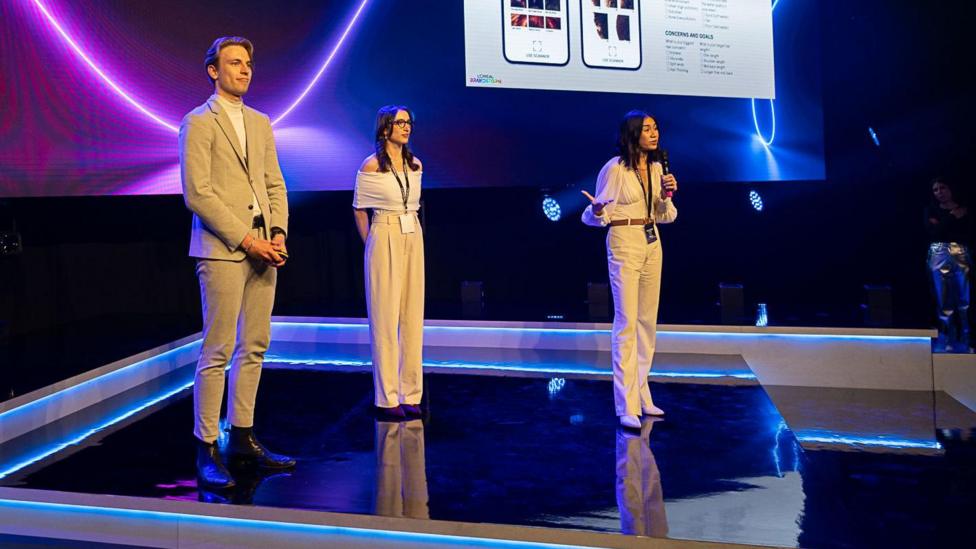
Liberman, now 24, reflects on the experience:
It reminded me of when I used to do competitive sports growing up and the pressure would get heavy. But somehow you just get into flow mode.
The strategy of transforming recruitment into entertainment-style competitions, with employment as the ultimate prize, generates significant media attention and corporate visibility. Yet this approach raises important questions about whether such processes are genuinely equitable for the young people participating.
Why are companies adopting competition-based hiring?
L'Oréal's Brandstorm operates as the biggest innovation competition worldwide for everyone under 30, welcoming applicants aged 18 to 30 from any educational or professional background. According to the company, this format successfully broadens the recruitment pool by attracting potential candidates who might never have considered applying through conventional channels.
The competition has expanded dramatically in scale. This year, approximately 380,000 people worldwide submitted applications—a 58 per cent increase from 240,000 applicants in 2025. The winning team receives a three-month programme at L'Oréal's Paris headquarters plus a place in the management trainee programme, making the stakes substantial for participants.
Jamie Kohn, senior director for talent acquisition at research firm Gartner, explains that competition-based hiring formats are becoming entrenched because employers find them more straightforward for evaluating candidates than traditional interview methods. However, she emphasises that organisations must exercise restraint regarding the demands placed on jobseekers.
And they should focus on providing feedback… so candidates build their capabilities even if they are not selected.
What challenges do young people face in today's job market?
Youth unemployment remains significantly elevated across numerous nations. In the United Kingdom, the jobless rate for young adults stands at 16.2 per cent, substantially higher than the overall national rate of 4.9 per cent. This disparity reflects employer hesitancy to recruit new staff in the current economic climate.

The competitive hiring landscape has intensified considerably. One graduate reported applying to 400 positions and receiving only three interviews, illustrating the difficulty many face in securing opportunities. Liberman acknowledges this reality among her peers:
I have a lot of friends coming from extremely reputable backgrounds, extremely educated people who have applied to over 1,000 jobs, and have been jobless.
For Liberman personally, the competition format proved advantageous. Living with severe dyslexia, she contends that navigating a conventional recruitment process with standard assessments would have presented greater obstacles. The competition allowed her to transition directly into her chosen field upon completing university, avoiding the unemployment gap many graduates experience.

Are competition-based recruitment processes fair to all candidates?
Critics raise substantial concerns about equity in this hiring model. Katrina Collier, a former recruitment consultant now working as an author, speaker and recruiter trainer, warns that competition-based processes requiring candidates to invest considerable unpaid time can generate what she terms
economic discrimination. She elaborates:
Not everyone can take time, possibly months, to participate in the challenges for the chance to secure one of a limited number of roles. Does that mean only people from financially strong backgrounds proceed? Is that leaving talented applicants who don't have the bank of mum or dad, for example, unable to take part?
Melissa Alcruz, who currently works in marketing for a New York-based real estate company, previously held the same position at television network MTV. During her tenure there, she participated in an internal competition for promotion described as a
bake-off, where candidates developed sponsorship and marketing campaigns before presenting to seven evaluators. Despite ultimately securing the promotion, Alcruz expressed dissatisfaction with the process:
This is intimidating, even for a seasoned professional. I ultimately got the job, but even though I won I disliked the process.
Her concern centred on the burden placed on participants. She was maintaining a demanding full-time role while simultaneously expected to complete substantial projects for the competition during her personal time, creating an unsustainable workload.
Psychologist Amanda Potter identifies another potential inequity: competition-based recruitment may systematically disadvantage introverted individuals.
Does this approach encourage all types of people to apply, or would certain types of people avoid these assessment methods? This could result in an organisation [ending up] full of ambitious, competitive people who want to win, possibly to the detriment of others.
How does this fit into the broader recruitment landscape?
The emergence of competition-based hiring reflects wider shifts in how organisations identify talent. Job seekers are increasingly using appearance, body language and confidence to help them stand out, suggesting that presentation skills have become central to employment prospects. Additionally, concerns have emerged about AI recruitment tools potentially disadvantaging mid-life women, with more than 60 women and experts raising similar concerns after extended job searches.
Government initiatives have also attempted to address youth unemployment. The government has introduced £3,000 grants to employers hiring unemployed young people aged 18-24, expanding existing schemes to target this demographic specifically.
What happens next with Brandstorm?
L'Oréal's Brandstorm 2026 competition is open to people aged 18 to 30 and offers participants the chance to be hired at L'Oréal plus a professional mission at its Paris headquarters. The international finals were scheduled for 18 June 2026 in Paris, with local finals held on 7 May 2026 in Melbourne and applications closing on 31 March 2026. Participants can create or join teams of three and submit a slide deck plus a three-minute video answering predefined questions, with successful entrants receiving privileged access to recruitment opportunities.