The Bank of England's nine-member Monetary Policy Committee is widely expected to maintain its benchmark interest rate at 3.75% when it announces its decision on 17 September 2026, despite mounting inflationary pressures stemming from geopolitical tensions and rising global energy costs. All 65 economists polled by anticipated no change at the meeting, though the committee faces a complex policy landscape as it weighs competing pressures on the economy.
The decision comes as official data released on 16 September 2026 showed inflation accelerating to 3.1% in August, up from 2.9% in July, marking its highest level in six months. Core inflation held steady at 2.6% for a fourth consecutive month, according to the Consumer Prices Index measure. The acceleration was driven primarily by increases in petrol, diesel and airfare costs, reflecting the broader impact of elevated global energy prices linked to the Middle East conflict.
The Bank of England uses interest rates as its primary tool to manage inflation, targeting a rate of 2%. However, the recent acceleration has created a dilemma for policymakers, particularly given the divergent actions of other major central banks. The European Central Bank recently raised its rates to 2.5%, citing Middle East tensions and warning that inflation would remain significantly above its target for an extended period. Similarly, the US Federal Reserve increased its rate to 3.5%-3.75% on Wednesday for comparable reasons.
At its July 2026 meeting, the MPC signalled a willingness to raise rates if the regional conflict escalated. Bank of England Governor Andrew Bailey stated at the time:
If we get a continuation of this conflict going on and oil prices stay above $100 a barrel... the odds are that interest rates will have to go up higher.Oil prices breached the $100 mark on 9 September and have remained elevated since, with little indication of a durable ceasefire.
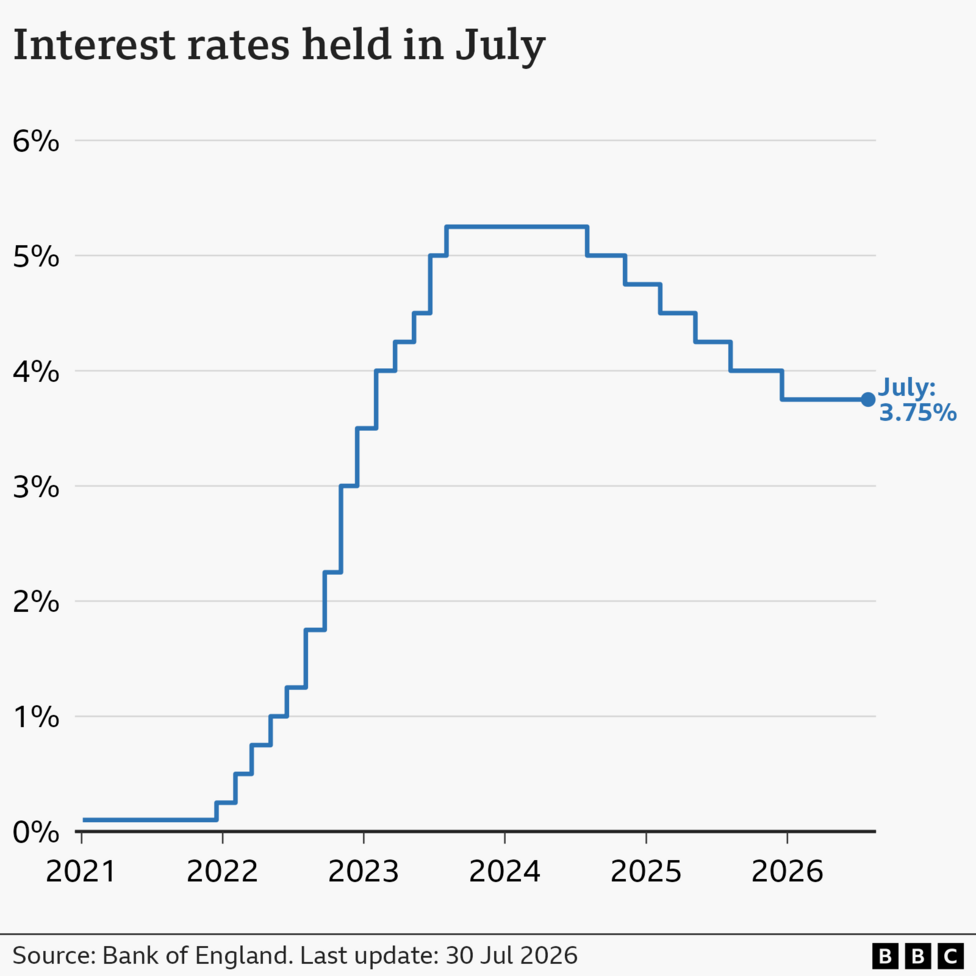
Despite these inflationary headwinds, the committee must balance its price stability mandate against the risk of dampening employment prospects. MPC members remain conscious that aggressive rate increases could pressure employers and worsen job market conditions for those seeking work. Nearly 90% of economists surveyed by expected the Bank Rate to remain on hold for the remainder of 2026, though financial markets were still pricing in one quarter-point increase by year-end.
Beyond the rate decision itself, the Bank is expected to slow its quantitative tightening programme, reducing the annual pace of government bond sales to £50 billion from £70 billion when it announces its policy stance on 17 September 2026. This adjustment reflects a more cautious approach to monetary policy normalisation amid the uncertain economic environment.

How will mortgage borrowers be affected?
Households seeking to borrow face immediate pressure from rising mortgage costs, as major lenders have already repriced fixed-rate mortgages upwards in recent days in anticipation of the policy environment. The average two-year fixed residential mortgage rate has climbed to 5.77%, its highest level since 11 May, while the average five-year rate stands at 5.83%, the highest since 8 November 2023, according to financial information service Moneyfacts.
Andrew Montlake, chief executive of mortgage broker Coreco, warned that the inflation situation remains unresolved:
The inflation dragon has not been fully slain.He added:
If inflation proves sticky, lenders' funding costs stay under pressure, which makes cheaper mortgages harder to deliver. We are already seeing lenders reprice upwards, so this will do little to calm things down. Borrowers should not panic, but anyone approaching the end of a fixed rate should start looking early, secure an option and keep reviewing it.
What about savers?
Savers may benefit from more generous interest rates on deposits as lenders seek to attract funds in a higher-rate environment. However, any gains in nominal returns risk being eroded by the rising cost of living, as inflation continues to outpace savings rates for many products. Harriet Guevara, chief savings officer at Nottingham Building Society, advised households to take a measured approach:
It's almost impossible to time things just right, so I would urge households to focus on what's best for them now, in the medium term and in the longer term. For savers, regularly check that your savings are earning a competitive return and that you have the right balance between easy access and money you can afford to put away for longer.
What is driving the inflation spike?
The acceleration in inflation reflects a combination of factors, with energy prices playing a central role. The Middle East conflict has kept crude oil prices elevated, feeding through to consumer-facing costs for petrol, diesel and aviation fuel. Economists anticipate that these higher global energy costs will eventually transmit to food and fuel prices paid by households, suggesting that inflation may not have reached its peak.
Public inflation expectations have also risen, with 12-month expectations reaching 3.9% and longer-term expectations at 4.1% according to a survey conducted in August 2026. This shift in expectations could complicate the MPC's task, as elevated public inflation beliefs may influence wage-setting behaviour and spending decisions.
What happens next?
The Bank of England will announce its rate decision on 17 September 2026 at 11:00 GMT, with a press conference to follow at 12:00 GMT. The Monetary Policy Summary and detailed meeting minutes will be published simultaneously. The next scheduled UK inflation release after the August data is due on 21 October 2026, which will provide fresh evidence of whether price pressures are moderating or persisting.