
Building a professional network can feel daunting, especially for those who find approaching strangers uncomfortable. Yet for many job seekers, networking has proven essential to landing opportunities. Whether through formal events, casual coffee meetings or online outreach, the strategies that work vary widely—but the underlying principle remains consistent: persistence and authenticity matter.
According to research from LinkedIn, just under half (44%) of Gen Z identify the absence of a strong professional network as the primary obstacle to securing an entry-level position. This barrier is particularly acute in some regions; 83% of Gen Z professionals in India report hesitation about networking, viewing it as a significant disadvantage in the hiring process.
Nicole Leverich, chief communications officer at LinkedIn, offers practical guidance on building connections, while workers across New York share their own experiences of what has worked for them in their careers.
Starting with connections you already possess
The foundation of any network lies in the relationships already within reach. Leverich emphasises that people often underestimate their existing connections.
You'd be surprised how many connections you have once you connect with people you went to school with, former professors, people you met through summer jobs, family and friends.
A small starting network should not discourage anyone from pursuing professional growth.
Not having a network right now doesn't mean you'll never have a network,Leverich notes. Lacking obvious industry contacts is equally not a reason to hesitate.
Leverich's own path illustrates this principle. Growing up in a small town in Oregon, she relocated to San Francisco after university without any established connections in communications. Her breakthrough came through willingness to take on challenging work.
I raised my hand for a lot of the grunt work that other people didn't want to do and I built connections as I went along.Now serving as LinkedIn's chief communications officer for the past two years, she credits this early approach with establishing her professional foundation.
How should you approach someone you don't know?
When reaching out to someone online, research and personalisation are essential. Leverich advises that your message should
reference something they've posted or establish some common ground.The request itself must be
clear and specificand something achievable in under five minutes.
Equally important is gratitude.
You'd be surprised by how many people are willing to help, but I get so few thank yous. I'm not talking about anything excessive but just a 'thanks' makes you want to help next time.
Recent guidance from LinkedIn reinforces this approach. LinkedIn's updated messaging guidelines recommend that connection messages be brief and specific, under 300 characters, with a polite tone and easy-to-answer requests. For job seekers specifically, a 2026 job-search playbook suggests personalisation, a 15-minute ask, and one follow-up after seven days if there is no reply.
When should you start building relationships?
Networking often feels transactional, which can undermine its effectiveness. To counter this, Leverich recommends establishing relationships before you need anything from them. If you have identified a particular industry as your target,
start finding people in that field a year or two before you're looking for a job.

When you do reach out, consider what value you might provide in return.
If you call me and say you want a job randomly, I'm much less likely to help than if you call and ask for five minutes of advice.You need not begin with a direct message either; reacting to posts or leaving comments can be an effective entry point.
LinkedIn's 2026 Gen Z networking guide suggests a structured "3-2-1 approach": three comments, two messages and one conversation each week—framing networking as an ongoing habit rather than a one-time campaign.
What makes in-person networking less intimidating?
Face-to-face networking can feel particularly daunting early in a career, but Leverich reminds attendees that everyone at a networking event shares the same goal: to talk. Beginning a conversation need not be complicated.
Start with something simple like complimenting someone's outfit, introducing yourself and asking why they're there.
Building confidence comes through repetition.
Put in the reps and start by going to an event for just 15 minutes or half an hour and then build from there.When it's time to leave a conversation, overthinking the exit is unnecessary.
I just do the hard cut and say, 'It was great to meet you and I need to make sure I work around the room.'For those preferring a gentler transition,
something like 'I need to get a glass of water, it was great meeting you' can work.

Why is rejection not the end of the story?
Knowing the theory of networking is one matter; actually executing it—walking up to a stranger or sending an unsolicited message—is quite another. Taylor Crow, who works in sales, prioritised networking during her university years and credits it with her current role.
I sent over 200 cold DMs on LinkedIn and reached out to people in the companies I wanted to work at while I was studying.She acknowledges the difficulty:
it was so awkwardbut necessary to achieve her goal.
Her colleague Vicky Peterlin, 24, shares a similar perspective.
It's not about being good at networking but more about not being afraid to reach out to people.She initially harboured doubts about her qualifications for such conversations but came to realise that
there are no rules and sending out emails and messages are free and easy. The worst that can happen is that they say no and that's ok.
Katherine Leopold, a tutor at Greenwich Business School, identifies the first move as the primary psychological hurdle. She warns that
if you don't take the step you are ruling yourself out.Given the volume of applications organisations now receive, she advises meeting employers in person and presenting your complete authentic story.
Ensure you say to them, 'I have this skill, I have this piece of knowledge, so I'm confident that your team is stronger with me in it.'
How can clarity strengthen your outreach?
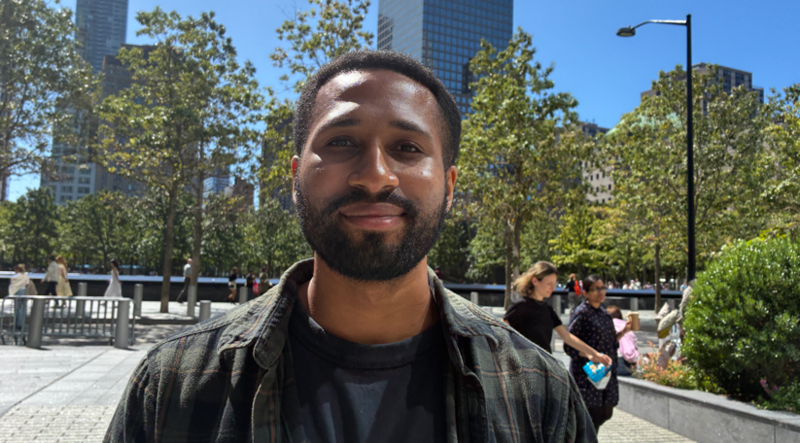
Madison Brown, who works in tech partnerships after spending 10 years in corporate roles, regularly receives career inquiries from younger professionals. He observes that many lack clarity about their objectives.
There's nothing wrong with saying what your goal is or what you want to get out of this interaction.
Authenticity amplifies the impact of such clarity.
It's important to be yourself and more doors will open if you are authentic.This combination—knowing what you want and presenting your genuine self—creates the conditions for meaningful professional connections.
What does effective networking look like in practice?
The emerging consensus among professionals and platforms is that networking functions best as a structured, repeatable activity rather than sporadic cold outreach. LinkedIn's 2026 job-search playbook frames networking as a routine activity tied to content engagement and targeted messages, with the most effective outreach beginning with context, value and a low-friction ask rather than an immediate request for employment.
The common thread across all these approaches—whether Taylor's 200 direct messages, Vicky's willingness to overcome self-doubt, or Madison's emphasis on authenticity—is that taking action, however uncomfortable, yields results. The barrier is not skill but willingness to begin.