Jensen Huang, the chief executive of Nvidia, carries himself with a presence reminiscent of Steve Jobs. Having interviewed both men, I can attest to their shared quality of up-close charisma paired with occasional flashes of brilliant intensity. Both favoured distinctive black attire—Huang in a leather jacket, Jobs in his iconic turtleneck—yet Huang's influence on the trajectory of global power dynamics far exceeds that of the Apple founder.
According to BBC News, Huang is currently facing investigation over an alleged affair with a suspected Chinese intelligence operative, a development that has cast a shadow over his recent high-profile diplomatic efforts. The controversy centres on his attempts to persuade the Trump administration to relax export restrictions on advanced artificial intelligence chips destined for China.
The entire landscape of AI development—whether celebrated as transformative or feared as catastrophic—hinges on access to the world's most capable frontier AI models. These models, in turn, depend entirely on the most advanced microchips available. For years, Nvidia, under Huang's leadership, has dominated this space, leveraging technology derived from repurposed graphics processors and Taiwan's manufacturing expertise.
Chips bearing names such as Gracehopper, Vera and Rubin remain largely unknown to the general public, yet they form the computational foundation for the AI systems reshaping global society. I encountered Huang during his engagement with journalists while accompanying US President Donald Trump on a state visit to the United Kingdom in September of the previous year. At that precise moment, Huang was actively campaigning to persuade Trump to lift export restrictions on some of Nvidia's highest-performing AI chips, particularly the H200 model. An export ban on a less advanced chip had already been removed.
I suggested to Huang that he occupied a unique position—one of the few individuals capable of walking into the White House to meet Trump and then, days later, sitting across from President Xi Jinping in Beijing. He articulated his position without hesitation, making evident his belief that he had successfully convinced Trump of his argument.
President Trump is very clear. He wants America to win and and President Xi wants China to win, and it's possible for both of them too. And the reason for that is because it's not a zero-sum game. The advance of human society is not a zero-sum game.
Huang may well be the sole individual on Earth capable of delivering such a statement with the authority that comes from having heard comparable sentiments directly from both superpowers' leaders.
How do national security experts view the AI competition?
Huang's characterisation of the situation as non-competitive finds little support among those responsible for national security strategy. Within defence and intelligence circles, the prevailing assessment is fundamentally different: the race to develop the most sophisticated AI systems represents a zero-sum competition that demands decisive Western action, particularly from the United States, to constrain China's technological advancement.
The reasoning is straightforward. The nation that develops the most powerful AI systems using the most advanced chips will gain decisive advantages across multiple domains: scientific breakthroughs, cryptographic capabilities, economic dominance and offensive cyber capabilities. These stakes have prompted policymakers to maintain strict controls on technology exports.
Huang advanced a counterargument that reframes the security calculus entirely. Rather than representing a national security vulnerability, he contended that American interests would be better served if the world, including China, became reliant on American technology systems—what industry participants term the "American tech stack," with Nvidia's chips as the essential component. This dependency, he suggested, would actually enhance rather than diminish American security.
He pressed further, asserting that President Trump "is very clear-eyed" about the proposition that "this computing technology is not a national security concern." He elaborated by arguing that "any military is smart enough to build their military on top of their own indigenous technology, and not rely on an adversary to build their technology, build their military capability."
The timing of these public statements is now fraught with significance. Nvidia launched an independent investigation after Huang's relationship with a suspected Chinese intelligence operative emerged, with the company asserting that no proprietary information had been compromised. Yet at the very moment when national security agencies were examining potential espionage concerns, Huang was making forceful public arguments for dismantling export controls and simultaneously dismissing the notion that his technology in Chinese hands posed any security threat whatsoever.
What is Nvidia's current market position?
Nvidia stands at the absolute centre of the American AI technology boom and the global competition for AI dominance. The company commands revenues approaching $400 billion annually. Even if the current AI expansion were to reverse course dramatically, Nvidia is projected to maintain substantial financial health. A decline of approximately 4 percent in share value on a recent trading day reflects the emergence of extraordinary risks at this intersection of technology and geopolitical competition, yet the chipmaker maintains a market valuation exceeding $4 trillion.
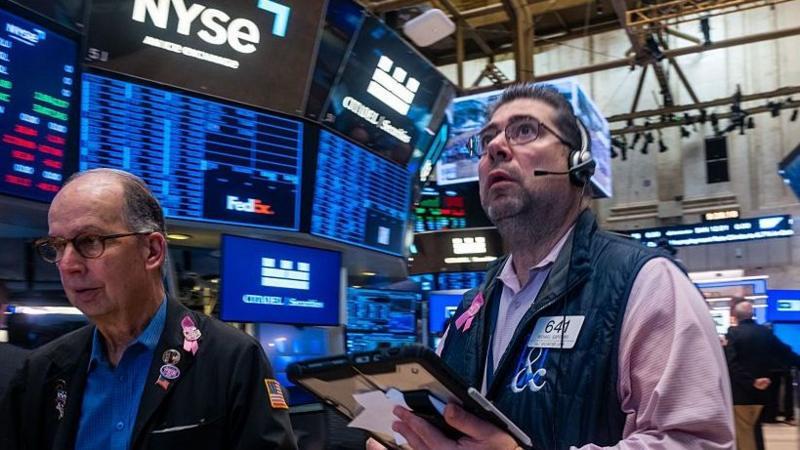
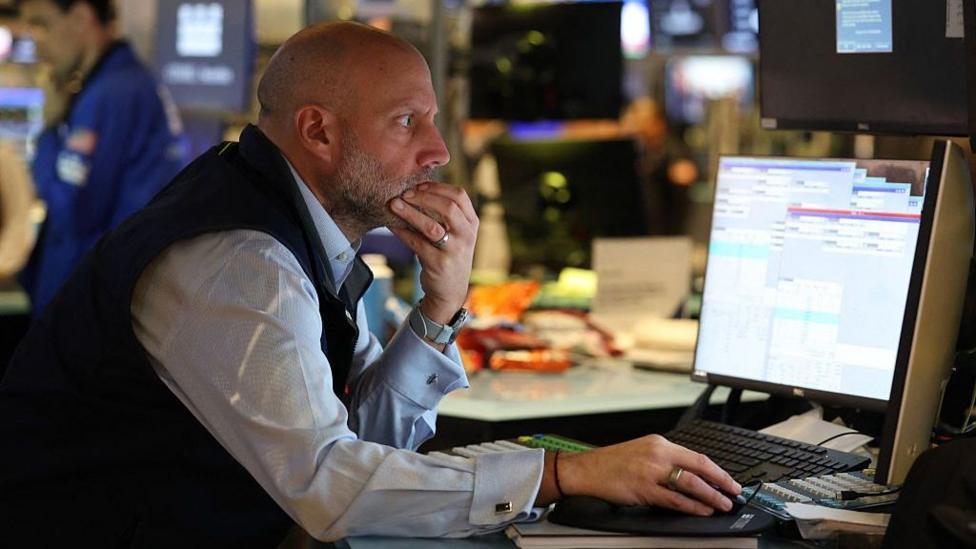
The scandal has triggered significant market turbulence. Nvidia shares have experienced substantial declines amid the investigation, with a $250 billion market selloff occurring as the scandal unfolded. President Trump has publicly stated his belief in Huang's assertion that he was unaware of the individual's connection to Chinese intelligence services.
What happens next?
The investigation into Huang's conduct will likely determine whether any classified information or proprietary technology was compromised. Congressional scrutiny has emerged on a bipartisan basis, reflecting the gravity of the situation at the intersection of corporate leadership, national security and international relations. The outcome may significantly influence future policy decisions regarding AI chip exports and the broader question of whether American technology companies can maintain their dominance while operating in an increasingly contested geopolitical environment.