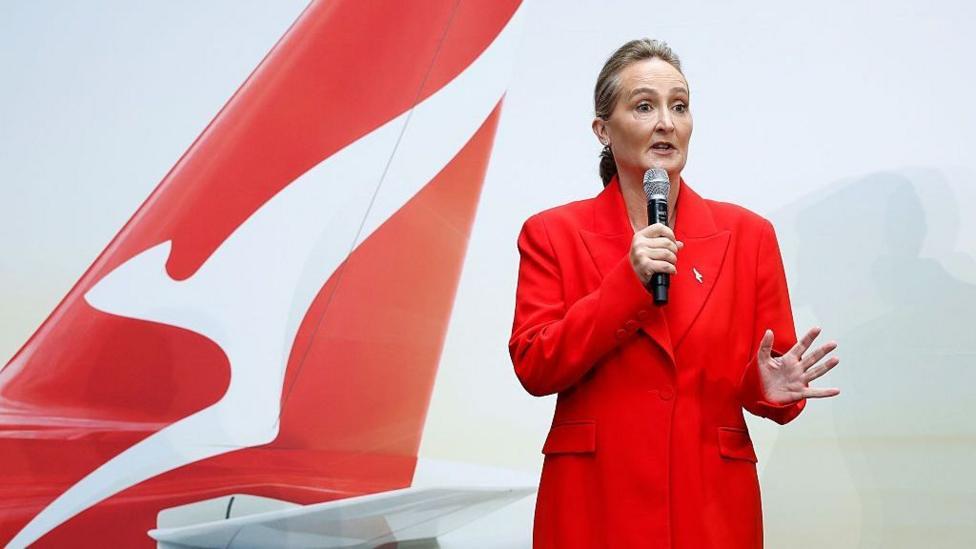
Qantas will eliminate 850 corporate positions in Australia by outsourcing them to consulting firm Accenture, with the majority of roles relocating to India as the airline accelerates its technology and artificial intelligence transformation. According to BBC News, CEO Vanessa Hudson announced the restructuring in an internal staff communication on Tuesday, describing it as "hard news" and acknowledging the uncertainty it creates for affected employees.
The outsourcing initiative will commence in mid-2027 and initially affect finance, procurement, people and marketing departments, with roles shifting predominantly to India and some remaining in Australia. Hudson stated the airline is pursuing this course to modernise its information technology infrastructure and adapt to rapid technological change. The announcement follows a challenging financial period for the carrier, which reported a net profit of AU$1.3 billion for 2025/26, down 19.8% year on year, with underlying pre-tax profit declining 13.8% to AU$2.1 billion.
The 850 affected roles represent approximately 3% of Qantas's 28,000-person Australian workforce, according to reporting from Reuters. Qantas operates approximately 4,000 additional staff globally.
Why is Qantas making this change?
Hudson emphasised that the airline's technology infrastructure requires substantial modernisation. The company currently operates more than 1,000 legacy applications that were never designed to function together, and its back-end systems reflect decades of accumulated technology built for a different operational era. Qantas spends over AU$1 billion (US$691 million; £514 million) annually on technology.
Like every airline, we run on technology built up over decades for a different era, including more than 1,000 legacy applications that were never designed to work together, Hudson stated in her communication to staff.
The Accenture partnership will enable the airline to
redesign and simplify parts of how our corporate functions work and reduce duplication, allowing staff to concentrate on activities that generate value for customers and the business. Hudson characterised the pace of technological and AI advancement as unprecedented, stating it represents change
at a scale and speed that none of us has seen in our lifetime.
What support will affected employees receive?
Qantas has committed to consulting with affected staff and their union representatives throughout the coming months regarding individual employment outcomes. The airline said individual job outcomes have not yet been determined and consultation will continue over the next few months, according to reporting from The New Daily.
The airline aims to redeploy as many affected workers as possible into new Australian roles and will provide reskilling, retraining and support services, according to Nine News. The airline has also established an Adelaide innovation centre expected to house approximately 400 staff, representing a commitment to maintaining Australian employment in technology-focused positions.
How will automation further reshape these roles?
Qantas indicated that work transferred to Accenture will eventually be transformed further through automation and artificial intelligence technologies. The company noted that thousands of its staff already incorporate AI into their daily operations, and the modernisation initiative is designed to expand this integration across the organisation.
What is the broader context for this decision?
The outsourcing initiative, internally known as Project iQ, was first reported in August, when the Australian Services Union sought assurances that Qantas would not outsource Australian jobs. The announcement comes days after Qantas provided a market update flagging fare increases and flight reductions due to elevated fuel costs, reflecting broader industry pressures affecting the carrier's profitability and operational strategy.
This move aligns with a broader trend across major corporations. Earlier this year, Barclays announced plans to cut 5,000 jobs—5% of its global workforce—as it invests heavily in AI and technology infrastructure, while Admiral Insurance eliminated 500 UK positions as part of a £100 million cost-reduction programme. Standard Chartered's CEO also faced criticism for comments about "lower value human capital" during AI-driven job cuts, highlighting the sensitivity surrounding technology-driven workforce reductions across the financial and corporate sectors.
What happens next?
Qantas expects the first wave of changes to take effect by mid-2027. Accenture will invest upfront capital to accelerate modernisation of the airline's data platforms, supporting the transition. Consultation with affected employees and their union is expected to continue over the coming months as the airline finalises implementation details and determines individual employment outcomes for the 850 affected staff members.