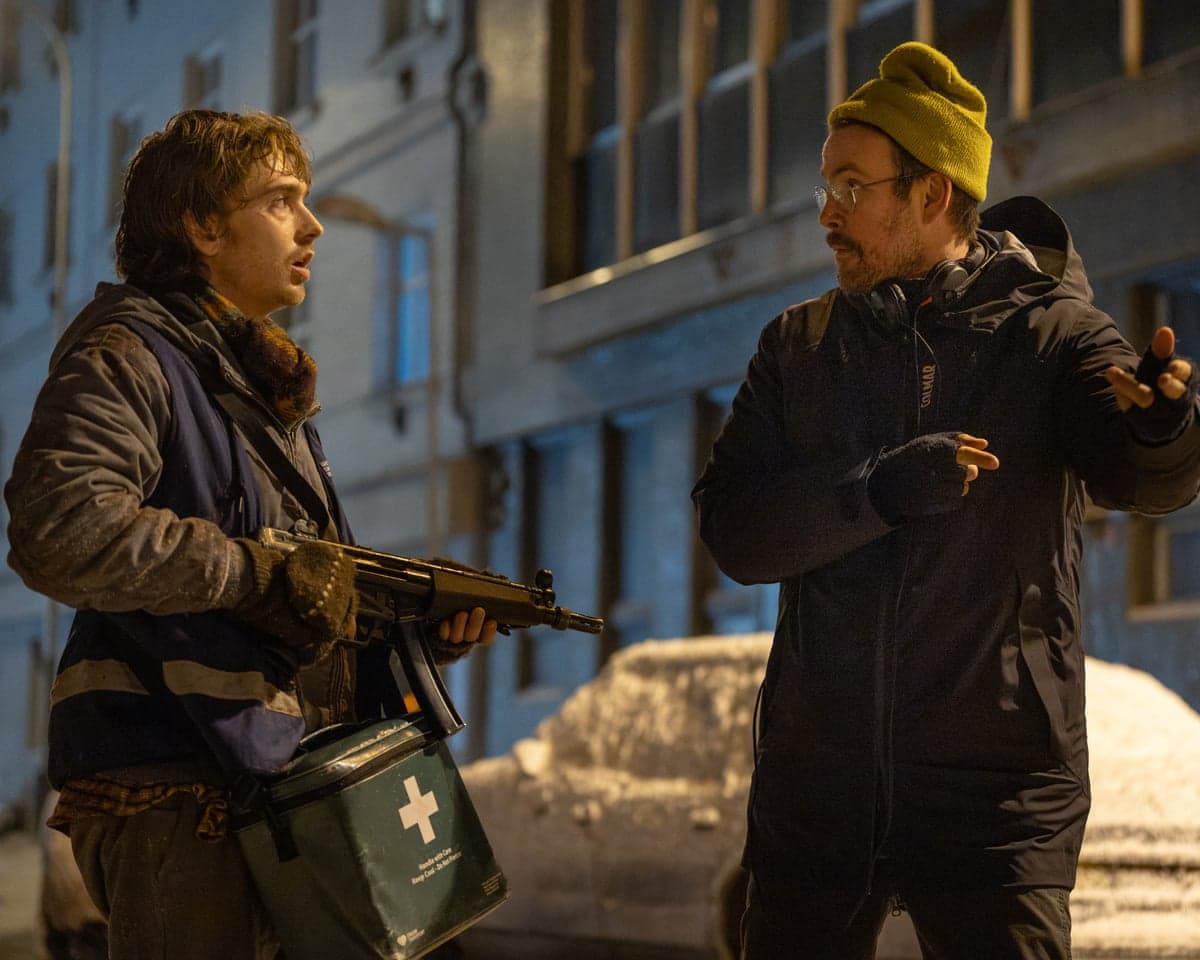
Zach Cregger's emergence as a distinctive voice in horror cinema has been swift and striking. His 2022 directorial debut generated significant critical acclaim and grossed $46 million worldwide. His follow-up in 2025 proved even more commercially successful, sparking a fierce industry bidding war that reportedly included producer Jordan Peele's unsuccessful attempt to secure the project. The film's unexpected box office performance and Academy Award win for supporting actress established Cregger as a filmmaker capable of blending commercial appeal with artistic credibility.
Both of Cregger's previous films tackled provocative subject matter—sexual assault and school shootings respectively—while resisting straightforward interpretation. Each began in one narrative direction before pivoting dramatically elsewhere, establishing Cregger's reputation for genuinely unpredictable, terrifying cinema. Yet his third project represents a significant departure: he has chosen to adapt an existing intellectual property rather than create original material.
Cregger's new film is a Resident Evil movie, a decision that has generated considerable discussion among protective fans of the long-running franchise. When asked why he would pivot to IP after establishing himself as an original voice, Cregger responds with measured confidence.
"Look, I could make a different movie now if I wanted to,"he explains during a video interview.
"I understand how people could be like: 'Why IP?' But to me, that's just such a secondary concern because the IP is not the point. The point is the story. The point is, it's an original movie, even though it is Resident Evil."
The filmmaker has faced online criticism from dedicated gamers who suggest he simply wanted to make his preferred film while leveraging the franchise's budget and recognition. Cregger pushes back firmly against this characterization.
"It was conceived to be a Resident Evil story. And when you watch the movie, you'll know that's the case, because it's undeniable."
What defines a Resident Evil story?
The franchise originated as a Japanese survival horror video game released for PlayStation in 1996. A live-action film adaptation began in 2002 with Paul WS Anderson's Resident Evil, starring Milla Jovovich as a protagonist battling a zombie outbreak unleashed by the shadowy Umbrella Corporation in Raccoon City. The film series has proven enormously profitable, accumulating nearly $1.2 billion in global revenue and ranking among the highest-grossing horror franchises ever made, though it has since been surpassed by the Conjuring Universe and the Alien series.
Critical reception of the existing films, however, has been decidedly mixed. The highest-rated entry on Rotten Tomatoes is 2016's Resident Evil: The Final Chapter, which achieved only a 39 percent score. Cregger himself has not engaged deeply with the film series. When asked about his film's relationship to previous installments—whether it functions as sequel, prequel, or universe-expanding reboot—he shrugs and admits with evident pride:
"I couldn't really say. I've never seen one."He was, however, a devoted fan of the original games.
How does Cregger bridge the gap between gamers and general audiences?
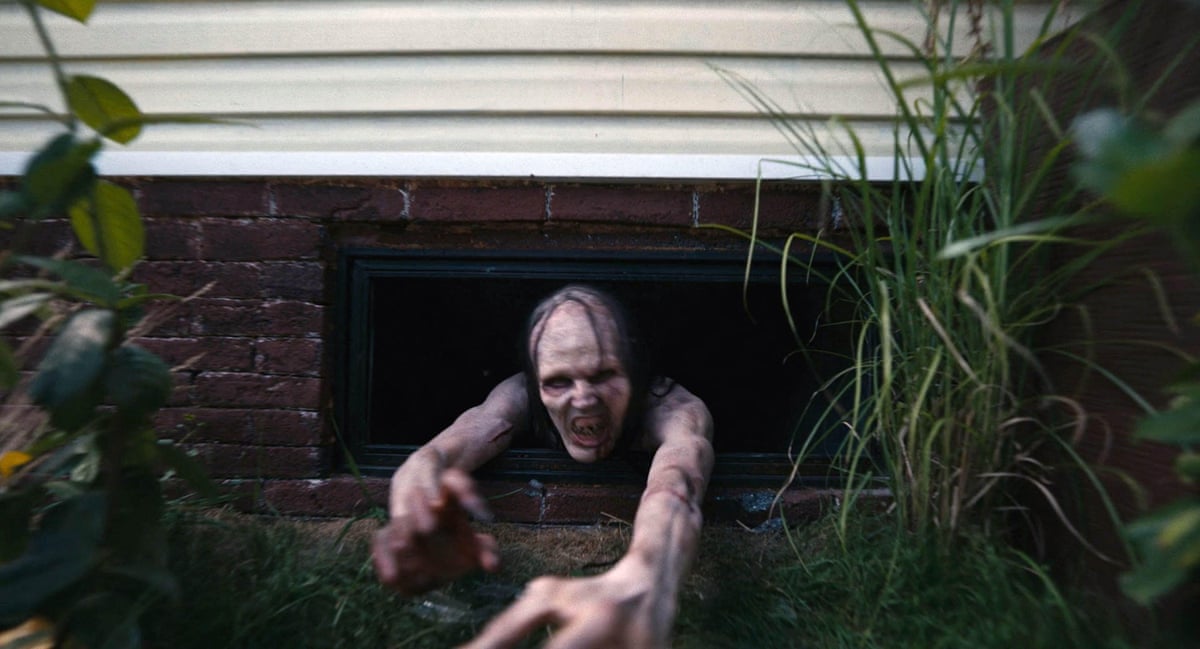
Video game adaptations face an inherent challenge: they must satisfy both experienced players and viewers unfamiliar with the source material. Cregger's solution is to create a cinematic experience that mimics the sensation of a 90-minute PlayStation session, regardless of the audience member's prior knowledge of Resident Evil.
The narrative follows Bryan, a medical courier played by Austin Abrams, as he attempts to deliver a transplant organ from one hospital to another in the remote mountains near Raccoon City, Colorado. Unbeknown to Bryan, a zombie outbreak is underway in the region. Like the game, Bryan progresses through varied environments—snowy roads, deserted farmhouses, sewage tunnels—where he must locate resources to survive. The film shifts away from established franchise characters, instead following this original protagonist through the outbreak zone.
Cregger employed over-the-shoulder camera angles characteristic of third-person shooter games to replicate gameplay visually. Bryan's dialogue consists largely of disjointed profanities and internal monologue.
"That's how I talk to myself when I'm sitting on the couch playing Resident Evil,"Cregger explains.
"I mean, I basically only say 'fuck' and run away from things."
The character of Bryan draws directly from Cregger himself.
"One hundred per cent,"he confirms when asked if the protagonist is autobiographical.
"Everything about him is me, my anxieties and my personality."This personal investment produces a character with genuine verisimilitude, distinct from the plot-serving panic and simplistic screaming often found in horror films.
"It's fun to have a character who is a real character and convincing in the scenario, but also behaving the way that I think most people who play Resident Evil would behave,"Cregger observes.
"He's more suited to be on the couch playing Resident Evil than surviving Resident Evil, and that's why he's the perfect person to put into this scenario."

Where do Cregger's creative influences originate?
Cregger grew up in a typical middle-class suburban neighborhood as one of four boys raised by a stay-at-home mother and a father working in mortgages and foreclosures—a profession that conjures the boarded-up houses featured in Cregger's film Barbarian, set in Detroit's Brightmoor neighborhood. His mother maintained deep involvement with the church, and after his parents' divorce, she took employment there as well, resulting in the young Cregger attending services four or five times weekly. Despite this structured upbringing, he found time to ride bicycles, watch films, and play video games—a classic 1980s American childhood with both Spielbergian wonder and latent Lynchian darkness.
As a teenager, Cregger performed in punk bands, an experience that introduced him to what musician and filmmaker David Lynch termed "catching the big fish," a transcendental meditation technique that has become foundational to Cregger's creative process.
"I remember I would write these songs and I'd be like: 'There's no way this is mine. This just feels like this is from somewhere else, and I've just been lucky enough to hook it.'"
In college, Cregger formed The Whitest Kids U'Know, a comedy troupe that achieved success on cable channels Fuse and IFC before effectively disbanding in 2022 following the accidental death of founder and close friend Trevor Moore. The group's final project, the film Mars, eventually released in 2024. It was during this period of grief that Cregger rapidly wrote screenplays for Weapons, Resident Evil, and a planned science fiction film titled The Flood.
"It may be the script I'm the most proud of, because it has its own strange anatomy that just fits. I'm very excited to start."
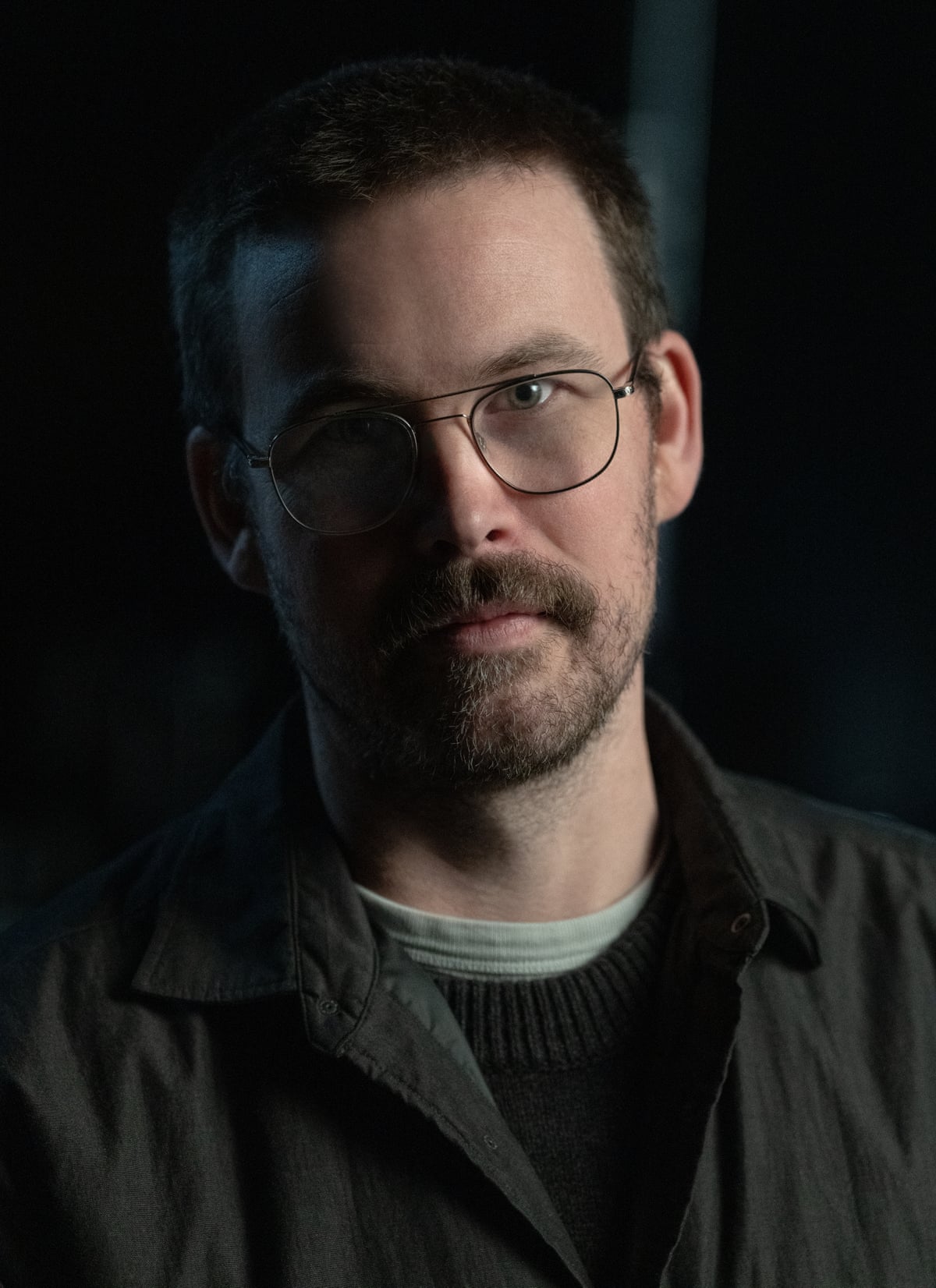
How does comedy training inform horror filmmaking?
A background in comedy is common among contemporary horror cinema's most innovative practitioners. Cregger articulates the connection clearly:
"That muscle group that you work out in comedy, where your brain is constantly trying to think, 'What's the surprise? How can I inject an interruption into what we're expecting?' That's the same muscle group you need for a scare. So all of my time spent in comedy was going to the gym for horror as well."
Just as accomplished comedians distinguish between different qualities of audience laughter, horror filmmakers aim to produce a spectrum of scares—from subtle startles to profound existential dread.
"My favourite kind is anything that gets me with stillness or a bizarre image,"Cregger says, citing a scene from another filmmaker's work as an example.
"Her, running around, holding the flowers in front of her face? I was like, this is fucked!"He clarifies with enthusiasm:
"That's a good feeling!"
Cregger is frequently grouped with online-adjacent horror auteurs, yet at 45 years old, his influences bypass internet "creepypasta" culture in favor of more enigmatic, classically rooted, and traditionally cinematic sources. Barbarian, for instance, drew direct inspiration from Gavin de Becker's 1997 self-help book The Gift of Fear.
"I have a lot of hippy ideas about creativity,"Cregger reflects.
"I just love the idea of being a conduit for the art, and that these objects of art exist with or without you [as an individual artist]. I understand how somebody could be like: 'Dude, what are you talking about?' Fine. I don't care. I like choosing to exist in that reality where I have the ability to go into my subconscious, cast a wide net and see what I can snag. And if the universe or whatever is smiling on me, I'll get something that will really make me happy, and that I'll get to spend a year and a half of my life bringing it to the surface."

What was the production experience like?
Cregger shot the film in a rural region of Czechia, an environment that proved physically demanding.
"It was dark. It was cold. It was unrelenting,"he recalls.
"I had pneumonia for the first half of the movie, and a horrible bacterial infection for the back half … It sucked."Despite these hardships, the resulting footage proved effective. A 30-minute preview made available to press demonstrated an exhilarating and immersive experience that successfully translates gameplay mechanics into cinematic language.
What is the film's commercial and critical standing?
The film premiered at Fantastic Fest on 17 September 2026 and opened in United States theaters on 18 September 2026. Early box-office tracking projected a roughly $35 million opening weekend, with speculation it could climb closer to $50 million. Sony distributed the film in wide theatrical release and IMAX format, with no digital or streaming date announced yet.
The film received an R rating for strong bloody violence, gore, and language. This represents the second reboot of the Resident Evil film franchise, following the earlier live-action adaptations that began in 2002, and marks a significant departure from those predecessors by centering on an original character rather than established franchise figures.
What comes next?
Streaming and digital release timing has not been announced. A Japan theatrical release is scheduled for 9 October 2026. Cregger has indicated he does not intend to direct sequels to this film, preferring to move forward with original projects.
Key Facts
- Cregger's previous two films, both original works, established him as a distinctive horror voice capable of blending commercial success with critical acclaim and awards recognition.
- The Resident Evil adaptation follows medical courier Bryan through a zombie outbreak in Colorado, employing over-the-shoulder camera angles and gameplay mechanics to create a cinematic experience that mimics video game play.
- Cregger has not watched the previous Resident Evil films but was a devoted fan of the original game series, which has spawned 11 additional sequels by 2026.
- The filmmaker's creative process draws from punk music, comedy performance, transcendental meditation techniques, and classical cinema influences rather than contemporary internet culture.
- The film's runtime is approximately 90–95 minutes and carries an R rating for violence, gore, and language.