In Salman Toor's paintings, queer south Asian men occupy centre stage—lounging in bars, dancing at nocturnal gatherings, absorbed in their phones, huddled in taxi backseats or pillow-fighting on beds. One portrait captures a brown man's apprehensive gaze as he faces customs officials. For the 43-year-old Pakistani American artist, this visibility matters profoundly, reversing decades of marginalisation and erasure from mainstream art.
"It excites me that the cuteness and sexiness of brown protagonists can become familiar,"Toor explains during a conversation at his sun-drenched Brooklyn studio, weeks before his inaugural European solo exhibition.
"Their stories are not a gay side story in a family saga. It's the main story. And everyone else is in the background."
Over the past decade, Toor has been reshaping cultural narratives around immigration, desire, power and sexuality. His richly figurative oil paintings—which simultaneously echo and subvert European baroque and impressionist traditions alongside Indian Mughal miniatures—have established him as a major contemporary voice. Solo museum exhibitions in New York, Baltimore and Beijing have garnered universal acclaim. In November 2022, his painting Four Friends achieved $1.2 million at Sotheby's, while Time magazine recently recognised him among its influential figures.
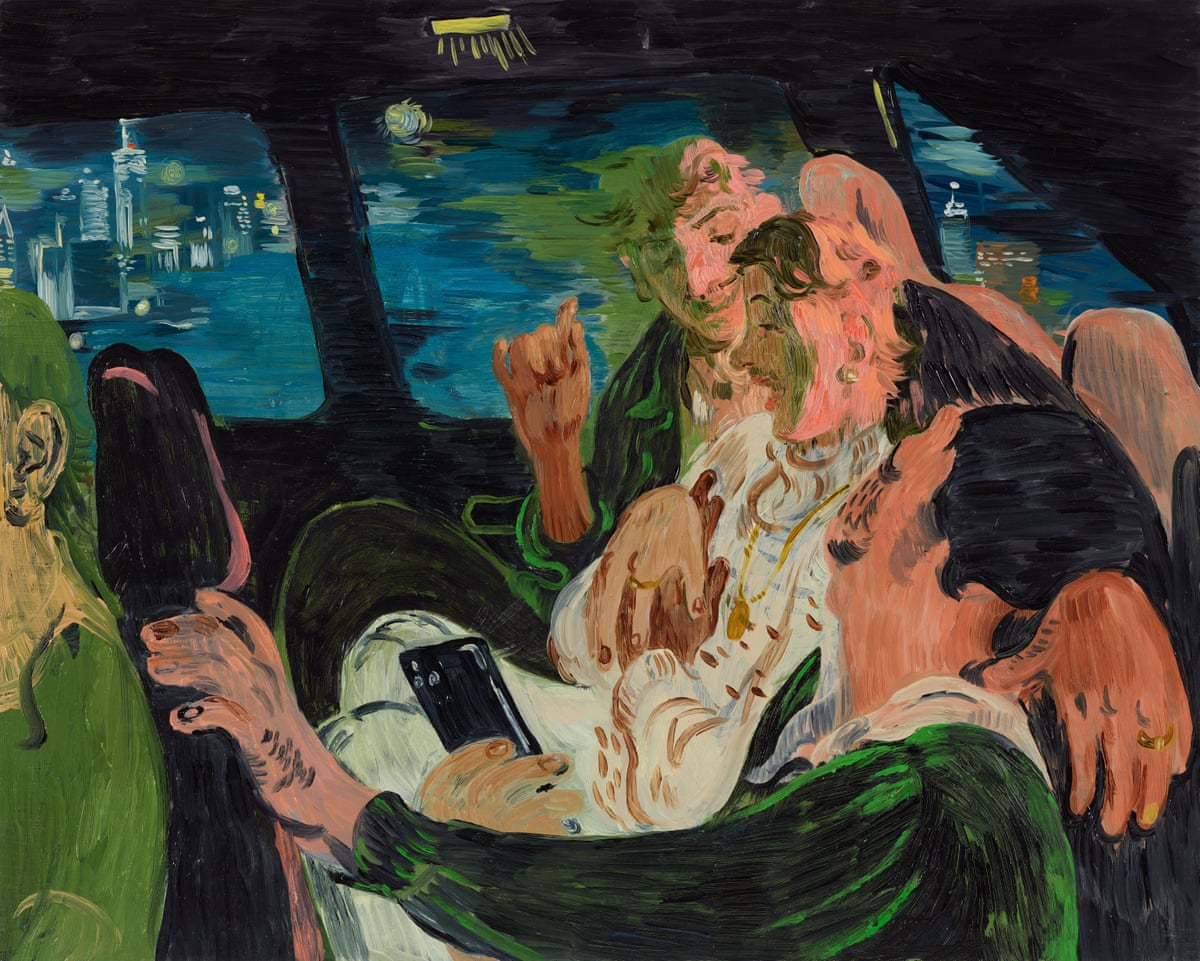
Next month, the Courtauld Gallery in London presents Someone Like You, running from 2 October 2026 to 10 January 2027, a curated selection of Toor's paintings and drawings chosen alongside curator Elena Crippa. The venue holds special significance for him: it houses many of his favourite baroque and impressionist artists, and was among the galleries he visited during his first trip to London from Pakistan.
"It's the most exciting thing that could happen,"he says, visibly moved.
The exhibition will bring together 19 of Toor's most iconic paintings created since 2019, displayed alongside a selection of drawings in the Gilbert and Ildiko Butler Drawings Gallery. Late-opening evenings are scheduled for 2 October, 6 November, 4 December 2026 and 8 January 2027, with general admission tickets starting from £16.
How did European masters shape his artistic vision?
As an art student, Toor spent countless hours studying works at the Courtauld during what he describes as obsessive periods of research.
"I was looking at a lot of Rubens and Van Dyck,"he recalls. He became particularly captivated by Édouard Manet's A Bar at the Folies-Bergère.
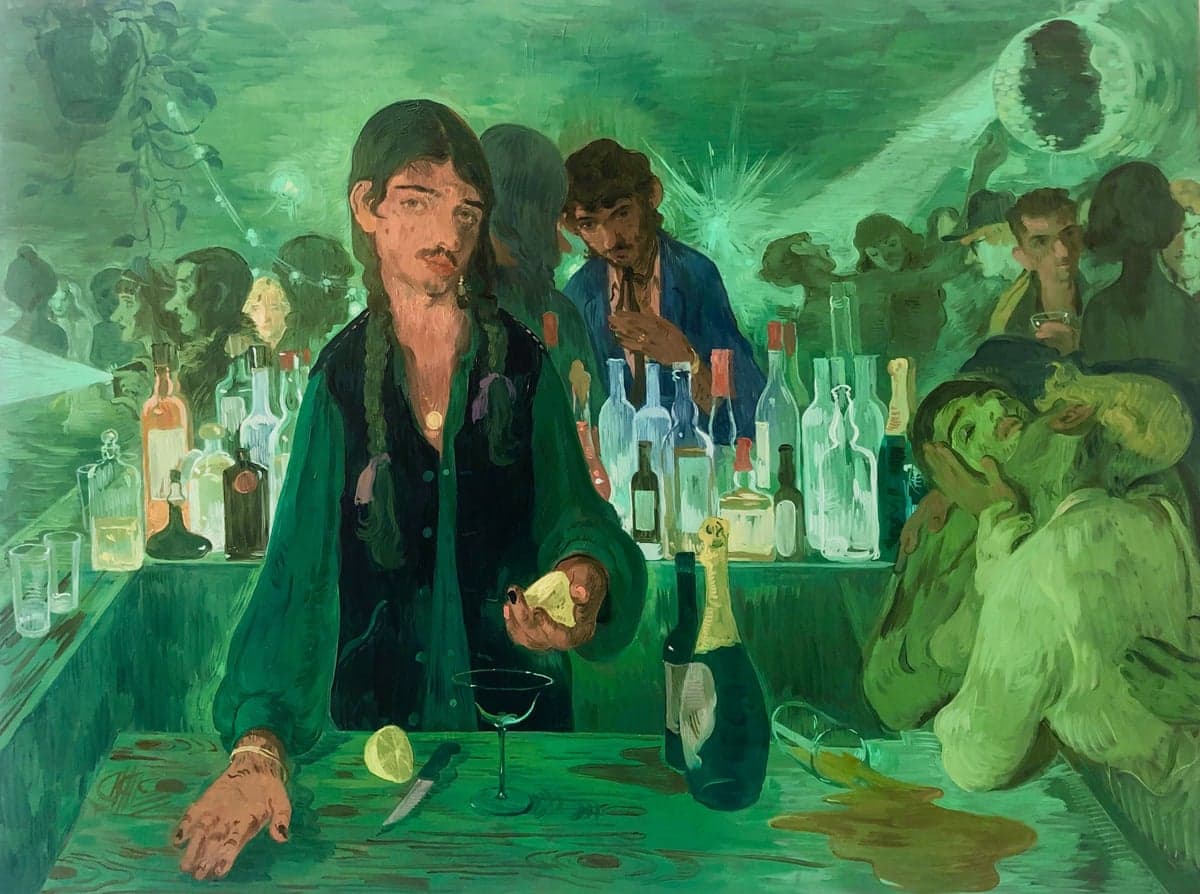
"I stood in front of it and I thought, 'Oh my God, this has all the solutions to my problems',"he laughs. His 2019 painting The Bar on East 13th pays homage to Manet's masterpiece by relocating it to New York's East Village, where hipster queer couples embrace and a brown barman wearing nail polish and braided hair replaces the melancholy French barmaid and bourgeois revellers.
Reflecting on that work now, Toor expresses mixed emotions:
"I had just come out through painting so it was exciting because I felt free. It was a time of well-deserved self-love. But I also felt in danger: I was getting a lot of negative, threatening messages online. I'm from a country which is very conservative. Those are very specific feelings from that time."
What shaped his artistic identity?
Toor was born in Lahore, Pakistan, into a middle-class Muslim family. At school, he sought refuge from athletic peers by immersing himself in the art department at Aitchison College, the city's elite institution, where he developed his craft. He relocated to the United States in 2002 to pursue art studies in Columbus, Ohio, initially feeling isolated until he moved into a hippy commune. In 2009, he earned a master's degree in fine arts from New York's Pratt Institute.
Within several years, Toor crystallised his signature aesthetic: emerald green compositions featuring explicit gay themes rooted in his and his friends' lived experiences navigating culture and belonging in New York City. In previous interviews, he has explained that he selected green for its simultaneous glamour and toxicity. Today, he elaborates: it possesses
"an atmospheric aspect that you can go deeper inside, an outdoor or nocturnal forest-like place beckoning you".Most works in Someone Like You were produced during the past seven years, a period in which Toor gained US citizenship.
"They're images about immigration and people on the verge of … the threshold of the free world or whatever."He pauses, reflecting on contemporary American politics.
"Or maybe not."

What draws him back to London?
Toor holds fond memories of visiting friends in London during the early 2000s, frequenting Soho bars and the pop club G-A-Y before catching the night bus to Streatham—
"shades on, getting a doner kebab."
"We were just kids. London was a city that opened me up to gay nightlife and art history."
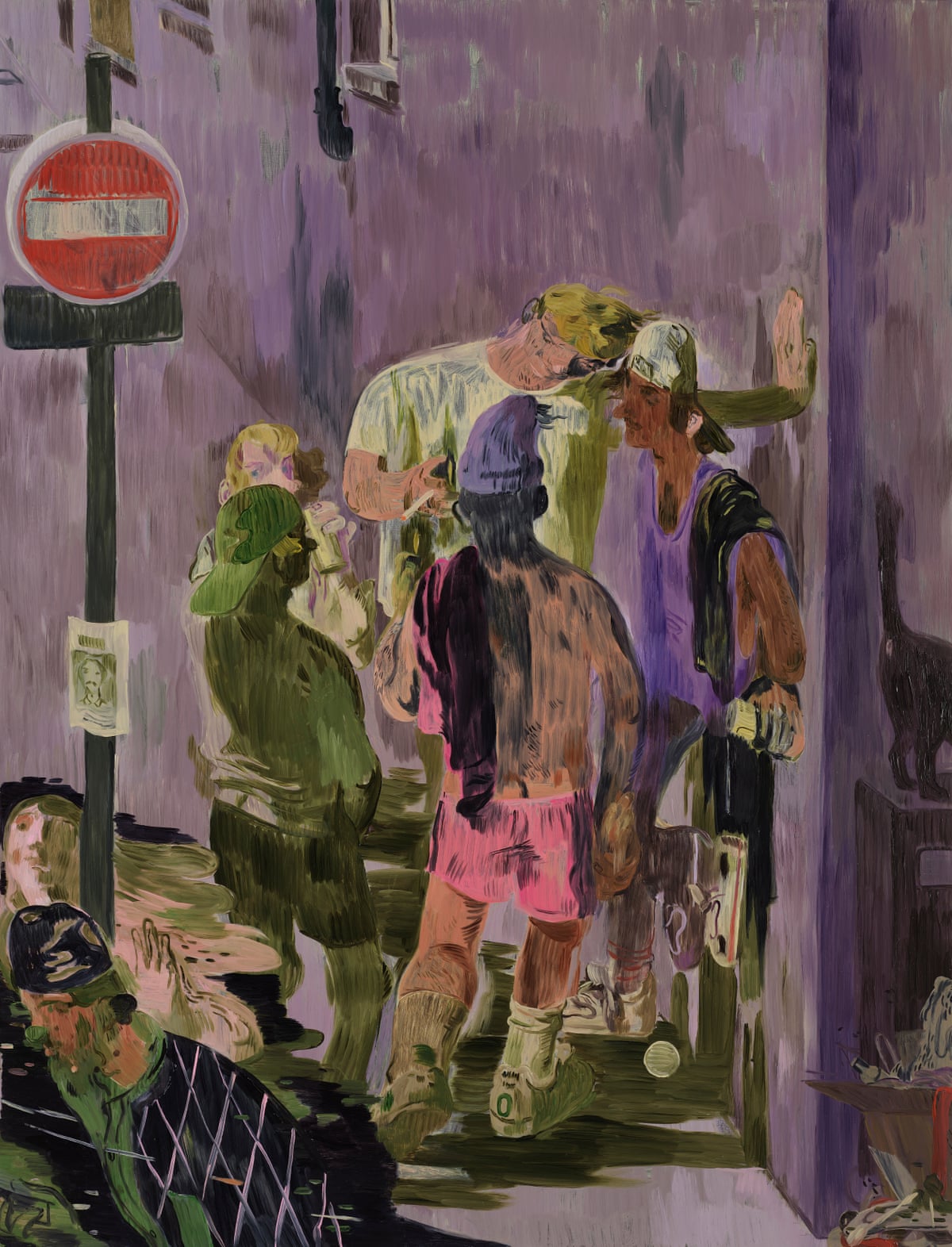
The city also features in one of his paintings. Cross Street emerged from a scene glimpsed through the window of a favourite London restaurant: Tayyabs in Whitechapel. The work depicts a group of muscular skaters standing near a street sign as a mullah passes by. Toor was struck by
"the proximity of two kinds of people"and sought to capture the different expressions of masculinity that intimidated him during his youth—the school bullies on one hand and the religious authority figure on the other.
Why is New York's moment significant for him?
Toor currently resides in New York with his partner, a musician, at a transformative moment for the city's south Asian and Middle Eastern communities. Across politics, culture and the arts, New York is experiencing a historic surge of creative energy and visibility. This momentum has been amplified by the election of mayor Zohran Mamdani, a figure Toor knows personally.
"It's Mamdani's New York,"Toor beams.
"What I love about this city is that there's a wonderful connection of artists and creative people who are part of our circle."As a first-generation immigrant, he finds himself energised by emerging possibilities around him, the archetypal concrete jungle where aspirations take root:
"People are brilliant at finding new solutions to being from traditional backgrounds, and choosing and shedding things to be part of the future."
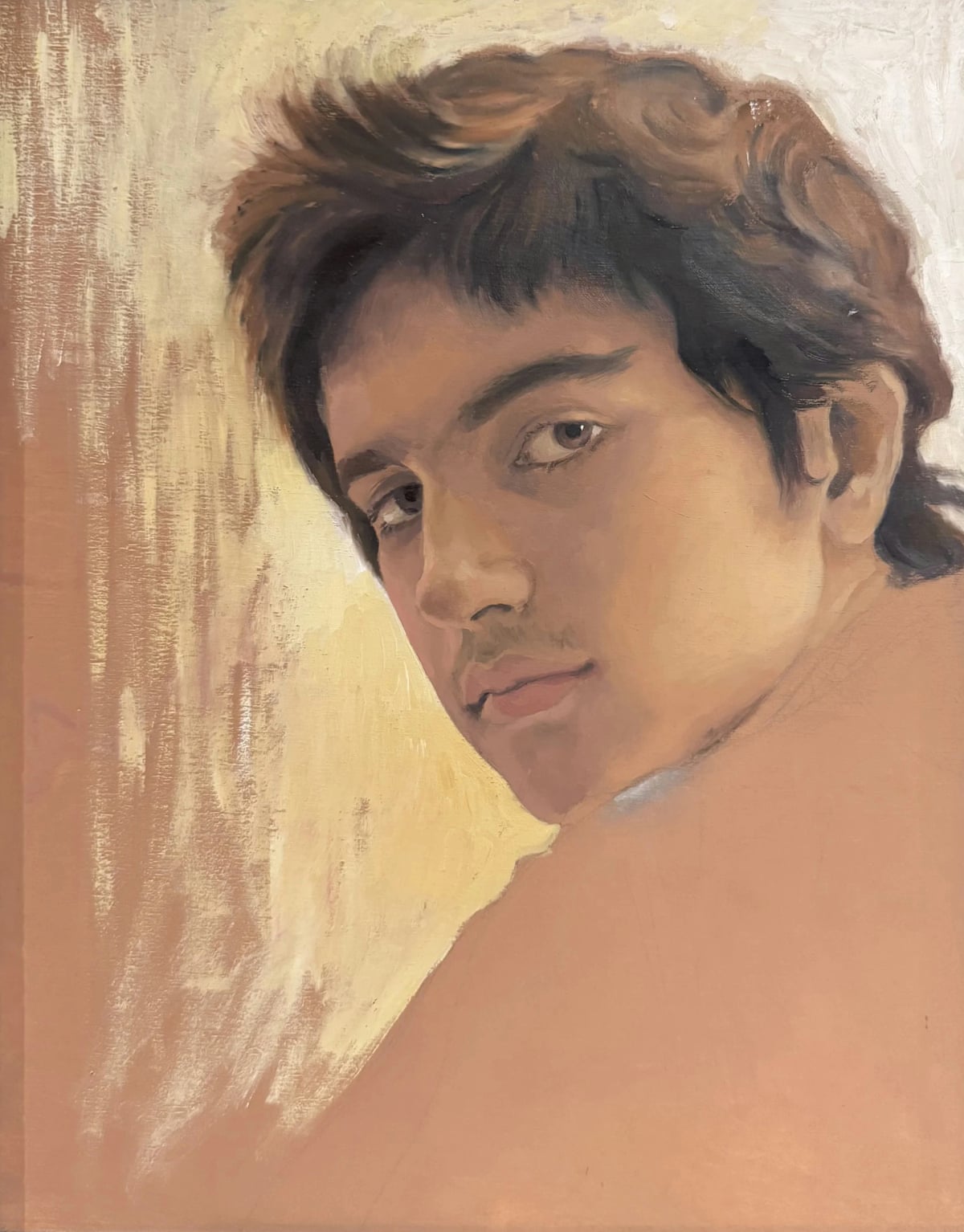
Shortly after Mamdani secured the Democratic nomination for mayor, a portrait of him surfaced on Instagram. Toor was commissioned by his friend, film director Mira Nair—Zohran's mother—to paint the family in 2007.
"The group portrait didn't come out that well. Mira has it locked up and I hope it remains in storage,"he laughs.
"But I knew this [individual portrait of Zohran] was good. She was thrilled and it's in their home. I saw it there recently."How does he regard the image now?
"It's more delicate and smaller than I remember. It's more finely painted than I thought – at the time it was my idea of rough. Maybe I've become freer or grungy."
He declines to comment on Mamdani's first nine months in office, but recently collaborated with Israeli American artist Doron Langberg to curate In a Free State, a modest exhibition addressing global political crises that had left him creatively paralysed and unable to paint figures for five months. The show featured their friends and other Middle Eastern artists, attempting to navigate despair through artistic expression. Toor also wanted to challenge widespread cynicism about art's capacity to engage with politics.
What occupies his studio now?
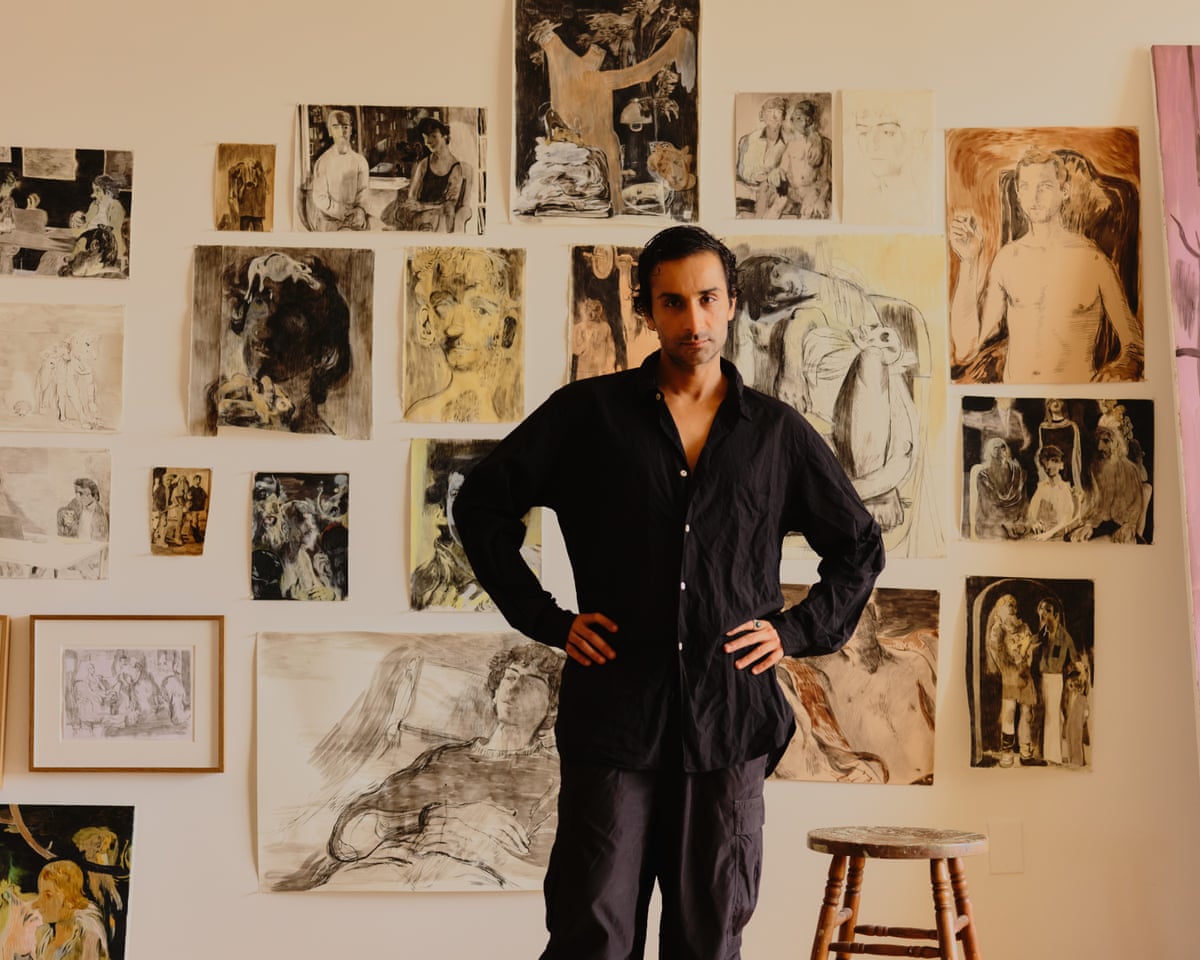
Following the opening of Someone Like You, Toor will return to his studio practice. The walls are covered with sketches and conceptual ideas; unfinished pieces include an experiment depicting an erect penis, a large image of workmen repairing a phallic air vent, and several dog drawings. He is also working on a portrait of a Columbia University student who was detained for more than three months and became the public face of the Trump administration's suppression of pro-Palestine speech. Toor was motivated to capture him after witnessing a powerful speech, returning to his central preoccupation with the
"brown protagonist".
What does he think about the new generation of brown politicians?
Earlier in the conversation, Toor discussed the emergence of a new cohort of US politicians, including Michigan senate candidates and other figures reshaping American politics.
"The great thing about the new brown men that are so visible now is that they're fearless,"he observes.
"They're funny and they're sexy. I would love to see the west deal with that."
When asked whether Western institutions are managing this shift well, given recent backlash against such figures, Toor responds with quiet determination:
"We'll see. They should get used to it."
Key Facts
- Salman Toor's exhibition Someone Like You opens at the Courtauld Gallery on 2 October 2026 and runs until 10 January 2027, featuring 19 paintings and drawings
- The 43-year-old Pakistani American artist was born in Lahore and moved to the United States in 2002 to study art
- His painting Four Friends sold for $1.2 million at Sotheby's in November 2022
- The Courtauld Gallery is located at Somerset House, Strand, London WC2R 0RN, with general admission from £16
- Late-opening evenings are scheduled for 2 October, 6 November, 4 December 2026 and 8 January 2027