Art historian Andrew Graham-Dixon narrates his own six-year research into the life and work of Johannes Vermeer, the Dutch master who remained largely obscure for nearly two centuries after his death in 1675. The audiobook explores fundamental questions about the artist's existence, creative motivations and the meaning embedded in his surviving works, of which only 36 are known to exist.
Vermeer's obscurity was profound. Following his death, his paintings circulated with forged signatures of more celebrated artists attached, and his name faded from cultural memory. The reassessment of his reputation began in the mid-19th century when French critics rediscovered his work. Today he ranks among the world's most celebrated painters, yet Graham-Dixon observes that he has
"proved stubbornly resistant to interpretation".
What made Vermeer's paintings distinctive?
Unlike his contemporaries among Dutch genre painters, Vermeer of Delft created solemn yet luminous compositions depicting women in domestic interiors engaged in everyday activities—reading, writing, playing music or pouring milk. His technical mastery lay in rendering light itself, capturing how it softened rooms and transformed the appearance of human figures. This ability remained unmatched among his peers.
The biography situates Vermeer within a wider intellectual and social network. According to the publisher's account, Graham-Dixon argues that Vermeer maintained previously unknown friendships and connections to an underground radical movement, positioning him as part of a broader circle of philosophers, patrons and religious figures. The book connects his artistic practice to Remonstrant and Collegiant dissenters, religious groups who opposed Calvinism and championed tolerance and free will.
Who was the Girl with the Pearl Earring?
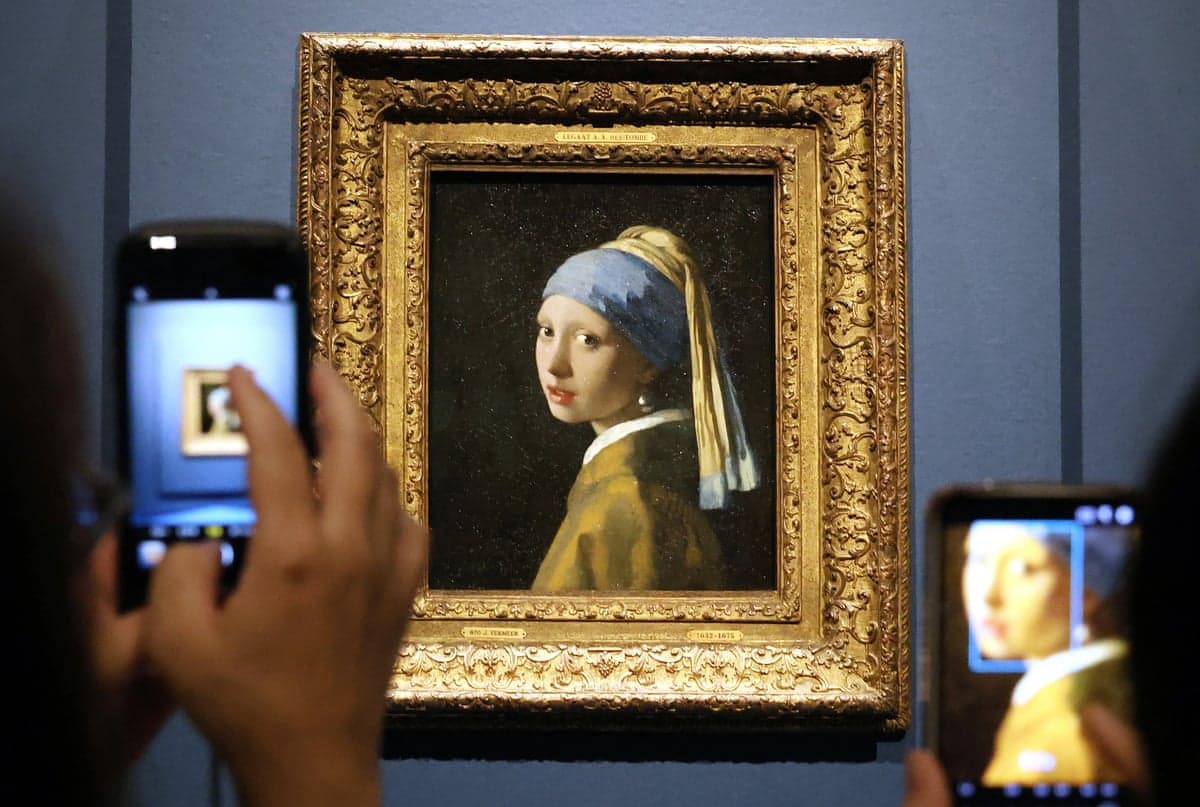
Graham-Dixon offers a fresh interpretation of one of Vermeer's most famous works, proposing an identity for the mysterious figure that, while impossible to definitively prove, reframes the painting's significance. According to The New Yorker's review, the sitter is identified as Magdalena van Ruijven, daughter of Vermeer's major patrons. This identification gains weight from historical evidence: a 1683 inventory of the late Magdalena Pieters van Ruijven's home recorded 20 Vermeer paintings, raising questions about how she accumulated such a significant collection of his work.
How does the audiobook perform as a listening experience?
Graham-Dixon's narration is sharp, authoritative and animated, bringing energy to his exploration of Vermeer's world and his theorising about the artist's relationships with patrons. The audiobook addresses a potential concern about studying visual art through audio format by including an attached digital file containing copious colour plates of Vermeer's paintings, allowing listeners to view the works discussed.
What happens next?
The UK paperback edition was published on 8 October 2026, priced at £14.99 and running to 416 pages. Meanwhile, one of Vermeer's masterworks, View of Delft, is scheduled to be displayed at Madrid's Thyssen-Bornemisza Museum through 10 January 2027, offering an opportunity to engage with the artist's work in person while reading or listening to Graham-Dixon's biography.
Key Facts
- Vermeer's reputation was revived in the mid-19th century after nearly 200 years of obscurity following his 1675 death
- Only 36 paintings by Vermeer are known to survive
- The biography proposes that Magdalena van Ruijven, daughter of Vermeer's patrons, was the model for The Girl with the Pearl Earring
- Graham-Dixon connects Vermeer to underground radical religious movements opposed to Calvinist orthodoxy
- The audiobook runs 15 hours 1 minute and includes digital colour plates of Vermeer's works