Regent's Park in London hosts two parallel art fairs this year, each revealing different facets of the contemporary art market. Frieze London showcases contemporary works alongside photographs, while its companion event, Frieze Masters, displays historical pieces, fossils, and antiquities. Together, they expose the market's most extravagant tendencies and the vast gulf between artistic merit and commercial value.
The most imaginative artwork on view is not among the contemporary offerings at Frieze London. Instead, it hangs in Frieze Masters: a 16th-century painting by a follower of Hieronymus Bosch depicting naked figures emerging from the earth, waving their arms and screaming, while a creature with a bird's head and wings plays bagpipes. This wildly inventive composition stands in stark contrast to the bulk of what surrounds it.
What makes Frieze London disappointing?
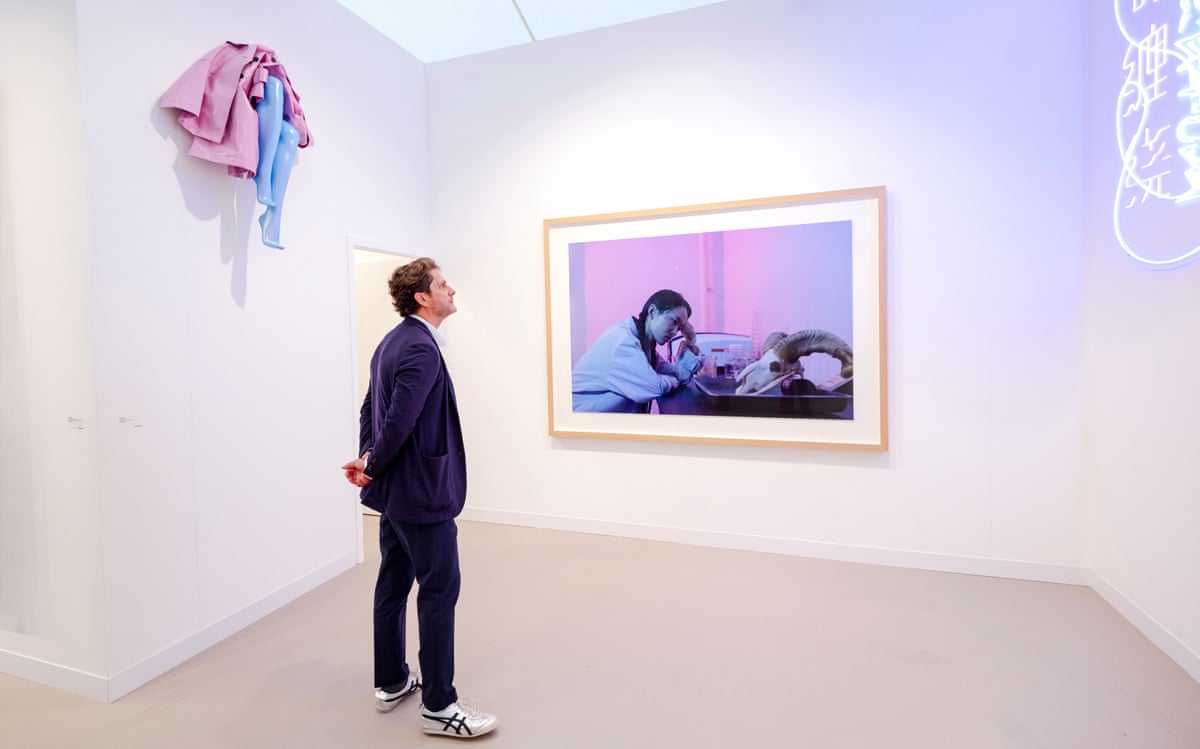
The contemporary fair fails to deliver the artistic innovation its reputation suggests. Visitors hoping to encounter the newest and most exciting art will find themselves underwhelmed; more genuinely avant-garde work appears in the tent of a television baking competition. The fair sprawls with countless paintings of mediocre quality, interspersed with photographs that marginally exceed them in interest. The white marquee structure, with its endless corridors of gallery booths, resembles a vast retail emporium rather than a space designed to showcase art meaningfully—a comparison to a luxury department store's approach to display proves apt.
The first work that captured sustained attention was a two-metre-tall inkjet print by Wolfgang Tillmans titled Paul, nude, golf ball. The image shows a naked man with his elbows on the floor, his close-cropped head bowed between them in apparent despair, while a white sphere beside him mirrors the pale flesh of his bony back. Yet this piece dates from 1994, hardly representing the cutting edge the fair claims to champion.
Who actually buys at Frieze?
Frieze markets itself as a fair that defines new artistic directions and identifies tomorrow's stars. In reality, it serves the commercial interests of dealers and caters to the preferences of an extremely wealthy clientele. This becomes unmistakably clear during VIP preview days, when technology entrepreneurs, hedge-fund managers, and their associates arrive with serious purchasing intent. At Frieze Masters, an elderly couple inquired about the price of an Anselm Kiefer work—a canvas clogged with matted vegetation—and learned it cost just under one million pounds. Such transactions reveal the fair's true function: a marketplace for the ultra-rich to acquire objects for their walls and homes.
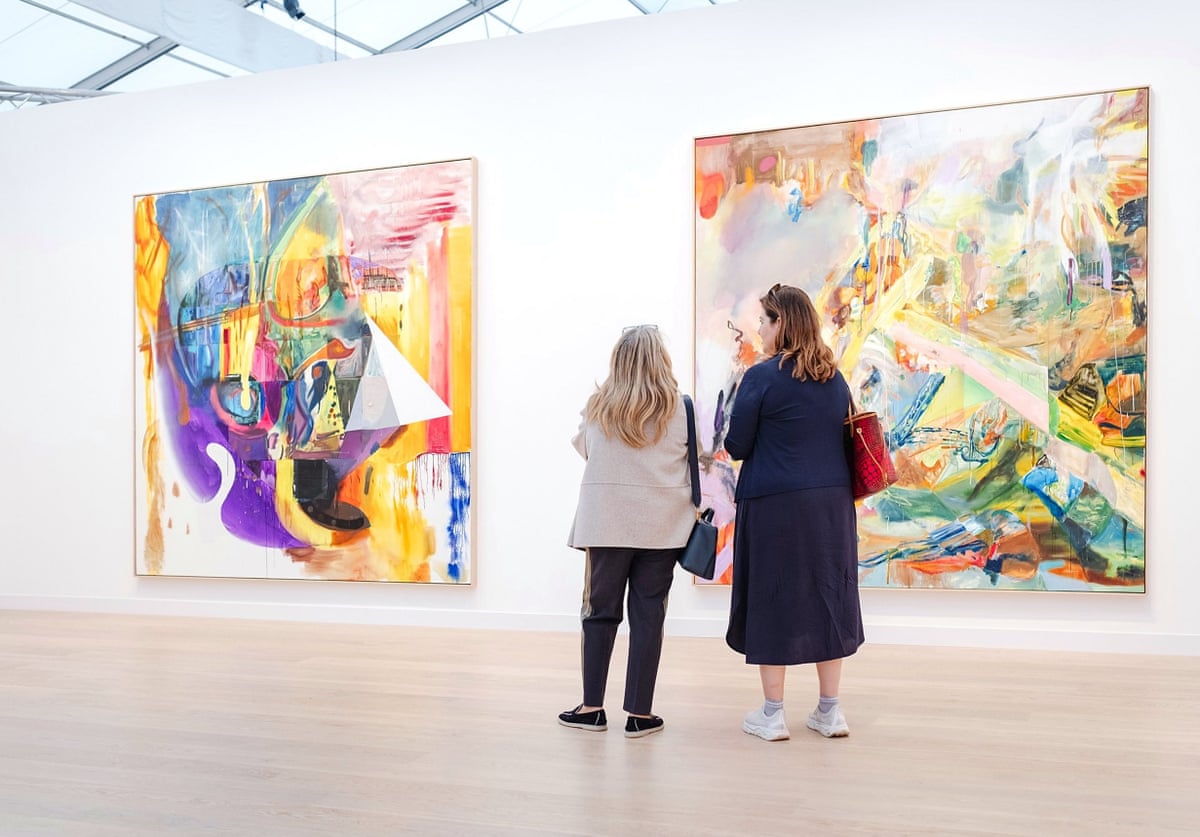
On the fair's opening day, major galleries reported substantial sales activity. Hauser & Wirth recorded more than 20 sales across its Frieze London and Frieze Masters booths, totalling over $11 million. Dealers reported brisk sales at both ends of the market, though some collectors took longer to decide; Gagosian sold six Albert Oehlen paintings for prices understood to exceed $1 million each. A particularly notable transaction involved a Jan Brueghel the Elder still life, Still Life of Flowers in a Stoneware Vase (1607–8), which sold for around £5 million at Frieze Masters.
Which contemporary artists stand out?
Among the contemporary offerings, a handful of artists merit attention. Helen Chadwick's Piss Flowers—a series of white, mineral-like growths that are eerily lovely and enigmatically organic—represent a modern classic by this tremendous artist who died in 1996. Her absence from Frieze Masters, where historical works are displayed, seems a curious oversight. Lonnie Holley's assemblage, featuring a water tap on a rusty pipe entwined with wire and two green bottles on a rough wooden plinth, possesses the raw authenticity of lived experience. Holley, a musician and artist from Birmingham, Alabama, creates beauty from discarded materials and stands out starkly against the fair's prevailing blandness. Tracey Emin, Waqas Khan, Do Ho Suh, Catherine Opie, and Zanele Muholi also merit recognition.
However, the success rate at Frieze London remains unacceptably low. For every worthwhile artwork, roughly nine others fail to justify serious consideration. This ratio falls far short of what an event claiming to define the artistic zeitgeist should achieve. Many booths display work of jumble-sale quality. At Los Angeles' Night Gallery, Wanda Koop's Radiance-Together depicts two candles burning side by side in a blue and purple setting—cute, perhaps, but hardly deserving of serious artistic engagement. Andy Woll's lazily brushed mountain views prove equally vacuous. At Grimm Gallery, Rosalind Nashashibi—better known for her films—exhibits a silly painting of lovers framed by flowery borders.
What distinguishes Frieze Masters?
Frieze Masters operates according to a different logic. Its greatest asset is time itself: if an object retains value after 50, 500, or 68 million years, it likely possesses genuine merit. That final figure refers to the age of a triple-horned, fossilised Triceratops skull currently offered for sale at the fair. This specimen represents museum-quality material of extraordinary rarity. The Natural History Museum does not possess a Triceratops fossil of comparable perfection. Yet here it sits, available for purchase by a wealthy collector who might display it as home decoration.
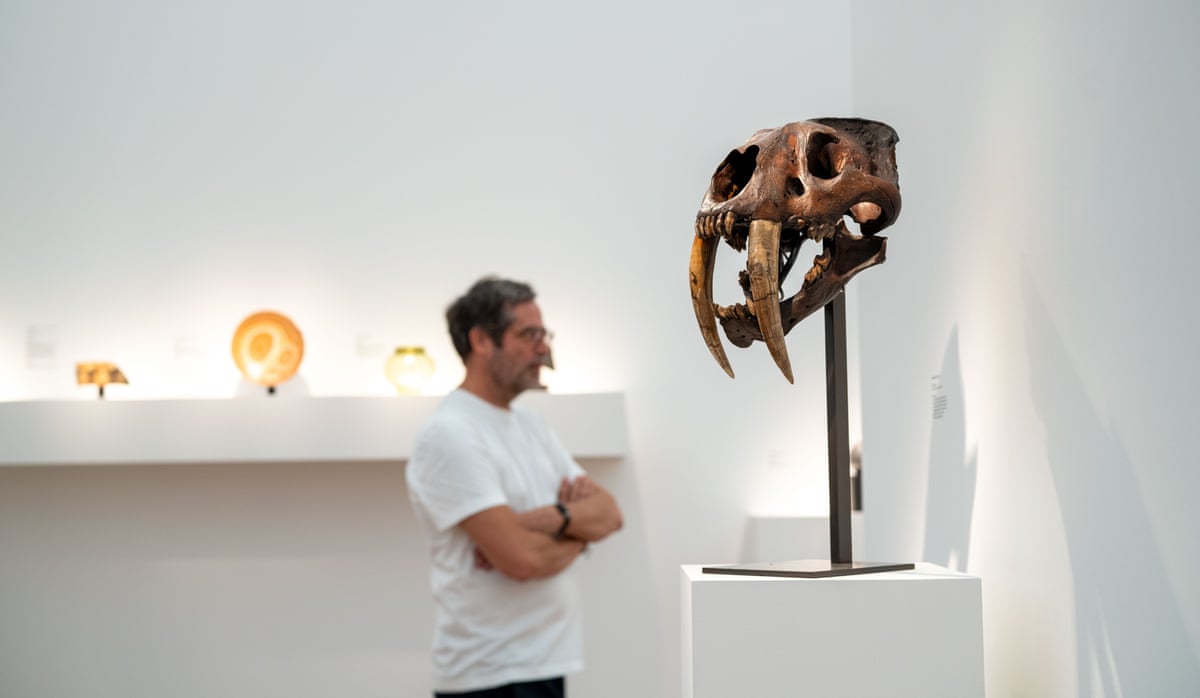
Palaeontologists express serious concern about this trend. The fashion for dinosaur specimens among the ultra-rich inflates prices and prevents museums from acquiring these irreplaceable scientific treasures. Several such specimens are being sold at this year's fair, each representing knowledge and wonder that should remain accessible to the public rather than locked away in private collections.
Frieze Masters proves visually more stimulating than its contemporary counterpart. It is fruitier, stranger, more perverse. Buyers can acquire armour, silverware, Arabian carpets, and the accumulated objects a decadent aesthete might have surrounded themselves with in 1896. This diversity makes the contemporary fair's conformity all the more apparent. Frieze Masters indulges the most extravagant tastes, including numerous sleazy 19th-century nudes that function as commodified representations of the female body.
What ethical concerns does the fair raise?
Yet this greater visual interest comes paired with greater moral disturbance. The fair's stalls fetishise objects torn from their original contexts and displayed under bright lights as luxury commodities: a manuscript page severed from its codex, a face mask removed from an ancient Egyptian coffin, a stone head of a priest from 2nd-century AD Palmyra. These artefacts belong in museums where they can be studied and understood within their historical frameworks. Instead, they are isolated under the spotlight of wealth and commerce, reduced to decorative objects for the affluent.
The fair represents capitalism operating without restraint. Its structure and values distort art into a delirious orgy of commodification. The Colnaghi booth could serve as a Marxist critique of the art market itself. African wooden carvings, created for religious purposes, stand in front of a kitsch 1920 nude by Giacomo Grosso. The lavish depiction of the model's body, rendered in high heels and positioned on silks, makes clear that this is finely painted soft pornography. The African art, stripped of its spiritual context, becomes mere decoration positioned before this commodified representation of female sexuality. John Berger, the radical critic who understood nude paintings and other commodified art as playthings of western capitalism, might have observed: the market has confirmed his analysis.
What happens next?
Frieze London and Frieze Masters continue through Sunday, 18 October 2026. The Masters programme includes a series titled "Breaking the Mould," featuring conversations with Grayson Perry and Iris Moon, and with Paul Pfeiffer and Danh Vō. Additionally, Frieze and Art Fund have announced 20 fully funded curator places for 2026—10 for international and 10 for UK-based curators—to explore historical collections in the context of Frieze Masters, an initiative designed to broaden access to the fair's scholarly dimensions.